I would build a monument within Saint Peter’s, Rome – A monument to martyrs who preached heresy. Who stood by their convictions when tortured and alone On principals of science and philosophy. I would build a monument to passions unafraid When Quisitors would dowse the light they shined. Their sacrifice was equal to that which Jesus made – They gave their lives to save all humankind.
Bringing Juvelilia Week Part 2 to a close (there will be no Part 3, thankfully) is a poem inspired by Giordano Bruno, a fore-runner to Galileo and proponent of Copernican theory – who was tried, tortured and burned by the Flat-Earthers in the Catholic Church.
Apologists claim that his crime was heresy, not sol-centrism, and as late as 2000 (According to Wikipedia) Cardinal Angelo Sodano said of his inquisitors that they “had the desire to serve freedom and promote the common good and did everything possible to save his life” – well, everything short of not actually burning him at the stake, anyway. And Pope John-Paul the Second lamented “the use of violence that some have committed in the service of truth”, so that’s all right then, no harm no foul.
Incidentally, the statue above (on the very spot of his pyre) by Ettore Ferrari is from 1889and paid for by the local Freemasons as a deliberate middle finger to the then-Pope, who I won’t bother to name. (Wow, who’d’a’thunk I’d ever have anything positive to say about Freemasons ?) Its plaque contains the words Il Secolo Da Lui Divinato (From The Age That He Predicted), which is a line that any poet would be proud of, though I don’t know why it also labels our Giordano as ‘A Bruno’ – surely he was The Bruno…
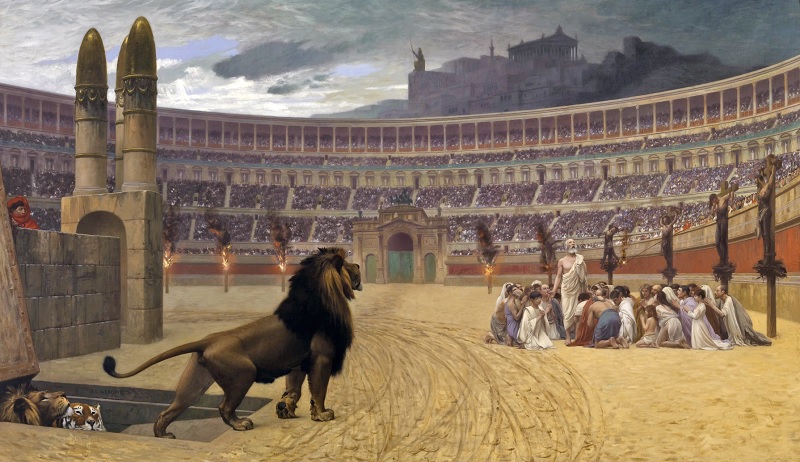
The Christian Martyrs’ Last Prayer by Jean-Léon Gérôme
Damnatio ad Bestias
The lions weren’t alone in the Colosseum To kill the priests – Not that there were none, But the Romans also had their fun With boars, and bulls, and dogs, especially dogs, To be the beasts. Their moment was the lunchtime lull When public executions filled the interval – And some, I guess, were Christians, Making up the Lions’ feasts.
Of course, a Colosseum death Was for the criminals – And Christians weren’t that often used To feed the animals. Persecution was rarer than lions – It happened, but only in spurts. But how to vilify Roman indiff’rence And un-martyred lack-of-hurts ? We needed far more dramatic saints, So unleash the lions and uncork the paints !
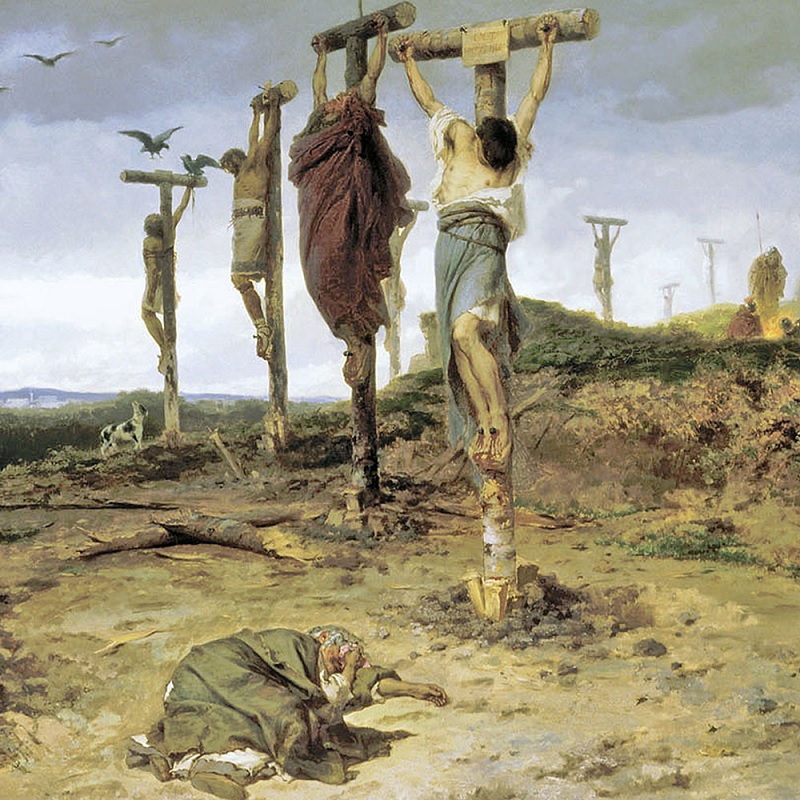
“Tell me, Roman, why this plan To execute this convict man ? Of all the ways to make him dead, Why hold up high with arms outspread ? Seeing him now crucified Just makes a martyr, gives him pride, It lets the martyr die with pride, So hero-like, so dignified.”
“But you are wrong. Now look again: The loincloth with its urine stain, The drooling lips, the bloodshot eyes, The excrement that cakes his thighs. To hang for days in agony – Now look again and show to me, Just look up there and show to me, The slightest shred of dignity.”
“Ah yes, I see, the lolling head, And yet…who cares once he is dead ? And history may not recall His wails and jerking fits at all. Despite what we right here may find, The crowd are of a diff’rent mind – And what they see within their mind Is all that you will leave behind.”
“Perhaps you’re right, and time will tell – But who can say he’s dying well ? And in three days, he lingers on For no-one, once the crowd has gone. Any execution can Create a martyr from a man – Yet here, we see he’s just a man And that is why this Roman plan.”
Bringing Juvenilia Week to a close with a typically iconoclastic poke at religion with some Real Science. Originally just the first two verses, it lacked the necessary back-and-forth to be the dialogue it wanted to be, so the latter two are new, though just as naff as a homage to the original.
Now, the perfect poem to follow with tomorrow would be this one, but it has already been posted.
Ancient wisdom always seems To favour pure and nat’ral artefacts, The stuff of philosophic dreams Of unmined hills and untapped cataracts – Yet crying for such simple ways From modern lives of iron, wells and mills, They lounge and think away their days, While harder-working peers must hone their skills To hew and dig and chop and grind, And turn the world into a workshop floor – To build the surplus so a mind Has food enough to ponder nat’ral lore.
Don’t call me a philistine, That’s racist ! Don’t call me a vandal or a thug. Don’t think just because you’re lower-case-ist That these words don’t have history to lug, That each was once intended to be place-ist, And keeping up old rivalries is strictly for the mug.
Or am I being studenty and smug ? The slandered tribes are all long gone, They’ve changed and merged and all moved on, And only pedants care enough to bug. Of course, the history involved Is fascinating to behold, Yet language doesn’t care, as it sweeps it all beneath the rug. But if you disagree, that’s fine, You’re free to call me philistine – And even though I’m not, I’ll only shrug.
Who burned down the Temple of Artemis ? “I,” said a man, “I did it for fame. I am proud to be the arsonist, Forcing the world to know my name ! Whistle me in nervous breathiness, Whisper me between your cheeks. You’ll all remember Limpfart of Ephesus ! Carry my name on the wind where it sneaks ! Limp…fart… Limp……… fart……… Toot my horn till my name reeks !”
Ptolemy, he knew the skies – At least, that much he saw of them Of course, he only had his eyes, And only words for drawing them.
He plotted out the vibrant stars Upon each underlying figure, But where ran the linking-bars Were sketched with far less rigour.
And then there were the hinterlands, The unincorporated flames Between the cities – roguish bands Too faint to ever warrant names.
He never saw the very South, The depths beneath the Argo’s keel, The Eridanus to its mouth, The wings and scales which pole-wards wheel.
So later gazers filled the gaps With modern and precision tools – They’re lacking in some myths, perhaps, A free-for-all where logic rules.
But Ptolemy has the last laugh, Those empty spaces serve their turn – For ev’ry dim and dull giraffe, Shall help his bears to brightly burn,
And sailors through the years are wise, From triremes to ships-of-the-line, To just ignore the cluttered skies And let Polaris shine.
Infact, Ptolemy named hardly any of the stars in his Almagest, with only the following:
Bootes: Arktouros (Arcturus): curiously, this is described as being ‘under the constellation’ and ‘between the thighs’ – so not technically part of Bootes at all. Lyra: Lyra (now called Vega) Heniochos (Auriga): Aix (now Capella) & Haedi (now called Haedus I & II, except Haedus I is now called Sadatoni). Aetos (Aquila): Aetos (now called Altair, which like Vega is a later Arabic name). Also of note is a passing namecheck to some stars being known as ‘Antonous’, a sort of mini constellette. This is in reference to a real individual and favourite of Emperor Hadrian who had drowned a few years previously – but his epitaph didn’t catch on, and his half-dozen stars are now firmly within Aquila. Tauros (Taurus): Hyádes (The Hyades) & Pleias (The Pleiades)clusters, but nottheir individual stars. Karkinos (Cancer): Onoi (Aselii, now Aselius Borealis & Australis). Leon (Leo): Basiliskos (Regulus), and also mentions an asterism called Plokamos (Coma Berenices) but doesn’t consider it a separate constellation (unlike today). So should I have named this poem Fifty ? Parthenos (Virgo):Protrygeter (now Vindemiatrix) & Stachys (Spica) Skorpios (Scorpius): Antares – the anti-Ares, or rival of Mars. Kyon (Canis Major): Kyon (Sirius) – Ptolemy names both the constellation and its brightest star ‘The Dog’, even though the name Sirius (or rather, Seirios)is both Greek and older. He also thought it looked reddish, which makes no sense (and it couldn’t be the final red giant phase of Sirius B, as there would still be evidence of lingering nebulosity). Prokyon (Canis Minor): Prokyon (Procyon, as in pre-Kyon) which name he also gives the constellationas a whole – all two stars of it – I’ve always thought it looks more like Canis Major’s juicy bone). Argo: Kanobos (Canopus)
Interesting that all bar two are still non-Arabic, though only Antares survives unscathed, with a few others receiving a light Latin makeover. Surprisingly, no mention is made of the two brightest stars in Gemini being named as Castor & Pollux. These are also the names of the Twins themselves, so presumably their transfer onto the stars is later. But even more surprising is that the Greeks apparently didn’t think it worth naming Betelgeuse, Rigel or Alpha Centauri.
There are a small handful of other Latin-based stellar names, and even a few Greek ones (mostly the names of individual Pleiadians), but these were coined later. For instance –
Bellatrix (Orion): from ‘female warrior’, it was first applied to Capella before being transferred in the 1400s and cemented by Johannes Bayer in 1603 – very much a name in search of a star… Polaris (Canis Minor): a shortening of Stellar Polaris, though I don’t know when the shortening first happened. The long version was recorded by Gemma Frisius in 1547, and it should be noted that precession has only moved this star closer to the celestial pole in recent centuries – indeed it won’t be at its closest until around 2100 (or should I say HE 12100 ?) – though it was probably the closest naked-eye star when Old English named it ‘scip-steorra’. Mira (Cetus): best known for being an exemplar for a type of variable star, Mira (from the Latin for ‘wonderful’) was names by Johannes Hevelius in 1662.
And finally, special mention must be made to the one lone Anglo-Saxon star name: Peacock in Pavo. (although ‘pea’ ultimately has a Latin root, though was very much in-use in Old English, as was ‘cock’, although the bird that would unite the two was unknown to them). Named by the RAF in the 1930s after its constellation, in much the same way as Ptolemy shows happening with Lyra and Kyon.
And speaking of Blighty, what did the mediaeval English farmhand think when looking up at the wide, unpolluted night sky ? It is hard to be sure what they called any of it before the Renaissance, though they likely knew the major constellations (The Plough, Orion, those of the Zodiac). It seems strange that they wouldn’t at least have had names for the twenty-odd brightest stars, but who knows – apparently Ptolemy didn’t either (because trust me, the ones he did name show a wide range of brightnesses). So perhaps the very concept of naming stars individually was invented by the Arabs ? And perhaps the very few exceptions that Ptolemy does mention are because these ones were used in astrology ? (I’m not sure they were more than others – I’m just speculating…)
To appease our vengeful God, there’s this sacrifice That really is no sacrifice at all, Of a man who’s really God, and who knows he’s really God, And who knows he’s coming back, as I recall. I guess it must have hurt, but he’s pretty damn inert To the pain, when he knows he’s really God. So why was there the need for our saviour to bleed To appease his other Self ? So very odd.
I know why you think that it’s a sacrifice: It’s all for Original damn Sin. But Eve disobeyed when her questing was displayed; She’s a hero – let our sciences begin ! We’d done nothing, it transpired, no apology required – Just a god wracked with fetishistic pain. But the Romans can take pride for their Friday deicide, Thereby lengthening the weekend with their slain.
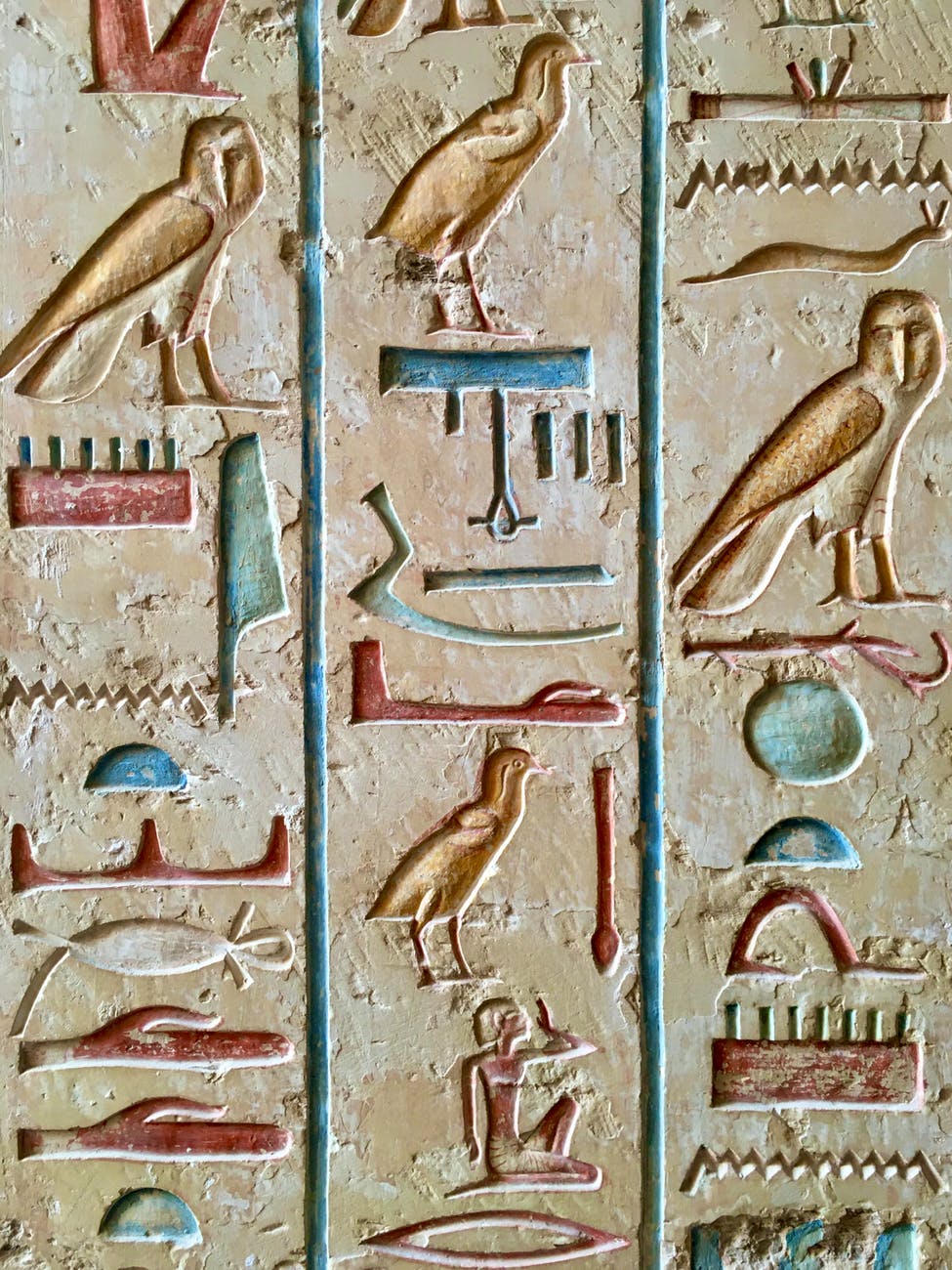
We’ve seen them all on ev’ry wall In Egypt – carved in profile style – But here’s a game to try and name The most – Let’s see, it’s been a while… The eye of the Sun, I know that one, The wavy lines that mean the Nile, The ankh, the egg, the owl and leg, The feather, sphinx, and crocodile, The scarab of course…and was there a horse ? The slug-like snake, that’s worth a smile… The goose (or duck)…and then I’m stuck… But the walls stretch on for mile on mile.
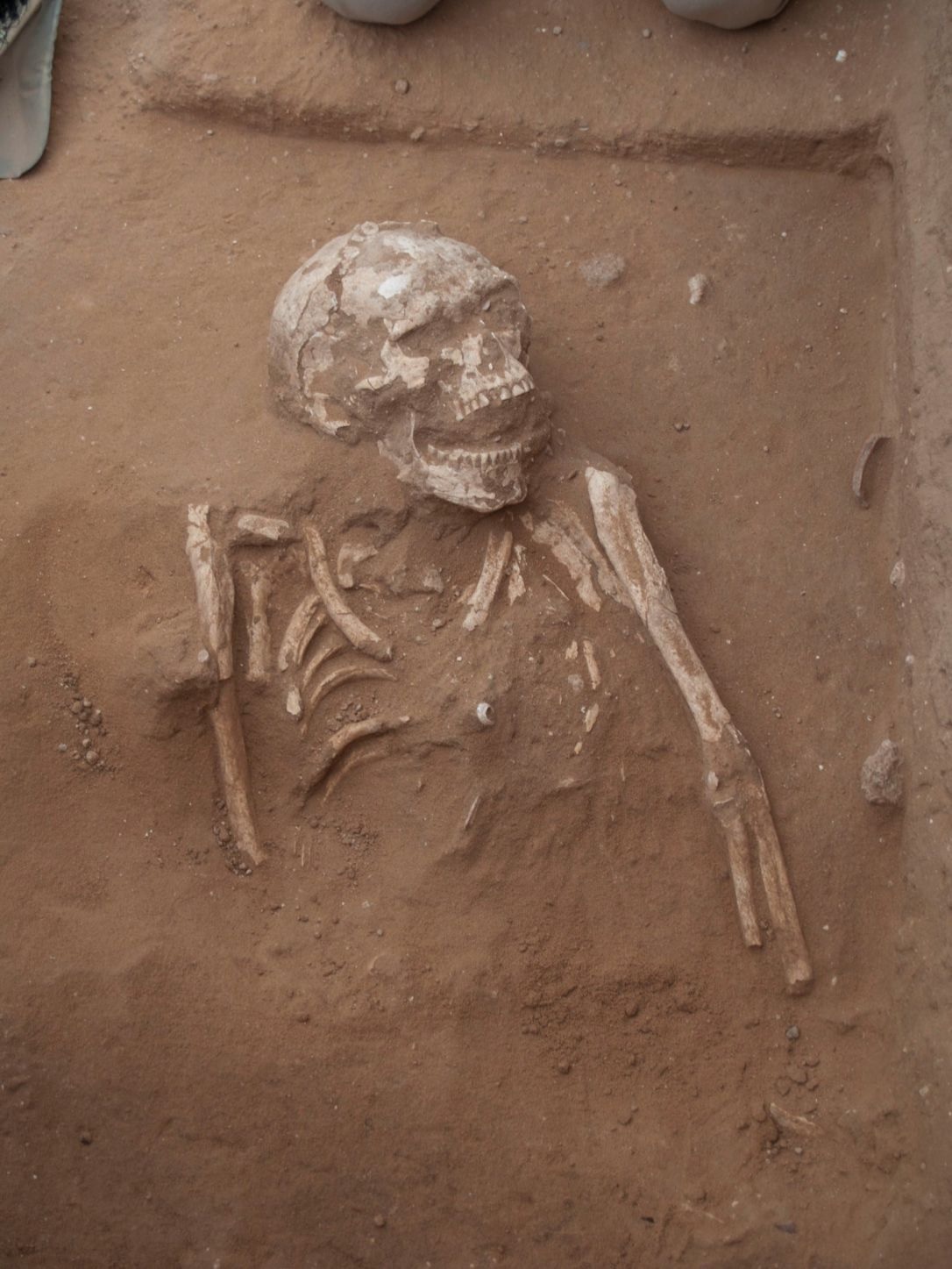
To tell the future we were here, To tell our names and what we think, What gods we praise and tribes we fear, What bread we bake and wine we drink – That we do more than just hunt deer And gather fruits for year on year, But proudly harvest grain for beer !- Then build in stone, and write in ink.
Too many cultures vanish, gone, Because they left nothing behind – They were forever moving on And left no footprints in the mind But others carved and others built, And others wrote in soot and gilt, So we might know who worked the silt – Because their names were proudly signed.





 Rhyming Couplets