The Illinois by Frank Wright, king of the wangers.
The High Cost of High-Rise
Okay, I’ll admit it – The expertise to scrape the sky, To build a hundred storeys high, The maths we truly understand, The engineering we command, To know the stresses held in steel, To take such plans and make them real… Okay, I’ll admit it, It’s a pretty bloody big amazing deal.
But just because we can, That doesn’t mean we always should, That competence is only good – That doesn’t mean we shouldn’t care, That towers often overbear, That carbon cost and energy To work the lifts is never free – So just because we can It doesn’t mean we have to boast so cleverly.
detail from The Bower Meadow by Dante Rossetti, Apple Blossoms by John Millais, Hylas & The Nymphs by John Waterhouse, Laus Veneris by Edward Burne-Jones and The School of Nature by William Holman-Hunt
The Clone of Beauty
So why did the Pre-Raphaelites have just the single face to paint ? Did they all maybe share a model, or ideal, or a joke ? Or were they merely moral allegories, underneath the quaint, The playthings of a puritanic club of touched and airy folk ? Their lounging nymphs of languid myth are diaphanous deities, Sometimes naked, always perfect, from Pompeii to Camelot – But rousing such lacklustre lust, or any spontaneities, These strangely-sexless sextuplets are gazed upon to be forgot.
These muses with the single face, And even fewer flickers of emotion in their artful grace, Demanding our devotion as they pose from Albion to Thrace. Androgynous, without a trace of cleavage, Under wafting folds of lace, But then again, their cold embrace has little use for heavage. At least their hair is big and wild, Those flowing waves and ringlets piled in unexpected verve, Quite out of place around a mask so English in reserve. This Sisterhood of sylvan sylphs – In pastels, spotless-clean and bright, All bathed within a golden light – Are quite the finer sort of elves, Perhaps the fairest of the fay, Just waiting for a errant knight or shepherd boy to pass their way.
Or maybe just ourselves, The gawpers in the gallery – The hoi-polloi who shrug and stare, And wonder why they have to share A single personality.
I wrote this some years ago but dug it out after visiting the Pre-Raphaelite Sisterhood exhibition at the National Portrait Gallery. I had always assumed that the painters made all the faces the same in search of an shared ideal of beauty, but I now suspect that the similarities were in the flesh rather than the paint – the women they chose as models already looked alike. They also shared their models around, in every sense, and I don’t think these women did any modelling for more establishment artists. That said, they don’t seem to have gone out of their way to show much nuance.
Now, we just need a good investigation about the male models they used…
You’re filling the halls from the gods to the stalls, You’re shaking the walls with your blast – You cry your encores as you cheer yourselves hoarse For the grand tour de force of the cast. And how they deserve all the plaudits you serve, For they are the verve of the play; But spare just a few for their hard-working crew, For we perform too, in our way.
Impressionist painters in poverty On canvasses lacking in threads, Glamorous silent-screen starlets, And bereted and bearded reds, Scientists seeking-out secrets, And dare-devils pushing their luck – They died too soon and died too young, When fortunes came unstuck. In days before the drugs did for, Disease was the way to go – Consumption, of course – or else it’s the pox – Or the needs of the narrative flow. Heroines, gothic or chivalrous, In novels antique or sublime – They’re dying too young from the loin or the lung, Yet they’re dying precisely on time.
The lights going on and off…and on…and off……and on………and off………
Turner Churners
The critics will faun it, the Mail just loathes – The public’s not stupid, it’s in on the deal – We’ve always known it’s the emperor’s clothes, It’s only the artists who think it’s for real. And all’s just performance-ing art in the end, These artists we hate yet adore: That pompously-arrogant, smugly-camp blend – Such wonderful caricature !
You often speak of they and them, So, so shall I. You see, I’m firmly one of them Whom you decry as sheep or swine Who are too careless with their gaze. But Don, I also use that phrase, I also have my thems and theys – And you are one of mine.
For you, like they, have ordered me To venerate your saints: Picasso, Rothko, and Matisse – Apostles in their paints. Never must my adulation cease Upon your feted clutch – But who’s the Zeus of all these gods ? Of course, your martyred Dutch !
I know, I know, it’s treason, But I still think that depression, Though it’s pretty good a-reason Is a really bad excuse For his whingey self-obsession, And his self-harming abuse, And for his total lack of wit, And being such an all-round shit.
But what’s the use ? You won’t agree. And truth to tell, that was obtuse of me – Both me and him are far more complicated Than we either you or I have stated. And anyway, let’s judge the work and not the man – Who cares if he’s a relic or a brash young Turk ? Except you’re doing all you can To make the man the work.
So here I stand – a heretic – A unbowed Philistine and hick. For Don, though I can listen fine, I’ll never like the tune he played. Ironic’ly, I quite like yours – A modern hymn to hector and persuade. I guess that Vincent makes you happy, And for that, I’m happy too. Just never try to set me free.
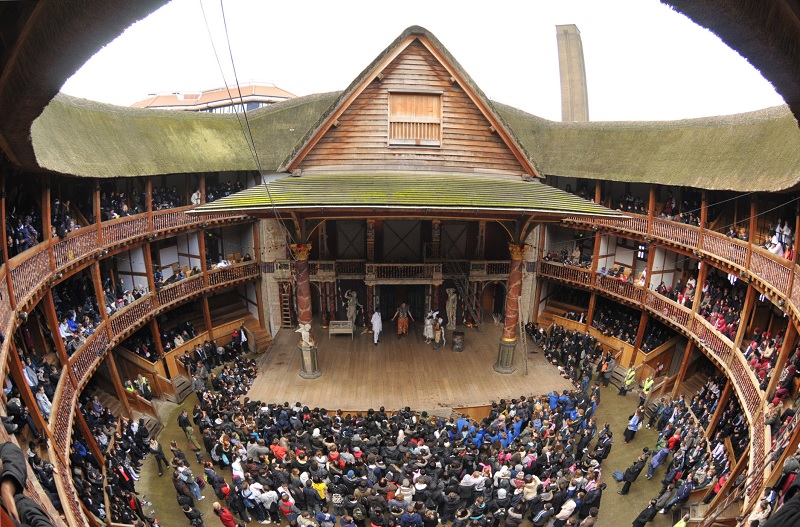
There’s no such thing as in-the-round, For ev’ry stage has front and sides, And despite ev’ry good intention, Actors shall forget the wides. So sit dead centre, free from such malarkey – For ev’ry circle has its hierarchy.
Round tables, while we’re at it, End up far from democratic: Always there’s a head, and it’s Whichever side King Arthur sits. Then right hand, left hand, straight across – There’s no disputing who’s the boss.
Ah, Theatre ! I think I’m gonna miss you, But maybe not the agony you always put me through – You may raise gasps and titters from the proper-postured sitters, But you leave me bent like Richard, joints askew. Your drama may be modern, but your seating is Victorian, Which quickly sees my comfort heading south. Your balconies and rakes are long my source of joys and aches, Where ev’ry twist brings heart-and-knees-in-mouth.
I read the most wonderous novel last year – So moving, so thoughtful, so witty and sheer. I think you’d enjoy it – it’s somewhere round here. So feel free to borrow, I’ll bring it tomorrow – It ain’t gloom and sorrow, but will raise a tear.
I don’t mean to hassle or bug or cajole, But these are the hands that have touched at my soul – Yet all of their beauty is wholly unknown – These pages get lonely to wander alone.
I heard the most marvellous album last year – So rich and inspired, so quirky and queer. I think you’d enjoy it – the vocals are clear. I’ll lend you the disk if you’re willing to risk – The tempo is brisk, but it long haunts the ear.
I don’t mean to pressure or preach or ensnare, But these are the songs that assuaged my despair – I long to belong, to be part of the show – And know there are others who know what I know.
I saw the most glorious movie last year So moody and epic, so lush and sincere I think you’d enjoy it – oh, please volunteer ! By all means I’ll lend what I sure recommend, For what kind of friend would not loan out their gear ?
I don’t mean to labour or pester or dwell, But these are the visions that saved me from hell. They may not be normal, they may not be rife – But maybe, just maybe, they may change your life.
I’m waiting to hear what you thought of my dears, Waiting for rapture or rancour or sneers, Waiting for days and for weeks and for years – Until they come sheepishly unopened back to me – And still you will miss how remiss this appears.
I don’t mean to censure or grumble or such, For you are my friends who have given so much – Yet still you don’t think or else still you don’t care When you once again leave me with nothing to share.







 Rhyming Couplets