The theatre is haunted, of course, Because, well, you know actors… An ingenue, I think, or else a restless dame – Or was the spectral source A longtime patron, or some benefactors Still attending shows just like they always came ? Expectation’s such a force And narratives are such attractors – No stage worth its boards can be without its ghostly claim. The theatre is haunted, of course – That must be the common factor, Why both the roof and the backstage gossip leak-out just the same.
Capitals, corbels, Etchings and baubles, Littered by the sculptors, Foisted by the smiths. Serifs and analogues, Grace notes and shaggy dogs, Wasting their energies With tales and jokes and myths. We tell them ev’ry time That ornament’s a crime – But they keep on disobeying As before. They’ll never realise Till we poke them in the eyes, To teach the little ingrates Less is more.
It’s the silence that hurts the most – When our efforts are all ignored. We’re never told what we’re doing wrong, When our souls are mutely scored. Did I offend you ? Or bore you rigid ? Is my writing just too bleak ? So why can I not find people like me ? Am I really so unique ? I send my children into the void To no reaction at all, Even a groan at least shows you looked – But I just bounce off your wall. And yet, I know that I ignored others When their work neither sang nor stung – I’m just as guilty, crushing their dreams By politely holding my tongue.
A bird fell down the flue last month, And panicked round the sitting room – Raising a squawk and spraying the soot, Till shooed-away with a gentle broom. Why did we have a chimney, anyway ? We never light it ! A useless shaft ! Indeed, where was the bundle of rags We’d stuffed-up the hole to stop the draught ? Time to give it a final sweep, And check it for cracks, and bring in a brickie. An open fire may be romantic, But getting the logs is increasingly tricky. And let’s get a platform placed in the pot, up top, To hold their twigs, And let their charcoal wings replace the smoke Of their rooftop digs.
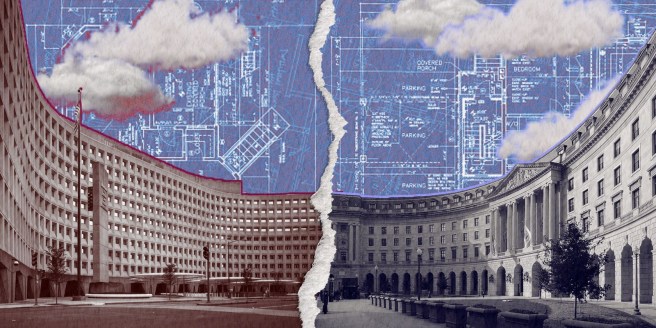
“It isn’t the resident tenants that make a city ugly, but rather the absentee planners.”
The Blueprint Bugle
Vienna is bursting with tourists, While Croydon is thoroughly dead – We all know why the one has the more is, And one is a ghetto instead. One has buildings of beauty That people will pay to admire – The other is screaming out “Nuke me !, And raze all my ugly in fire.”
Oh sure, that intangible culture takes many a-century To embed and to reign – But if your town looks more like a penitentiary, Then you’re waiting in vain.
Venice is sinking in people, While Stevenage wallows in grime – We all know why the latter is feeble, And looks like the scene of a crime. One has buildings of grandeur, That travellers travel to see, The other is yelling-out slander With a nihilistic glee.
And it doesn’t take castles and squares and cathedrals To still have plenty of charms – But it does take some sense, and lack of upheavals From brutalists swinging their arms.
Paris is famous for beauty, And Slough is famous for bombs – We all know why the one is a cutie, And one won’t get asked to the prom. One has buildings for humans, That are sculpted, and tiled, and embossed. The other is built for consumers With the ornaments cut-out for cost.
We know it deep down in our footings, this concrete-clad craze Is simply so unrefined. If it ain’t Manhattan, then high-rise ain’t for the holidays, But for the daily grind.
Please note that for the rhythm to work in the second verse, ‘century’ needs to be given it’s full there syllables, and ‘penitentiary’ it’s full six.
A writer’s house is such an odd museum – With all their private, not-for-public touch. Does it forever colour how we see them, Or just amount to telling little much ? Must we rifle through their dirty laundry, And publish all their letters, kiss-and-tell ? And then complain they put us in a quand’ry Of seeing flaws when knowing them too-well. So why does hero-worship seek these holy relics, anyway ? And basing truth on only what they claim the gossip-mongers say ? Although I guess some writers would adore the fame they have today, And sure, let all the crowds come snooping round their hallowed ground… But as for me, if my words work there due, Don’t let the creeps come crawling through my caches – But burn my house, and all its contents too – And leave the pervy fanboys only ashes.
Two dancing birds, Beaks apart, as if in song – As they circle through the cloudy, milky sky. One windsocked weeping willow, Slanted, yet still strong, And three folks on a hump-backed bridge nearby. Could it be they’re fishing ? Or waiting for the boat ? Though it hasn’t got a sail – perhaps a punt ? Upon the other bank Is a house that looks afloat, Sporting plenty of round shrubbery infront. And over here, behind a zig-zag fence, A squat pagoda, That’s sheltered by a spreading ping-pong tree. And round the edge are squares and scales, And flowers for a coda, A busyness of cobalt for our tea. I stared and stared at China On those Sunday afternoons, When round at Gran’s, for tea and crumpets from the grate. The disappearing cake Revealed the timeless blue lagoons – So very Eastern, yet so English, on a plate.
It is uncertain when the first examples of Willow Pattern appeared, although Wikipedia suggests they could have been produced by Spode in 1790. They are, of course, a classic example of cultural appropriation – and thank goodness they were ! Genuine Chinese porcelain at this time was very expensive, and modern pecksniffs would have seen to it that it remianed so, and that the hard-working families of Britain should be denied the beauty and broadened horizons that came with their roast beef and Yorkshires.
London Bridge has fallen down As planners suffocate the town – They cannot fathom what appeals In Nonesuch House and waterwheels They claim it’s not a chance to dream, For reasons that evade me. It’s just a means to cross a stream, My fair forgotten lady.
The bridge that used to grace these banks They gladly sold-off cheap to Yanks. They have no care for what is lost, Just that it’s done for cheapest cost. And now the name evokes the tides Of business bland and shady – Just traffic jams and suicides, My fair forgotten lady.
Why so many self-portraits ? Vanity, or an honest appraisal ? Why the endless tortured brow, And wistful gaze of hazel ? Are they honest, or distorted ? Simply practice, or masterclass ? Or is the cheapest model that funds allow A looking-glass ?
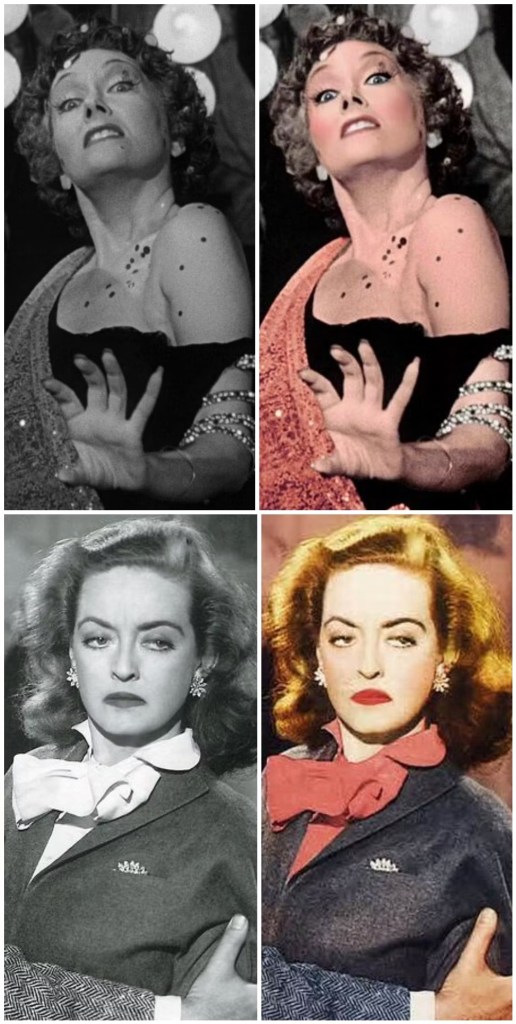
I’ve never been a fan of black-and-white In films of the modern day. It feels all rather hairshirt-pretentious, To choose to wallow in grey. I’ve always thought that Raging Bull and Schindler’s List, Are a wash of look-at-me grim, And not brought-on by a limited budget – But don’t you dare give their hues a trim.
For even more, I hate the arrogant yobs Who can’t leave well-alone Who colourise and bastardise, And completely wreck the tone. We won’t want some future-tech to force 3D Onto all the films we’ve made – So leave the classics just as their artists’ wished, As they shine in light and shade.
But maybe you like them better when brighter. Maybe there’s room for us both. Maybe I need to take a few breaths And not try to stymie growth. There’s a rainbow of points of view out there, And the world is never quite as before – It’s not such a matter of life and death, And I guess we’re not in Kansas anymore.






 Rhyming Couplets