The books call this an igneous province, As if a country of lava – They also call these rocks an intrusion, So more of an empire, rather. But due to the terraces up the plateau, They mostly call them traps – Like a very slow escalator, Till the warring flanks collapse. Or are they prisoners to their nature, Locked beneath the land ? Heaving, layering, underpinning, Mountains raised from sand – Pushing-up from underneath By stealth or by explosion, To reinforce the battle With the forces of erosion. The books call these the flood basalts That roll across the shield Unstoppable, a stony horde That sweep the battlefield.
I’ll gladly say I love you, If you don’t ask if I love you More than all the stars above – For what mere girl can stir up so much love To turn the sternest head ? Nuclear fusion, supernovas, black hole cuties, Diamond-cored and shifted ruby-red – It isn’t fair that I compare you To the very heavens’ beauties Turning all the inky velvet pearled – For they are truly gems from out this world.
I’ll gladly say I love you, If you don’t ask if I love you Till the saline seas run dry. For what mere girl can draw out such a sigh To spring the harshest heart ? Continents crashing, mountains leaping, plates migrating, Magma-cored and slowly wrenched apart – It isn’t fair that I compare you To the very land creating Granite, quartz, and crystals, forged and furled – For they are truly gems within this world.
I’ll gladly say I love you, If you don’t ask if I love you Even more than life itself – For what mere girl can equal so much wealth To spark the jadest eye ? Bejewellèd beetles, primrose blossom, eagles soaring, Helix-cored and left to multiply – It isn’t fair that I compare you To the fruits of blind exploring – Trunks and scales and proteins tightly curled – For they are truly gems upon this world
I’ll gladly say I love you If you don’t ask if I love you Like a this or that or other-hand – For what mere boy can try to understand What all this wonder means ? Ricochet rapture, all things quickly, nothing mildly, Empty-cored and barely out my teens – It isn’t fair that you compare me To a firefly flitting wildly Through the endless lures in which I’m swirled – I’ve never known such gems for all the world.
I hear they’ve found another Super-Earth Around another star – A bit bigger round the waist, But still as rocky as we are. The gravity is stronger, So the mountains are all lower, But there’s no reason at all That some life is not a goer. Maybe life much smarter Than the likes us down here, But life that never gets to cross The endless void, I fear. They, like us, can only run so fast, Can only reach so high, But they must drag a greater ball-and-chain Before they fly.
You see, that could have been us, Had the Earth and Mars collided In the days before the days Before the proto-cells divided. Life could still arise From the planetary ash, But could never hope to reach the Moon (If the Moon survived the crash). Rockets can only burn so bright, But the g-force rises, ev’ry thrust – When you have to ride a nuke to fly, You’ll orbit as a smear of dust. That’s the price of gravity’s embrace – We’re hers for keeping – And she’s a hard mistress, gravity, Possessive and unsleeping.
Except, of course, our planet is Just small enough to jump and fly, (Not that we have, we grounded individuals Trapped beneath the sky). But others of our species have, And probes have sent our eyes to dance With Jupiter and Mercury – And all because we had the chance. And when the Sun is old and red, Then we’ll be gone to boldly go – Yet till that day, we only get to dream Of all we’ll never know. We may be stranded in the well, But we are safe and warm, all told – I hear it’s very beautiful up there, But oh, so cold…
Right at the bottom of the Zodiac, he lies – At the bottom of the garden, at the bottom of the sky – Barely rising high enough above the privet hedges, As he’s hugging the horizon – just a hello and goodbye. Battling through the light-infested night (plus those long evenings), Peeking out from skies that are perpetually grey – From the top floor of a tower block, I bet he looks a treat, But for us, he’s always hidden by the roofs across the way.
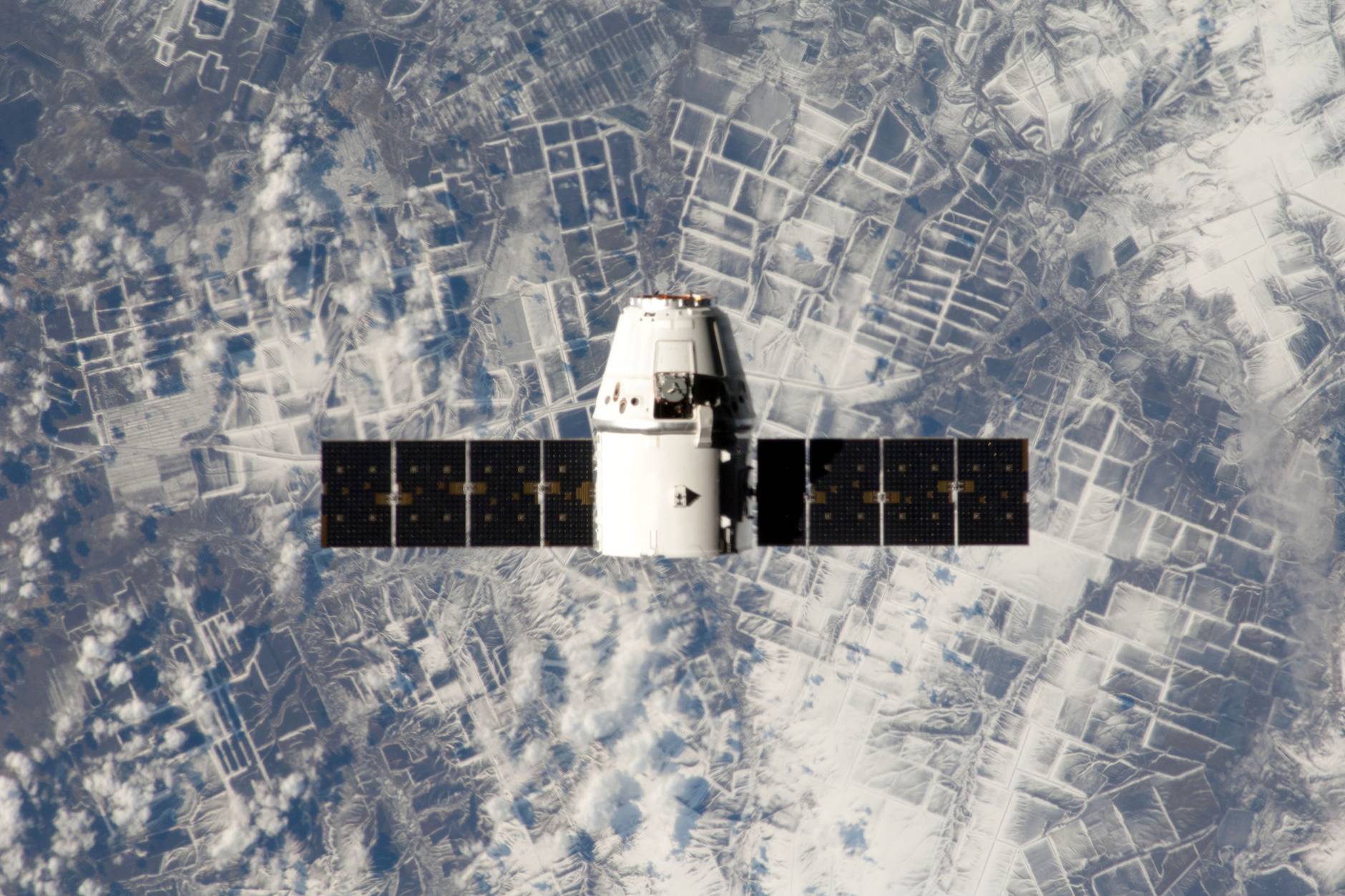
Strange to think, how satellites would watch us from above, Back when they flew – Sometimes sinister, I guess, but mostly were benign enough – And what a view ! They photographed our towns, and all the towns across the Earth We’d never see – They let us zoom in anywhere, from Minsk to Bogota to Perth And all for free ! They beamed our television down, they watched the clouds and rain, They showed us Mars – They navigated us around, then brought us safely home again, And shone like stars – Before their orbitals were filled with shrapnel, deadly fast, That took them out – The age of satellites became the age when flying junk amassed – It’s all about ! So now, of course, we’re trapped upon the Earth, trapped in the past Without those eyes, For years – until the tug of friction rains them down at last, And clears the skies.
Ptolemy, he knew the skies – At least, that much he saw of them Of course, he only had his eyes, And only words for drawing them.
He plotted out the vibrant stars Upon each underlying figure, But where ran the linking-bars Were sketched with far less rigour.
And then there were the hinterlands, The unincorporated flames Between the cities – roguish bands Too faint to ever warrant names.
He never saw the very South, The depths beneath the Argo’s keel, The Eridanus to its mouth, The wings and scales which pole-wards wheel.
So later gazers filled the gaps With modern and precision tools – They’re lacking in some myths, perhaps, A free-for-all where logic rules.
But Ptolemy has the last laugh, Those empty spaces serve their turn – For ev’ry dim and dull giraffe, Shall help his bears to brightly burn,
And sailors through the years are wise, From triremes to ships-of-the-line, To just ignore the cluttered skies And let Polaris shine.
Infact, Ptolemy named hardly any of the stars in his Almagest, with only the following:
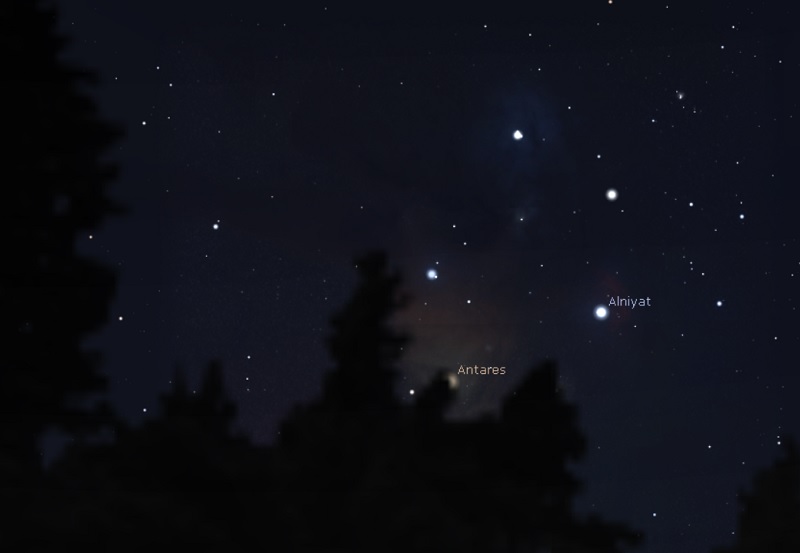
Bootes: Arktouros (Arcturus): curiously, this is described as being ‘under the constellation’ and ‘between the thighs’ – so not technically part of Bootes at all. Lyra: Lyra (now called Vega) Heniochos (Auriga): Aix (now Capella) & Haedi (now called Haedus I & II, except Haedus I is now called Sadatoni). Aetos (Aquila): Aetos (now called Altair, which like Vega is a later Arabic name). Also of note is a passing namecheck to some stars being known as ‘Antonous’, a sort of mini constellette. This is in reference to a real individual and favourite of Emperor Hadrian who had drowned a few years previously – but his epitaph didn’t catch on, and his half-dozen stars are now firmly within Aquila. Tauros (Taurus): Hyádes (The Hyades) & Pleias (The Pleiades)clusters, but nottheir individual stars. Karkinos (Cancer): Onoi (Aselii, now Aselius Borealis & Australis). Leon (Leo): Basiliskos (Regulus), and also mentions an asterism called Plokamos (Coma Berenices) but doesn’t consider it a separate constellation (unlike today). So should I have named this poem Fifty ? Parthenos (Virgo):Protrygeter (now Vindemiatrix) & Stachys (Spica) Skorpios (Scorpius): Antares – the anti-Ares, or rival of Mars. Kyon (Canis Major): Kyon (Sirius) – Ptolemy names both the constellation and its brightest star ‘The Dog’, even though the name Sirius (or rather, Seirios)is both Greek and older. He also thought it looked reddish, which makes no sense (and it couldn’t be the final red giant phase of Sirius B, as there would still be evidence of lingering nebulosity). Prokyon (Canis Minor): Prokyon (Procyon, as in pre-Kyon) which name he also gives the constellationas a whole – all two stars of it – I’ve always thought it looks more like Canis Major’s juicy bone). Argo: Kanobos (Canopus)
Interesting that all bar two are still non-Arabic, though only Antares survives unscathed, with a few others receiving a light Latin makeover. Surprisingly, no mention is made of the two brightest stars in Gemini being named as Castor & Pollux. These are also the names of the Twins themselves, so presumably their transfer onto the stars is later. But even more surprising is that the Greeks apparently didn’t think it worth naming Betelgeuse, Rigel or Alpha Centauri.
There are a small handful of other Latin-based stellar names, and even a few Greek ones (mostly the names of individual Pleiadians), but these were coined later. For instance –
Bellatrix (Orion): from ‘female warrior’, it was first applied to Capella before being transferred in the 1400s and cemented by Johannes Bayer in 1603 – very much a name in search of a star… Polaris (Canis Minor): a shortening of Stellar Polaris, though I don’t know when the shortening first happened. The long version was recorded by Gemma Frisius in 1547, and it should be noted that precession has only moved this star closer to the celestial pole in recent centuries – indeed it won’t be at its closest until around 2100 (or should I say HE 12100 ?) – though it was probably the closest naked-eye star when Old English named it ‘scip-steorra’. Mira (Cetus): best known for being an exemplar for a type of variable star, Mira (from the Latin for ‘wonderful’) was names by Johannes Hevelius in 1662.
And finally, special mention must be made to the one lone Anglo-Saxon star name: Peacock in Pavo. (although ‘pea’ ultimately has a Latin root, though was very much in-use in Old English, as was ‘cock’, although the bird that would unite the two was unknown to them). Named by the RAF in the 1930s after its constellation, in much the same way as Ptolemy shows happening with Lyra and Kyon.
And speaking of Blighty, what did the mediaeval English farmhand think when looking up at the wide, unpolluted night sky ? It is hard to be sure what they called any of it before the Renaissance, though they likely knew the major constellations (The Plough, Orion, those of the Zodiac). It seems strange that they wouldn’t at least have had names for the twenty-odd brightest stars, but who knows – apparently Ptolemy didn’t either (because trust me, the ones he did name show a wide range of brightnesses). So perhaps the very concept of naming stars individually was invented by the Arabs ? And perhaps the very few exceptions that Ptolemy does mention are because these ones were used in astrology ? (I’m not sure they were more than others – I’m just speculating…)
So, two ohs, and an umlaut to boot – Or is it four ohs, of differing size ? Who knows ? Is the e long, or is short, or mute ? You might as well pray to the skies ! How many syllables ? Which one to stress ? Your answer’s a guess – Claims to an ancient authority, false and unwise – That way, pedantry lies.
So is he a guard for a bear (a big bear) As says his main star ? Or a plough ? The Greeks said it’s really the cart of a cow. Well, I see a plough, or dipper, or cart, But how in all of this heavenly art Is that a bear ? (And black, or white, or brown ?) Enough ! I swear, I’ve had it with this clown ! I just want to say his noun !
If we take a telescope to the second O, And focus in on its second moon, The one at five-past noon – Will it show us satellites of its own ? And could we keep on zooming-in To find another fractal clone ? Like double stars, like Gemini, There’s more than meets the naked eye – Unpronounceable, but not alone.
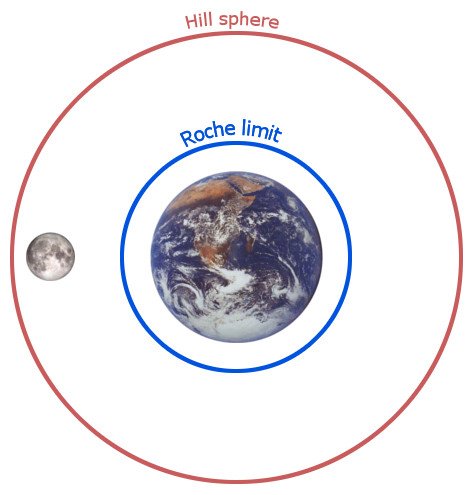
The Earth could have a ring, you know – The Moon as well. Perhaps they have already done, But that was then. There would be nothing left to show So who can tell ? Unless, of course, they’ve yet to come, Though who knows when ?
But then, that’s just how gravity Is all around, Its spheres of influence we must Obey, or break – Like how your eyes will grab at me And grind me down – Trapped about your orbit, I am dust Within your wake.
A country comet, blazing through The skies of peace and status quo – Your portents wasted to the blue. You shout your name and on you go, With not a trace of plague or coup Or sparks beyond your pretty show.
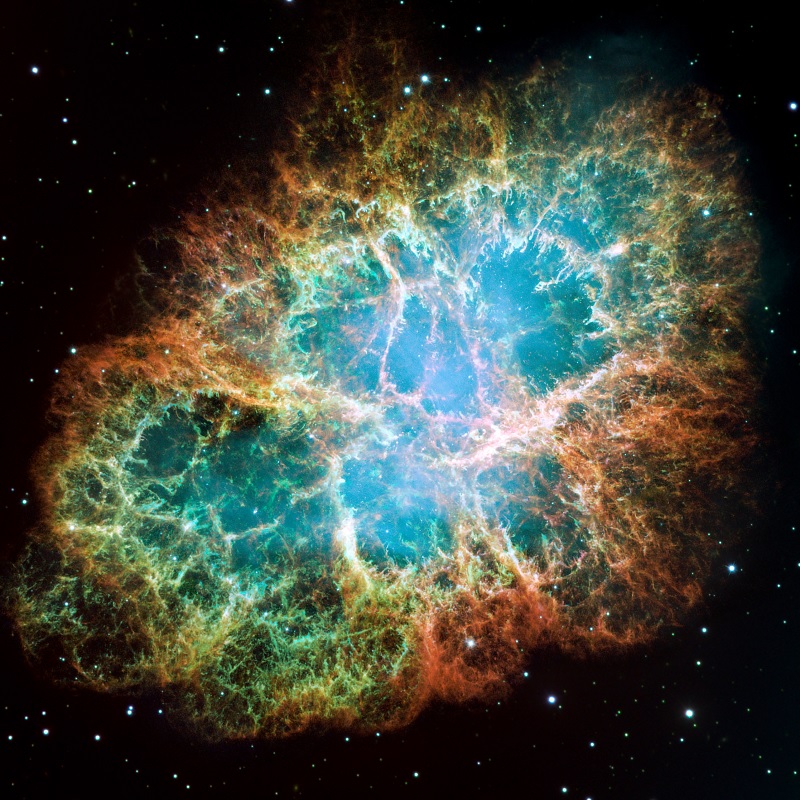
The supernovas all are dead already, Dead – but not yet gone. They flare, they fade – but holding steady, Nebulas are glinting on To mark the spot within the eddy Where the star had shone.
The supernovas all are dead, But oh, they make a lovely grave ! Now some stars swell up fat and red, But find they haven’t got the head – While others fade away instead, As all the light they had, they gave.
But supernovas, when they die, They die with one almighty blast That sings from out the daylight sky – But even when their peak has passed, Their nebulas still testify They saved the best to last.




 Rhyming Couplets