Once a time, the clocks would tick, Like any decent metaphor – By slicing up the passing time, And tolling out their hourly chime. Pocket watches, chirping quick, Longcase , slow and sure, Tick-tock, clip-clop, out they’d trot, When seconds were a noisy lot. Yet now, they’re silent and they’re slick, Just oozing moments from their store – But still they serve to spread the word How time is slipping past, unheard.
Some of us are lumpers, And some of us are splitters, Some are bulky-clumpers, And some are little-bitters, Some of us are big-tent stuffers, Broad-brush roughers, Close-enoughers, Filling-up our grab-bags Till there’s no more room inside – And some of us are split-hair-threaders, Sep’rate-bedders, Excess-shedders, Spilling-out and sorting-through To further subdivide. And honestly, we need both kinds of schemes To help us to discover, Masterplan and granular, Millennial and annular – Yet nobody can do them both, it seems, We lean one way or ’tother – Either rounding up or down, With both the only game in town. So some of us are throngers, And some of us are sparsers, Half of us are glommers, And half of us are parsers. I guess we cannot change the plot, Our ways are set, alas – But still, let’s proudly work our lot, And classify with class.
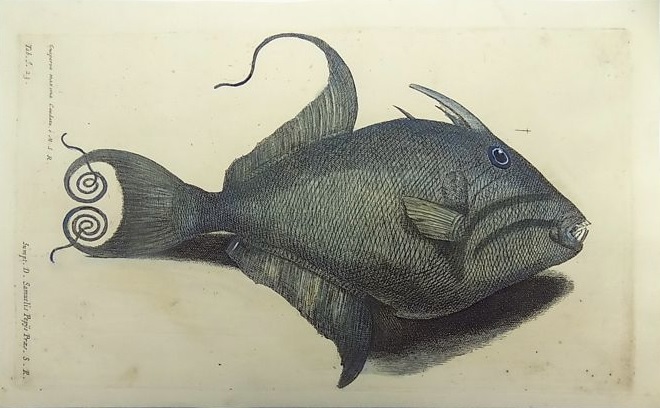
Amazonian Guaperva Fish by Francis Willughby (at least, I think he did his own illustrations).
Fishes & Physics
Gentle Francis Willughby, To best of his ability Has written us a thriller – see, The History of Fish ! Illustrated lib’rally, Meticulous and jibber-free – No charlatan or fibber, he, But honest, if not swish. The Royal-dubbed Society Have praised his work most high and free, And published with propriety His dense and hearty dish – Examining their parity And countless similarity, To classify with clarity Each finble, scule and gish. His work will lead inex’rably To Karl Linné’s complexity And Darwin’s sexy theory That the bishops try to squish – Yet mocked in perpetuity, His book an incongruity, For lacking the acuity Of Newton’s masterpiece – His grandiose Principia, That makes the heavens trippier And gravity much nippier, Is straining for release. But things are tight financially, With profits down substantially And Newton sees his chances flee Despite the Fellows’ wish – They cannot foot the bill, you see, The budget’s blown on Willughby – But don’t show Frank hostility, He’s not so queer a fish.
The trouble with a drum machine Is that it hasn’t got an ego, Trouble with a drum machine Is that it always keeps in time: The fourth beat goes where the first three go, As do the crash and click and chime. Ev’ry beat created Is so beautifully weighted And it comes along precisely When a beat’s anticipated. Yes, some settings let it swing (In a very predictable way), But at its heart, it can only play As its programming dictates – It has no art in how it syncopates. From the moment we press start, It serves up static jazz and bluesless blues At gridline rates – And despite what the singer would choose. It can’t insist on using toms or gates. However loud, however smart, It never tries to build its part, With never a roll and never a fill – It just keeps beating, Beat-beat-beating, Beating on and on until At last the plug is pulled, the button pushed, The damn thing overruled and hushed, And finally each tireless brush and stick is still. The trouble with a drum machine From marching boys to charging pop, Is knowing when to make a noise, And knowing when to stop.
We’ve all heard of the sealed train That carried the 36 between Zürich and the Glasbahnhof, In April 1917. A couple of ferries and a new suit later, Tornio station, platform 1, To catch the sleeper to Petrograd – And become the prodigal son. Finnish metals all the way, On over the swamps and rugged terrain To the Finland Station and history, Though no-one thought to note the train. One is preserved – it may be the one, But as likely not – we’ll never know. Those locos were all faithful workers, Too busy toiling to stop and crow.
But in the height of August, Fleeing back the way he came – Working his passage with a shovel, Lenin stoked the movement’s flame. 293 – preserved in glass The only loco we know he rode, Not that we can blame the pistons For their unexpected load. American built, as the century turned, A proud ten-wheeler, H2-Class, A broad-gauge beauty, wood-fired boiler, Black, without that bourgeois brass. Does it matter ? Holy relics ? Lenin was also just a machine That public anger drove to the station In the red-heat of 1917.
I have completely failed to determin which platform at Tornio the train to Petrograd would have departed from, so naturally I chose the one that rhymed.
Evolution has no use for wheels – It walks, it never rolls – Beyond a tumbleweed or spider That the random wind controls. For real life lacks our perfect strips Of smooth and tarmacked roads, These alien technologies, These edges linking nodes. Biology’s against it anyway, Unless the wheels are dead – For how can blood and nerves attach To grow the spokes, repair the tread ?
Though germs can grow their flagellates Upon an axle, loosely bound – And they can drive by swimming, Just by spinning tendrils round and round. So give a million years or ten, And life may well adapt To these ribbons of oil and gravel, If they haven’t been buried or snapped. But while terrain is bumpy And a bogged-down caster cannot trot, Then legs will always run the show – The world may turn, but life does not.
I remember watching the cars go by From the back seat of my Dad’s Cavalier – A rep-mobile, that would sometimes change Into a Sierra, or something near.
I could name them all, down the motorway, From the back seat of my Dad’s works’ Rover By make and model, and sometimes trim, And dreamt of driving them all twice over.
But when I left home with a job, It didn’t come with its own Passat – And I was living in digs in London, Without a garage, and that was that.
Besides, there’s never any parking, And what there is will costs me loads – And if the Tube is crowded, well, Then you should see the roads !
But still I eye the kerbside cars Beyond the pay of my nine-to-five – And fantasise which one I’d have, If I’d only learned to drive.
Until my sensible shoes recall The fossil fuels and rusting hulks – And the boy inside with the brum-brum dreams Just sits in the back seat and sulks.
When did cars become so boring ? When did roads become less roaring ? When did bland become okay ? Paintjobs dull as office flooring – Offered in a monochrome of grey.
Call it Silver, call it Graphite, Brooding Shadow, Summer Midnight Any guff that comes to mind – But once we see them in the light You’re surely fooling no-one but the blind.
White and black are offered too, And boy, that’s really big of you, But what will people think ? Leary over red or blue, And terrified of lemon, lime, or pink.
Remember – we were bright and fun Before the mortgage and school run ? Oh, we were colourful and proud ! The dial tuned to Radio 1 – Not Archers, Proms, or Magic, not too loud.
The reason, I suspect, is that Our Chelsea Tractors grew so fat Our excess-baggage showed. And so we dressed them down in matt To blend in with the tarmac of the road.
And as a side-effect, we get To hide the dirt and hide the threat That purple-headed Greens advance. So boring cars are worth it yet To motor on in blissful ignorance.
Back in the days of cathode rays, Electron guns of RGB Would bring the colour to TV – Except they could get out of phase When untoward magnetic strays Would tamper with the purity.
And boy, were mine unpure ! With ev’ry colour out of sync, Where skies were green and trees were pink ! They told me there’s no easy cure – “But you’ll get used to it, I’m sure” I tried so hard to think.
I might have made it through, But for the glaring lack of red That ultimately screwed my head – Faces, lips, and roses too – Those cyan people made me blue As if the aliens had bred !
I thought I dug the mood To love all races in my sight – But skin-of-denim just ain’t right ! So I rejected modern dudes For old-time films and attitudes That showed the world in black and white.
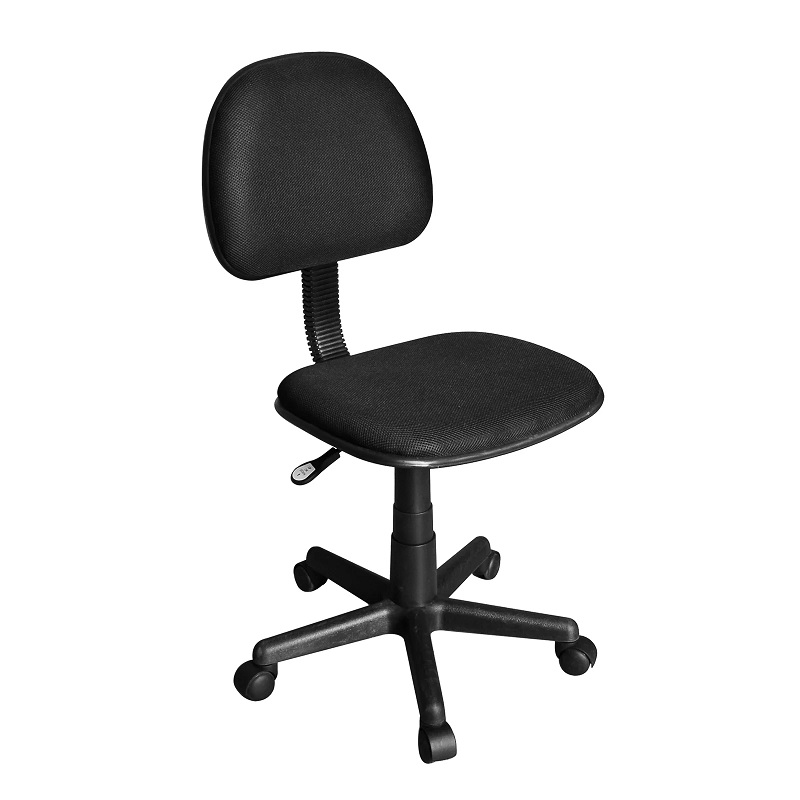
Office chairs with starfish bases, Wobbly levers, sofa wheels – They never fit quite right, most cases – Either leaving swinging heels, Or bunched-up knees and hunched-down shoulders, Wimpy pistons full of slack. But still, a useful perch for folders Till the backside needs it back.




 Rhyming Couplets