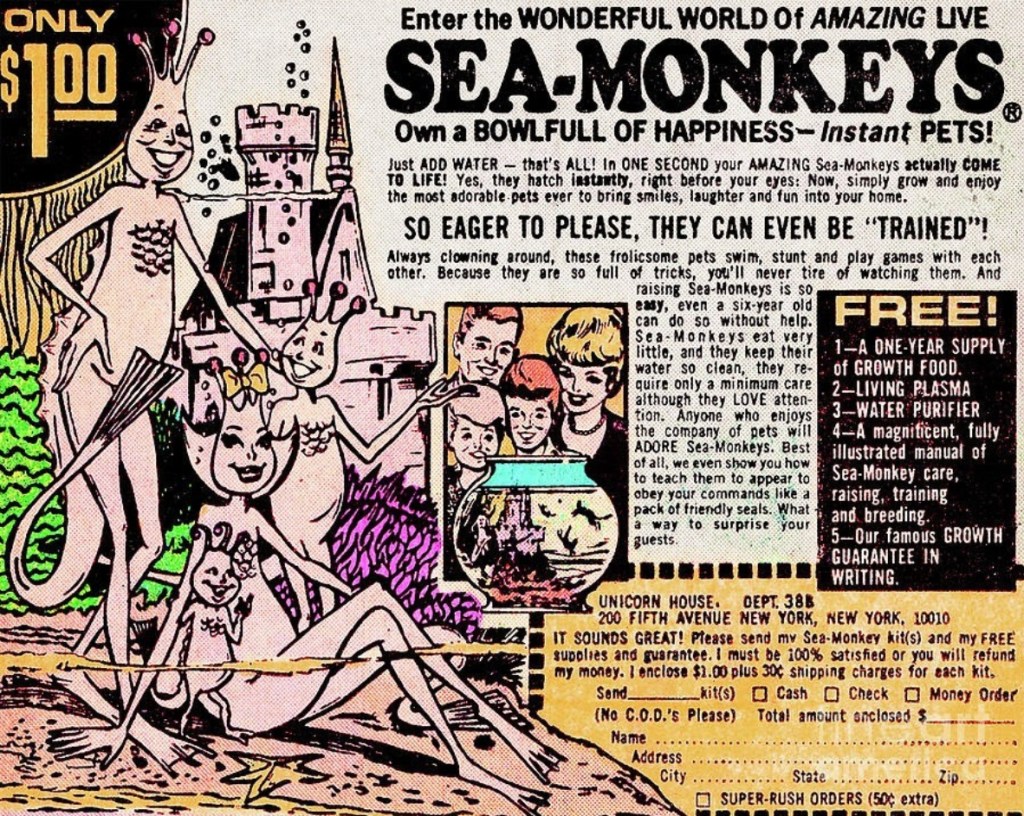
Sea monkeys aren’t monkeys, Never will they be – They don’t live in the trees And they don’t live in the sea. These brine shrimps are no chimps, They’re bugs with jointed limbs – Such fascinating little imps, Or tiny specks who swim. There’s plenty fun invertebrates, But these are pretty scant – If you want pets that resonate, You’re better off with ants. Funky, shrunky monkeys, Who are oh-so very wee – They’re glorious, but also junk, As dinky as a flea.
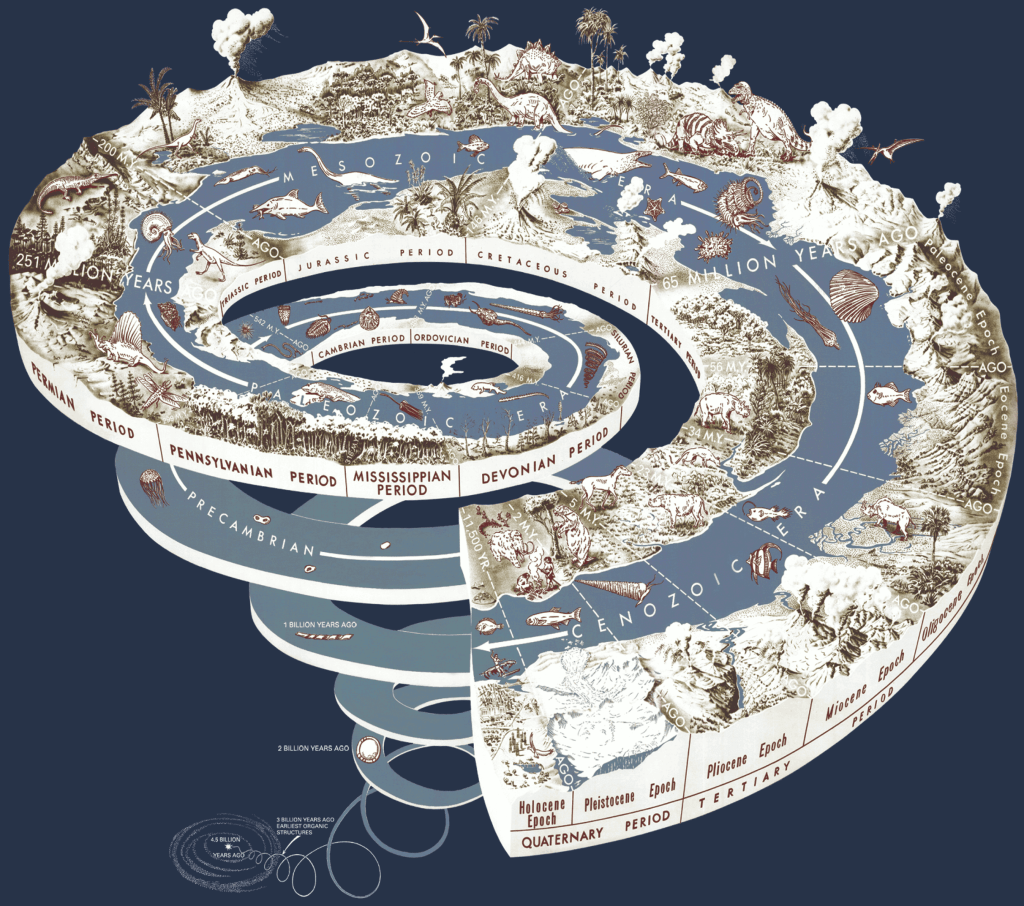
Geological Time Spiral by Joseph Graham, William Newman, & John Stacy
Counting Forwards
Imagine, if we like, To the Earth when it was younger – Let’s go back in our minds As Rodinia accretes and binds. Imagine all the life, With its breeding and its hunger, Is all within the ocean wide, While all the land is dead and dried. Go on back a billion years To when the Tonian began, And the first alga brave appears In the inter-tidal span. And let’s call this Year Thousand in our plan.
Now imagine, if you like, A thousand million later – To Britain, as it will become, Through evolution’s endless sum. Let’s use the past to take a hike, To be our ad-hoc dater – With ev’ry year that we explore That’s adding-on a million more. Ready ? Well then, come with me ! To Year One Thousand, long before, When Vinland Vikings rule the sea And early green specs dot the shore – And let’s see history expand once more.
1000-1280 The Tonian is a long old stretch, From Ethelred to Longshanks. We’re not sure when things happened quite, So none of these are strong ranks, But sponges would appear to appear Around the Fourth Crusade, Just as we leave the Dark Age, As the Boring Billion fade.
1280-1365 The Cryogenian grows cold, As the mediaeval warmth recedes – The plague upsets the status quo, As animals succeed. The monks and fossils leave their records, (Fewer than we’d wish), As peasants rise-up, and the jellies – Both the combs and fish.
1365-1460 The Ediacaran, through the Hundred Years War, Is a pregnant time. The Agincourt slaughter sees new forms of life Are on the climb. We’ve so little idea what, Though likely all the phyla we know Are going their separate ways back then, As the trade and prosperity grow.
1460-1515 Bang ! The War of the Cambrian Roses And Henry Tudor the Trilobite. Bosworth Field is awash with early fish, As eyes first see the light. Predators prey, so the shell evolves, And the codpiece probes the way to dress – And we know so much of those olden times Because of the Burgess printing press.
1515-1555 The Ordovician sweeps the monks away And ends in the great divorce – The Little Ice Age causes mass extinction, Though with a patchy force. Most of the phyla shrug it off, As do the merchants of the day, While plants colonise a whole new world of land, Down Mexico way.
1555-1580 The Elizabethan Silurian Sees vascular plants grow bodice and ruff, While armoured fish develop jaws As Catholics have it tough. The millipedes creep onto shore While Mary Queen of Scots must flee, And Francis Drake sails round the world, While scorpions swarm the sea.
1580-1640 Awaiting the tetrapod armada in Plymouth, Comes the Devonian span – Sharks and ammonites emerge In the Tempest of Caliban. King James writes his Bible On the wood of the early trees, Till the Civil War extinction Brings the shallows to their knees.
1640-1700 With the Carboniferous Restoration, Amphibeans arrive. There’s giant dragonflies in the endless forests, Where spiders thrive. They lay-down future coal, of course, As London is aflame – Till the Glorious Revolution, When the reptiles change the game.
1700-1750 The Permian now joins Pangaea With the Hannoverian line – Dimetrodon and future-mammals Have their chance to shine. But from the North, a Great Dying Sweeps them from their heights – The lava traps of Siberia, And the pikes of the Jacobites.
1750-1800 The Triassic sees a trident of firsts – Pterasaurs, crocomorphs, dinosaurs. The sea’s full of plessies and ichthies and turtles, An empire stretching to distant shores. But American lizards break away From rule they call draconian, And a great extinction’s coming-in That’s all thanks to Napoleon.
1800-1855 The Regency brings us the Jurassic, Victoria sees placentas get birthed, While the Chartists challenge the old big beasts, As the sauropods shake the earth. The allosaurs fight stegosaurs, While archaeopteryx soar above Of the Valley of Death as India splits, On their way to becoming a dove.
1855-1935 The Cretaceous next, but where to start ? Pangea well-and-truly splits, While flowers bloom for Victoria’s weeds, And spinosaurs are Edwardian hits. Veloceraptors perish in the Depression, But T-Rex jazzes the town With Triceratops to the very end, When the asteroid comes crashing down.
1935-2000+ Into the Cenozoic we go, As the atom bomb sees things get hot. Mammals and birds diversify, As hippy grasses grab their shot. Hominids climb down from the trees As Tony Blair brings-down the freeze – Then Christmas Day in ’99 Sees farmers plant communities.
Imagine, if we like, Where our journey goes from here – What might the next long thousand bring To life that’s ever-quickening ? And when extinctions strike, Then new forms suddenly appear. History shows progress all the while, Though fashions change the style. But here, for now, our trek is done, We’ve counted up the years we hold, From an Anglo-Saxon simple son To multi-cultured forms so bold. They tell the greatest story ever told.
Happy birthday ! Yes, it’s true, Rhyming Couplets is turning six, so here’s a special treat for anyone who’s still out there.
Similar to my championing of the Holocene Calendar, I hate counting backwards, and can’t wrap my head around the numbers. Therefore I propose the Paleontology Calendar, which can either begin at 0 (equal to 2,000 MYA) when the Great Oxydation Event was coming to an end, or at 1,000 MYA when the first algae was colonising the land. The latter is more useful, as it results in three-digit numbers rather than four, as we don’t have much evidence for what happened prior to the Ediacaran fauna emerging (they’re not called the Boring Billion for nothing…) However, I’ve adopted the former here so that the dates can line up with European history to make conceptualiseing the events easier, at least for me. By happy coincidence, 1000 MYA is also when Bicellum first appears, which might just be the earliest evidence we have of animals evolving away from algae…
Note that all dates prior to the Cambrian are tentative and likely to change in the future. Just when the animal phylums diverged is unclear as there are very few fossils, and rely on DNA analysis and molecular clocks. Furthermore, the current estimated dates may be a few years different from their historical counterparts for the sake convenience (for example, some think that algae first poked its head out of the water as early as 1200 MYA). Come on, this is a poem, not a textbook !
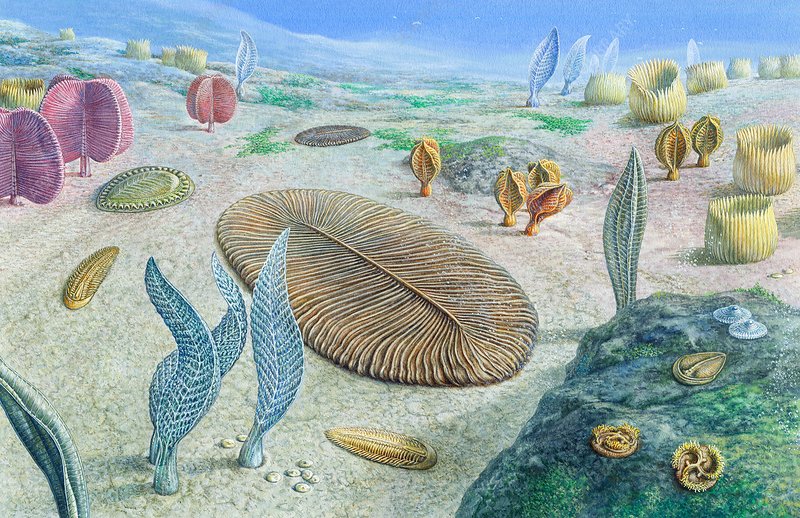
The Victorians couldn’t have known, of course, The abundance of life in the lifeless rocks – The explosion before the trilobites, With multicellular building blocks. The fossils are rare, but they are there, In Charnia and Kimberella. What were they ? We don’t quite know – Foundation in the stony cellar. Dickinsonia, Cyclomedusa, You flourished, then you died away. The Boring Billion birthed you all – Our great ancestral stray.
Yet still the Paleozoic begins, Long after the glories of Avalon. That makes no sense, not now we know What the Cambrian was built upon. Dismissed as children’s stories, We have had to wait a long long time – Yet the Pre- was not so pre at all, Its oceans teemed with some strange slime… The end of the Cryogenian, that’s the border, That’s when things got big – Spriggina and Aspidella are waiting – All we have to do is dig…
This illustration seems to come from The Burke Museum, but alas I have no idea who drew it.
Limb-Slungs & Beam-Shanks
Some daddy-longlegs are spiders in cellars, And some daddy-longlegs are leg-craning flies. Some are strange scorpings who walk in the harvest, But all have more leg than they should for their size. Some daddy-longlegs are tip-toeing fellers, And some daddy-longlegs are mummies-on-stilts. Some have evolved from their cousins the farthest, But all are as lanky as when they were built.
I wonder if Carl Linnaeus smiled As he coined a name for a water-snail As if a windmill in a gale. Perhaps the twist of its shell beguiled, But given its lack of energy, He must have seen the irony ?
Forever dubbed forever more By a name befitting of cavaliers To a bug with neither joints nor gears – In the age of steam, as the turbines roar, What did they think of their silent whirlwind, Forever failing to twirl and spin ?
But maybe our Carl was being sublime ? As cyclones on their well-greased heels, Like plugholes, perhaps, or waterwheels, But they did so in their own sweet time – Forever in motion, the will that drives, Revolving their shells throughout their lives.
Perhaps Carl was thinking of the popular hobby of snail racing ?
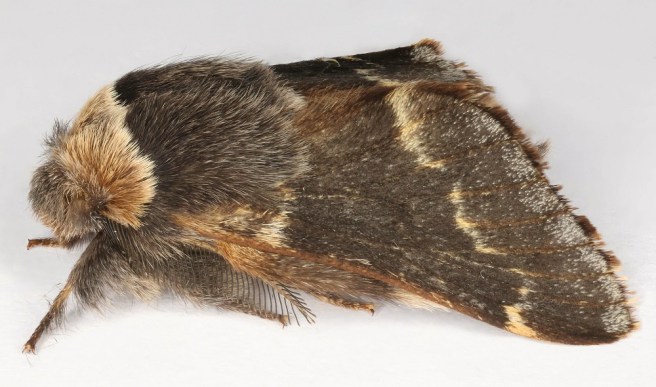
December moths are loyal to their name, Defying Autumn’s dying – Hugged in furs, as charcoal as the nights, These moths keep flying – And yet, they earn so little fame, From folklores, who ignore them – However much they circle fairy lights With soft decorum.
They’re on the wing for Halloween, Yet bats have all the glory, And then they’re just too dark to stake a claim For the robin’s story. These spinners of the Winter slip between, Ours fears and holy writ, But touch on neither, failing at the game – They just don’t seem to fit.
All the Summer, lappets gorge on oaks, Unnoticed then as well – Pupating into eggars with the acorns, Till a colder spell. They hatch as the dead are donning cloaks, As if by frost released – Then die at the time of the manger-born, From fasting through the feast.
Some plants only germinate through fire, Waiting out the years Until the tragedy appears. They need the forest hotter, tinder dryer, Even dropping oil To make a tarpit of the soil. But there hasn’t been a fire through here, I’m told, In fifty years of cold – I guess these trees are all the same-age-old.
Their life-cycle needs the flames be fanned, They need to taste the char Before they’ll shoot a single spar. They need apocalypse to sweep the land To birth their phoenix seeds, To grow within the ash of weeds. And there are even beetles who must birth Within the hell-scorched earth, (Though salamanders don’t, for what it’s worth).
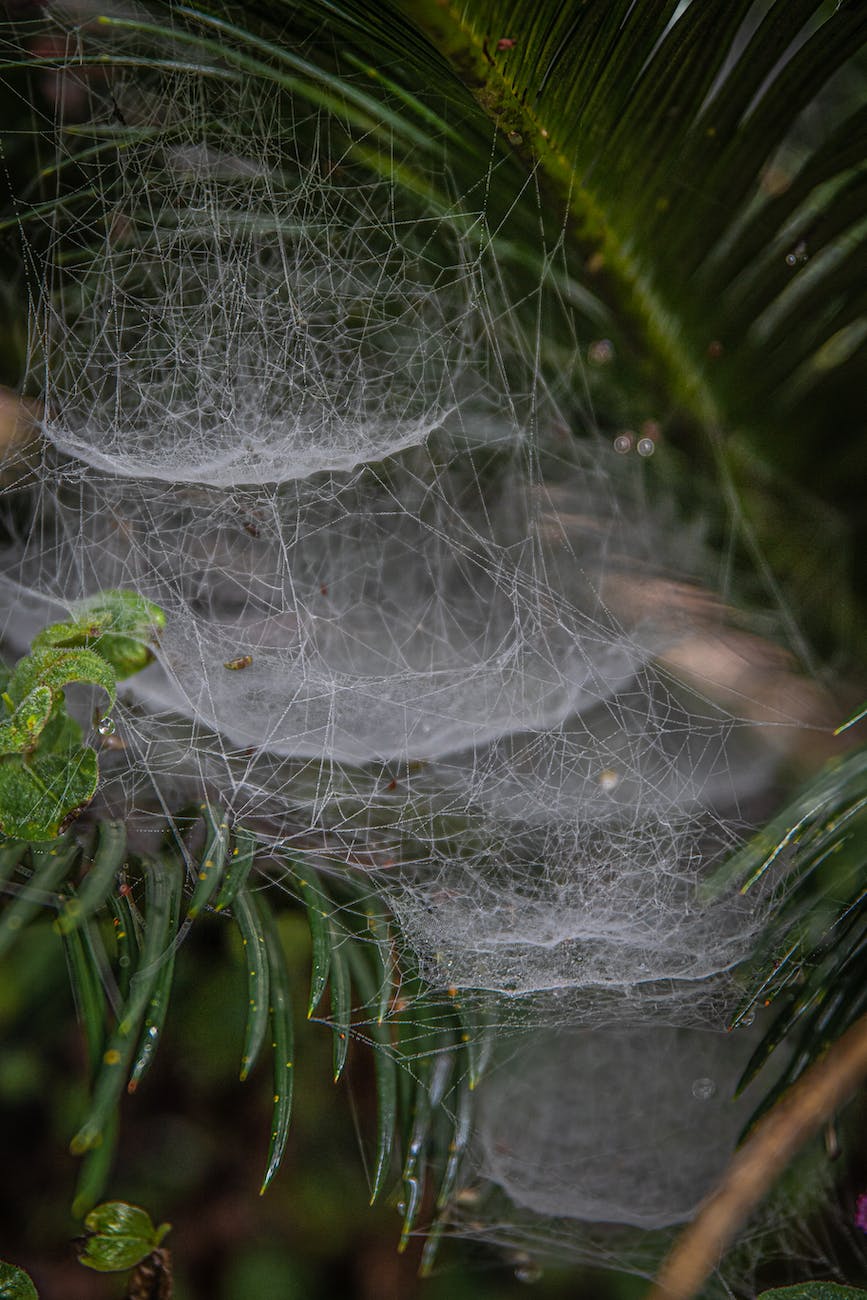
Spiders are only one-by-one, Each web is a bachelor-pad – We don’t see social types a ton, Which might make the squeamish glad ! But how then does a spider dad Make a brand new spider son ? Some sexy-togetherness must be had To see that the deed gets done ! So come the Autumn, see them run On the carpet, ev’ry lad, On the hunt for a lady, to have some fun, When the urge to breed gets bad. Usu’lly, company drives them mad – Their perfect number is none ! But once a year, they get up and gad From the loneliness they’ve spun.
Spiders are litterbugs, Leaving their webbing just hanging around. And yet, if one tugs, Then a derelict ruin is all that is found. Covered in dust, And discarded skins, and husks of meals – They raise our disgust With the waist that their indolent lifestyle reveals. Could something not eat this ? It’s all made of protein and going for free. Why do we dismiss Such a feast of spaghetti and gristle for tea ? Spiders are all blight Who wontonly turn all our corners to slums – But could not some dust mite Come sweeping up after them, feeding on crumbs ?
Double roses are showy but barren, Turning stamens into yet more petals, Living the bachelor life. Even if they still make pollen, Bees can’t push through all those petals, Leaving them with no midwife. Yet these are the roses in bouquets, To symbolise our multilayered love Of loud and overdressed grooms. But dog roses are where bees graze – They’re wide-open with stamens full of love And hips full of future blooms.






 Rhyming Couplets