My poor, befuddled Easter cactus – Sometimes early, sometimes late, But never can it bloom in practice On the actual Easter date. We set a day for April Fools, We set a day to change our clocks But Easter follows loony rules: The first full-Moon from Equinox.
Early April’s worth a shout, I reckon, for a stable day – It’s warm enough for going out, And far enough from busy May. But all this shifty, ancient mess With sense as empty as the tomb, Is why my cactus cannot guess The week in which to bloom.
Snowdrops, pale and shy and still, As if they’re afraid to face the bracing breeze. Downcast propellers, silent in the chill, So loathe to disturb the hush beneath the trees. Always huddled together in their crowds With the neck of a swan and the wimple of a nun; Tensed to bare the worst from the clouds, And wilting away in the first warmth of the sun.
Christmas is done with, The New Year is come, The feasting is over, The outlook is glum, Our work is resumed And the weather is cold, So uproot the glitter And out with the old.
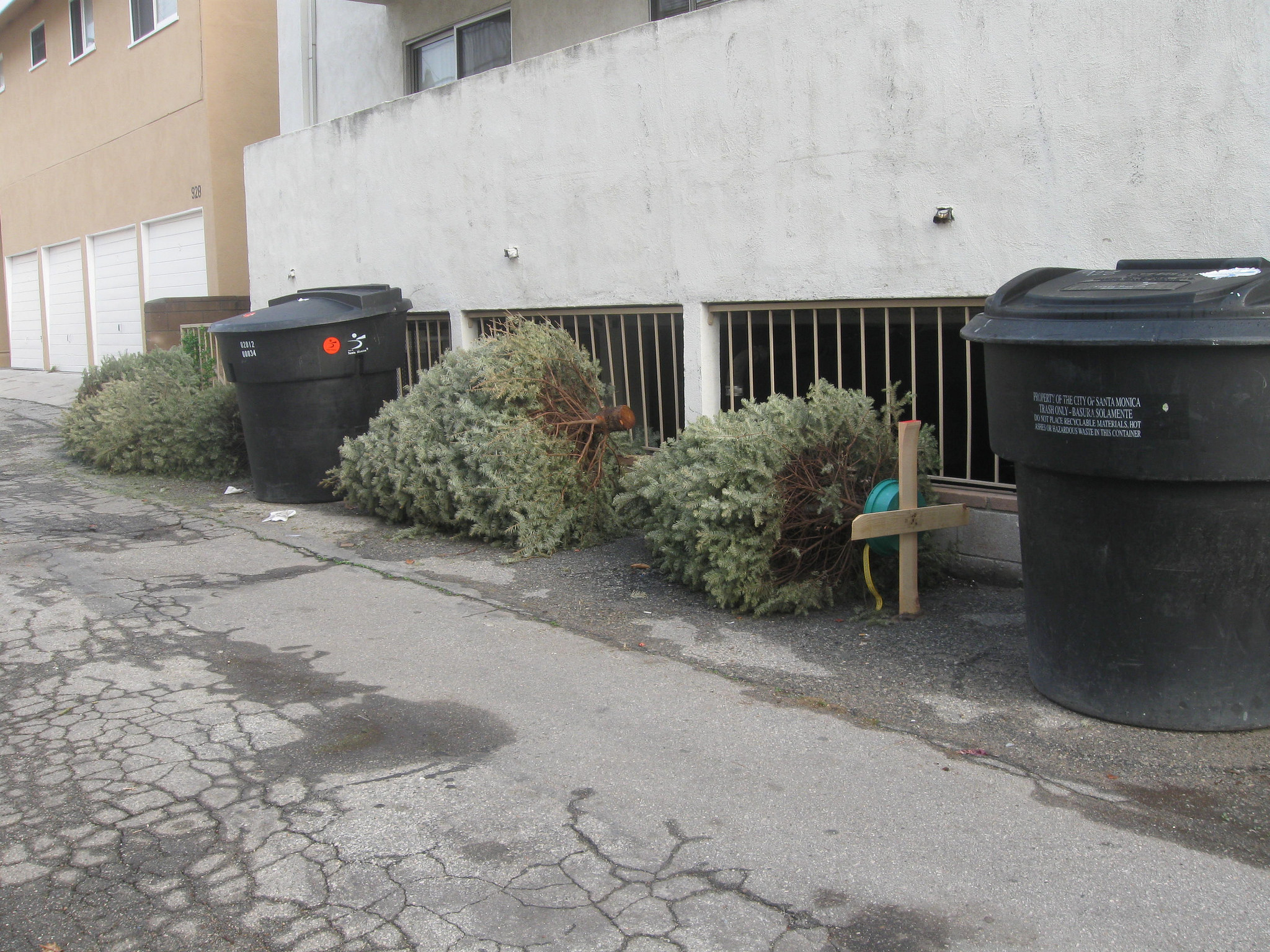
They’re sprouting on pavements And swarming on greens, They loiter on verges Like unruly teens, They cluster round dustbins And litter our lanes – Straggly and soggy, These sorry remains.
They served us so proudly A fortnight ago, They warmed up the winter And gave us a glow. But now they are cast out With scant a goodbye – Destitute, homeless, And waiting to die.
The council is working To round up the strays And shred them to chippings For Agas to blaze, Or sit beneath see-saws, Or borders to don. By Twelve Night they’re coming, By Burns Night, they’re gone.
The People’s Trees are greenest green – They’re marching forth since Halloween. On chilly days and snowy nights, They proudly bear their fairy lights.
So raise your verdant branches high, And hoist your red star to the sky – Though humbugs scoff and scrooges sneer, We’ll keep the green tree growing here.
When Christmas time is ruinous, With profiteers pursuing us, Their simple charm bring us delight, And help us through the silent night.
So raise our battered spirits high, And help us keep our powder dry. Let bankers curse and workers cheer – We’ll keep the green tree glowing here.
Oh Tannenbaum, oh Tannenbaum, For needlekind we’re pining. Oh Tannenbaum, oh Tannenbaum, We’ll keep the green tree shining.
The leaves all grow each spring And the leaves all fall each autumn, But there’s some leaves firmly cling While the rest – the ground has caught ’em. I think the final leaves outstanding Wait till last, to clinch a nice soft landing.
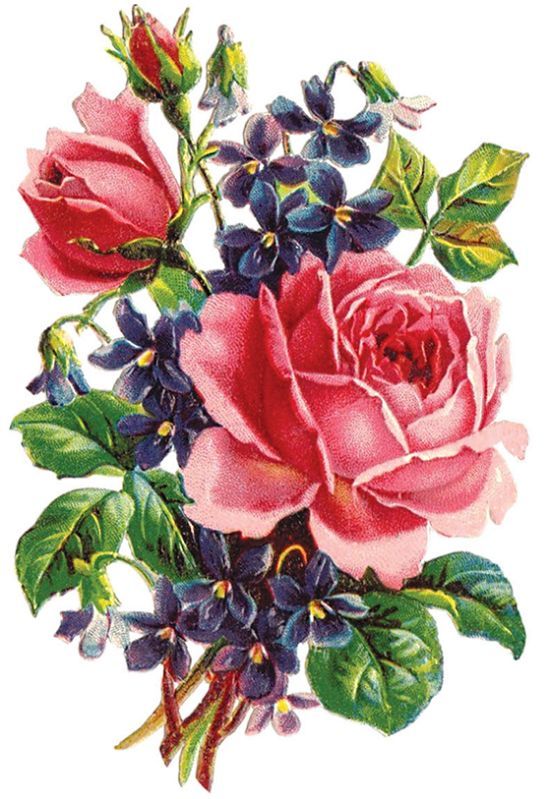
1. Roses are red, And violets are blue… Except to a bee Who can see in UV – Who knew ?
2. Roses are red, And violets are blue – Or so it is said, But I wonder if true ? Perhaps in the future – But for a while yet Most roses are fuschia, And violets are violet.
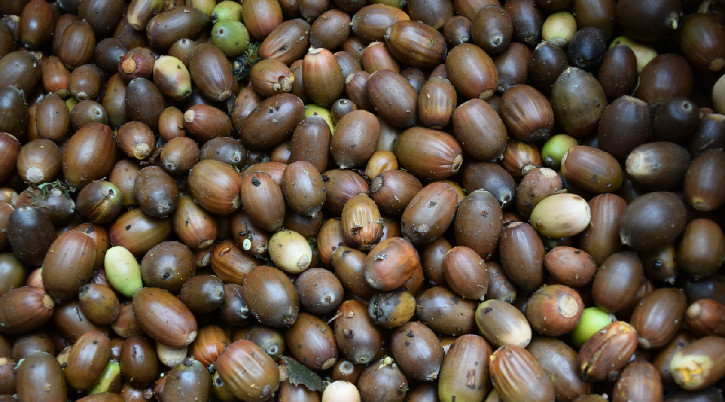
Acorns crunch beneath my boots – There’s far too many for the looting squirrels, howe’er keen. Are these too green ? Are these too brown ? A breeze shakes down a hail of fruits – I pick a fresh one up, and pop it from its birthing cup, And wonder if an acorn dreams Of pleated barks and soaring beams – And what if ev’ry one of these took root ? This lane would be athwart with trees ! Just think of how a trunk might shoot From ev’ry acorn, where they lay: At most an inch or two apart, I’d say – How long before their saplings start To touch, and merge, from verge to verge, Until a hedge of oak will choke This ancient right of way ? But if I take one home with me, Perhaps that wall will bare a gap Where flows no sap and grows no tree – But as I turn to leave, I see Another drizzle fill the lane, And when I try to find my spot I cannot – all is acorns once again.
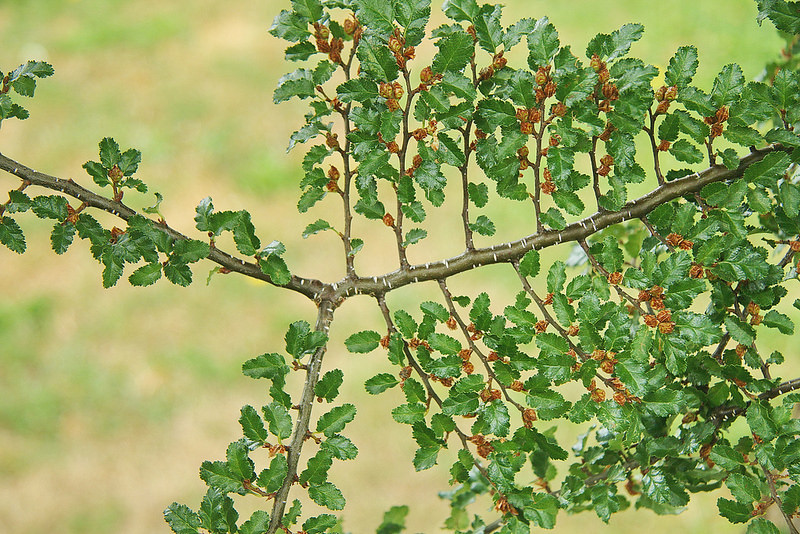
They call him the Antarctic Beech, And they call him False Beech too, He’s somewhat beechy, that bit’s true, Although he’s rather false as well: A cousin, not a brother, truth to tell. But as for the Antarctic, hell – That one’s a real reach !
Antarctic Beech is no such thing, He cannot cross the Southern Seas – He clings to Fuego, looking out, The southernmost of all the trees. He braces up to southerlies That stunt and sculpt and knock about.
And so, each slow September-Spring He wakes, and adds another ring. But far five hundred miles beyond, His boughs bow-out to fragile gloom, Where only mosses raise a frond, And only grass and pearlwort bloom.
Now far to the north, he’s also in sprout: An immigrant hardwood who’s hardy and stout. So the Antarctic Beech is the king of the Faroes – Where’er the cold air blows, That’s where he grows. Though not in all lands that are under the Plough, But only as far as the cold will allow: The poles are forever beyond his long reach – Forever the sub-arctic beech.
The Horn’s as far as he may go, But fair’s fair, fossils have been found Beneath the harsh Antarctic ground – But as for living species: no. But oh ! The Antarctic beech – what a star ! The tree to the south of the south of afar ! So yes, we all know that his claim is a lie – But how could we let such a name pass us by ?
My garden is a rabble Of the pushiest of weeds – I wander through the scrabble Of these self-selecting seeds. I really should uproot them, But in truth, I’m loath to scoot them, When they bring the place alive, alive, Where lesser blooms won’t thrive.
I love the weeds for their weediness, For their entrepreneurial greediness, With none of your hot-housey neediness. Keep all your grasses and sedges and reeds, Just give me a garden of nothing but weeds.
My rose-bush is no stunner, And my aster’s called it quits. My beans have done a runner, And my melon’s gone up-tits. But see my clamb’ring bramble, And my bindweed web and ramble, And my nettles stretching high, so high – At least they’re never shy.
I love the weeds for their weediness, For their never gone-to-seediness, With none of your quaint little tweediness. Keep all your caulis and marrows and swedes, Just give me a garden of nothing but weeds.
With maggots on the rise, And with aphids by the score, I hope to soon see butterflies, And ladybirds galore. So when the slugs come feeding, They just help me with the weeding. Those bugs may all belong, belong, But so does blackbird song.
I love the weeds for their weediness, For their naught-to-invasive speediness, With none of your lack-of-succeediness. Keep all your cultivars, hybrids and breeds, Just give me a garden of nothing but weeds.
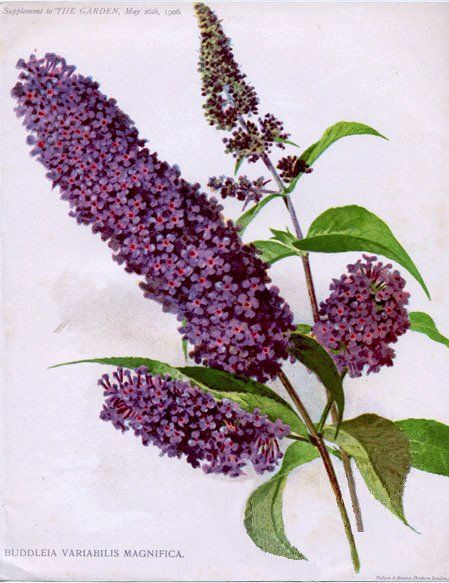
Buddleia ! Buddleia ! Ev’rywhere, buddleia ! Growing in gardens too small to contain it. Growing in wasteland and making it muddier – Railways and quarries won’t even restrain it. And then in July, see it all turn to violet As thousands of flowers bring stamen and style. Soon, we think, soon comes each painted-up pilot To flitter and dazzle and make it worthwhile. But here in the suburbs, with bushes amassing, There’s plenty of purple, but no Blues in sight. Just when did we last see a butterfly passing, Aside from the clothes-moths and odd Cabbage White ? Here in the suburbs, these shrubs ramble well, Yet we won’t see a Camberwell Beauty near Peckham, Nor ravenous inchworms descending to wreck ’em ! So no Painted Lady, no Marbled and Tortoiseshell, Won’t see an Argus, a Skipper or Admiral. Monarchs and Emperors too have set sail, So where the Fritillary ? Wherefore the Swallowtale ? Coppers and Brimstones have melted away, Hairstreaks and Ringlets receded to grey, The Gatekeeper’s keyless, The Speckled Wood’s treeless – A banquet of nectar, yet still not a single gourmet. So where strut the Peacocks we avidly spy ? Comma and Map and Wall, Where do their larvae crawl ? Where do their mothers all gravidly fly ? Small Heath and Meadow Brown, Not to be seen in town – Naught but irruptions of davidii ! And soon it’s September, and blooming is ending, And then they’re just weeds that need far too much tending. Buddleia ! Buddleia ! Ev’rywhere, buddleia ! I tell you, the purple invasion is pending…





 Rhyming Couplets