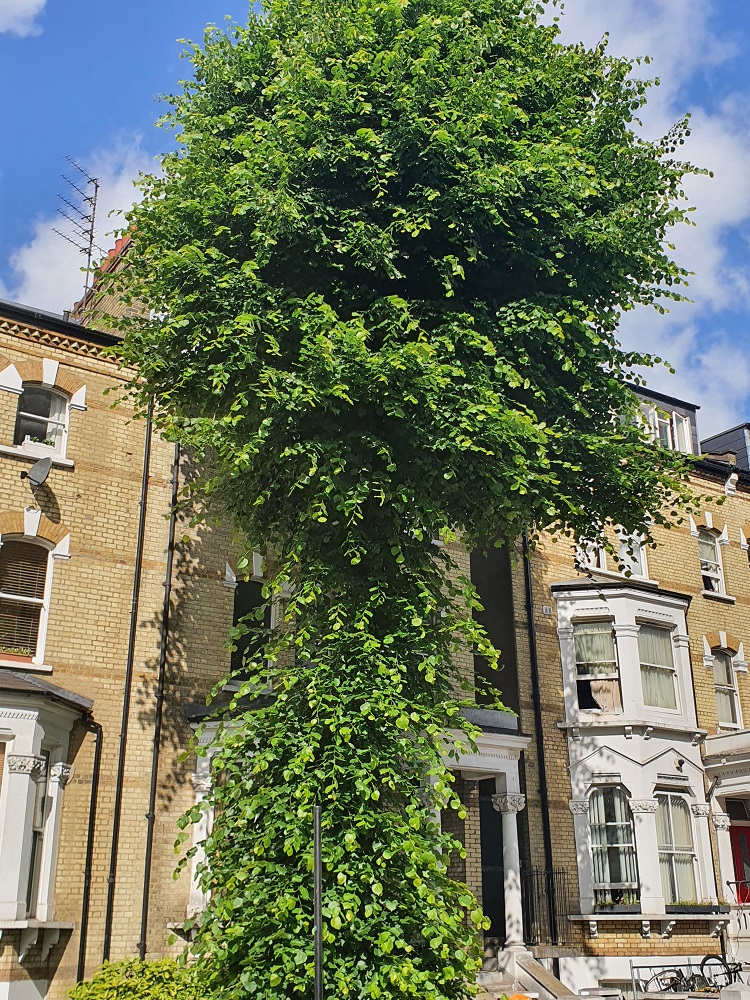
Street trees, lining suburban streets From Wandsworth to Walthamstow. Planes, of course, and sycamores, Wherever the middle-class grow. Full of rustles, full of tweets, From Hackney to Acton Town, To shade the cars and the corner stores Till the council trim them down.
Street trees, lining suburban streets From Kidbrooke to Cricklewood With tear-off strips and missing cats In a vertical neighbourhood. Full of squirrels and parakeets From Hampton to Harringay Then shed their leaves on the garden flats Till the council sweep them away.
The tallest, broadest sycamore in Dorset Is a stately tree – Beloved by Lords and Parliament, A pillar of society – He’s tended by The National Trust, As English as can be, In a village with a funny name, And a bloody history.
Yet sycamores are not a native, Bringing European fruits To challenge all the local trees With non-conforming shoots. These upstarts will not know their place, Their seeds are new recruits, And down into the bedrock They have planted creeping roots.
Yet, for all their canopy may shield, And union hold fast, They do not live so long, these trees, Their shelter cannot last. And though the status quo may praise, When safely in the past, They’ll gladly chop his children down And root him out at last.
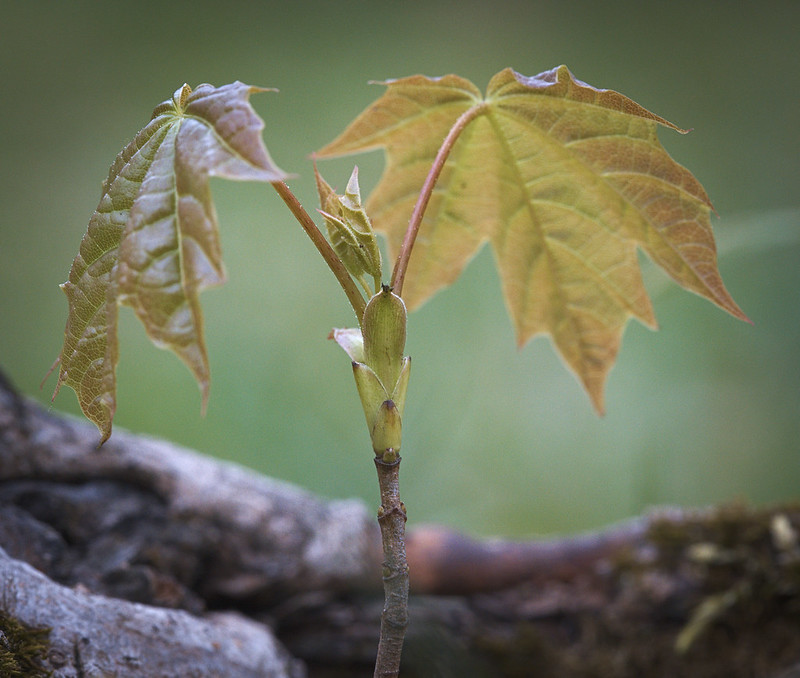
‘Sycamore‘ is a restless word. It appears to have started life in Hebrew, before the Greeks noticed how much it coincidentally sounded like their words for fig-mulberry. From there it made its way via Latin and French to English, where it was applied to a newly-introduced species of European maple tree. Confusingly, the contemporeous authors of the King James Bible used it several times to refer to the original fig tree. And then the Americans took the word and slapped it on a type of plane tree quite unrelated to either (although in their partial defence, the leaves of the plane do look a very maple-like, as even Carl Linneus noted in his name Acer pseudoplatanus). The one thing the three trees seem to have in common is their shade-giving spread.
Meanwhile, it is also a surname – apparently deriving from the village of Siglemere near Bramford in Suffolk, from *sīcel ‘small stream’ + mere ‘pool’. So in seems that my eight-year old self was quite wrong to insist that they were called sycamores because their seed-cases were shaped like sickles…
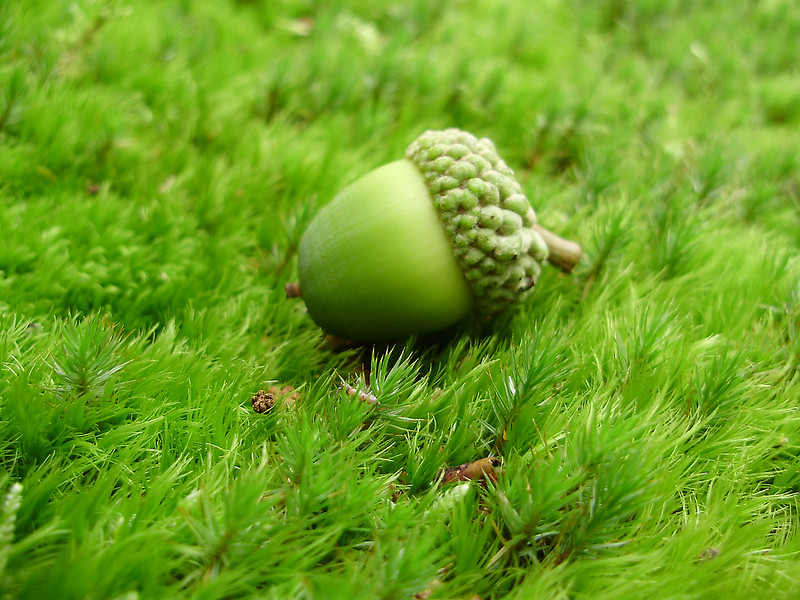
Only July, and the first acorns down, Here and there on the lawn. Windfalls, surely, they don’t look mature – Hard to imagine an oak will spawn From these early-birds I found. They look too lean, too small and green To be a mighty giant’s dawn. Only July, and the first acorns down, The tree advances a pawn.
Though now I look around, I see An oak with its first grey hairs – Of little concern, but a leaf on the turn, Like unattended Summer repairs On an old and lazy tree. And there on the lawn, the start of a yawn, A warning from up-the-stairs – Only July, but the prep-work is the key, To order its affairs.
The thing about trees is, Trees are big, But ev’ry trunk Begins a twig – They’re building height From light and air, Just add a little rain, And there ! They’re springing-up, Each rapid-grower – Mushroom-like, But much, much slower. Eat the sunshine, Drink the breeze – They’re timber-making Factories.
The thing about trees is, Trees are tall, They stretch and tower Over all. But that has made them Litter bugs – With petals, pollen, Seeds, and slugs, It all comes down, And blows about – From fresh air in, To dandruff out. These trees are yobs And carbon thieves ! And come the Autumn, Come the leaves…
The history of trees is that The trees are not a clade – They spring-up from the strangest places, Evolution-made. So beech and birch are boring, All their family are so wooden, But others have the oddest kin And ev’ry one’s a good ’un. They’ve found the same solution Independently, you know – When stretching for the sunlight, well, There’s just one way to go.
So apple trees are strawberries That built a sturdy trunk, Yucca palms are bluebells If a bluebell were a hunk. Acacia trees are runner beans That bolted in their teens, While rubber trees are spurges That have stretched beyond their means. There’s only so much energy, And trees don’t like to share – They’re hungrier when taller, But their mouths are ev’rywhere !
So linden limes are cottons That have fluffed-up in the streets, And oranges are really rue Whose bitterness turned sweet. Finest teak is peppermint, That’s why it smells so nice – And eucalyptus is a clove That added too much spice. The forest is a battleground, And ev’ry plant must fight – So trees is what you always get, If what you get is height.
I’m not very good at identifying plants on sight, but I can thoroughly recommend the app PlantNet. I’m also not very good at identifying crabs, which is hardly surprising.
I love to grab a handful of holly-leaves, Pale and tender in the Spring, Before they’ve darkened, hardened, sharpened, Tanned their leather good and bent. I love to hug a branchful of holly-sheaves, Ere each shoot has gained its sting – To shakes its hand with good intent, To thank it for last Yule well-spent.
In Spring, I can sniff-out the sap as it rises, And comes overshooting the branches and twigs Of the cherries and lindens and suburban figs – A street full of pollen – my nose recognises That Spring has returned to the gardens again, In the asphalted forests of wychelm and plane. My hay-fevered neighbours are rather less happy, But I scent the chestnuts, the sweet and the horse, And the avenues of the acacias, of course ! Municipal headiness leaves me quite sappy – The syrups of sycamores, weepings of willows, That’s wafted by birdsong in sugary billows.
I am the Lord your God, And I clearly lay down word and rule – Do not interbreed your cattle, Nor produce a hybrid mule – For if your beef is tough, Then that is how I mean your beef to taste, Do not allow these foreign cows To make your home-grown bulls debased. Don’t raise a mule, but make do with an ass, And a smaller pack. Don’t mix your strands, But keep your garments pure upon your back. Don’t weft your linen with your wool, And mingle threads within your hem. And though these laws be heavy, Use no mule to help you carry them.
I say again, I am your Lord, No things of yours shall fraternise – Don’t plant your field with many seeds, Or who can know what shoots may rise ? Let pagans plant their carrots with their leeks To keep them company, But I say, let yours suffer by the fly, For it is sent by me. Now let the weevil dine on fruits and grains, And slugs reduce your yields, And praise my swarming locusts As they take your monocultured fields. Do not co-plant companions, For all your crops must stand alone – Just like my hungry chosen people In this wilderness I’ve sown.
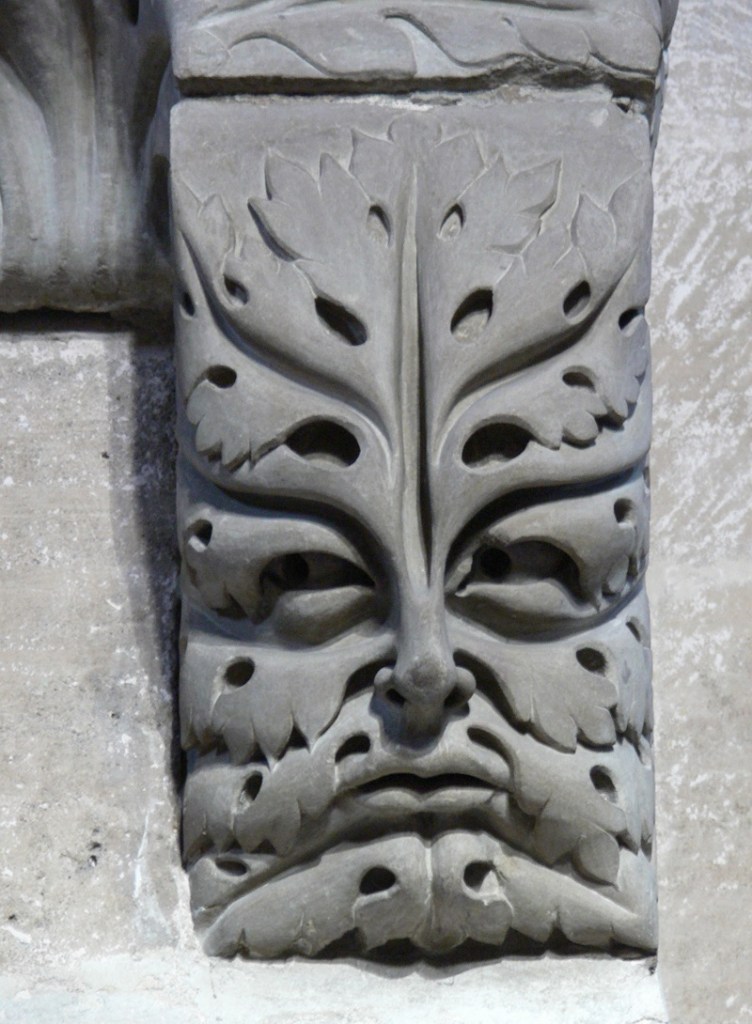
Green men – as grey as stone, All talking with their mouths full, Look in any ancient church And you may find a houseful. Part of the grotesque gallery To keep watch on us mortals – Lurking round the capitals, And hanging from the corbels.
Green men, as Pagan as they sound, As yews and birches, As nature-sprites whose temples got rebuilt As parish churches. Or are they jolly demons, greening Hell And sprouting lies ? They don’t look very evil, though – But rather rustic-wise.
Green men, as vigorous as weeds Where priests don’t mow – Though Jesus doesn’t mind, it seems, Content to let them grow. So are they harvest gods of yore, Or mistletoes in larches ? Or are they merely hunkypunks, To decorate the arches ?
Ev’ry year, they foist an austerity tree upon Trafalgar Square – Begrudgingly, they hoist it up with as few fairy lights as they can Just straight-up-and-down, with no helter-skelter, or swags, or laissez-faire, And only white, as if other colours fall foul of a bureaucrat’s ban. It looks a bit like a deep-sea comb-jelly, wilting embarrassed under our gaze. It even makes the Fourth Plinth look impressive – now there’s a paradox ! Haven’t we any goddam civic pride, or is that taboo these days ? Honestly, Oslo, we treat your heartfelt gift like a packet of socks. Thus the status quo avoids the threat of tinsel, and regulates ev’ry star, So the branches are bare of baubles, and of candy canes there are none. I guess it can’t outshine old Nelson, we need to remember who we are – For we are stoic, joyless Brits, and we mustn’t have too much fun.
As to how come there’s a tree in the Square at all, see here.






 Rhyming Couplets