The first to blossom was Daisy, Yet still a rather homely lass – Though pretty in a common way, She spent all year within the grass
The next to blossom was Iris, Bursting out in the warming Spring – Showy, delicate, desirous, Over quickly – just a fling.
The next to blossom was Poppy, A gothic girl in crimson red – A heady mix of sharp and soppy, Fascinated by the dead.
The next to blossom was Rosie, A redhead maid with cheeks of pink – Nothing about her was boring or prosy, And lasting longer than you’d think.
The next to blossom was Heather, Just as the leaves were starting to turn – Sturdy and tough, whatever the weather, And hiding a heart just waiting to burn.
The last to blossom was Ivy, Much maligned, but on the climb – Her bauble buds were small though lively, Coming of age at Christmastime.
Last Autumn, all your leaves came down – Just like they must each year. But seeing them when dead and brown, And unlike all the rest in town, Is just too late, I fear. I should have seen them all when green ! But now I wondered – what tree had we here ?
Big, they were, the largest, broadest leaves In all this urban wood And finger-lobed, for holding-up the eaves, And poking now from gutter-sleeves About the neighbourhood. My thought was fig, with leaves that big, Yet far too gropey to do Eve much good.
But I, alas, might never even know, For once your leaves were shed – The shears came out and brought you low, As all your branches had to go And left your trunk for dead. No tree could sleep with cuts so deep – You surely won’t be rising out of bed…
April was well underway before Your twigs began to sprout. And then, such tiny hands they bore, As ev’ry day a couple more To prove you yet were stout. At this rate Fall would claim them all Ere half the sun-grab hands were even out !
But then I looked a little lower, Where some suckers crowd the roots – While your wounds may heal the slower, Round your foot you’re still a grower Shooting out a dozen shoots. Succour feeders, weed succeeders, Sucking sunshine into fruits.
May saw plenty spindly upper twigs – A hedgehog on each bough, To carry leaves, so close, so big, As if they’d snap right off the rig, But seemed to cling on anyhow. As June grew late, they put on weight As fleshy forearms now.
By summer, something stirred in me, A memory about the bumps That swell no larger than a pea – They’re really next’s year’s fruits-to-be. But here, of course, there were no lumps – For what life stirred was secateured Down to your barest stumps.
So will I have to wait another year To see your fruits in Fall ? I wonder if I’ll still be here… You will, of course, that much is clear – You’re bursting branches big and small. Unless your twigs are lacking figs Because you never were a fig at all…
Reapers sweep the scythe And sheafers bush the sheaf – Gathering the harvest, Gathering the grain – Threshers thresh the flail To tear the seed from leaf – Gathering the harvest, Holding off the rain – Winnow-women winnow, And siever-maidens sieve, Prizing out the pearls That the golden ears give – For to the corn we’re born, And by the wheat we live. Bringing home the harvest down the lane.
Once it took a village, And ev’ry boy to spare – Gathering the harvest, Stooked and ricked and mown – Now it takes machines, With no use for man or mare – Gathering the harvest, Gathered to the bone – Children of the corn And cottage-kitchen wives Are spared the broken backs And spared the broken lives, With Summers never shorn By the sweeping Reaper’s scythes – So bring us home the harvest on your own.
If you want a Russian Thistle, All you have to do is whistle – In they tumble on the breeze. An 1880s stowaway, A foreign sprout who’s here to stay By blowing ever West with ease. Not a thistle, but as hairy, From the steppes to claim the prairie, Infiltrating cowboy lore. Full of thorns and full of seeds, These drifting immigrants are weeds Just made to be a metaphor.
The first recording of a Russian Thistle in America is from 1877 in South Dakota, but ‘seven’ has too many syllables…
Sunflowers are conformists – Growing equally tall, Facing the same direction – See one, see them all… Until a shoot is pampered, And displayed against a wall.
The clones out in the fields They all droop their heads as one, But the show-offs in the garden They are staring at the sun. But which will yield us seeds and oil Once the reaping’s done ?
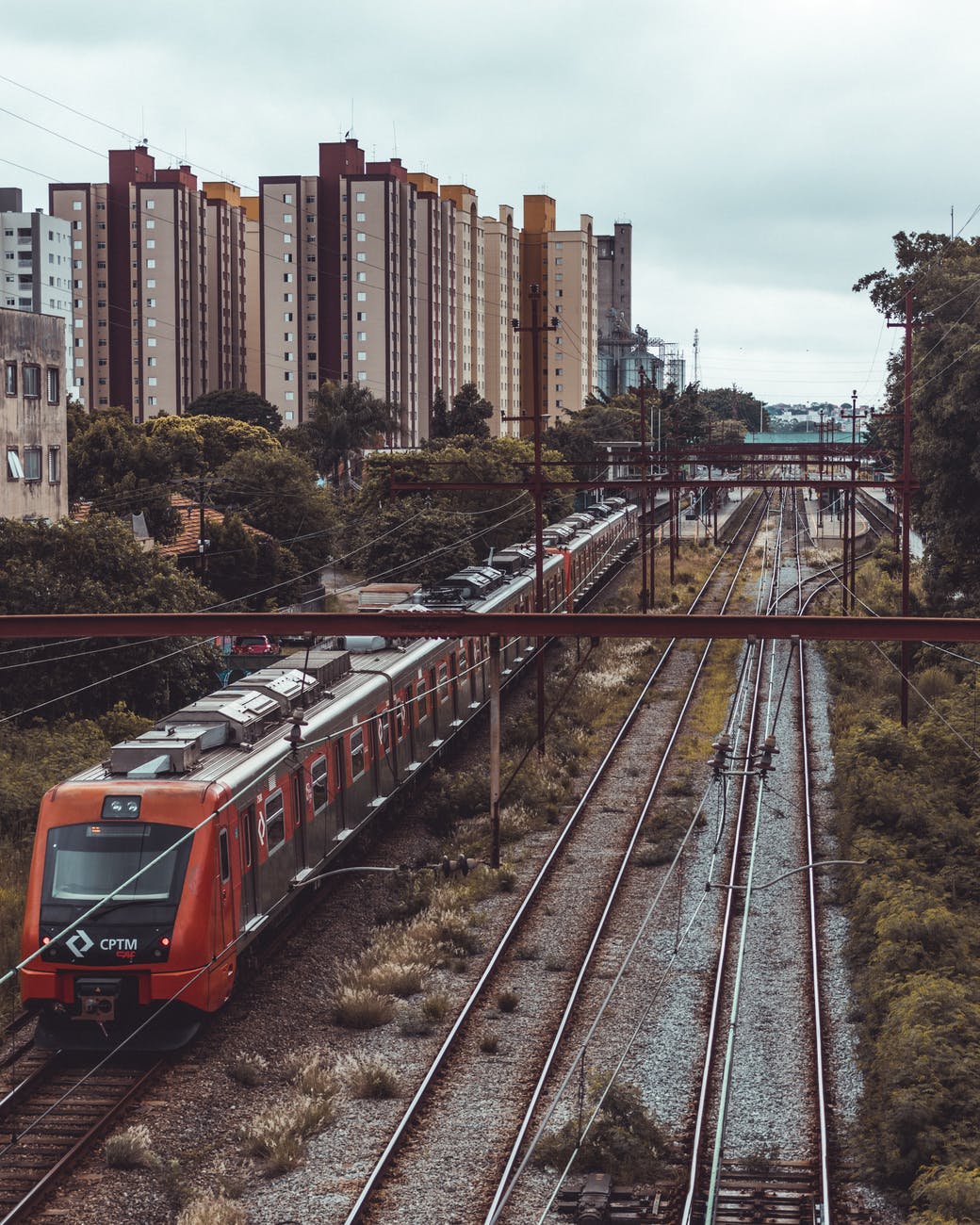
Every morning, all Summer long, We tie-less masses struggle aboard The dawdling trains in the hungry platforms, Like some suburban zombie horde. Then staring out at rusty sidings, Ragged lots, and the empty sweltering sky, As the weaving rails must dance and join, And the shapeless buddleia bushes go by.
Every evening, all Summer long, We shirtsleeve masses of sweaty sardines Cram airless trains on commuter corridors, Staring at space or staring at screens. Some folks ride on gilded viaducts, Mutely surveying the city from high, While we in the troughs watch the overgrown fences, As grasping bindweeds bushes go by.
June is full of unexpected flowers – We shouldn’t be surprised at such, We know these buds exist in theory, But we never think of them that much. I don’t mean roses or hydrangeas, Where the blooms are solely why they’re bought – But rather in the offhand places Where the flowers are an afterthought – The lively sprays of privet blossom, say, Or potato’s multi-coloured spawn, Or dead-nettles with snakeheads raised, And teasing frills of clover on the lawn. For ev’ry showy thug like bindweed, There’s small-and-many thyme and poison ivy – Where oxeyes lord it over the daisies, The plantain spikes are defiantly lively. A shock of yellow in the verges, Wastelands looking oddly brisk and bright, And brambles showing their softer side, While shy little sundews and chickweeds fleck with white. They don’t do it for us of course, These unassuming emissaries – And we’ll forget, then be surprised again By the Autumn’s unexpected berries.
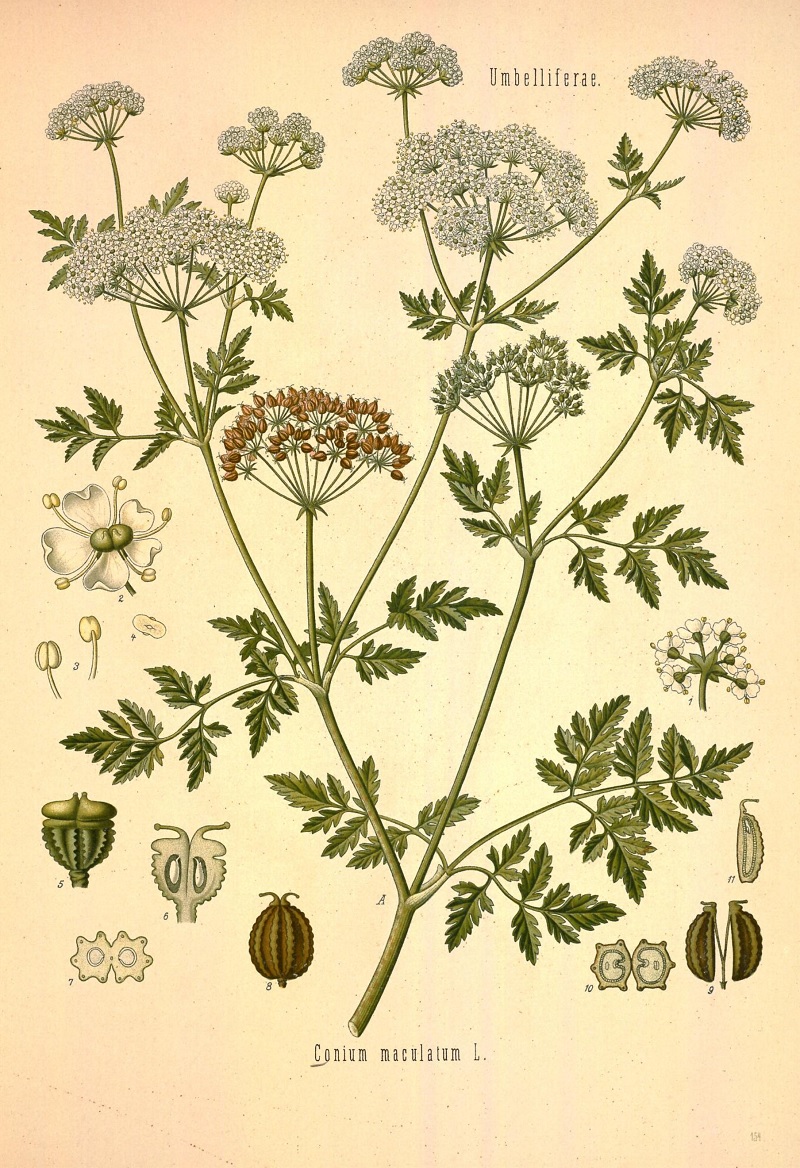
Hemlock, as shown in Medizinal-Pflanzen (Medicinal Plants) by Franz Köhler
One Plant’s Meat is Another Man’s Garden
Hemlock won’t kill us, Despite all its poison, (And not for the warnings that textbooks all parrot.) For why would we eat it, right there in the hedgerow ? It doesn’t look that much like parsley or carrot.
Since when do we sample the leaves and the berries Of any old weed in the wild ? How bizarre ! We buy all our veg from the market and grocer, Who hopefully know what the diff’rences are.
And meanwhile we cherish the monkshood and foxglove, And nurture their weapons without any fuss. But hey, there’s no danger admiring their flowers, For light cannot carry their toxins to us.
Buttercups, daffodils, rosemary, poppies, And holly and ivy, and conkers and yew. We’re much more at risk from a field of grain – From the carbs that we bake, or the booze that we brew.
Animals know well to leave them alone, Whether ragwort to nightshade – just ask any herder. And humans will likewise spit bitterness out – So we won’t die of hemlock…unless it is murder !
Forests gone Stop Trees no more Stop From Formosa down to Singapore They hacked them down Stop Shore to shore Stop Felled them for the precious sap they bore
Send a message Round the globe To spare the trees that let your message probe Stop Send a message In good faith To spare the trees that keep your message safe Stop Send a message To the top Or else some day all messages must Stop
Perished rubber Turns to brittle Gutta-percha won’t degrade a little Latex stretches So does leather Gutta-percha keeps its form forever
Send a message Through the gloam To spare the trees that bring your message home Stop Send a message Dit by dah To spare the trees that speed your message far Stop Send a message Spare the crop Or else some day all messages must Stop
New to the village then, hey ? Ah, the cottage of old man Beck. All that garden in the way ! Well, good luck keeping that in check…
Tell you what, let’s take a gander, Milk and two spoons, lovely, cheers. Of course, it used to be much grander – But gone to seed for donkey’s years.
These flowers like potatoes… Nightshade ? No, it’s bittersweet. Oh, don’t look so relieved mate – Those are just as deadly if you eat.
What’s that, you hope to keep some bees ? I really wouldn’t, were I you – Cos when they pollinate all these, It turns their honey deadly too !
Now here’s a fine old holly tree, Though he could do with quite a trim. Yes, he’s a he – a male, you see, You’ll get no berries out of him !
Your buddleia is running free, In crumbled mortar, rotten sills, And, yes, between your slates, I see. Pretty flowers, massive bills !
And stonecrop on your gable-end – Hanging mid-air, what a champ ! But best to hoick it out, my friend, For room for roots is room for damp.
I see you’ve last year’s veg galore, All overgrown and moulted. Too late to shut the greenhouse door, Your cabbages have bolted.
Your bindweed bullies ev’rywhere, Insinuating strangling strands While its triumphal trumpets blare – A cheeky chap with wand’ring hands.
A shame about the knotweed, though, And ragwort too ! And bracken fronds, And ivy, nettles, thorny sloe, And duckweed choking off the ponds.
This hemlock – best not touch it, natch – All snowy-flowered, poison-flecked. Much like your giant hogweed patch With last year’s corpses still erect.
Your wild tobacco’s quite a hit, And morphine poppies look a treat – Oh don’t sweat guv, they’re quite legit – Though weed-out all your weed, toot-sweet !
And are those shrooms I see in spawn Between the death caps ’neath the trees ? And fairy rings across your lawn, And stinkhorns flavouring the breeze.
But say, your dandelions roar ! A joy, a golden-yellow sea, And ev’ry year, there’s more and more – Old Beck would brew the leaves for tea…
Speaking of which, is there more in the pot ? Well, can’t stand jawing round here all day. I’d say you’ve got one hell of a plot, To keep you busy for many a May.







 Rhyming Couplets