
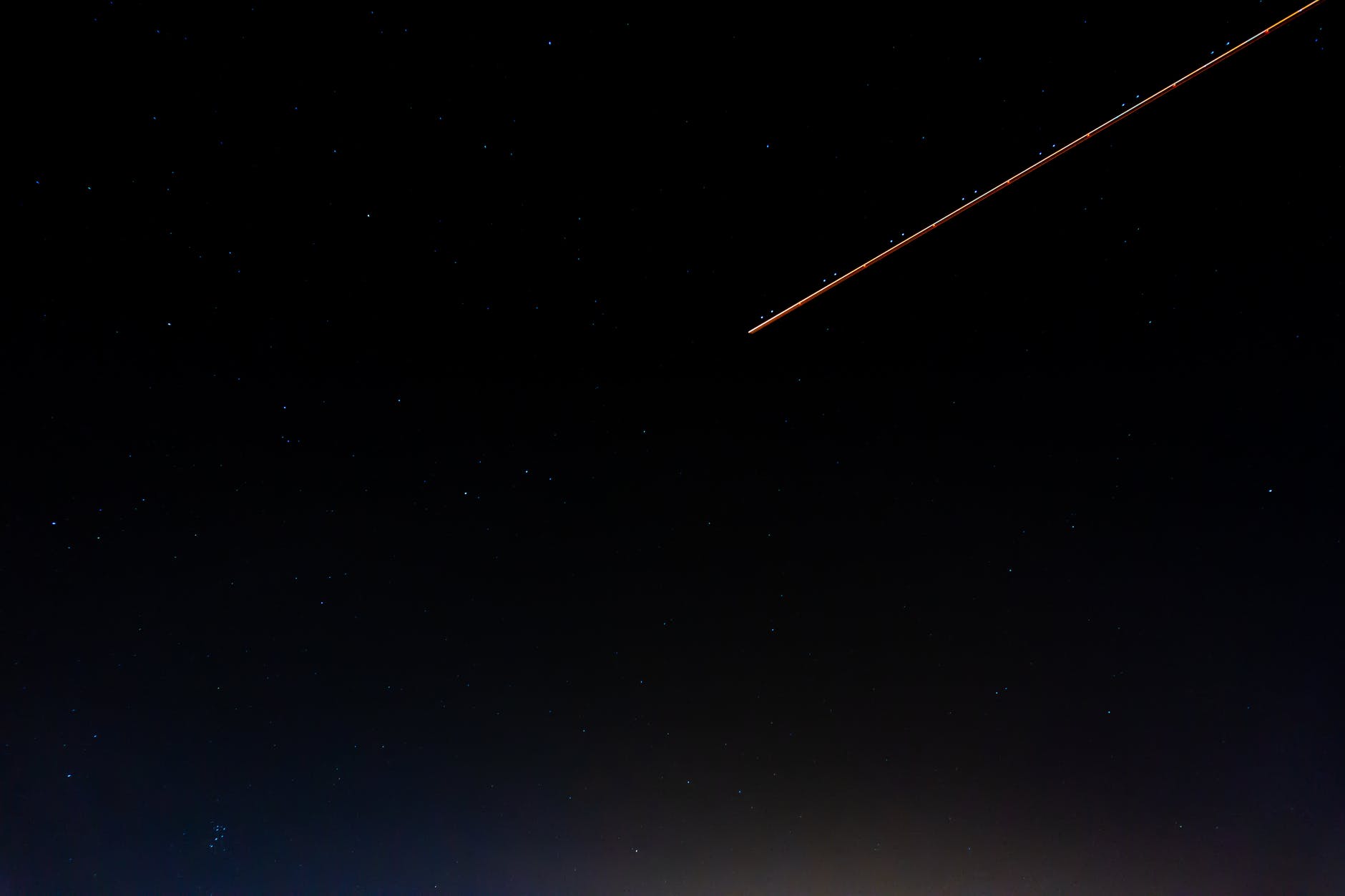
Shot Star
A country comet, blazing through
The skies of peace and status quo –
Your portents wasted to the blue.
You shout your name and on you go,
With not a trace of plague or coup
Or sparks beyond your pretty show.
Shot Star
A country comet, blazing through
The skies of peace and status quo –
Your portents wasted to the blue.
You shout your name and on you go,
With not a trace of plague or coup
Or sparks beyond your pretty show.

Throats
Damascene tiles, centuries old,
Victorian acquired –
Beautif’ly painted in blue and gold
As fresh as the day they were fired
Geometric, dense and hectic,
Begging to be admired.
But most of all, of all I love,
It is the birds that shine –
Each peacock, parrot, lark, and dove,
Are delicately fine –
With vibrant tints and eyes that glint,
Each heavenly divine.
And yet I missed, for all they shone,
(Had not the tour-guide said)
That ev’ry gorgeous bird thereon
Was elegantly dead –
A single stroke had simply broke
Each neck beneath each head.
Apparently, this trick was rife
Throughout the Eastern land –
In Islam, images of life
Were well-and-truly banned.
But corpses were quite de rigueur –
And here, the stiffs were grand !
But oh !, those crass colonials,
Those patriarchs on tour,
Who bought up ceremonials
From natives by the score –
They couldn’t see the subtlety,
Or else chose to ignore…
Without the least misgiving
They’d appropriate the style,
But paint their birds as living
On each modern-ancient tile.
Their arrogance had quite by chance
Now caused them to defile.
Or maybe they knew, and rejected –
Just took what they wanted to keep.
And who are we, self-selected,
To label them shallow or deep ?
Well, I for one, see much more fun
In birds who can still go ‘cheep’ !
Damascene tiles, centuries old,
Victorian acquired –
Marvelled, then improved, all told,
As their inspiration fired.
And we in turn must gaze and learn,
Then change to what’s required.
Hieroglyphs
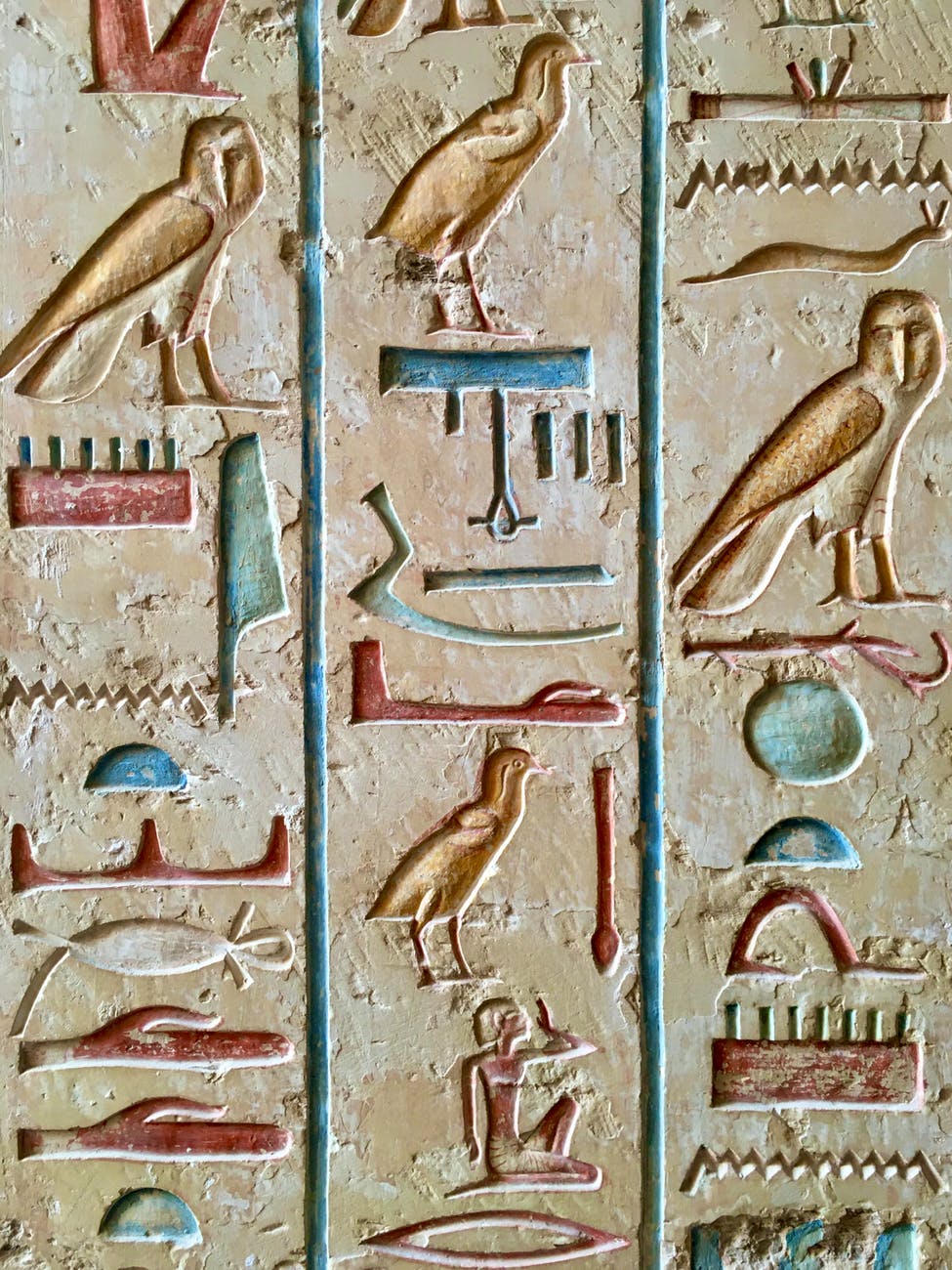
We’ve seen them all on ev’ry wall
In Egypt – carved in profile style –
But here’s a game to try and name
The most – Let’s see, it’s been a while…
The eye of the Sun, I know that one,
The wavy lines that mean the Nile,
The ankh, the egg, the owl and leg,
The feather, sphinx, and crocodile,
The scarab of course…and was there a horse ?
The slug-like snake, that’s worth a smile…
The goose (or duck)…and then I’m stuck…
But the walls stretch on for mile on mile.

Regulation Jollity
What can this madness be ?
Say what ? April Fools ?
Ah yes, the day of anarchy,
Though strictly by the rules.
The toying with insanity,
The jesters’ feast of ridicule,
The PG-safe profanity,
The smirking after school.
Oh, what a rictus parody,
Such clever-clogs hilarity –
Such silly lies and naughty fibs,
And pointy elbows in the ribs,
Hee-hee-ho-hum-hee.
Well, don’t I feel a tit,
And there was I expecting wit –
I guess the joke’s on me.

The Deep State of Fear
First it was the Devil and his minions beseiging us,
And then it was the Cath’lics and the Pope –
After them the Masons with their fingers in the pies,
And then the Jews would steal away all hope –
And don’t forget the Communists, the baby-eating Communists,
To polish up the ever-slipp’ry slope –
Today’s we blame the media, tomorrow blame the nanobots,
But do we ever blame ourselves ? Hell, nope !

Piratez-Moi
If you like me – use me, take me,
Pass me on and make me fly.
If you hate me – change me, break me,
Set me right or let me die.
Eulogies
1.
At sorrowed times like this, I’ve heard it said
That mem’ry is the living of the dead –
So when I find I dwell too long a-while,
I force myself to call to mind your smile.
2.
Not the chance unmet,
Not the promise broken…
This alone do I regret –
Words left unspoken.
3.
I never thought this day would call
When I stand here and you lie there –
Of course, our time comes to us all,
It’s entropy, and only fair.
I knew it too, down deep below,
By grace of fate and rule of thumb –
I knew some day you’d have to go,
Yet never thought that day would come.

Licence to Crenellate
Once-a-time, when castles wore a crown of battlements,
Their merlons hid the archers in the toothy parapet –
And when the peasantry came by to pay their serf-and-chattel-rents,
It wasn’t solid walls that awed them, but the holes that made a net.
If only they had known how they were more for show and ostentation,
Arrow slits too small to use, and windows big and weak –
A single siege would give the lie to strength in crenellation
But who would dare declare their home as battle-less and meek ?
So castle-style continued long past castles were of any use,
As if a Henry Tudor were no diff’rent from a Robert Bruce.
To be clear, battlements are very effective when their big enough, but by the time of Bodiam (1385) and Herstmonceux (1441) things were on the slide.
Breakfast in the Ruins
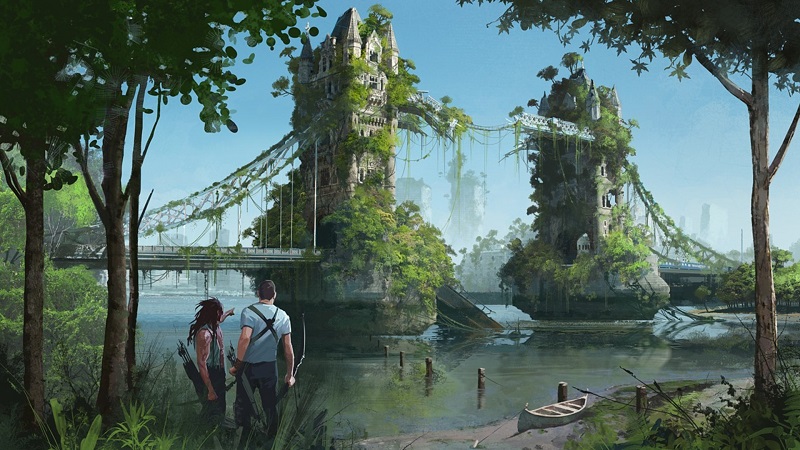
This ! This is the time that I’ve been waiting for,
When the cars leave the street and the planes leave the sky,
And only the zombies are joining my morning,
While sensible people are waiting to die.
And I – I am a rare survivor,
Finally special – finally alone –
Scrabbling the rubble of civilisation,
Shaking off every habit I’ve known.
I never said my fantasies were pleasant,
Wiping out humanity with barely a shrug –
But there they lurk, just itching for apocalypse –
Not some ugly famine, but a quick and silent bug.
Do I feel bad, now something has happened,
Has finally happened !, to strangers I never knew ?
Though I’ve wished worse in my listless hours –
But wishing is safe, for they never come true.
I can tell myself that it’s all coincidence –
Out of my hands to cause it, or to repair –
So I might as well relish the sudden upheaval
If this is our doom, then I’ll guess I’ll see you there.
But thanks to the efforts of folks far nicer,
We’ll prob’ly survive this, and prob’ly forget.
And I will be just one more drudge on the treadmill,
Still dreaming disaster to spin the roulette.
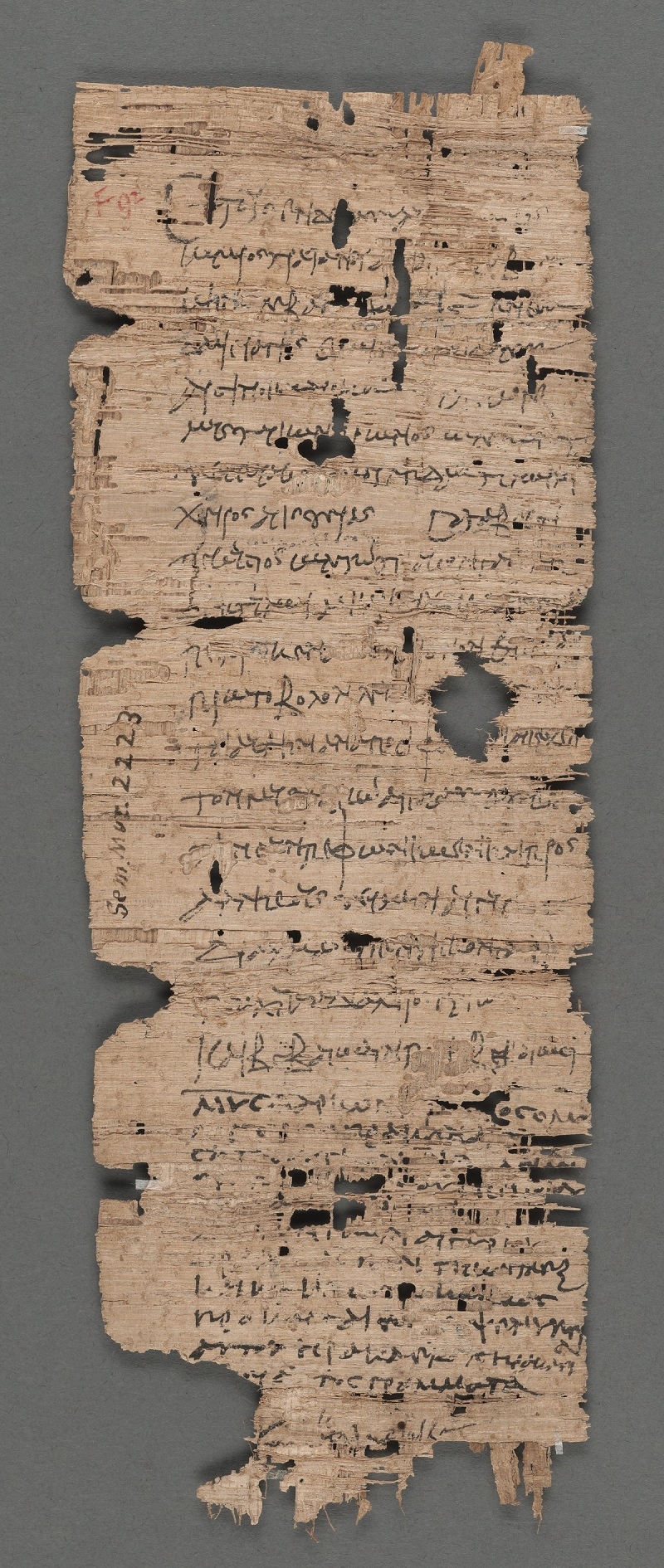
Ancient & Modern
To tell the future we were here,
To tell our names and what we think,
What gods we praise and tribes we fear,
What bread we bake and wine we drink –
That we do more than just hunt deer
And gather fruits for year on year,
But proudly harvest grain for beer !-
Then build in stone, and write in ink.
Too many cultures vanish, gone,
Because they left nothing behind –
They were forever moving on
And left no footprints in the mind
But others carved and others built,
And others wrote in soot and gilt,
So we might know who worked the silt –
Because their names were proudly signed.

