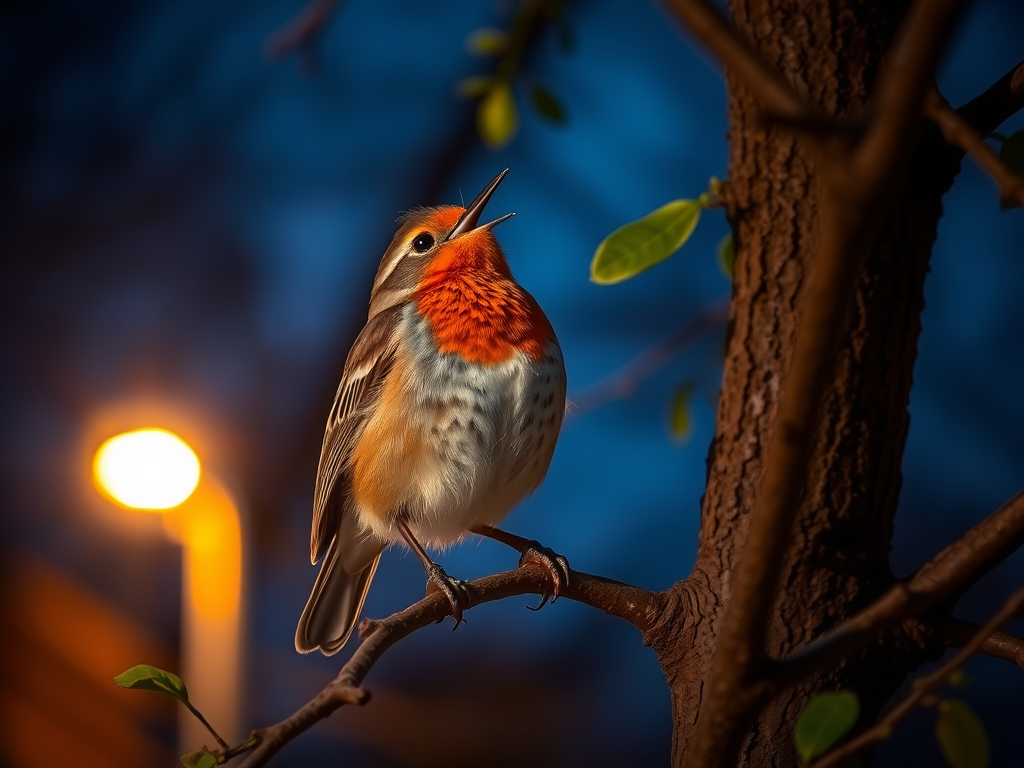
The robins are chirping all night long In the tree by the streetlight over the street. I wonder what is the point of their song That they keeping on chirping all night long ? Perhaps this tree’s just a place to meet When they fancy a branch for a late-night tweet ? A nightclub where the music is strong In the tree by the streetlight over the street. I thought that robins were territorial, And yet this tree is a truce-arboreal – Chatting and chirping in one big throng, In the tree by the streetlight all night long.
Diagram Comparing the Celtic, Astronomical and Meteorological Calendars by Ccferrie
Fourthtides
The Celtic quarter days are out of sync By six weeks or so, all said. Not on the English solstice and equinox, But behind (or ahead). Now May Day and All Saints are obvious links, To anchor the year secure – But Lammas and Candlemas slip their docks When they don’t mean much anymore. And so the seasons grow and shrink, And won’t be tightly bound – The year won’t fit a nice square box, When its orbit is a round.
On a bit of a tangent, but I’ve long thought the perfect year would be made up of 6-day weeks – with five per month, or 60 in a year (plus five spare days, interspersed one every three months, plus one extra for New Year’s Day). This would mean that a particular date was always the same day of the week each year, and we could finally ditch Mondays…
English’s attitude to accents is curious – I don’t mean Geordie and Scouse, But those sprinkles of furniture that turn pedants furious When added (or not) to the house. A déjà vu of coördination Or über-pretentious clatter ? A naïve façade in over-citation, Or a stick to beat the piñata ? In a language with only a nodding relation With sensible phonetics as this, Then it hardly matters if most of the nation Give this foreign decoration a miss. With English, their rôle is recherché at best, For all some writers may covet – In English, they just make the page look stressed, And I doubt they’ll ever be belovèd.
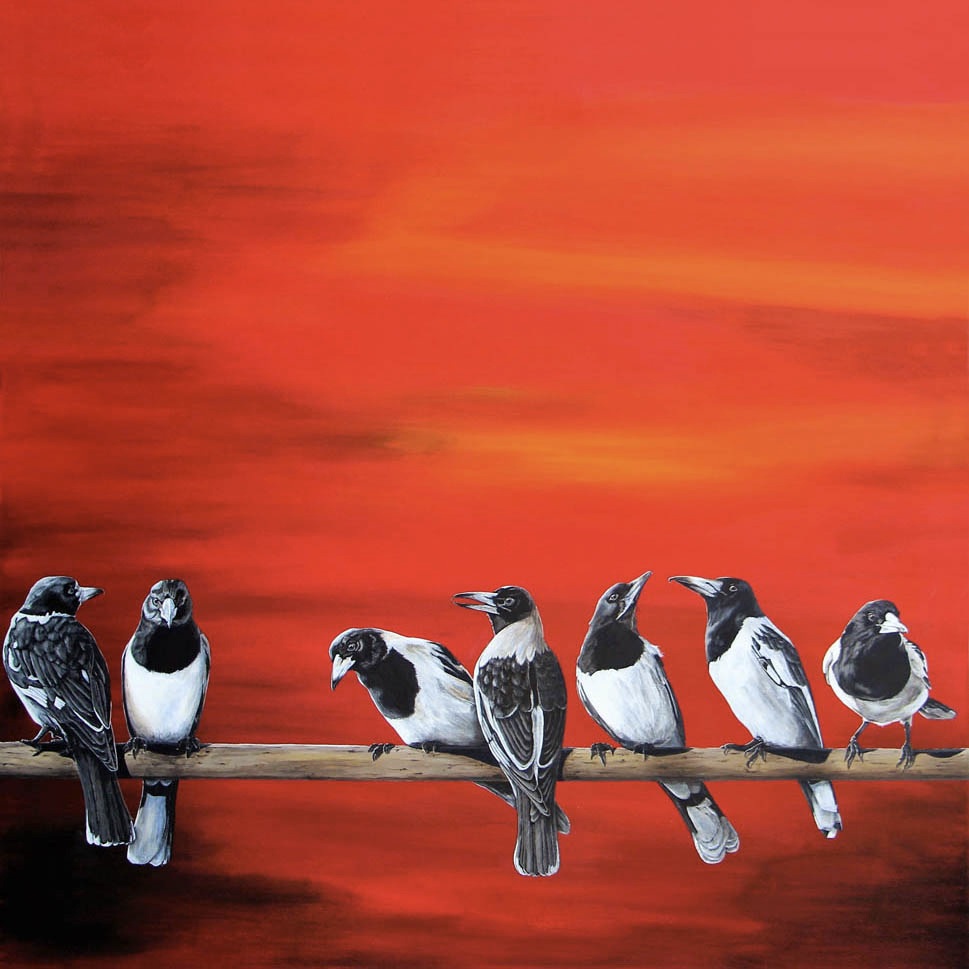
Magpie-mimics, pseudo-shrikes, In apron-fronts and axeman-hoods – They hang their excess kills on spikes Around their Aussie urban woods. Lizzies, hoppers, chicks and mice, On thorns and barbs and obscure ledges – Bringing their suburban vice To tuckeroos and privet hedges. Where creeps the white trifolium, So fly these cheerful songsters – Where lays the fresh linoleum, So roost these hipster monsters. But most of all at nesting time, When elder siblings lend a wing – They form a gang, a clan of crime, Whose name they proudly sing.
Lillah McCarthy as Jennifer Dubedat in the original production of The Doctor’s Dilemma
White Enchantress
The scene is London – the Edwardian stage – A new play opens by George Bernard Shaw – That finger-wagger of the gilded age, That rabble-rouser of the better sort – The Doctor’s Dilemma. Will it be a draw ? The public shrug as the critics snort – It isn’t a flop, but it isn’t a hit, So the world moves on for a better fit.
But lying unnoticed, there was a seed – One of his characters, posh as the rest, Was given a name she didn’t need – She could have been Cathy or Claire or Cass – But instead, her author had thought it best To name her after a rustic lass. And Cornish to boot, though she made no claim – I guess he simply liked the name.
And so that name was Jennifer – And she would come to dominate As just the handle we prefer – The whole thing now sounds so contrived, But it took a while to percolate, And for the play to be revived. Yet slowly lifting up the blinds, A pale phantom stalked our minds.
Now the audience in Nineteen-Oh-Six Had heard of Blondwyn, Fiona, and Neve. But those were for natives, who barely mix With these theatre types, who would never think That a child of theirs should ever receive Such a name, if they had no family link. And though Guinevere was hardly forgot, They found her name no Lancelot !
Now Jenny was known for centuries – For Jane or Joanna, and paved the way. And Celtic awareness increasingly pleased, With a dash of exotic, and of something new. So when Jennifer Jones hit the screens, I’d say That the time was ripe for its big breakthrough. It shot up the rankings, left Anns in its wake A working-class wide-girl, a name on the make.
But her reign was short, as she paid fame’s price – She peaked in the Eighties, as big as her hair, Then drifted from psyches, as parents thought twice. Forever a signpost to the Post-War age – For a hundred years after, we’ll find her there, Before she slips back to the dusty page, And she and Guinevere are equally dim. And to think, Bernard Shaw prob’ly chose her on a whim…
Historical name data isn’t nearly as detailed as I would wish, and I can only find the top hundred names listed at ten-year intervals on the UK Office for National Statistics website. It shows Jennifer first broke onto the list in 1934 (87th), shot upto 18th in 1944, slipped slightly to 23rd in 1954, down to 45th in 1964, then rallied to 34th in 1974, and rocketted to 11th in 1984, before starting its (final ?) descent in 1994 at 42nd. This page then has a year-by-year breakdown showing 87th in 2004 and 217th in 2014. The most recent dataset for 2022 shows…457th (though remember that all of these are for births – the Jennifers we encounter will face at least a couple of decades’ lag).
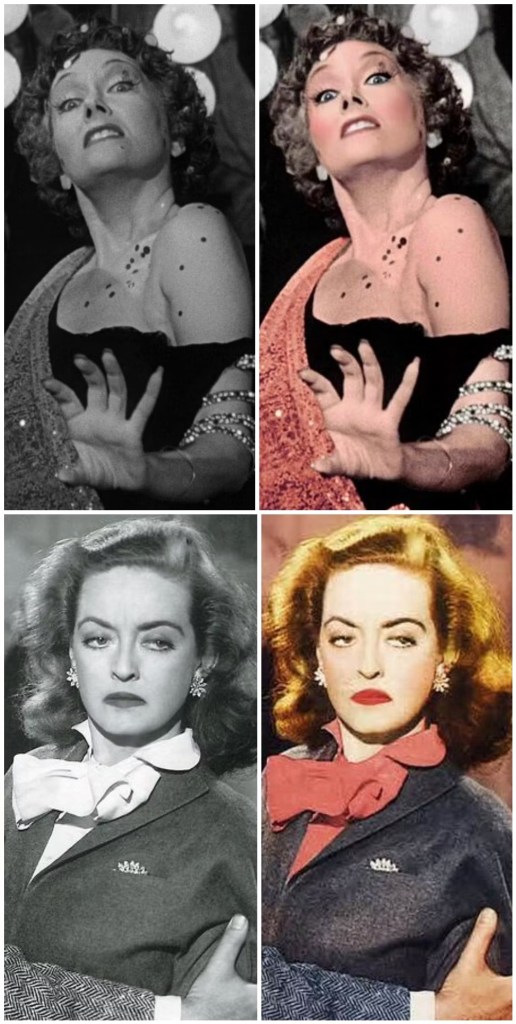
I’ve never been a fan of black-and-white In films of the modern day. It feels all rather hairshirt-pretentious, To choose to wallow in grey. I’ve always thought that Raging Bull and Schindler’s List, Are a wash of look-at-me grim, And not brought-on by a limited budget – But don’t you dare give their hues a trim.
For even more, I hate the arrogant yobs Who can’t leave well-alone Who colourise and bastardise, And completely wreck the tone. We won’t want some future-tech to force 3D Onto all the films we’ve made – So leave the classics just as their artists’ wished, As they shine in light and shade.
But maybe you like them better when brighter. Maybe there’s room for us both. Maybe I need to take a few breaths And not try to stymie growth. There’s a rainbow of points of view out there, And the world is never quite as before – It’s not such a matter of life and death, And I guess we’re not in Kansas anymore.
I wanted to work in herbaceous control, Where I would keep track Of the landscape’s needs. I sent out letters for any such role, But all I got back Were tumbleweeds.
I wanted to work with invertebrates, Recording each fly In the council’s thickets. I sent my CV to associates, But the only reply Was the chirp of crickets.
I wanted to work on stellar stations, To be employed As a space engineer – I sent out a thousand applications, But into the void They would disappear.
I wanted to work in an int’resting job And proceeded to chase For ev’ry scheme. But the world just told me to shut my gob, And to know my place, And to never dream.
Humans, like water, flow down from the hills To the lowest and easiest level to settle – On floodplains and coastlines, the habitat fills With the tides of the houses that sprout-up like petals. Until, as the towns and the centuries grow There must come a reckoning one stormy May, As the flood meets the flood – so the undertow Shall sink all the streets that stand in its way.
We have to live somewhere, but so does the water, And so we must share the valleys and lakes – In a constant battle of marsh and mortar, To raise-up the levee before it breaks. The humans are clever, but the river is long, And gravity draws then both to ground – So the silt is as soft as the stones are strong, Till the continents rise or the roofs are drowned.
For years, I built-up energy, Laying-down my layers of fat As batteries, never running flat. But now, those bonds are breaking free, Are draining-down, are being spent, Are liquified to pay the rent. Each breath contains a piece of me, A tiny sliver of my store That was sequestered years before – As all those good times, all that glee, Each choc’late cream or hearty stew, Escapes my lips as CO2.








 Rhyming Couplets