

Introducing cyber-poet Winifrid, here to read two of my verses –
Having completely failed to make my previous passing, I have decided to mark my half decade in style (is that a quintade ?, or is this the epitome of Unnecessary Latin ?)
Thanks to recent advancements in AI, it is now possible to create avatars of never-existed people in Midjourney, and voices of never-spoken tongues in Prime Voice, and then get the former to speak the latter thanks to D-ID. Although you won’t get to see that last part, as videos can only be included for premium WordPressers – after all they have to keep us riff-raff out…
And so, all this week I shall be unveiling my new Readers, who are definitely attempting to scale the slope out of uncanny valley and almost sorta kinda sound perfectly natural ! Well, as long as the poem doesn’t contain a question mark, as they can’t change their intonation. And as long as you don’t mind them sounding thoroughly middle class, as the British voice samples all tended towards the RP – which is a pity, as I always intended for my words to be read in an ‘Educated West Country’ accent.
However, saving the best for last, I have persuaded a couple of friends to read for me as well, and you can heartheir delightfully-human tones at the end of the week.

Sheep Music
Camping by a field of sheep
That baa throughout the night –
The farmer says each ewe must peep
To check her lamb’s alright.
One wonders if they ever sleep,
Or keep a state of fright ?
But we are hypnotised by sweeping
Bleats by Luna light.
Until the dawn brings cheap-cheap-cheap
That sound too fresh and bright –
At least the sheep were slow and deep
As they camped besides the site.

Neptune’s Daughters
As a kid, I used to believe in the Seven Seas –
But which on Earth were they ?
Clearly the Channel, the North, and the Irish,
But which were the other four ?, I’d say.
But then I learned there were dozens of others,
From the Med to Aegean to Adriatic –
Time for a rethink, I thought, to the map –
Clearly the rolling waves weren’t static !
Some people say they were numbered by the Arabs
From the Gulf to the South China Sea,
Others that they represent the oceans
In one big continuity.
But some say currents can separate them,
So some shall flood while others seep.
And others again say the seas are layers
From the sunlit shallows to Challenger Deep.
As a kid, I used to believe in the old salts’ notion,
Until I did no more –
And then I believed in the Panthalassic Ocean,
Lapping ev’ry shore.
And then I believed in gradients and upward swells
For the flows to surmount –
Yet the tides never asked their name as they rose and fell,
And the seas can’t count.

The Curious Case of Mr Smith
(in reply to Agatha Christie’s Murder on the Nile)
Agatha Christie cherished the Tories,
Kept the masses out of her stories –
Servants were faceless, background filler –
Never the victim, never the killer.
Whodunnits by nature are class-based, though,
With chaos disrupting the status quo,
That must be traced and rooted out
Before it spreads its dangerous doubt.
Now true, she distrusted businessmen,
And makes them villains agen and agen,
Not like a blue-blooded, honourable gent –
But was this an anti-Semitic bent ?
Of course, she hated the socialist –
But wait, with her there’s always a twist !
Just witness her Nile when splashed on the stage,
With Poirot banished back to the page –
Instead, a Canon is quizzing them,
While building his new Jerusalem –
One wonders what he might behold ?
A commune or sorts ? We’re not quite told.
And then, at last, there’s Mr Smith –
The snidy lefty they’re travelling with.
Part hypocrite, but only a part,
When a short-hand typist catches his heart.
He makes some good points along the way,
That it’s hard to imagine our Agatha say –
Perhaps once the cuts had been applied,
It left no room for a seedier side.
All-in-all, a little less sour,
Just as Attlee was coming to power.
For this one trip, it must be said,
It wasn’t only her herrings were red.

Synapse Error
All my school-mates, all my former colleagues –
All now broken links.
When clicking on their memories,
I find each name and face un-syncs.
I’ve left a trail of 404s behind me,
An archive of data decay –
I’ve got no backup with which to remind me,
As all my friendships leak away.

Across the Multi-Verse
Plenty of poets who only learned English later
Have plenty of English to tell,
Which makes all their poems so very much greater –
When using their step-mother tongue so well.
But usu’lly, they’re only in free verse, it must be said,
Not often in rhyme –
(Unless they are writing in pop instead,
Cos that happens all the time !)

Eurovision Song
You can’t understand a word I’m saying
That’s okay, let me sing it all again
Tu ne peux pas comprendre un mot que je dis
That’s okay, let me try to explain
Du kannst kein Wort verstehen, das ich sage
But I’m sure I can make my meaning plain
Non potes intelligere verbum me dicens
But no communication is in vain
All we need to do is turn the subtitles on
Activer les sous-titres
Schalten Sie die Untertitel ein
Conversus in sub textu
And we all can get along
And sing the same song in our own way
Because we all say Yeah and Okay.

The Ultramarine Dark Sea
Blue, is hard for nature to be it –
We’re told “no pigments” is the why.
Forget-me-nots, though, give the lie,
And kingfishers darting by,
And rocks of lapis lazuli,
And the irises of Lady Di –
And Planet Earth, I hear you cry,
Together with the frigging sky !
So yes, the ancient Greeks could see it,
Just as well as you or I.
This is a particularly pernicious urban myth that will take years to debunk, and shame to say it’s often lefties who love these QI-style gotchas (two moons, anyone ?). I recomend watching Metetron’s takedown of this bullshit.
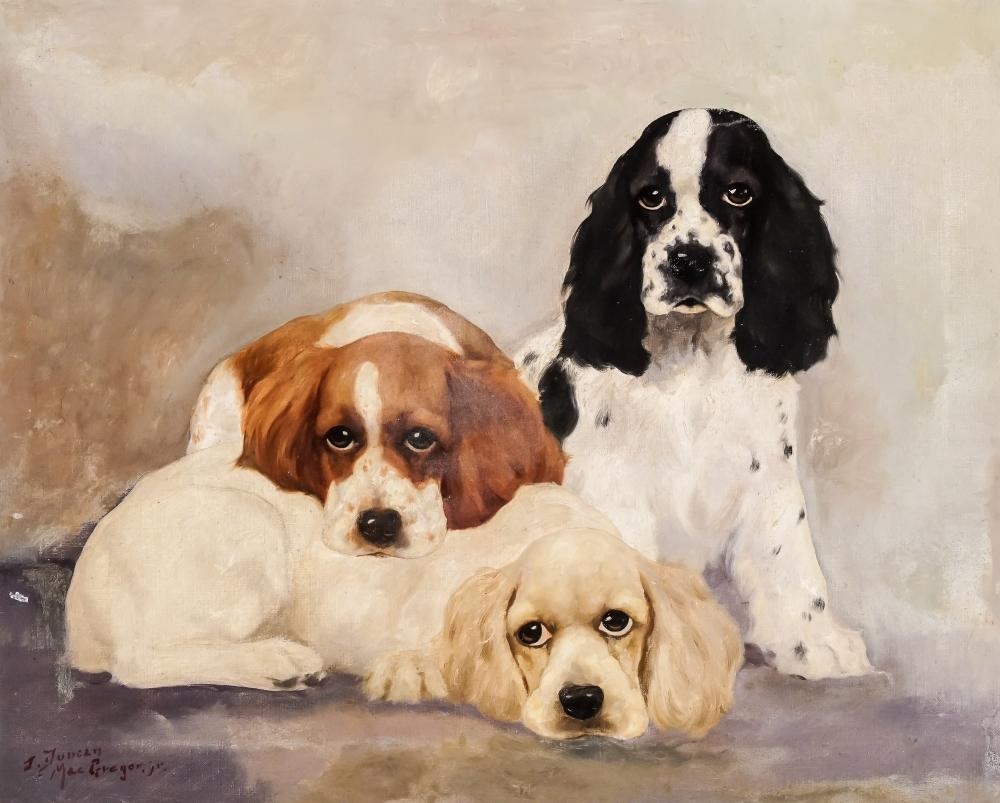
Proper Charlies
Charles the First was the very worst
Till he got the chop at the hands of the mob –
Who wanted a say in to whom they pray,
And not being subjects ripe for the rob.
Charles the Second was a letch who reckoned
That the country had to polish his knob –
He may have been jolly, compared to Ollie,
But he still was a hypocrit and a snob.
And Charles the Third is a privileged turd
Who is screwing-us all for ev’ry bob –
He is honour-bound to keep folks down,
And to keep the upper class in a job.

