The thing about Phylums and Classes and Orders and all, They don’t really mean very much, from a-one to another – They don’t show a definite border or wall, Except that each member within is a brother. But how shall we simply compare, say, a Fam’ly of fishes With Fam’lies of insects or fungi, or some other race – For nature won’t readily yield to our wishes For systems and schemes with all life in its place.
What’s needed are rankings that indicate something specific, Like maybe the age when such clades were diverging anew – There must be a way to be more scientific That merely to shrug and decide “this’ll do”. Then maybe some Kingdoms or Phylums will prove to be hoarders, While others lack class in their Classes, now under-supplied. So finally, let’s bring an order to Orders, And give ev’ry Genus some Family pride.
It always struck me that the Linnaean ranks would be more useful if either all of their inhabitants shared a minimum percentage of genes, or alternatively that they were diverging at roughly the same time as all the others of that rank.
Note that in the old method, species is the only rank which has some actual science behind it and isn’t just vibes-based. Except…it turns out that the concept of a biological species is far murkier and less discrete than we used to think, so even this is not really true any longer. Hybrids, it seems, just keep popping-up…
But this will cause its own oddities, such as Cheliserates (arachnids & horseshoe crabs) diverging from the other arthropods in the Cambrian before all of the currently-recognised phylums had appeared, meaning these would need to be recognised as their own phylum too. So we are back to (hopefully) common-sense rough collectives showing nested sub-groups within – but this only makes real sense when we examine the specific heirarchy, but not much when we compare the same level from different heirarchies.
But either way, the idea of the phylums being the major body-plan divisions is well-established, at least in the animals. And having four intermediate levels between there and species feels about right – we now know that there have been an order of magnitude more branches (mostly petering-out in extinction), but we don’t need to capture all the complexity of the Shrub of Life, this is intended to be a layman’s tool, not a PHD.
Yet I do wish when talking of, say, the Order of Proboscidea, they would add when the split occurred – in this case, in the early Paleocene. You’re welcome.
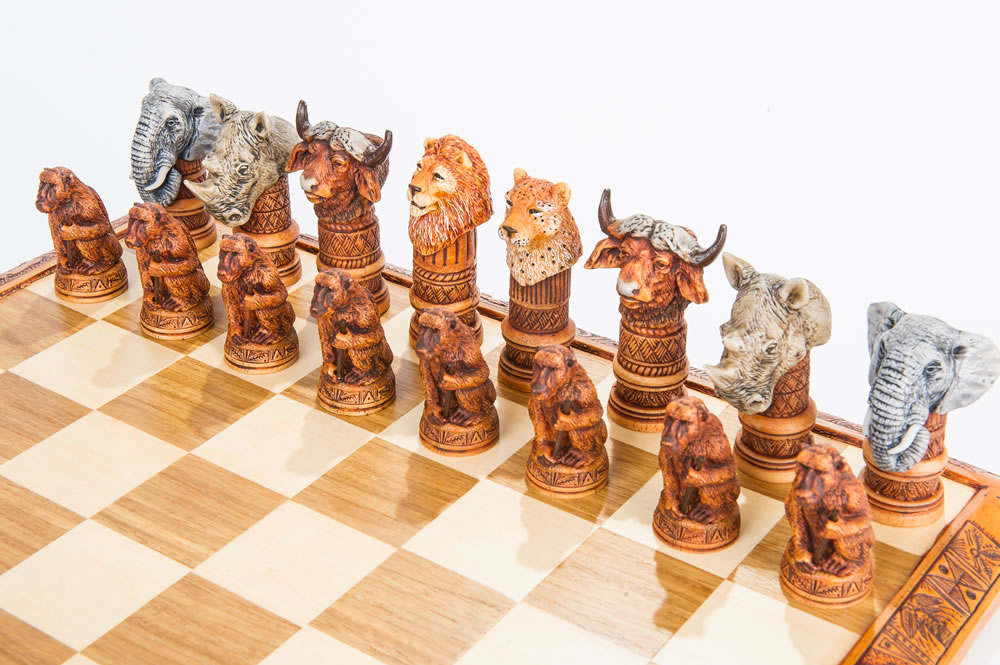
Henry moves his vertebrates, And Louis tunes his tunicates, While Malcolm swims his sharks and skates To battle Olaf’s ranks of starfish pawns. Boris risks bacillus rods To fight with Oskar’s fungal squads, As Richard launches octopods To counter Philip’s shrimp-less group of prawns. So James arrays his gymnosperms, Like Ferdinand his cyan germs, And Otto’s nematody worms, At Charles’ yet-to-be-discovered spawns.
I should point out that the title is a mnemonic for the Linnaean ranks of life: Domain, Kingdom, Phylum, Class, Order, Family, Genus & Species. Actually, Domain is a relatively new addition, and plants have Divisions instead of Phylums (or Phyla if you’re a pedant), and the whole thing now looks hopelessly simplistic in the wake of cladistics, but it’s still a handy starting-point.
Are Water- and Cape- the more closely related ? Who knows ? Why are those ‘true’ while the Bison are ‘false’ ? I say they all are true buffaloes ! You label the grouping as polyphyletic, Like ‘shrew’ – But what does it matter their genes, when we’re talking Of big things with horns that go moo ?
So pedants and cladists may mutter and sleight, But Buffalo Gals, won’t you come out tonight ?
And did you know twenty-five cities and towns Disagree ? And how many towns in the States are called Bison ? Well well, only three ! So don’t try and tell me I can’t call the bison All ‘buffaloes’, mate ! Cos Buffalo Soldiers and Buffalo Bill, And Buffalo Springfield and Buffalo Twill, And the Buffalo Wings at the Buffalo Grill, Tell me you’re way way too late.
So pedants and cladists may grumble and snide, But Buffalo Gals go round the outside.
Magpie, magpie, all upon your lonely, Have you an omen or an auspice to portend ? Tell me, oh magpie, perched all one and only, What do you impart, my fortune-casting friend ?
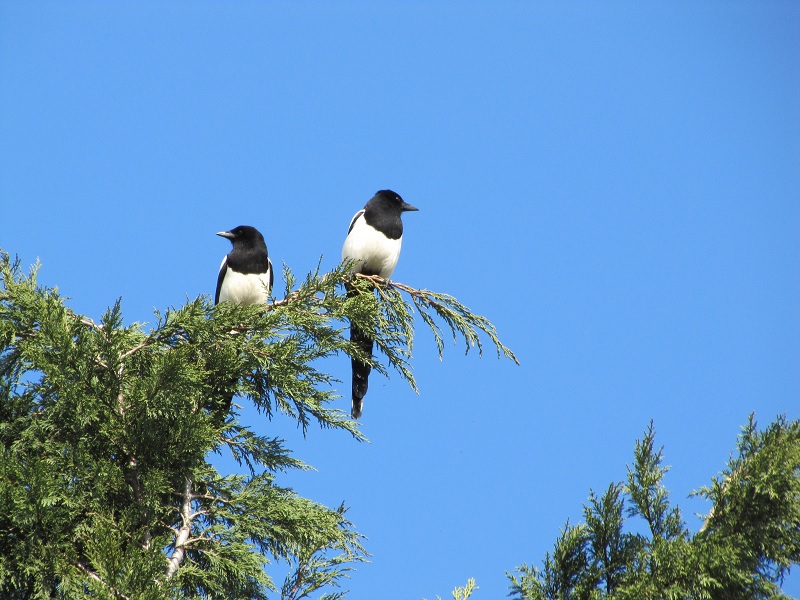
Magpies, magpies, twosome in my setting, Have you an omen or an auspice to bestow ? Tell me, oh magpies, the pair of you abetting, What do you impart – am I set for joy or woe ?
Magpies, magpies, thrice upon my vision, Have you an omen or an auspice to enprime ? Tell me, oh magpie, a trio on your mission, What do you impart for my future-coming time ?
Magpies, magpies, four of you here gathered, Have you an omen or an auspice for my mood ? I tell you, oh magpies, I think your signs are blathered, You’ve nothing to impart – you’re too busy finding food.
There is a cat who watches trains And makes his home in signal boxes, Lives beneath the weathered gables, Catches rats who chew the cables. Grey, he is, with smoky grains That fleck his coat the way of foxes, ’Cept the tramlines down his back Which earn his name of Clickerclack. They shine out silver, brow to rump They even bear the marks for sleepers – Branded thus, his fate assured His working for the Railways Board. So where a plague of rodents clump Within the homes of signal-keepers – Unannounced by midnight freight Comes Clickerclack to extirpate. He bites, he claws, he chews in half And shreds them into vermicelli – Drives them out and leaves his scent To fright them off resettlement. And when his work is done, the staff Will feed him fish and rub his belly. Then it’s off to boxes new Aboard the 07:22.
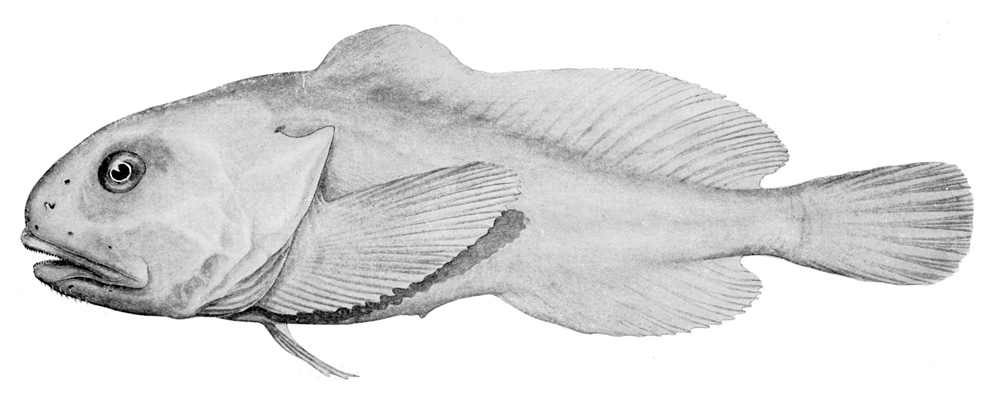
Sketch of a blobfish in its natural environment by Alan Riverstone McCulloch
The Blobfish
Clearly a fish, Clearly a blob: Big of hooter, Wide of gob, Beady eyes and bloated head, And very, very dead. We trawled the net to rake the murky depths, And up your mugshot popped – For once, an ugly bugger who’s unplugged, And not the usual “cropped & ’shopped”.
But wait. No, this feels too easy – All too gawpy, snide and cheesy, Facts and heckles both unchecked.
But what can we expect, hey ? We snatch you out from miles-deep And leave you rotting on a slab Where density is not so steep – No wonder, then, you’re looking drab ! Gelatinous skin is just the thing to help you float – But do we care ? Oh, how we grin and how we gloat, As you bloat in our low-pressure air.
But away from such shallows, Away from our narrow lies – Deep down and dense, Where you raise your callow fry, So you suddenly make sense Amid sea-pig and anglerfish and barreleye.
We all know what will happen If these ravens quit the Tower – Strange to think these scavengers Should hold such royal power – To keep the crown from toppling, They are crippled in one wing, To fawn and clown for punters, (All still peasants of the king.)
But you should be flying, Raven, You should have flown, For what cares a raven for propping-up thrones ? Be mightier, Raven, than magpie or rook – For the higher you fly, so the smaller we look.
We all know what will happen If these ravens quit the Tower – So much like us, they’re savaged Just to keep the nobs in power. They’re victim of Victorians, They’re prisoners to lore – If only they could bring them down, And goad them “Nevermore !”
For you should be soaring, Raven, You should be gone, For what cares a raven for owners of swans ? Be mighty, oh Raven, and help us stand tall – For the higher you fly, so the further they fall.
The whole myth only started in Victorian times, and to this day these magnificaent birds are denied their natural instinct to fly for the sake of tourist pounds.






 Rhyming Couplets