Equant & Deferent

razor
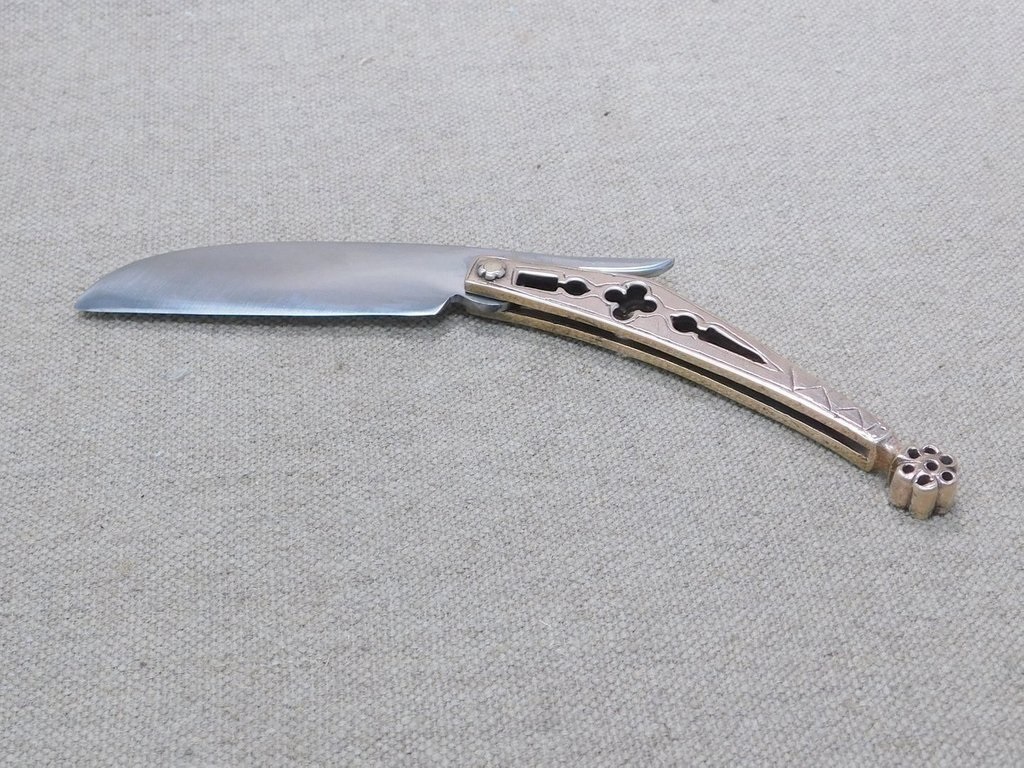
A reproduction of a 1300s razor by Tod Cutler

Equant & Deferent

The ancient Greeks were pretty clever,
Worked out that the Earth was round
From shadows cast by poles at noon
And by the Earth upon the Moon,
And how the sky was put together
Just from watching from the ground,
And some who guessed a central Sun
About which all the planets run.

But then along came Aristotle,
Then along came Ptolemy –
And they alone would set the tone
Till their mistakes were set in stone.
The hand is dead, but still can throttle,
Piously and solemnly,
Of any thought that might get out –
So hush the whisper, choke the doubt.

But still, but still,
The more we looked, the more we saw –
The though the heavens mostly draw
Upon the Ptolemaic law,
They sometimes would exert their will
That rubbed enquiring watchers raw.


You see, the ancient Greeks well knew
That crystal dome and ev’ry gem
That all the night, without a rest,
Would wheel above from East to West.
And like the stars, the planets, too –
Though slower, losing ground on them.
Except…well, that’s where trouble lies,
With yearly yet unruly skies.

Because they each would switch their motion,
With the stars, and overtaking !
Week by week, the Greeks would trace
The way the planets dance and race.
So Ptolemy proposed a notion,
Saved the universe from breaking –
Sure it was all fudge and spin,
But epicyles for the win !

But here’s the thing –
For all its complex shells and reels,
For all its windmills within wheels,
It somehow kinda always deals
With accurate positioning,
As though the sums would guide their heels.


So if the Greeks were badly off,
Well, spare that scoff – they did their best
With nothing but a pair of eyes
To theorise what they can’t test.
But did they ever pinch their gaze
And mutter at the tangled ways
In which the heavens spend their days ?
Did even Ptolemy have doubt
And long to hack the deadwood out ?


The Romans, though they changed the names
(From Krios, Aries, from Ares, Mars),
They kept the skies just as before,
For fourteen hundred years or more.
And though the planets’ little games
Were thought as written in the stars –
A monk proposed a new appraiser,
Slashing bunkum with his razor.

Simple answers, they’re what matter !
Less is more than meets the eye –
If two proposals have to fight,
The simplest one is often right.
And all those epicycles clatter
With a clean, efficient sky –
Forget the Church and ancient stuff,
Copernicus has had enough !

And yet, and yet,
Despite his perfect circles round
His central sun, we quickly found
Like Ptolemy’s, they ran aground,
Till Kepler and ellipses met –
And suddenly, the maths was sound.


Truth be told, Copernicus
Had little proof on which to base
His unbound Earth and steadfast Sun –
In faith alone, his planets spun.
But still the world must turn, and thus,
Young Galileo took his place –
Perhaps with fewer facts than hope,
But this time with a telescope.

And in the eyepiece, clear as night,
The moons of Jupiter were seen –
As though the planet gave them birth –
And not in orbit round the Earth !
And better yet, the startling sight
Of Venus phasing inbetween
A smaller full and larger new –
And then the revolution flew !

So here’s the thing –
With claims of modern matter dark,
And energy with unseen spark –
Has it the proof of string and quark ?
Or do they chase around a ring
To make the model fit the mark ?


And like Copernicus, they could be right,
Despite a lack of evidence.
Or like old Ptolemy, they could be wrong,
Yet strong in their defence –
His theory held up, truth to tell,
In matching observations well –
But oh, it was a complex hell !
So scientists, and heaven-gazers,
Never lose your sharpest razors !

M-K-G-F-A-B-O

Henry Russell’s first published plot from 1913.  (It was later discovered that Ejnar Hertzsprung has published something similar in 1911, hence the shared credit.)

M-K-G-F-A-B-O

Doktor Hertzsprung, Doctor Russell,
Why is your diagram such a tussle ?
Why is your axis the wrong way round,
Higher to lower, bluer to redder ?
Does it reveal some secret profound,
Hotter to cooler, younger to deader ?
Your sweeping main sequence is mirrored about,
Your plot’s lost the plot, and your graph’s up the spout.

Actually, I’m being a little unfair here.  The original plot was absolute magnitude (aka luminosity) on the y-axis, and the peak wavelength of light on the x (or ‘spectral type’).  Since high-energy blue light has many more waves in the same distance as lower-energy red light, so the length between peaks in red light is longer, and thus a higher number.  (Incidentally, Omicron2 Eriadne B was the first white dwarf discovered in 1910.)

When it was later realised that the wavelengths directly related to surface tempurature, the latter was substituted, but now the numbers were going down instead of up, and nobody bothered to flip it.  But thanks to the wonders of the internet, I was able to rustle up the following:

H-R Diagram - corrected

The Electric Universe

electric universe
Electric Universe by wickedsword

The Electric Universe

I heard about it on the wires –
From out the noise, a brand new spark
That’s causing quite a buzz, it seems,
With those who dare to cross the streams –
The stars are not atomic fires,
They claim, and matter isn’t dark !
Instead, across all empty space
Electrostatic charges race…

The stars are merely filaments
Amid a galaxy of bulbs,
The cosmic pulse, at super-C,
Will form electro-gravity.
Now, many physicists resent
This theory, and the place it holds –
But then, how can they fail to see
The holes in relativity ?

I heard the crackle in the air,
And tuned my head and felt the spike –
For all that maths and physics bore,
I saw at once the metaphor !
The Universe and I must share
In cells and galaxies alike
Electrons – tiny, yet so large –
So much potential in their charge !

Just in time for the first image of a black hole, I learned about a theory of space that denies their existence (also referred to as Plasma Cosmology).  As I understand it, it basically posits that (though I’m sure I’m butchering this):

the reason no definitive evidence of black holes or dark matter exists is because they don’t actually exist,

that over 99% of matter in the universe is in a state of plasma, which readily conducts electricity,

that the lack of matter to hold the galaxies together is due to electricity itself amplifying gravity,

And that stars are not nuclear furnaces but more akin to the elements in lightbulbs, that is the places where the Universe’s electric fields ‘discharge’.

But like I say, I’m sure I’ve got that mostly wrong.  And I make no claims to its accuracy.  What attracted me to it was simply its poetic possibilities.

Dwarf Planet

Pluto 2
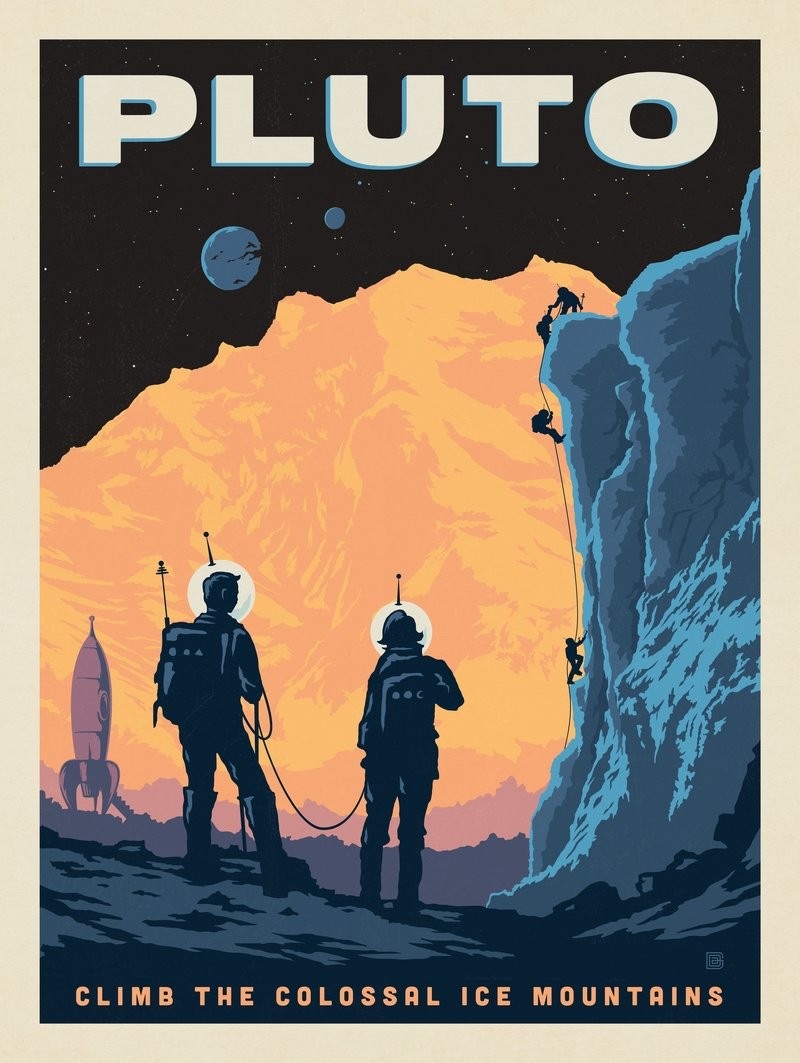
Pluto: Ice Mountain Climbing by Derek Anderson & Joel Anderson

Dwarf Planet

Of course he’s not a planet !
That shouldn’t be disputable.
That shouldn’t make him any less the beautiful,
That shouldn’t make him any less –
His surface is so mutable,
And not the long-expected pockered granite
Of our Earth-restricted guess –
But plains and ridges run instead,
In shades of red,
Across which canyons slice.
And we were right about the ice,
But not the mountains that it forms !
Mountains that could melt away,
Except he never warms at all –
His crystal peaks that should reflect the sun’s weak glow,
Except they’re covered by the nitrogen that falls as snow.

Dwarf perhaps is too pejorative,
But then, if you’ll forgive, he’s not the same,
And after all, it’s just a name.
There is no magic line
Where we can suddenly define
The class of planets from the dwarfs at just below his size –
To let him cling to planet-hood,
But sorry, Eris, all you other guys are just a might too small.
It’s hardly wise to be so arbit’ry in what should get the planet’s call –
It also shows that gravity is quite misunderstood:
For lack of mass is why he swings
In tilted rings around the sun,
And why he’s kept at bay by Neptune’s sway,
In the long, long run:
So no, he’s not a planet, he’s a diff’rent kind of thing –
We know because we’ve seen him: he’s the cosmic Kuiper king.

Out in the Styx

Pluto 1
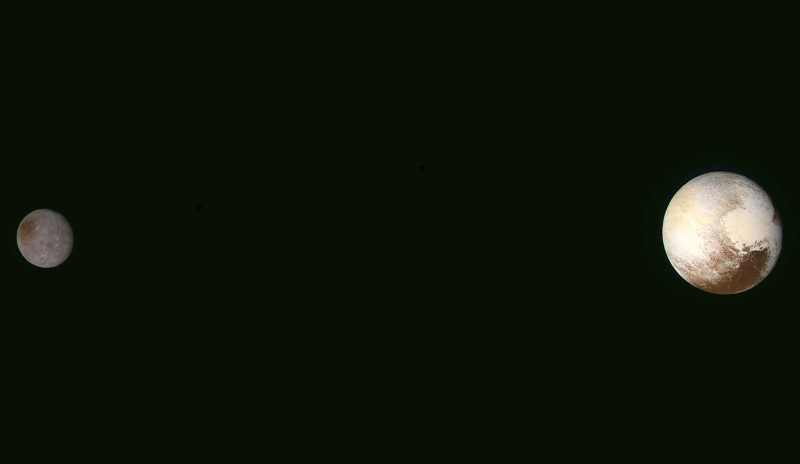
Charon & Pluto by NASA

Out in the Styx

Pluto – the solar system’s Greenland,
Cold and remote, an inbetween land,
As way beyond the horizon he lies.
Infact they are a similar size –
And Charon is Baffin – who watches him sleep,
While facing each other across the deep.
An arctic fox and a polar bear
Of the Kuiper Belt, that pair.
If planets are continents, these two are islands:
So icy and ancient, yet teasingly shy lands.

Their names and status are pure propaganda
The truth, of course, is both lesser and grander –
Fascinating for their own sake,
Despite the islets that clutter their wake.
But here, their orbits must diverge:
As Greenland enters its warming surge,
While his long summer cannot last –
His perihelion has passed.
So into the Hadean depths once more,
Upon the night’s Plutonian shore.

Rocket Roll

robbie
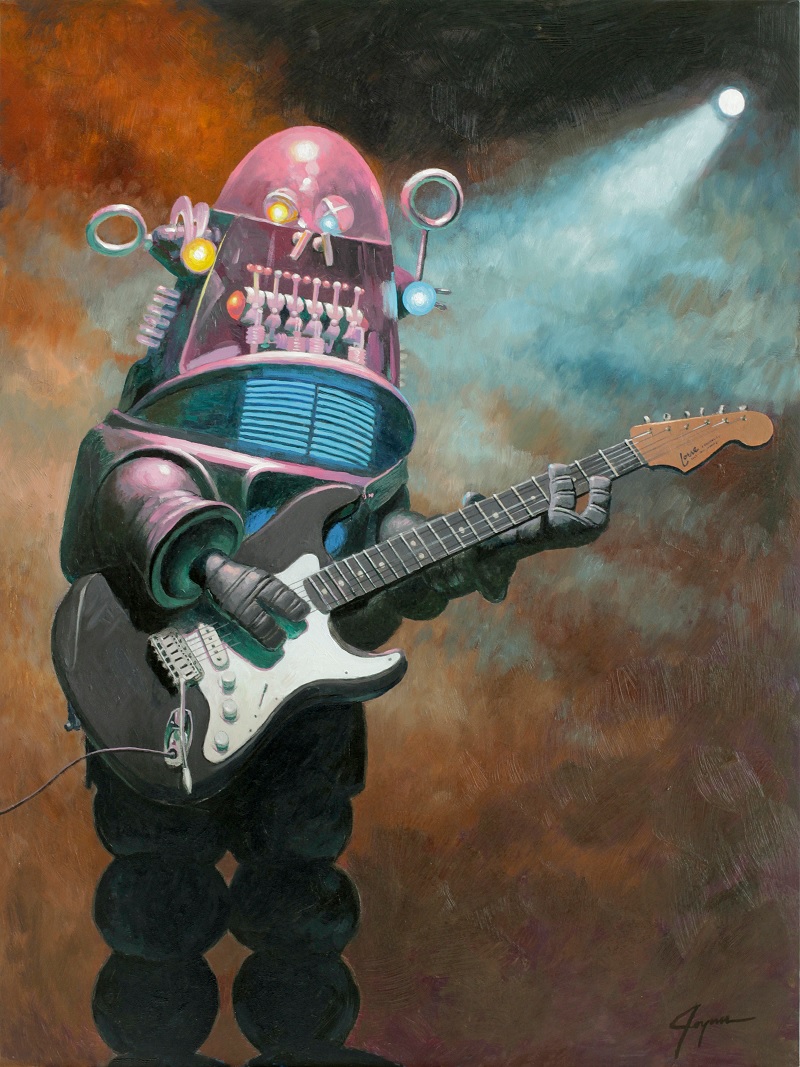
Blues Machine by Eric Joyner

Rocket Roll

To ev’ry band who never hit the heights,
Who play the clubs but never play the halls –
Whose name will never burn in lights,
Nor posters hang from bedroom walls –
Who always watch their fellow dudes a-strut,
And always think “We’re just as good as that !”
Who feel the calling in their gut,
But never feast upon the fat –
You’ve got the amps, you’ve got the tunes,
You’ve got your share of dweebs and loons –
Yet still you only smoulder, never blast.
You missed your chance to quit this town,
It’s gravity that keeps you down.
You’re only growing older and surpassed.

But ev’ry band with unloved riff and chord
Can always hope that Later Times may find
That album ev’ryone ignored,
And bring you forth to futurekind:
To fill the galaxy with your guitars,
And play your ballads on a thousand earths,
And sing your melodies to stars
For centuries beyond your births.
You’ve got the chance, you’ve got the scars,
You’ve got your share of superstars –
So hit the road, and let those thrusters gun.
A soundtrack to the pioneers,
The very music of the spheres,
Could see you flying higher than the sun.

Newton’s Cradle

newton
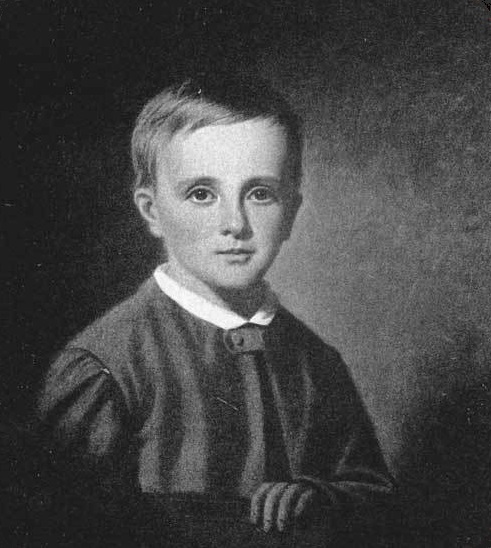
Isaac Newton as a Child by an unknown artist

Newton’s Cradle

A child is born in dead of winter,
Child to bring the summer in –
He teases rainbows from the sunshine,
Lets enlightenment begin.
He brings us universal laws –
For as above, then so below.
He shows the path that we must follow,
Teaches how the heavens go.

Brightly shines his star above
In both his eyepiece and his eyes –
His clockwork earth perturbs the sun,
His motion never dies.
He shows us how all things must love –
We all attract and all obey.
So promises the savant one
Who’s born on Christmas Day.

A child is born in dead of winter,
Child to set the world alight –
He mechanises all our fluids,
Magnifies the heavens bright.
He stands atop the giants’ shoulders,
Calculates the cosmic story –
From the leastest fractions upwards,
His the powers and the glory.

He wants to save the human genus
From the couterfeiter’s haul.
Apples are the fruit of learning –
Worlds shall rise to meet their fall.
He shows us how the warmth between us
Never really goes away –
Hark the one who keeps us burning,
Born on Christmas Day.

Many sources cite Isaac as being born on 25th December 1642, while many others claim it was on 4th January 1643.  Both are correct.  At the time of his birth, the Julian Calandar was still in use in Britain, but the 10-days-ahead Gregorian had been adopted in continental Europe (and more to the point, by the modern audience reading those dates).

Likewise, the day he died can be shown as variously 20th March 1726, 20th March 1727, or 31st March 1727.  So, firstly, during his lifespan the Julian had drifted to 11 days out (which accounts for the 31st March reference).  And secondly, the official New Year’s Day in England was 25th March, thus 1726 ran from 25th March to 24th March (four days after he died) – but again, this is often retrospectively adjusted (or sometimes half-adjusted, changing the New Year but not the Calandar)

All-in-all, a curious mix-up over a man obsessed with orbits.

Thanks-Giving

sky space dark galaxy
Photo by Pixabay on Pexels.com

Thanks-Giving

Let us give our thanks to the universe for hosting us,
Even if it doesn’t even know that’s what it does.
And even if it does, it wouldn’t care that it had made us
When it’s only accidental that its stellar constants aid us;
And anyway, we’re here today – I guess we can’t evade us,
Even though we’re only just-because.
But anyhow, we’re here now, and that’s what really matters:
Neither choked nor gasping, and neither froze nor burned.
But anthro-cosmologic-thought just fills the void and flatters,
For if we ever never were, we wouldn’t know we weren’t.
So thank-you, universe, (not that you care) –
Thank-you just for simply being there.

Area 42

Ufo
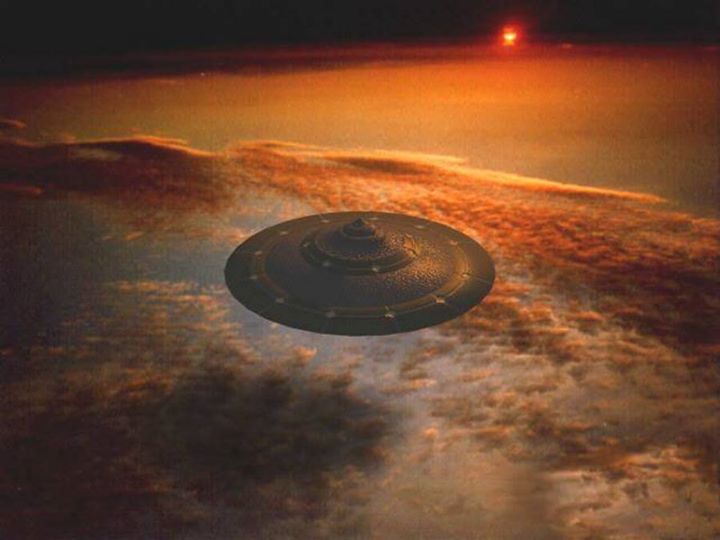
Ufo by süleymanakçay

Area 42

Aliens, aliens,
Somewhere they’re out there !
The odds are so great,
And the physics agrees.
They just need a planet
With temp’rature fair,
With water that’s liquid,
And low stellar breeze.
And who would have thought it,
But when we went looking,
There’s thousands of planets
Just lurking all over.
So down in their oceans,
What might they have cooking ?
Alas, they’re too distant
To send out a Rover.

Ah, but imagine if we could !
Just grab our towels and jelly beans
And stride our cosmic neighbourhood !
If only we could learn the means.
Until such time, it might be wise
To doubt the news, and watch the skies.


Forget about greys
Or a buxom blue femme,
We know they’ll look nothing
Like anything here.
For they’ll be as strange
As must we be to them,
From opposite ends
Of the final frontier.
So let’s not be too harsh
On yoofoo believers
For who knows what’s lurking
Beyond our ken  ?
But things are too distant
For radar receivers
To show us the saucers
Of little green men.

Ah, but imagine if they could !
Above high clouds, they’d scrutinise
Our quaint provincial neighbourhood.
Alas, I must dispute your cries.
The only people up there, guys,
Are far outside our lonely skies.