Ev’ryone thinks of Alpha, Alpha waves and alpha dogs – Beta has its beta blockers, Beta tests and beta logs – Gamma gives us gamma rays, And tennis gives us Gamma strings – And Delta – so much Delta ! With its rivers and its wings But no-one thinks of Omicron, As obscure as you get, What excitement could there be In the bowels of the alphabet…?
Its time to ditch the postrophe, Its use is a catostrophe – A snare for those who cant decide Just how these ticks should be applied. Theyre deathly silent in our speech, Beyond the pedants overreach, Yet still weer well and understood – Just cos theyre there dont mean we should.
I never understood loopholes, I mean understood it as an actual thing – I get that they’re escapes from laws – But are we then fenced-in by string ? They might have referred to arrow-slits, But they only fit an arrow’s stem. They might be thinking of knotholes, But only secrets can pass through them. The breach in the wall of the castle of law Would be a backdoor, or overhanging beams. So I never understood why ‘loopholes’ at all – Their meaning escapes my logic, it seems.
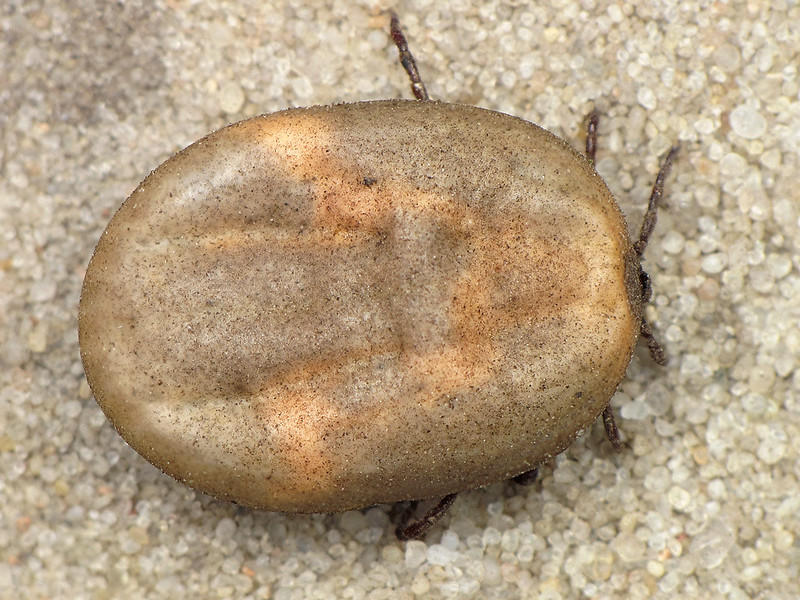
A tick is a bug that sucks up meaning, A tiny check-mark on the skin That no amount of language-cleaning Will dislodge now it’s sunk its snout in. A facial tic on our pristine tongue Of too many meanings from a single noun – Oh for a speech that’s regular and young Before the parasites invade the town. We use words on tick, to be paid for later, Like the stuffing in a tick-case that is already frayed, Or the ticks on a rule till the namesakes are greater And we’ve spewed-out enough for a tickertape parade. It ticks us off that such gaudy schlocks lurk, But they’ve plagued us forever, syphoning their fraction – Older than moments, older than clockwork, The tick is as ancient as Anglo-Saxon.
‘Tick’ is also a Middle English word for goat (whose latter name is even older), and though thoroughly out-of-use can still be found in placenames such as Tickenhurst.
Incidentally, what does a twitcher call the first whinchat of the year ? A tick tick.
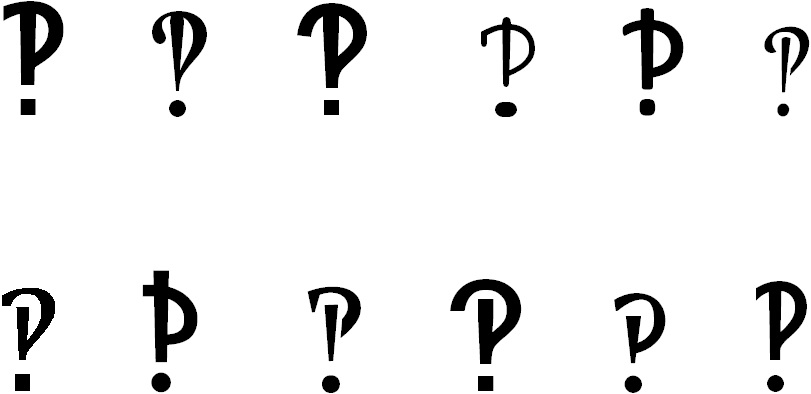
Okay, hands up, gang, If you’ve ever used, Or even heard, of an ‘interrobang’ ? You all look confused at the word, And I’m not surprised – Of all the useless punctuation, This abomination ought to be the most despised. But no !, the lumpy little toad Is honoured with a Unicode While decent, necessary marks Are offered no abode. These silly lexographic larks With so little help to bring Are only ever seen in fun – I mean, has anyone The slightest need to use the bloody thing ? And meanwhile, I cannot succeed To get the Question-Comma recognised – Now there’s a boy whose time has come, Who should be common, should be prized, Instead of all this tweedle-dum, Mine shows our queries raised at root, Mid-flow, when the clauses overshoot, – Not waiting till the line has passed And a full-stop hoves in view at last, To plonk our squiggle over, when the matter’s all-but moot. Yet ev’ry font is pleading ignorance, And claiming that they’re full – Such bull ! So now my hybrid glyph won’t stand a chance. But why ?, when they’d gladly welcome-in the clang Of that bastard offspring runt, the Interrobang !? Oh…oh yeah… I guess I kinda coulda used one there…
And yes, I did use ‘to hove’ in the present tense, and I’m not even sorry.
That said, Wiktionary suggests that it was a separate Middle English verb roughly meaning ‘to linger’ which became conflated with the past tense of ‘to heave’, and which also spun-off ‘to hover’.
Meanwhile, here are a few examples of what we we’re missing. Sort it out, Times New Roman !
Our zees are zeds, our maths is plural, Routs are rooted, herbs are heard, And Y’s are added to news and mural, Post and petrol are preferred. And then, we spell things diff’rently, Like U’s in colour, E’s in grey, We favour biscuits with our tea, And get our chips from a takeaway,
The trouble is, we’re losing. These days, all the art we get, The culture and the etiquette Is blowing to our shores – And when we make our own, we’re choosing Ways to make it more like yours. We’ve lost our national confidence, I guess, We seem to export less, As our markets flood with Yankee slang. And though we tut and though we chide, Our countrymen will each decide To stop the war and join your gang – When it’s too hard to ignore, And to hold the line becomes a bore, And we finally accept we just don’t care. We’re nearly there, I swear, When we must admit defeat once more – Just like we did before – oh yeah !
The Bible lumps the bats in with the birds, And oh, how we sneer. “A mammal is no more a fowl Than a dragonfly is like an owl.” But hang-on, none of those are Hebrew words, So none of those appear – They have their own, we must allow – So don’t confound their language, now.
Maybe what we think meant ‘bird’ to them Meant simply ‘thing that flies’ – And likewise whales are fish that swim, And snakes are worms for lacking limbs. It’s unscientific, so we condemn, But that don’t mean it’s lies. They did the job they were assigned – To each their own, and after their kind.
The English tongue is a toolkit To unlock those very English sounds In a well-oiled perfect fit. The Scots and Welsh have tongues that sit At a slightly diff’rent angle each So’s not to mangle all those subtle bits of brogue That abound within their speech. Americans are yet more rogue, Dismissing our metric metre For their own iambic feet and inches – They prefer their rhotic burr to ring, With a tongue that sounds the sweeter And a throat that swells and pinches Fine enough to let it sing. But none of we Anglophones are great At sounding French, or Japanese – We haven’t the tools we need for these. And that’s okay – we still can try, And even if we’re second-rate, There’s no need to be shy. The thing is, no two individual tongues Are contoured quite the same They vary how they’re ribbed and strung, And where they set their aim. So if we were to slur your foreign name next time we call, It’s just because our tongues are curled the other way, that’s all.
Q’s without U’s, You’re not fooling me – You’re out to confuse With your Q’s floating free. But I know you’re trick – You’re just curly K’s, With a kick and a click To anchor a phrase. Yet sometimes in French At the end of a word, A Q is what’s mentioned, But K is what’s heard. And Arabic’s full of ’em, Inuit too, With gutter and phlegm To push the sound through – Less plosive, more fricative, That’s what it’s telling – It’s purely indicative, Snobbish in spelling – For only a Scot could Hope to pronounce it – No Sassenach should, They’ll mangle and trounce it. And that’s not a problem, It’s just how they speak – They’re likely to drop them Than rumble or squeak. And why must we write down These non-English letters For non-English sounds, So the cringing trend-setters Can show how well-travelled Their spellings display – With words that unravelled When struggled to say. So spare the obtuse views On grammatophones – We’ve no use for loose Qs Without chaperones.
The title is intended to be a play on ‘crock of craic’, but I had to ditch the superfluous k and i.
OO is for Hoopoo, U is for Duv, O is for Swon and for Folcon, my luv. H is for Wooper, F is for Chuff, Z is for Fezzant, and pritty enuff. N is for Natcatcher, K is for Kwail, J is for Pijjon, who’s bringing the mail. I is for Ider, R is for Ren, T is for Tarmigan – ta-ta, my hen.





 Rhyming Couplets