Photo by Boys in Bristol Photography on Pexels.com
Jingle-Worms
I know all year we’ve been skipping them, skipping them, Whenever they shuffled into play – But now it’s December, and the whole world’s sipping them, And we’ve no chance to slip away. I guess it’s time to be shipping them, tripping them, Their timing is no longer quite so wrong – For now it’s December, and the whole world’s gripping them So best to simply shrug and sing their song. Let the tunes be ripping And the sentiment be dripping As we flipping-well must belt another verse. We’ve spent all year so chippy With the luxury of nipping them, But now we must embrace their joyful curse. Altogether now ! Sing a song of sleighbells, Tinkle tinkle, In the snow – When the choirboys sing high Then the baritones sing low. But we’ll meet-up in the middle. Where the fast shall meet the slow – And we’ll sing it all again, All the month – it’s all we know. Ho ho ho.
So you’ve formed a band, hey ? A bunch of like-musicians have joined-forces with each other. Time to chase that fame And choose a name For all of your future fans to discover – One that sticks in the mind okay, Yet’s easy to say, And you won’t be ashamed to tell it your mother.
We’ve all of us kept lists as kids, Whenever we heard a future name In a turn-of-phrase or a parlour game. Well, now it’s time to make your bids, Set all those quirky titles free – They may just be your new identity, For all the times you joked with a whoop “Now that’s the name of my future group !”
Don’t call yourselves after one of your members, For therein lies an ego – I guarantee, of all career-enders, This is the bitterest blow. The public assume the namee is the main-man, Until the members think the same – And what was a band when you began Becomes a bunch of sidemen to the Name. And girls, this doesn’t just apply to the dudes – So insist you’re a we and an us in interviews.
Now, if it contains three words or four, It may be a mouthful, Pretentious bull, And more manifesto than proper noun – But it may be distinct and int’resting, With a definite ring like nothing around. If so, resist the urge to water it down. For ev’ry word you unpick from your thread Is a little less grand and a little more bland, As if to admit you couldn’t live-up to its stead. Till you’re just one syllable, Easily killable, By keeping-on cutting till there’s nothing to be said.
Yet make sure your moniker sounds like your music – Don’t play metal in the name of a jazz quartet. But whatever public-label you pick, You gotta make it stick By showing no regret. Whatever you choose, however you want, Inscribe it with pride in a well-drawn font. Before you can even play a note, your brand Is the first that the world will hear of your band.
It’s just as vital as your onstage-looks, As your lyrics and your hooks and your tattooed breasts. Imagine it competing with your rockstar brothers On your album covers and t-shirt chests, And your tabloid headlines of drunken arrests. Will the kids double-take when they see it From Vietnam to Budapest ? Inhabit your name – believe it and be it, It’s what makes your music diff’rent from the rest.
How can something so mellow Sound so scratchy in the wrong hands ? How can a starting fellow Be encouraged to stick to their plans ? And not be lured away By an easy piano with its separate keys – How can we learn to play If we never can go as sweet as we please ? If we must have things like untuned strings, Then the neighbours don’t need to hear. If our notes are bums and our fingers thumbs, Then we need some friendlier gear. Yet the pros aren’t a piglet’s squeal, Or the hinge on a rusty gate – So how can a sound so real, Be a sound so hard to create ?
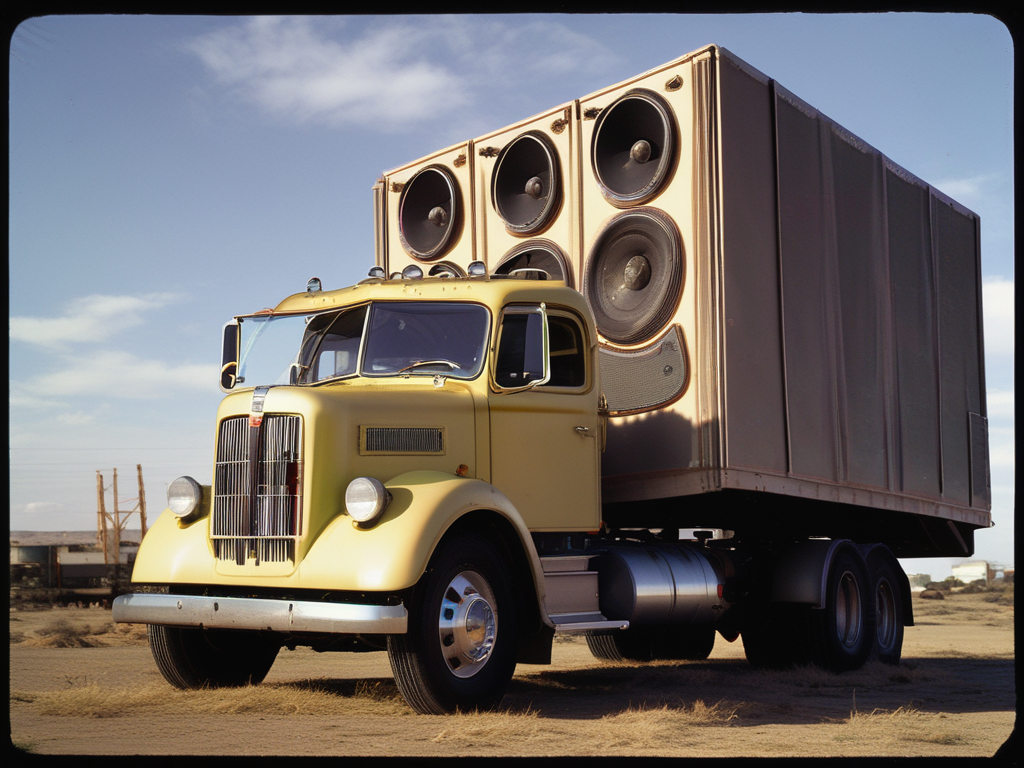
Back in the Seventies, big cones were rare, And so was the reggae they played. But these days, both are ev’rywhere, When blasting through suburban air From weekend cars who love to share – Just like in the cavalcade.
Yet come the Carnival, out come the gents, As if it were yesterday – It’s not a live show that this presents, They aren’t musicians with instruments – Their only action, in all events, Is simply pressing ‘play’.
Country folk are godly folk, They sing to holy Jesus, Sing how he’s the one they set their heart upon. Yet over Nashville way, no joke, They worship olive trees, yes, Sing to Grecians in their mighty Parthenon. They built a statue that ain’t churchin’, Dressed in gold and ivory, With ancient eyes of blue that never blink. They built a temple to the Virgin, Yet in rivalry – Cos she ain’t the usual Virgin that they think –
Hallelujah, hail Athena ! Sing it loud and sing it free ! You beat Poseidon with his trident, And now Jesus with his trinity. We need a goddess, not a patriarch To stir these sisters free – In the Athens of the South, your spark Lights up your mystery.
Country folk are gawdy folk, They love their rhinestone rings – Yet their churches are just warehouses of prayers. Is Jesus stoney broke That he can’t afford some decent bling In which his shouty preachers flog his wares ? But over at Athena’s place, There’s statues in the pediments Of epic battles fought in ancient times – She may be stoic in her face, But not so harsh and regiment To frown upon our splashing-out the dimes.
Hallelujah, hail Athena ! Sing it free and sing it loud ! Lady Wisdom, Lady with the Owl, Intelligent and proud – We need a goddess to the arts For fans to worship when we hum – A diva moving-up the charts, Who’s number one till kingdom come.
The original statue was sculpted by Phedias in 9563HE. This replica was designed by Alan LeQuire in 11990, using gypsum cement, fibreglass-infused plaster, and gold leaf (not ivory, like the original, but close enough – and surely Phedias would have loved to have access to these…) It is, I believe, based on ancient descriptions and other statues, but I’m sure some original interpretation has been included, and quite right too !
Strange, the oldest folk tunes have no authors known, They’ve just been sung like that forever. I wonder if a single soul created them, Or many voices altogether. Maybe over centuries, they’ve slowly grown, Adding new words to old songs, From bawdy balladry, through cherished hymn, To terrace singalongs.
From London Bridge to Scarborough Fair, Ride a cock horse to the old grey mare, Lady Greensleeves, mistress mine, And over the hills for auld lang syne. We’ll never know, we’re never told – They are too old and we’re too young – Yet still their songs are sung.
Strange, the newest pop tunes come with artist names – We know just who created each. Yet maybe in a thousand years, a few persist Whose origins are out of reach. Carols may be sung to them, or children’s’ games, Or earworms and lullabyes – With half the words forgotten, and their meaning missed, But hanging on in diff’rent guise.
From Ground Control to Billie Jean, Go Johnny, go, come on Eileen. All the lonely yesterday – Sing for tomorrow, we fade to grey. They’ll never know, the trail is cold – We are too old and still of tongue – Yet still our songs are sung.
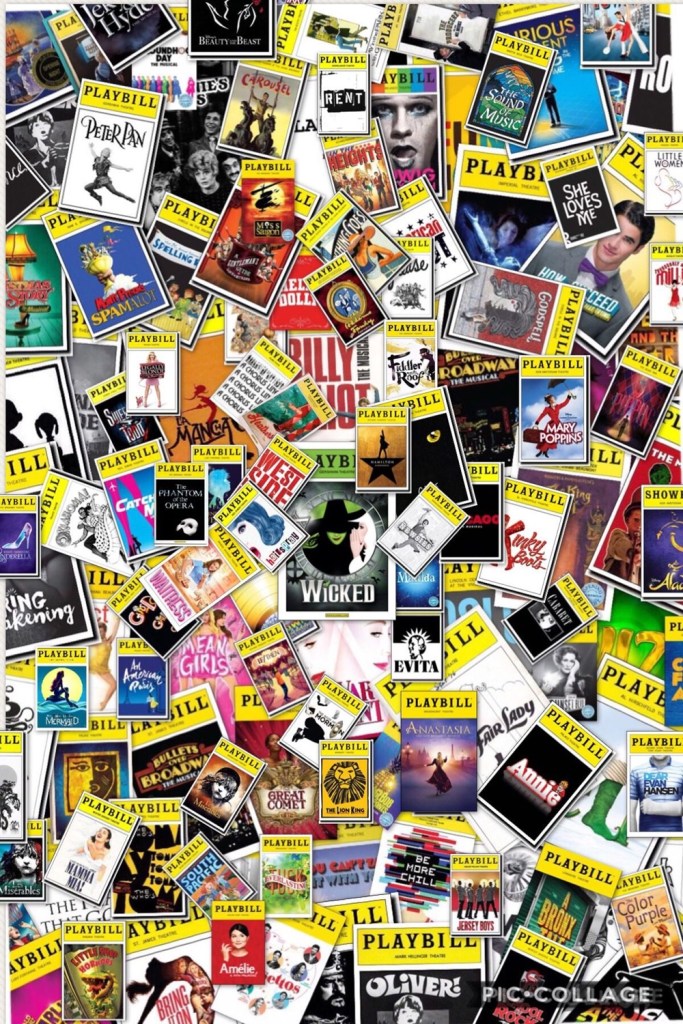
All the world’s a musical, A song-and-dance in rhyme, A carefree waltz through happy life In endless pantomime. Just drifting by the numbers, As they’re belted to the rafters – So farcic’ly predictable In happy-ever-afters.
The rest of us, we’re not the stars, That’s always someone else – The people with more talent, And the people with more wealth. We rarely even get to join the chorus As they strut – We’re just the understudies To the bit-parts-who-were-cut.
All the world’s a musical, That’s dancing in the street, But some of us will never get to Glimpse the lyric-sheet. But leads become the leads Because they’re who we want to see – There’s few to watch the story of the life Of you and me.
The rest of us, we’re not the stars, We’re just the audience – We go about our daily lives With fading confidence. We try to make a diff’rence, But we struggle to be heard – We’ll never be performers, If we never sing a word.
All the world’s a musical, A life that’s lit by lime – Where strangers sing impulsively, Yet sing in perfect time. The rest of us, we’re not the stars, We barely know the song – But in the end, I guess we shrug, And try to hum along.
Award me no Oscar, Bedeck me no Grammy – Your platitudes bore me, Your clapping is clammy. Nobels are for losers, Don’t grovel and crawl – Your Emmys are empty, And Pulitzers pall. So spare me your trinkets, Your Tony or Bafta – Just pay me with sales, And reward me with laughter. Pray, do not insult me With Knighthoods and gongs – If you wish to do honour, Keep singing my songs.
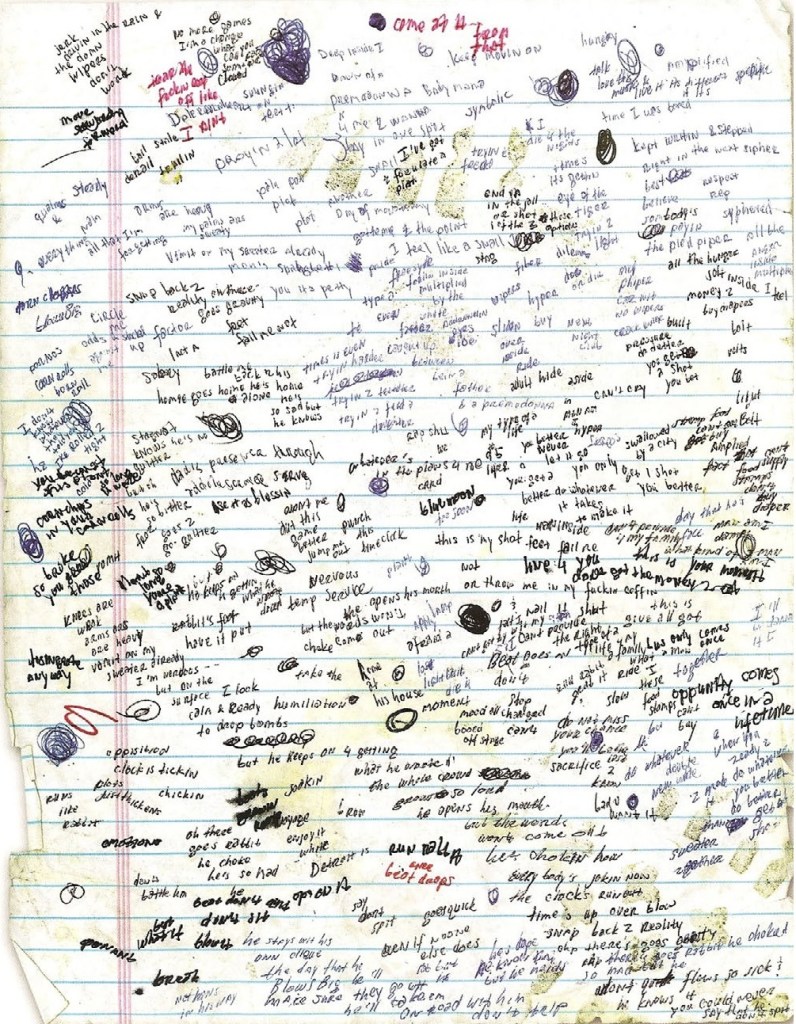
This, apparently, is the lyric sheet for Lose Yourself by Eminem
Throw your Hands in the Air till it Cuts like a Knife
Musicians’ lyrics are words for music, An afterthought to fill the tune. And that’s what makes them words of int’rest, Knocked-up quick, and none too soon ! Musicians’ lyrics, they’re corny or woozy, But always organic in self-expression – Their very essence is always the quintest – When forged in the deadline of ending the session. Musicians are never librettists, They never write words to stand alone – They’re woven into the very chords, Their voices are played like a saxophone. Musicians’ lyrics are hard to resist, They’re what turns a tune to a song. They master what poets are groping towards, When the audience all sing along.
Note that this poem is about bands who write their own songs, not about professional songwriters who often have individuals working exclusively on the words. It’s intended as a celebration of those musicians for whom the words are simply less important than the tune.