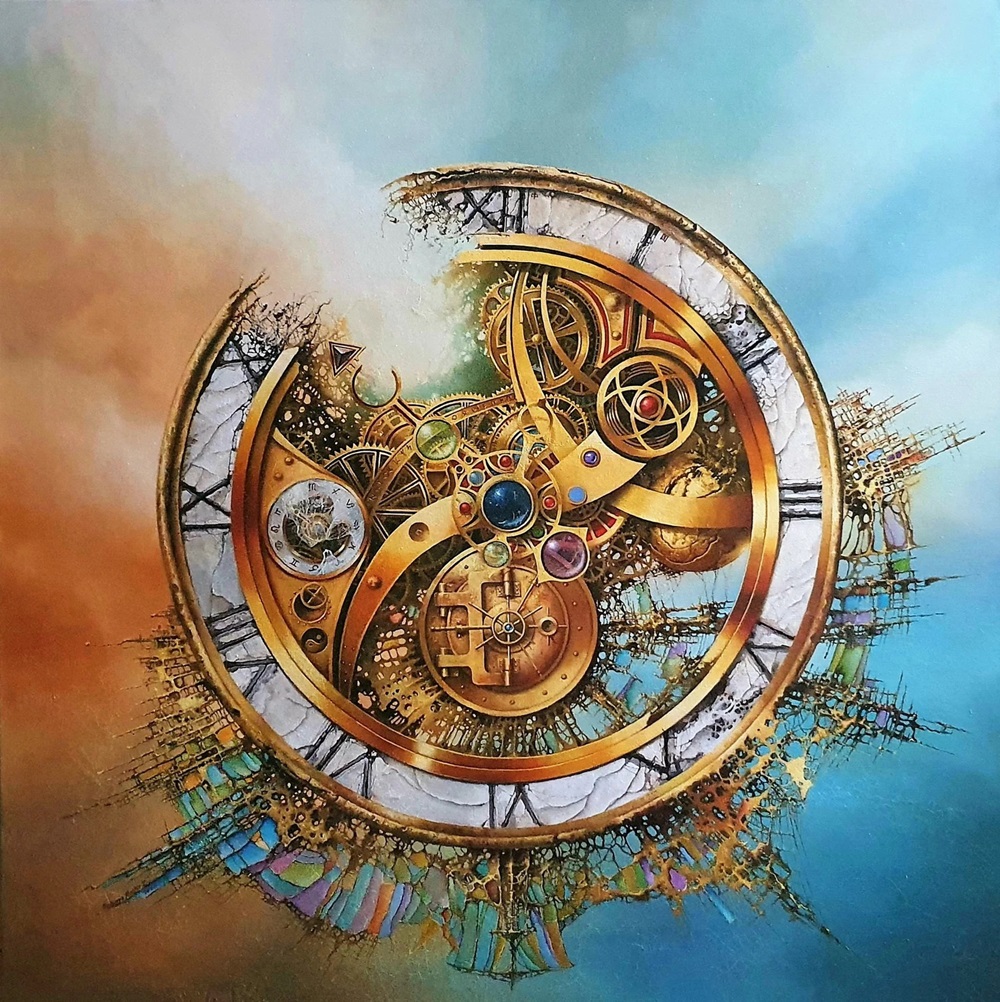
The clocks are haunting Daylight Savings, Goading us to stay in bed – In late October, ancient cravings Rear their bureaucratic head. We skirt with time, we loop the sands, Rewind once more the ancient rite – We must perform the dance of hands Upon the face of waning light.
The past is haunting Daylight Savings, Logic lost to undead rules. In late October, we’re the playthings Of the limbo hour of fools. We flirt with time, yet so habitual, Barely offer an excuse – We must perform the sacred ritual, Stop all Hell from breaking loose.
The trouble with a labyrinth, Is that it feels so foreign – Is that it has no logic To its endless winding paths. No hierarchy separating Avenues from warrens, As we trudge the many mazes On our lost and aching calves.
Our only means of finding out The route into the centre Is by choosing random tracks And by try-and-try-again – With a dozen unsigned junctions And a dozen doors to enter, To a dozen cul-de-sacs, And a single golden lane.
It makes sense in a dungeon, With its safety-at-all-cost, Or even on a garden, Where the mapless lovers sally – But why are city planners Quite so keen to get us lost ? Or to meet a Minotaur Down a twisty, unlit alley…?
Best be wary Of Dante Alighieri, Whose hellish depiction Is turgid fan-fiction – Trekking round each Circle With Mary-Sue Virgil, While snarking in the sleaze Of revenge fantasies.
Strange how the Church Has bought-up all his merch, And turned this random blogger Into Pope-approved-of dogma. But worst of all, is any fool Who has to labour-through at school, Just hoping for a joke or three Within his so-called Comedy.
No wait, don’t hate, Don’t follow the gate That tells us “Nope, Abandon all hope !” My anger is alive In Circle number Five – But no, I must not dwell In this self-made Hell.
For Hell is more feeble – It’s simply other people With whom we disagree, Like Dante is for me. But to be more analytic, Then Hell is just a critic Complaining for eternity – Don’t let that carping voice be me…
The theatre is haunted, of course, Because, well, you know actors… An ingenue, I think, or else a restless dame – Or was the spectral source A longtime patron, or some benefactors Still attending shows just like they always came ? Expectation’s such a force And narratives are such attractors – No stage worth its boards can be without its ghostly claim. The theatre is haunted, of course – That must be the common factor, Why both the roof and the backstage gossip leak-out just the same.
As Atlas said to Sisyphus, To lift the latter’s frown: “We bear a heavy burden, But don’t let it drag you down.” As Sisyphus replied to Atlas, In a weary wheeze – “Huh. Yours is on your shoulders, But mine is on my knees.” So Atlas said to Sisyphus “Don’t be a deadweight, dude. You’re so intense and full-of-lead, And warp space with your mood.” But Sisyphus replied “Just stop !, You’re weighing on my soul. But I wouldn’t stand down there, mate – This rock’s about to roll.”
detail from John Kay, Inventor of the Fly Shuttle by Ford Madox-Brown
Ravelling
Penelope just cannot seem To stitch the seam to stop her shroud – She warps her wefts and weaves her wools, And intermingles through the crowd. But somehow, she can’t cast them off, Who lurk around her loom – They watch her fingers thread and pull, To work the fabric of her tomb.
She has the memory of a goldfish, In that she remembers pretty well. She is a frog in a warming dish That knows it is no place to dwell. And she’s a giraffe who loves shut-eye, An ostrich with her head held high, A colourblind bull when the red rags fly, And an old wife with new tales to tell.
Staring deep in wonder at an apple, Or contemplating where to move in chess, Shutting-out the thoughts with which we grapple – Boring, boring, boring mindfulness !
Lazy-arses squatting in believe-ment, While others get stuff done so you can pray – But beauty’s in distraction and achievement, And life’s too short for omming it away.
Where were the darts of Galilee ? And the damsels of the Rubicon ? Was Runnymede so needle-free, Or the Athens Woods of Oberon ? So where are all the dragonflies ? There’s not a word in tale or scroll – The Greeks and Romans closed their eyes, The monks and knights ignored them whole.
It took the new Enlightenment To even notice them at last – And then Romantics sought intent In Nature bold and wild and vast – Till Art Nouveau, which gave them wings That keeps them soaring till this day – As wardens of eternal springs, Where dreamy Summers while away.
So where were the dragonflies of Hermes ? Why no mention in the myths ? Why did Freyr not claim these flurries, Crafted by the finest smiths ? Perhaps the Bible’s just too dry For water-sprites as story-tools, But rainy Europe shouldn’t shy To catch the eye with flying jewels.
Transforming in among the reeds, A lit’ral metamorphosis – The fey-folk surely rode these steeds ?, Yet Brigid never knew such bliss. Shouldn’t the Devil have taken hold ?, Or gargoyles, say, or heraldry ? Yet where were the dragonflies of old ?, Who chirped and danced for nobody.
‘Adderbolt’ is the only earlier name for them that I couold find, and this only dates from 1483, according to the OED, and ‘Devil’s darning needle’ is only from 1809.
And finally, the image below is from a poster which looks reminiscent of others advertising the various Art Nouveau exhibitions at places like the V&A.cHowever, I cannot find out anything else about this particular image, and if it is even an original by William Morris. I hope it isn’t AI…
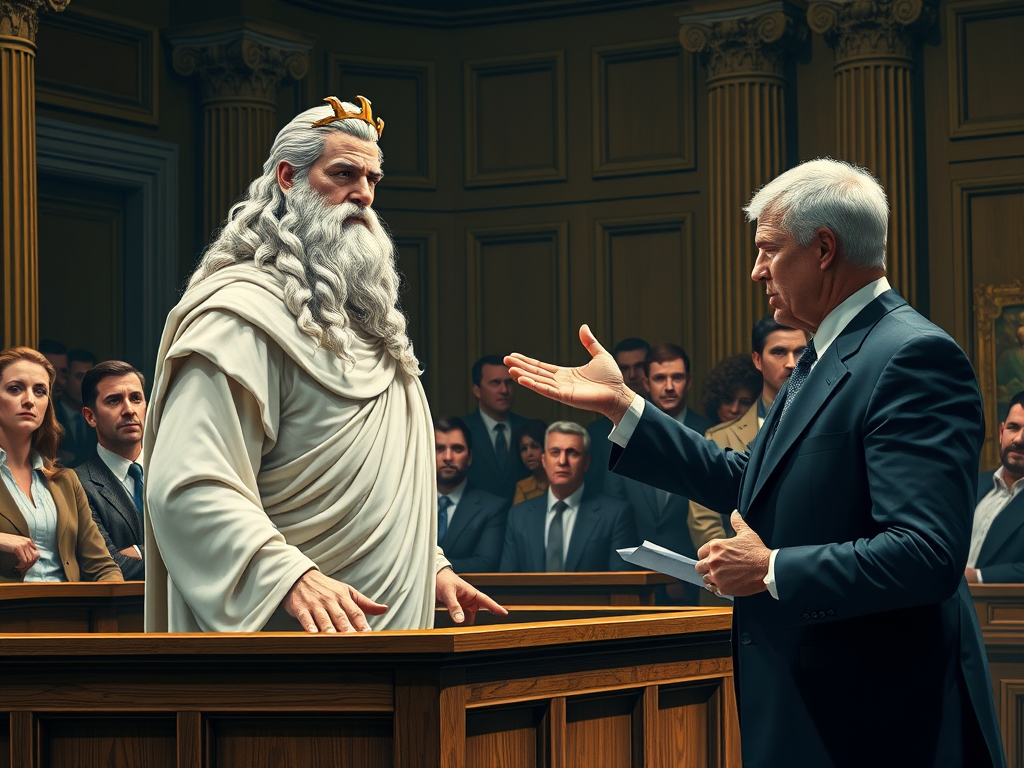
Zeus was tried for rape and murder, So were all his kin – And the verdict came back guilty For their cruelty and sin. Their sentence was to be forgotten – Maybe not in name, And yet from our hearts and from our prayers, We snuffed their precious flame. We found a god of kindness Over whom to make a fuss – Though just as much a lie, of course, But one that suited us.