The Engineers’ Plot

penge palace
Gems of The Crystal Palace, Sydenham by George Baxter, showing off the designs of Joseph Paxton

The Engineers’ Plot

Crystal Palace – it’s a suburb,
Station, park, and football team,
And a memory to a time
When this nation still could dream.
Once a product of Empire,
A palace to capture its roar –
Now just a flat-topped hill
In the Republic of Elsinore.
Straddling boroughs, pumping fountains,
Soaring towers, glass for miles.
Till flames across eight counties
Shattered her dreamy crystal aisles.

She no more beguiles – but that sounds Victorian –
Half vers libre, half Tudor sonnet.
Flirting with jazz and television,
Yet still bedecked in her bustle and bonnet.
She was no Bauhaus, no mere function –
Cast iron crockets encrusted her shell –
For all her prefab industry,
She always wore her baubles well.
Ah, she’s gone now – like her dinosaurs,
She’s of her time and place.
Though her place of course is the one she named –
You cannot say she leaves no trace.

Circle Lines

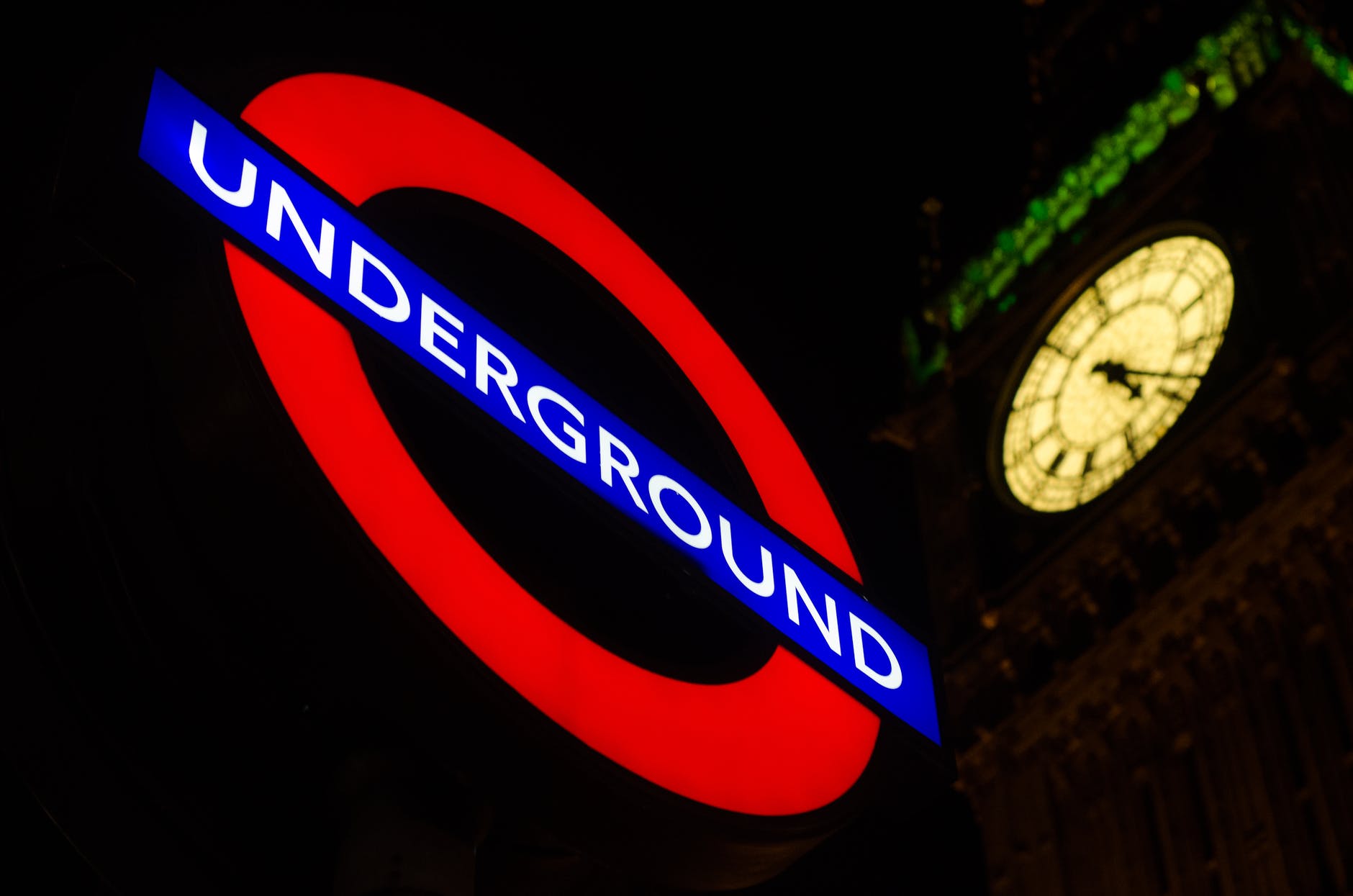
city night architecture metro
Photo by Skitterphoto on Pexels.com

Circle Lines

I see the poems popping up again
Upon the Underground –
Prosy, earnest, and ignored
By all except the very bored.
They’re forced to slum it on the crowded train –
At least they get around,
But free from glottal-stops and grime,
And far too erudite to rhyme.
And yet, it does them good to mix where
Plain-spoke folk abound –
And tailor their delivery
To suit the Drain and Jubilee:

“Mind the gap please, mind the metaphors,
Next stop is Leicester Square,
Oh tyger tyger burning bright,
She walks in beauty like the night,
All-change for Euston, mind the doors,
Use Oyster for the cheapest fare,
Remember me when I am gone away,
The darling buds of May,
South Kensington for dinosaurs,
Beyond the spiral stair –
Early electric, to beat the queues –
Where is Skimble ? Men long for news.”

Horseguards

royal guard standing near lamp post
Photo by Samuel Wu00f6lfl on Pexels.com

Horseguards

Come on down to Whitehall,
To visit England’s pride –
Fine-dressed guards on horseback stand
Sentry either side.

Come on down to Whitehall,
These soldiers trained to kill
With milit’ry precision sit
Absolutely still.

Come on down to Whitehall,
At eleventh hour
Watch crack troops all moving at
The rate of one horse-power.

Come on down to Whitehall,
They don’t do things by halves –
Our household guards can both stand guard
And pose for photographs.

Blown on the Windrush

Blown on the Windrush

Oh London, my London !  Forever so fond,
Yet I heard of the rumours of places beyond –
For further than ring roads and suburban stations
Apparently lies there a wealth of far nations.
How greatly I dreamed of the boat and the train
And the tropical sun, now washed out by your rain.
For my riches are poorly, my cupboards are bare,
My travelling stalled upon your thoroughfare.

Oh London, my London !  You felt my distress.
And pitied my yearnings to quit your address.
For penned by your broadways, I longed to escape –
So you widened my cage from the Steppes to the Cape,
From Hong Kong to Lisbon, from Cairo to Cork,
From L.A. to Delhi, from Auckland to York.
With bright lights and glamours, and chiming Bow Bell,
You brought me the world, and their families as well !

Growing up in the boring countryside, I’ve always liked the idea of immigration – not for myself, far too lazy, but for the rest of the world to do the hard work of coming to me.  Though I guess I am a kind-of immigrant into London, and this was written soon after my arrival as I was still marvelling.  Looking back, it’s a bit dum-de-dum, but that pretty much summed-up my provincial output at the time.  What my poems needed was a splash of colour, and London was just the place for that.

Dressed in the Raiments of Emperors

Lady Godiva
Lady Godiva by John Collier

Dressed in the Raiments of Emperors

Oh People of Coventry, turn not away !
For not only Thomas should view this display.

Oh People of Coventry, look not in shame,
She canters so proudly, erect in her frame.

Oh People of Coventry, unshield your eyes !
She wants us to watch her, to join her, to rise.

Oh People of Coventry, protest exudes,
So cast off your shackles, your breeches, your prudes.

The story is based on a real woman – Godgifu, Countess of Mercia, who survived her husband Leofric and died soon before the Domesday survey of 1086 (which lists her former lands).  The bareback ride doesn’t appear until the Flores Historiarum collected and retold by Roger of Wendover in the early HE 11200s (early 1200s AD), and Peeping Tom didn’t get a look-in until 11600-700s.

As for the poem, I wrote this so long ago that it feels almost as old as the legend.  Strange I was trying to channel socialist values through a protest over lower taxes !

Carcassong

meeplestars

Carcassong

Highwaymen are looting on the roads beneath the Pyranees,
As abbots tend their gardens in the misty Marin breeze,
While knights are walled in cities with their castles, shields and shrines,
And farmers lie in fields while the sunshine grows the vines.
And the River Aude is rolling down
From mountain pass to coastal town,
And from the peaks we see for miles
The chequerboard of tiles.

It turns out, the highwaymen in the opening line were all working for Lucky Hans, busy swiping other people’s property. However, I hear there is a growing resistance movement aiming to Free The Meeple !

Tumbleweed

all that's missing is a cactus

Tumbleweed

If you want a Russian Thistle,
All you have to do is whistle –
In they tumble on the breeze.
An 1880s stowaway,
A foreign sprout who’s here to stay
By blowing ever West with ease.
Not a thistle, but as hairy,
From the steppes to claim the prairie,
Infiltrating cowboy lore.
Full of thorns and full of seeds,
These drifting immigrants are weeds
Just made to be a metaphor.

The first recording of a Russian Thistle in America is from 1877 in South Dakota, but ‘seven’ has too many syllables…

Stone-Sand

photo of rocky seashore during golden hour
Photo by James Wheeler on Pexels.com

Stone-Sand

Shingle beaches, pebble-dashed,
Where armoured dunes are heaped and smashed
By hefting surf that tills and rolls
On up the beaches, spits and shoals,
Whatever flints that storm and time can prize
And toss like bowls –
All layered out by weight and size.

Gravels from the cliffs and beds
In blacks and greys, in blues and reds –
These bucket-breakers of the strand,
These castles that can never stand,
Upon a beach-head built by wave on wave
Of new-formed land,
Of nuggets dug from out the grave.

Pushing back against our soles,
The sucking wash between its holes –
This is no barefoot summer beach,
But haunt of limpet, kelp and leech.
Yet stones to scree to grains shall grow
Along this tidal reach
By silicates just going with the flow.

Coasts

aerial view beach beautiful cliff
Photo by Pixabay on Pexels.com

Coasts

The Spanish have the Brava and Del Sol,
The French have the Vermeille and d’Azur,
The British have…the South, the East and West
They’re simply places for the trains to roll.
They sound so innocent and amateur,
Before the marketeers have had them dressed.

They gave us the Jurassic, don’t forget.
What next ?  The Coccolith Coast of Dover ?
The Devonian Coast of…I don’t know…Dundee ?
The Windfarm Coast of Wales – it could be yet,
The Yorkshire Bladderwracks – think it over,
The Seaside Coast of Seaton-by-the-Sea…

The Name of the Wind

wind
Wind by Vladimir Kush

The Name of the Wind

Siroccos blow across the Sahara,
North from the desert to the inland sea,
Where Mistrals meet them, off the Alps,
To buffet the coasts of France and Italy.
The Helm roars in from Winter Norway,
And the Bora from the Steppes out East,
But most of all, from gale to zephyr,
None can blow as often as the beast –
From out the West, with not a name but Westerly,
He comes, and comes, and rarely drops for long.
He’s blowing turbines, hats and weathervanes,
From Summer-teasing soft to stormy-strong –
Bringing the Atlantic in his clouds,
And laden schooners in his wake,
From Kerry landfall to the Humber,
He’s the one for whom the branches shake.
In truth, we rarely name our winds in Britain,
Save to tell us where they’ve been –
And Westerlies are born on ocean-blue,
In cloudy-grey, to keep our island green.