Time to start the annual eyeing Of the final blooms in bloom, Before the Winter dying. Which will be the final womb ?
Ivy, maybe, maybe daisy, Roses far too slow and lazy To be done and gone by now. Asters equally as surly, Gorse that’s late and jasmine early, Petals braving frost somehow.
I guess they’re mainly cultivars, These freaks who just won’t quit, These suicidal stars – All for our benefit.
But perhaps there’s evolution here, With all the competition clear – The last shall be the first. Goldenrod and wintersweet Are hanging on so long, they meet The snowdrops when they burst.
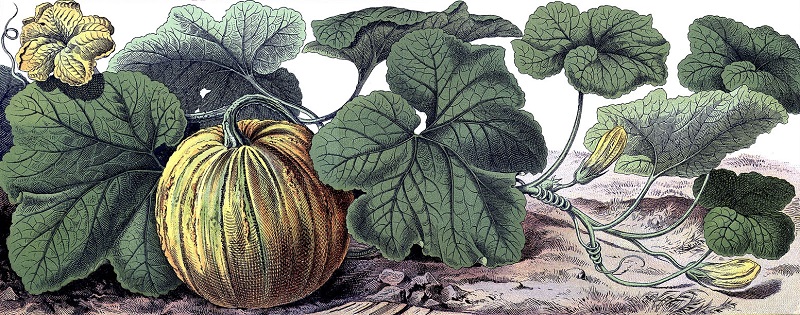
Pumpkin, oh plumpling, oh hideous mutant ! The hothouse of Hades is where you were born ! Nobody thinks of your yellow-starred flowers, They only remember your potbellied spawn.
An fragile annual, a delicate diva, Confined to the plots of the greenhouse and garden. You won’t survive long in the wastelands and margins, Where squirrels will eat you before you can harden.
Sclerosified skin in an orange-palled jaundice, With five-fingered leaves and with deep, sucking roots, And a hunger voracious to fatten grotesquely Your thickly-pus’d tumours, your Frankenstein fruits.
So pump up the pumpkins, fatter and fatter, You’re nothing but water and tasteless matter – Your heads then trepanned to scoop out your cortex, Yet still you’re invading our legends and doorsteps.
Yet many won’t make it – mistakes of blind nature, All twisted or stunted, or rotting while still on the vine. And if they’re not ripe by the first frost, they’re lost. Oh Lord, what have we created ? Oh monstrous design !
“The Kingdom of God is a mustard seed, The leastest of all of the seeds of the earth, From out which the greatest of herbs shall be freed, With branches so stout for the birds to find berth.”
“But Master, are then not the seeds of the duckweed, Or even the orchid, or poppy, or rue, Yet ever more tiny, yet too they succeed ? From dust on the breeze, so the wilderness grew. Whyfore is mustard so sacred ? If smallness is wanted, when all’s said and done, Then surely the Kingdom of God should be second to none ? To carpenters, all wood is worthy, But farmers know not ev’ry stem is a beam, And there’s more to croft than a prophet can dream.”
“Then look at the size of the mustard and poppy: The former grows three times the height of the latter. Within such a speck lies so giant a crop, see, And we should remember that, next time we scatter.”
“But Master, if increase in size is so vital, Then why not the mulberry, grapevine, or cane ? There surely are worthier plants for the title, For look at the growth of the poplar and plane ! Whyfore is mustard so sacred ? The not-tallest herb from the not-smallest seed. And surely the Kingdom of God is a tree, not a weed ? To fishermen, all land is constant, But farmers know not ev’ry bud will bare fruit – And there’s more to a plant than a leaf and a root.”
“But those other plants are not found in the garden – Their seeds are but sown by the wind, not the hand. And mustard grows tall and its branches will harden, So even the nests of the birds can it stand.”
“But Master, the mustard grows tall in late summer, And then, as an annual, each winter it dies. When nesters are building, this plant’s still a comer, And still till the fledglings have long filled the skies. Whyfore is mustard so sacred ? For any birds perching must cause it to quake. But surely the Kingdom of Heaven won’t tremble and break ? To parables, all things are symbols But farmers know not ev’ry shrub is a rose, And there’s more to a seed than the fact that she grows.”
In terms of the ratio between the volume of the seed and the volume of the plant it fell from, Jesus would be hard-pressed to better the Coast Redwood: Wikipedia gives the seeds a size of 4mm x 1mm (including wings – about four times longer than a mustard seed), and let’s say they are 0.5mm deep. Let’s be generous and assume they are perfect rectangles, so each will have a volume of 2mm3, or 1/500 millionth of a cubic metre. The tallest known tree today is Hyperion at 115m, though the most massive is Grogan’s Fault with a main trunk volume of 1084m3 as at 2014, and that doesn’t include the branches or roots (though who knows how one calculates such a thing). Let’s call it a 1000m3 – we therefore have a size increase of 542 billion times the seed that grew it !
However, Grogan has nothing on Pando, a grove of Quaking Aspens that are infact all clones sharing a root system. Wikipedia gives its estimated weight at 6 million kilos, and according to Penn State University the average green wood weighs 714 kg/m3, so 6 million kilos of tree has a volume of 4,284,000 metres3. Unfortunately, I cannot find an indication online as to the size of the seeds, but the US Forestry Service states that there are “very light, 5,500 to 8,000 clean seeds per gram”. If we take the lower figure, then that single Aspen seed which spawned Pando has put on 33 trillion times its own mass.
However, give omniscient Jesus his due, he surely knew that redwoods would not thrive in arid Canaan, and this was likely why he didn’t bring them up. However, Canaan contains both Aspens (albeit Eurasian, not Quaking) and their cousins Poplars (White and Black), and the King James Version mentions ‘poplar’ twice – once in Genesis 30:37 (the famous ‘goats staring at streaky rods give birth to streaky kids’ experiment), and again in Hosea 4:13. Some translations also change ‘willow’ for the archeologically-correct ‘poplar’ in Psalm 137:2. But…the seeds are often accompanied by hairs making them appear much larger. What about a more down-to-Earth comparison ?
I can find no statistics on the average weights of garden plants, but TheSeedCollection.com (which sells them) states that there are around 360 Black Mustard seeds/gram, and Wikipedia says that a gram of Poppy seeds will get you 3300 seeds (there is no mention of Poppies in the KJV, but there is archeological evidence that the Philistines introduced them – indeed maybe they even formed part of Isaiah 40:6’s ‘flowers of the field’). Therefore, each Mustard seed weights the equivalent of 9 Poppy seeds, so even though a fully-grown Black Mustard plant is 2 metres tall (Britannica) and a full grown Poppy only 1 metre (Wikipedia) – it’s hard to imagine that the Mustard weighs nine times as much (remember, they have hollow stems). Though based on the image below, they look about a quarter of the volume so maybe the mustard seeds are more dense ? Incidentally, Wolffia is a type of duckweed, including the world’s smallest flowering plant, so no wonder their seeds are so teeny.
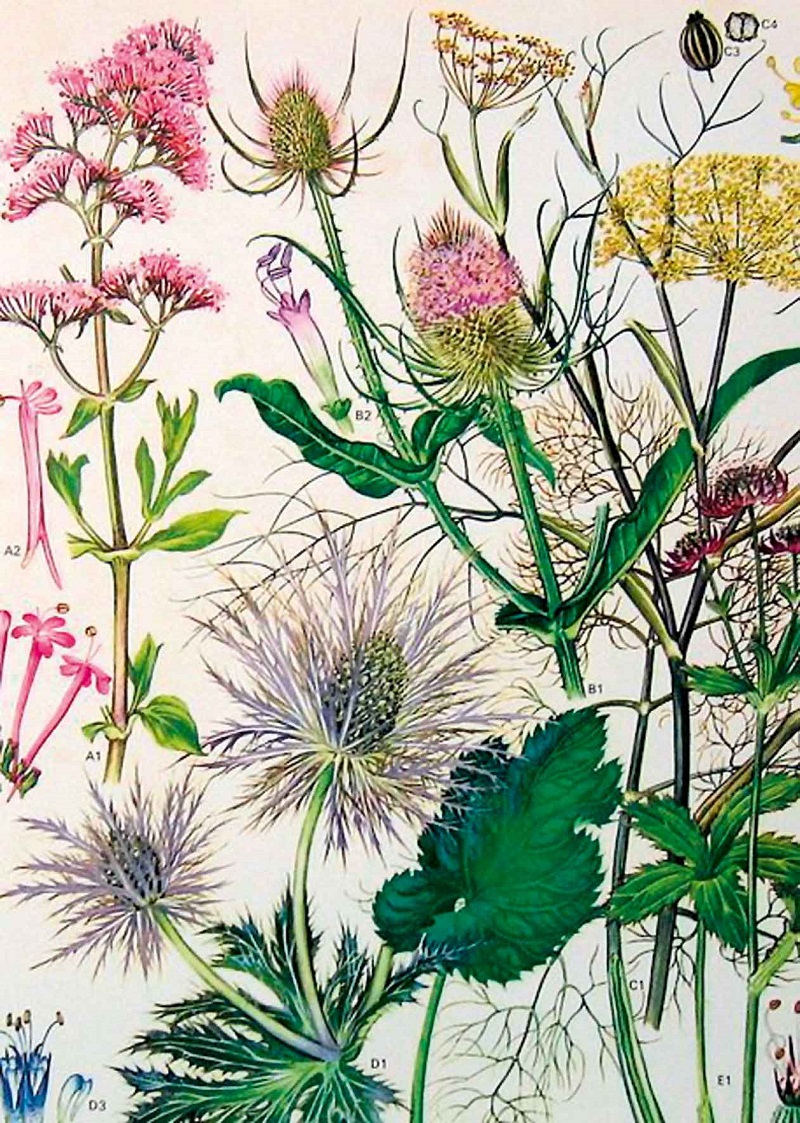
Is your backyard unkempt and scarred ? Then call us to the scene ! Is your bare patch not up to scratch ? We’ll turn your brown dirt green. We’ve got the roots and seeds and shoots And foliage to go. We’ve got the blooms and shrubs and ’shrooms To make your garden grow. No need to dig to get ’em big, No need to rake or delve. With zero care, they’re ev’rywhere: These plants just grow themselves ! We’ve dodder vines and thistle spines And stickybuds galore – To justify the docks nearby, We’ve nettles by the score ! What’s cuddlier than buddleia, And dandelion heads, Or hairy sheathes of borage leaves To feather-nest your beds ? Our ivy cloaks, our bindweed chokes, Our narcissus is black. Forget-me-nots won’t be forgot, They’ll keep on coming back. So if your lawn is neat and shorn, Too manicured and styled, Then call the chums with seasick thumbs – We’ll get it running wild ! If all that toil in clay-packed soil Has left you lacking zest, Then let us sow our vibrant show Of nature at her best !
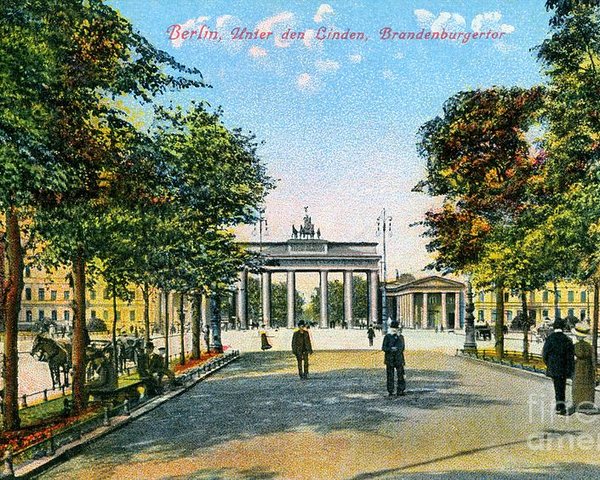
I was walking Underneath the lindens, Walking with my true love, With Summer on the breeze. We were walking Walking in Berlin, then, Walking two-by-two, love, Underneath the trees.
I was walking Underneath the lindens, Walking with my true love, Past the other fraus. We were walking In our finest linens Walking two-by-two, love, Underneath the boughs.
I was talking Underneath the lindens, Talking with my true love About my life and times. We were talking Of how back in Swindon, When walking two-by-two, love, We’d be walking under limes.
Is any insect brave enough To pollinate the venus-flower, Tempted never by the lure Of nectar, rich upon the leaves ? Is any insect sure enough To find that small white-petalled tower Standing tall above those mauls That punish tardy, wayward thieves ? Is any insect smart enough To find the pollen in the bower, And to fly away again And not be caged within those sheathes ?
Throat-wort over here and five-tongue over there, Clinging to the brickwork, When other weeds won’t dare. Any scrap of dirt will do, Waiting till the bulbs are through – And suddenly, they’re ev’rywhere, Ready with their reddy-blue.
Butterflies this side, bumblebees the other, Ferrying the love-notes, Each bloom to its lover. And then the scatter-seeds will blow, And where they land, so there they grow, As next Spring will uncover, By sprouting mauve and indigo.
Throat-wort is an old name for campanula (aka bellflower, but I always think of bellflowers as larger and grander). Five-tongue is a literal translation of Pentaglottis, the genus name of green alkanet. The truth is, I needed two-syllable names for both of them.
You gave me seeds to scatter In the ground beneath my plum – A lover’s gift for growing, And for shooing Winter glum. Just sow them and forget them, And with any-colour thumb, And these blue and tiny flowers Sprout a little straggly scrum – Yet year-on-year, these self-seed parts Make up a spreading sum – These almost-weeds, not worth the dig, Are no chrysanthemum ! You gave me some forget-me-nots – And later called me scum. I’ve tried so hard to wipe the slate – Yet ev’ry Spring, they come.
This poem was inspired by one by Dino Mahoney – I basically took his idea and added rhymes.
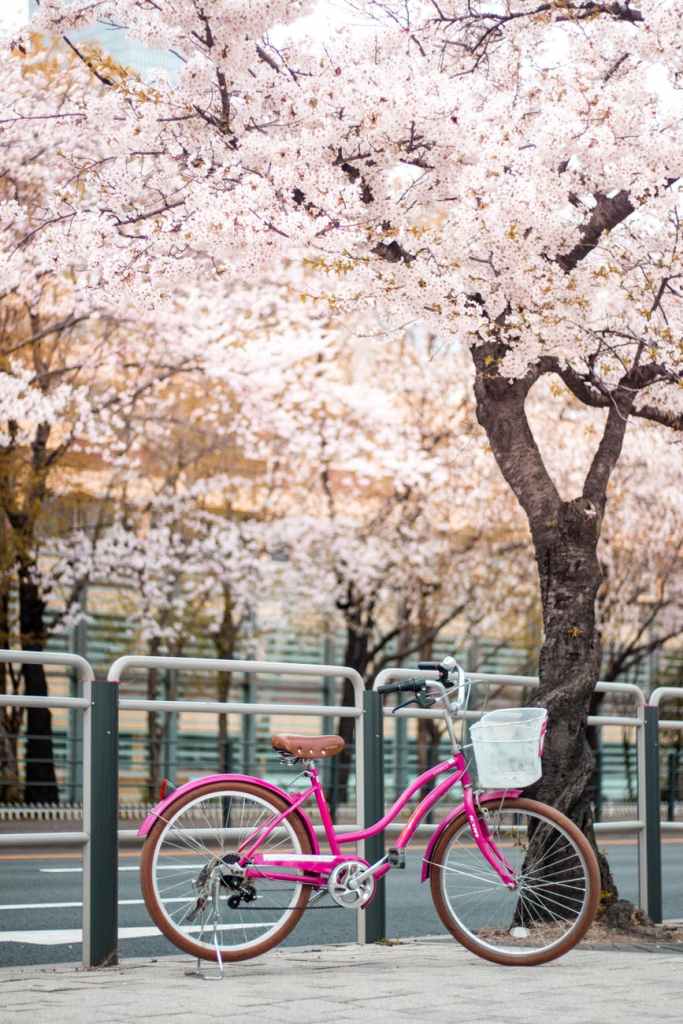
Along Acacia Drive, Through Elm Tree Road and Hollyside, And into Laurel Lane and Willow Mews, The civic cherries thrive – An orchard only one-tree wide, But threading through suburban avenues.
Before March has come, I see the cherry plums are out, Their branches full of flowers, keen to pop – I never see the plums – The pigeons scrump the lot, no doubt, Before they even get the chance to drop.
And just as those ones fade, The cherries-proper flush with pink, A very English taste of oriental. And yet, as they parade, I’ve never seen them fruit, I think – I guess that’s why they call them ornamental.
A burst of April snow, Confetti for an Easter bride, A blossoming before the leaves are built. They really make a show – They love to boast, all front and pride, Pretending like they’re never gonna wilt…
Of course, ere April’s out, They’re over for another year, And all that’s left are unimpressive trees. They are a Springtime shout, Before the moans and tuts appear To ask for dignified behaviour, please !
Which is a shame, I say, For here beneath each semi’s eaves They symbolise the middle-class at root – For all their youthful play, They settle down and spread their leaves And sire such oddly neat and waxy fruit.
The plant you gave so lovingly Is dying on my windowsill. I swear it’s not a metaphor, It’s just a drooping hellebore. I tend the plant so lovingly, And steadily it goes downhill. I swear its thrips and fungal pus Are meaningless in terms of us. This poor maltreated gift you chose, This sacrificial Lenten rose, Is no barometer of woes That gnarls and twists and guilts. It’s just a plant in dying throes That cannot blame or presuppose. The only thing this flower shows Is soil that’s poor in silts. I swear our love still blooms and grows, As surely as this other wilts. Whatever the bards or historians say, It’s not the pot-plant of Dorian Gray.







 Rhyming Couplets