May Day – the start of the long, late Spring, When early promise at last bears shoots, And the frigid world of the Winter King Is losing, day-by-day, its sting, As underground, our creeping roots Are undermining everything.
The dawns are dawning early, And the dark is in retreat – A wind of change is blowing, And to some it’s blowing sweet. The world is waking, waking, To the march of springing feet.
Labor Day, when the Summer turns cold, And all that promise, though showy, is fruitless – Or just as our efforts are harvesting gold, So they all dry up and lose their hold – As footings, once secure, prove rootless, Infiltrated by bugs and mould.
The dusk is gaining daily, And the storms are in the skies, While the chill is on the breeze And the breeze is on the rise, And the world is sleeping, sleeping, As the hoar-frosts crystallise.
Diamond – as hard as the universe – A nebula trapped under ice. Forged in the heart of a supernova, Polished by continents tumble‘ing over.
Diamond – as hard as a warlord’s curse – Each sparkle a bullet, the price. Landscapes are pillaged for so little won – Carbon for carbon, a thousand to one.
I suppose the pecksniffs will insist that zirconium can only refer to the elemental metal, and that the crystaline form of the dioxide should be referred to as cubic zirconia – but since I never listen to pecksniffs I can’t be sure.
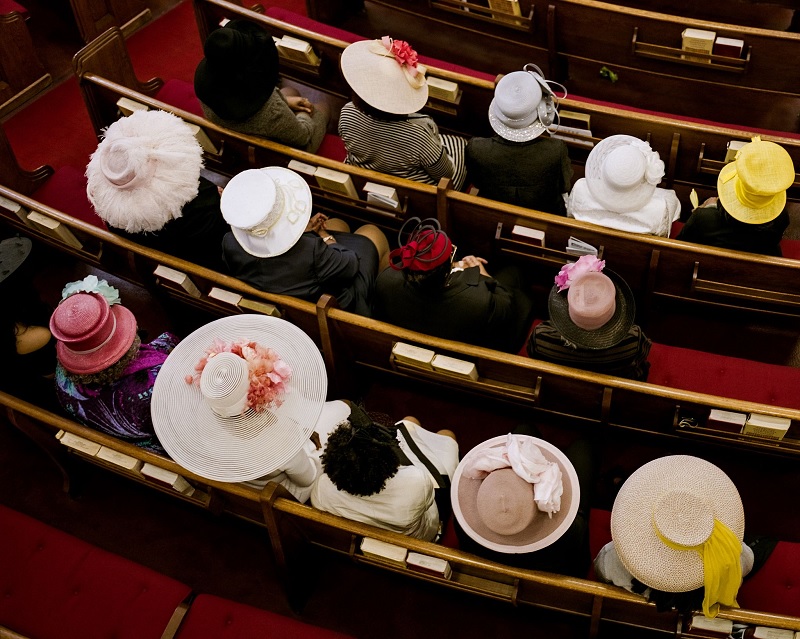
Just what is it with trilbies and churches ? Men must remove theirs, but women’s stay put. Indeed, why does Paul say that women must cover ? Is God so upset by each bare-headed mother ? Men, shed your turbans ! Your masking besmirches ! At least He allows still a shoe on each foot ! (Though women are free from such moaning and wails To sport wedding bonnets and funeral veils.)
Just what is it with stetsons and churches ? We might as well dress-down in sackcloth and soots Than decked-out in finery, mumbling our prayers, While tutting at any bloke hiding his hairs. Men, lose your skull-caps ! Such hattery lurches To thinking you’re working upon your kibbutz – For men who wear hats are not resters, but grafters – So the Lord wants your locks flowing free to the rafters.
Just what is it with bowlers and churches ? Men’s heads are open, but women’s are shut. How much of an insult is headgear undoffed ? Does God rage in Heaven at brims left aloft ? Men, ditch your toupees ! Our scriptural researches Show bald-pate Elisha is nobody’s butt ! Or do we use ‘etiquette’ as a hypocrisy ? That doesn’t sound like good manners to me !
I hope the hatted women in church also keep silent throughout, just as 1st Cor 14:34 says to.
To defeat one’s mortal enemy, Approach him as a friend And speak the honeyed words of peace And fawn and twist and bend. In time, once his guard is down And slower to defend, Then draw him even closer still With bridges on the mend.
Confuse with favoured trading rights, And treaties by the tome, And offer cunning compromise Beneath his pleasure dome By breaking bread instead of bones, And quoting “when in Rome…”, And beating ploughshares from your swords To bring his harvest home.
And waiting for the trap to spring, He will not understand You sprung it years ago, back when You shook him by the hand – And now he’s caged by friendship With no anger to command, As your lovers take his city And your children work his land.
But best of all, he cannot strike you back, He is too late – For now his precious kin are settled All throughout your state – For he has also conquered When he opened up his gate, And now can only sit and watch His people grow-up great.
We don’t need Miscavige, see, To run our audits, rig our fates – We’re moving up the bridge all by ourselves. We needn’t wait till OT3 To learn of Xenu’s DC-8s, Now Teegeeack’s escaped your secret shelves.
We’re the methadone to their crack, The thirteenth sign to their zodiac, With a finger-wag to psychiatry, And a less-homophobic piety – We’re still in the zone, but at least the zone is free.
We’ve shed your cult, we’ve sunk your navy, Quit your billion-years a slave, Although we all think LRH is swell. Yet still the core is true, unbeaten – Still believe in body thetans, Just like Quakers still believe in Hell.
With solar-powered e-psych probes, We’re the white-shirt face to their cult-black robes, Lightly tutting at SPs, But never disconnection, please ! We’re an altogether healthier paranoia, with no fees.
Diesel-hungry four-by-fours, Draft-dodgers dodging wars, Betting on the football scores – Well, that’s the price of freedom.
Christmas Cards on sale in June, TV news all afternoon, And folks who claim we faked the Moon – Cos that’s the price of freedom.
Despots have it easy, They can do away with clutter – But me, I’ll take the messiness Of ev’ry geek and nutter. So tune them in or tune them out, But never for a second doubt That we can ever do without.
Sticky kids on talent shows, Tattooed arm and studded nose, Neighbours’ hedges come to blows, And that’s the price of freedom.
Metric units here and there, And lots of artificial hair – It isn’t always right and fair, But that’s the price of freedom.
Dreamers have it easy, They can make the world anew – But me, I’ll take the old one Cos it’s here and now and true. So make it sweat or make it blink, But never for a second think That freedom is just pen and ink.
Ancient wisdom always seems To favour pure and nat’ral artefacts, The stuff of philosophic dreams Of unmined hills and untapped cataracts – Yet crying for such simple ways From modern lives of iron, wells and mills, They lounge and think away their days, While harder-working peers must hone their skills To hew and dig and chop and grind, And turn the world into a workshop floor – To build the surplus so a mind Has food enough to ponder nat’ral lore.
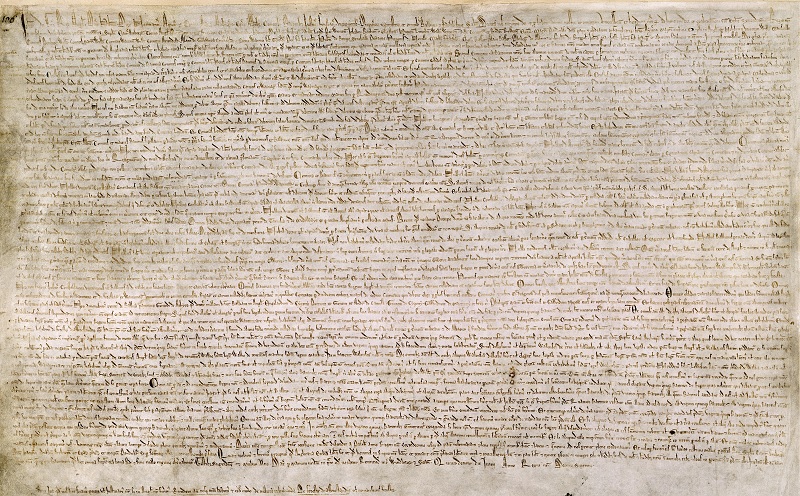
Thirteen copies were written, at least, And probably many more – All passed from bishop to sheriff to lord, And pinned-up, read, and, finally, stored, Then rotted or burned or thoroughly creased, Until we were left with four.
But then, for many centuries, Their words were out-of-date – Their scutages and fishing-weirs Belonged to long-forgotten years, And busy parli’mentaries Have moved on the debate.
Their Latin text is cramped and clipped, With not an inch to spare. And just like half the baron knights, We cannot even read the rights We’re gifted by this foreign script – We have to trust they’re there.
But so what if the parchments fade ? They’re passing, mortal things – It ain’t the laws that they imparted, But the movement that they started – In their image we are made, Who bow to laws, not kings.
“We will remove entirely the kinsmen of Gerard d’Athée from their bailiwicks, so that in future they may hold no bailiwick in England. We will remove from the kingdom all foreign knights who have come to the detriment of the kingdom.”
Magna Carta, 1215
English rights for English barons: That was the cry at liberty’s birth – And though they’d gag at the thought, would the barons, Their rights would trickle down to the serfs. Slowly, slowly, and bloody hard-won, Till the days of the tyrant-kings were done.
But nothing but exile for Gerard d’Athée, Farewell to Engelard, can’t let you stay, Goodbye to Guy, and to Guy, too-da-loo, Au revoir, Peter, and Andrew, adieu, And Geoffrey and Geoffrey, your fate is the same: Deported by charter in liberty’s name. And Philip (and brothers), return to your sires, Ex-Sheriff of Derby- and Nottingham- shires.
So there it was: the English disease: Scraping-up some scapegoats for their sleeping in our bed. But never for a moment did we get up off our knees To kick out at the barons – so we kicked the French instead. This lack of disquiet from locals is telling: Just tugging at forelocks instead of rebelling.
But surely things have improved ? It isn’t as though the world hasn’t moved: It started a wave that has kept rolling on, So we’ve far more rights now than had even King John. But all the un-English may find us less caring, For English-born freedoms were not made for sharing. So tell, Magna Carta: just what are you for ?, But a thing to suspend when we’re neck-deep in war.
The quote above is actually elided from half of clauses 50 (which does indeed go on to name nine individuals as well as two additional sets of ‘brothers’), and also part of clause 51 which continues the thought – although in the original, the clauses were not infact numbered. The first to do so was George Ferrers’ English translation of 1534, while the modern numbering dates from William Blackstone in 1759.







 Rhyming Couplets