Punctilagogaloquociatude

dryden
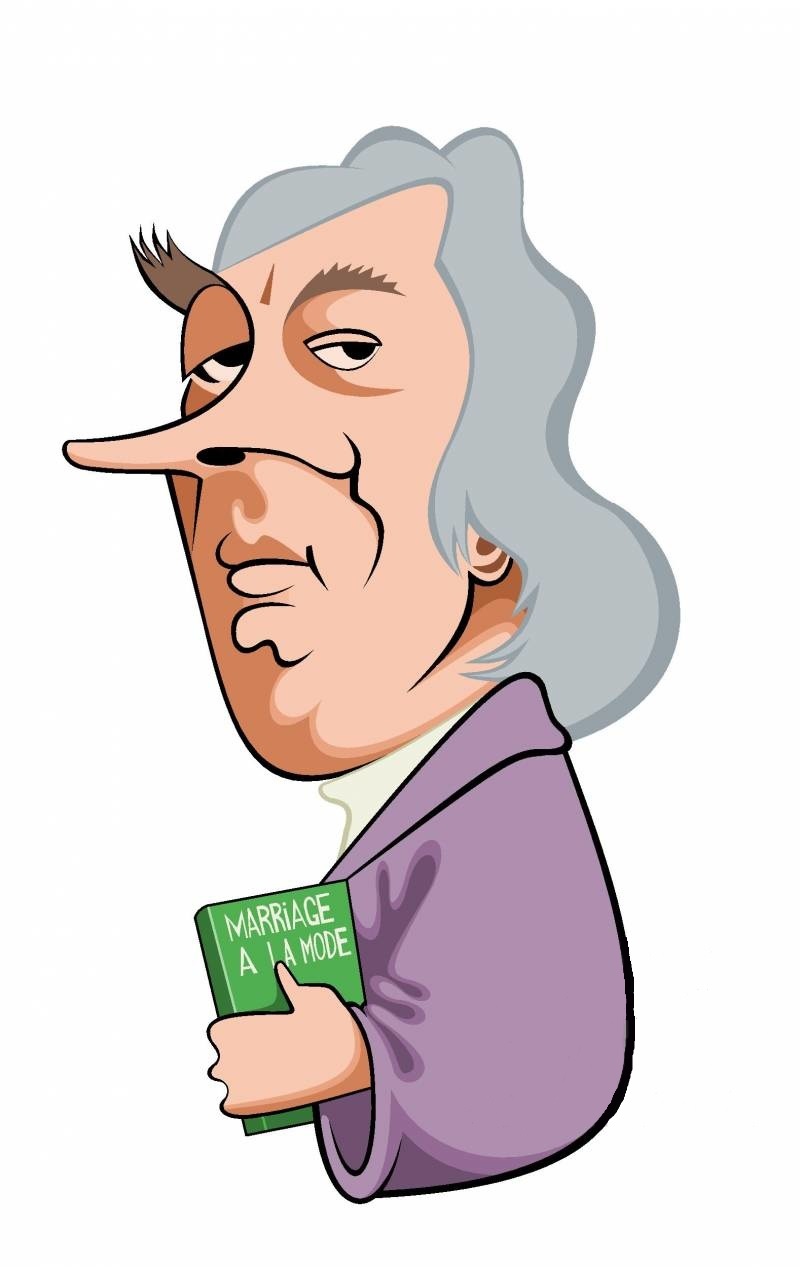
John Dryden by Gary Brown

Punctilagogaloquociatude

Poor poor Johnny Dryden
Thinks that English is too English –
Wishes it could be more Latin,
Than this horde that he’s combatting.
But he’s heading for a hiding
If he thinks our mongrel language
Is a synonym for Latin,
Somehow ripe for reformatting.

Poor poor Johnny Dryden
Hates those final prepositions –
Keep them out, just like in Latin,
Else we’ll really let the cat in.
Always ready for some chiding,
He polices our transmissions
Should we stray away from Latin
In our ungrammatic chatting.

Poor poor Johnny Dryden,
Hates infinitives to split –
After all, you can’t in Latin…
Oh, to truly scholar that in !
But the mobs are over-riding
All his careful rules to bits !
Ripping off their hairshirt Latin
For their English shifts of satin.

The title is pronounced PUNK-till-uh-gog-uh-low-KWO-shah-tyood.
Pride & Vanity

vanity
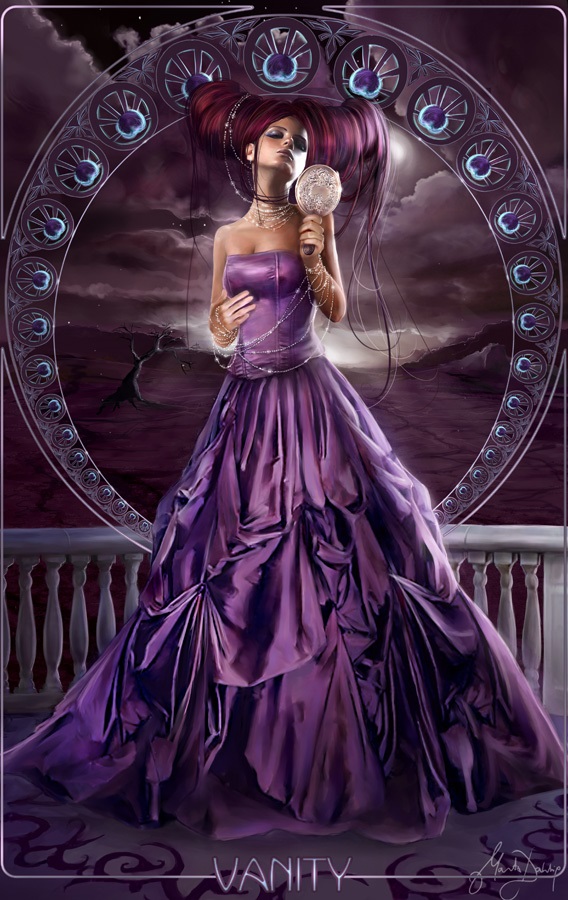
Vanity by Marta Dahlig

Pride & Vanity

If Gluttony is diff’rent enough from Avarice
To warrant a sin of its own,
Then how is Vanity denied ?
Is Gluttony not simply greed
Of a specialist and ravenous kind ?
And yet it claims to need a sep’rate plus-size Deadly bride.
So a fascination with one’s looks – why, surely this
Is sin enough to stand alone ?,
Wanton in its slow and catwalk stride.
Is Vanity not a diff’rent breed
Than mastery of the hand and mind ?
She needs to fight for a Sin of herself, an Eighth on par with Pride.

Some would add-in treachery and cowardice –
And lo, our list has grown
With these bonus sins we haven’t tried –
For ev’ry virtuous life we lead,
There’s even more to leave behind,
And takes us ever further from our short and handy guide.
Perhaps, when staring into the grim Abyss,
It’s not the time to tut and moan
At just which name should be applied.
But if there really is a need
To see these twins be redefined –
“I Am” belongs to Vanity, “I Can” belongs to Pride.

Of course – each deadly and elicit bliss
To which our mortals souls are prone
Is coupled with a better side –
A saving, which has been decreed
To counteract such moral grind –
Is Scruffiness a virtue, then ?  That seems undignified.
But honestly, the whole thing seems amiss –
If anything, this thought has shown
How Vanity is quite cock-eyed.
Yet still she struggles to succeed
To stand alone, not left behind,
As proudly Vain – and thus of course she’s still consumed by Pride.

After the Aftermath

broken vinyl

After the Aftermath

I heard a cautious plucking
Of a rubber-banded string,
And a nervous, tuneless whistle,
And a doorbell’s lonely ring.
While the birds were oddly quiet
Till a starling risked a ping,
And a chorus of the grazing ewes replied.

As note by chord by tonic,
So the melodies returned –
For all we needed silence,
They cannot, will not be spurned.
We’ve lost them many times before,
But somehow never learned –
On the day beyond
The day the music died.

I heard the constant background hum
Change key,
To slowly raise the dead –
From tinnitus to the thrum of industry,
In C,
Inside my head.
From the tapping of the plumbing
To the footsteps that I tread,
Even my heartbeat was a drum
Which would not be denied.

One, Two, Three, Dead

protest

One, Two, Three, Dead

Where are all the protest songs ?
Where is all the agit-pop to tell us ev’rything is wrong ?
I hear they’re out there, chanting still –
But somehow never reach me, and they prob’ly never will.

Where are all the protest songs ?
I mean, I know that pop has always
Been obsessed with love and lovers.
It’s rare than politics belongs
Beside the sugar on the airwaves,
Saving all its love for brothers.

They try to set the world to right,
But only in a quiet corner of the dial, late at night,
And fight-the-power-chords and tears
Are never crossing-over into unsuspecting teenage ears.

Best to use the tools you find
By marching to a funky beat
And tapping into pop’s romance –
For if you want to move the mind,
Then first you move the feet,
By making earworms of your chants.

Hypocrites

LE BON SAMARITAIN
The Good Samaritan by Aimé Morot

Hypocrites

Many believers, I know, are heretics,
Spitting in the face of their Lord.
Not that they would credit my judgement,
Not that they would ever spit.
But their God, their God of love,
Is a god of hate with a jealous sword,
And His book, their book, is a pompous monster,
That they know is a monster, if they’d only admit.
Burning witches,
Slaving slaves,
And all because their Saviour saves –

But many believers, I know, are lovers,
Who love the world and who love its people,
Its ev’ry people, without exception,
When giving their time, their strength, their soul
To the homeless, hungry, the troubled and lonely,
Inspired, for sure, by their Sunday steeple.
Point to the scriptures, they shrug about ‘context’,
And get on with giving, and charging no toll.
Gays and women
Welcome here –
Despite each prophet, priest and seer.

Many believers, I know, are heretics –
And thank God they disobey !
Pray, God, turn all of your faithful to hypocrites,
Help them to spit, and to show You the way !

Everything from Shells

coccolithophores
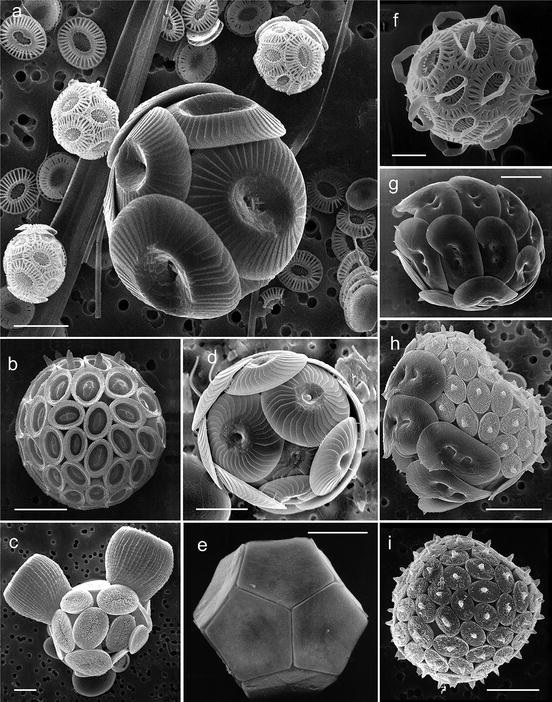
Various species of coccolithophores.  Each is a single-celled alga surrounded by plates.

Everything from Shells

Downs go up and downs go down,
As wave on wave of frozen ocean
Built each ridge and vale and crown
With ev’ry ancient tide in motion.
Tiny creatures swarmed the sea
And dropped their tiny plates all over,
From Stonehenge to Normandy
As deeply as the Cliffs of Dover.

Singular alga sounds all wrong, as if the term has become strictly a mass noun.

Handle for a Han Girl

woman wearing eyeglasses
Photo by Phong Bùi Nam on Pexels.com

Handle for a Han Girl

Don’t ask me her birth-name,
For I never heard it
Till many years later – too late to take root.
No, she was called Clover:
So terribly English,
So strangely old-fashioned, and strangely un-cute.
And pure Anglo-Saxon – her name, but not her –
No, she was as Chinese as any I’ve met,
With excellent English and excellent manners,
Yet bearing the name that was all Somerset.

And as for her birth-name,
I knew that she had one,
But she never told me, and I never asked.
And had I been told it,
I’d only be baffled
By which was her first name, and which was her last.
So she plucked a new one, did Clover, a new name –
I don’t know why this name, but this name is she.
She chose it at high school, I gather – they all did,
Her classmates and Clover, they chose who to be.

She still has her birth-name,
She hasn’t erased it,
She still has her birth-name for using back home –
But here she is Clover
For living in London,
(Though maybe she’s Cleo when living in Rome).
We in the West are too jealous of birth-names,
We get what we get, and we lump what we got,
Then sneer at the actors and writers for daring –
But Clover is Clover because…well, why not ?

Compulsory Mechanical Licence

assorted title cassette tapes
Photo by Vova Krasilnikov on Pexels.com

Compulsory Mechanical Licence

Sing it if you want to,
Cos I cannot stop you.
Pay me my royalties,
Do with it as you please.
For once a song is out there,
Then it’s out there for ev’ryone –
It’s out there for evermore,
They’re all out there together.
Until I’m dead for three score ten
And then it’s all for free forever.
But until that day,
If the author gets their pay,
Then the artist gets to sing away.
Permission isn’t theirs to grant,
And nobody tells anyone they can’t.

Was, Not-Was

Was, Not-Was

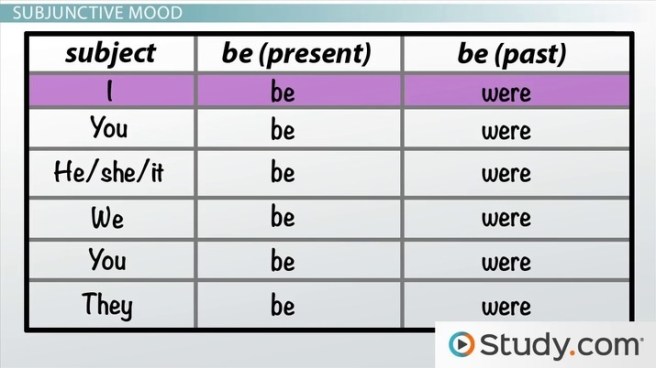
If I were to say today
If I was,
Would I generate a buzz
At my un-subjunctive ?
I doubt it.
Not to be presumptive,
But the world can live without it.
The less-pedantic folk
Have been dropping weres for years –
Not to provoke,
But only, it appears,
That they never learned a diff’rent way.
And who’s to say that what they say is wrong ?
Their meaning is as clear
To an ever over-fussy ear,
And all thanks to its context –
That complex glue that helps us get along.
To make a counter-factual phrase,
They have no need for prissy rules
That sound like strays from olden days –
They do it fine with simple tools,
Without the fuss,
Without the spleen,
And ev’ry single one of us knows wholly what they mean.

Don’t weep for changes in our speech –
It changed for you –
In all those words they wouldn’t teach
That once were dangerous and new.
They horrified your grandpapa, of course –
They made him jar, they made him hoarse.
But you knew better than your betters –
Broke the fetters on the Non-U,
Took these immigrants upon you,
Gave them voice and gave them force,
You let them all rejoice
And hoped they stung –
Rolling their illicit letters
Round and round your tongue.

So if I was to use the was
Is it because I like the buzz ?
But then again, perhaps
It’s more an unintended lapse,
And not a careless slur.
Or maybe I prefer
The ever-simple sound of was
I like the way she does,
So let her purr.
If that be all it is,
Or if that is all it be,
Let’s let the was be fancy-free –
As it were…

The Ballad of Evermore

agincourt
Agincourt by Donato Giancola

The Ballad of Evermore

The Thousand-Years War did not come to an end,
So they say – it just came to a stop.
When the gold and the men and the food has all gone,
Then the number of battles must drop.

The sheep were untended, the cattle were stray,
While the geese were so full they must walk,
For there’s none could survive, save the crickets and mice,
When the harvest remained on the stalk.

So famine and fasting would follow the fighting,
As fighters would follow their swords –
And even the nobles ate turnips and gruel,
While the ravens were dining like lords.

For year after year, as the sun dried the ground,
So the raiding would start with the Spring,
Till the storms and the Autumn at last gave a rest,
Till the battles that next year would bring.

When home for the Winter, the men would greet newborns,
And plant in their wives their next growth –
But all of the fighting brought all of the dying,
And birthing was slower than both.

So fathers and brothers, on hearing the muster,
Rode off with the equinox sun –
Then followed their heirs, from the firstborn and eldest –
To younger – then youngest – then none.

The plague swept the camps and the swords swept the necks,
And the romance went out of the roam,
And the tales and adventures for telling through Winter
Would often not make it back home.

Then even the daughters, for lacking their brothers,
Would join for the pride of the shire –
When even the women were thrust into arms
Then you know that the world is on fire.

The war couldn’t last now, with nobody raising
The next generation to fight –
So either the feuding must splutter to ashes,
Or burn all to keep it alight.

The Thousand-Years War did not come to an end,
So they say – it just came to a stop.
Now folk and their cattle are slowly increasing,
And harvesters bring in the crop.

But I hear my countrymen, those who came home,
As they tell of their travels with sword.
And what of our enemy ?  Cheated us victory !-
Grandsons are dutif’ly awed

The war has been wounded, and needed to heal,
But it’s now getting frisky for gore –
Were years of futility not pain enough
That we’re keen for a thousand-odd more ?