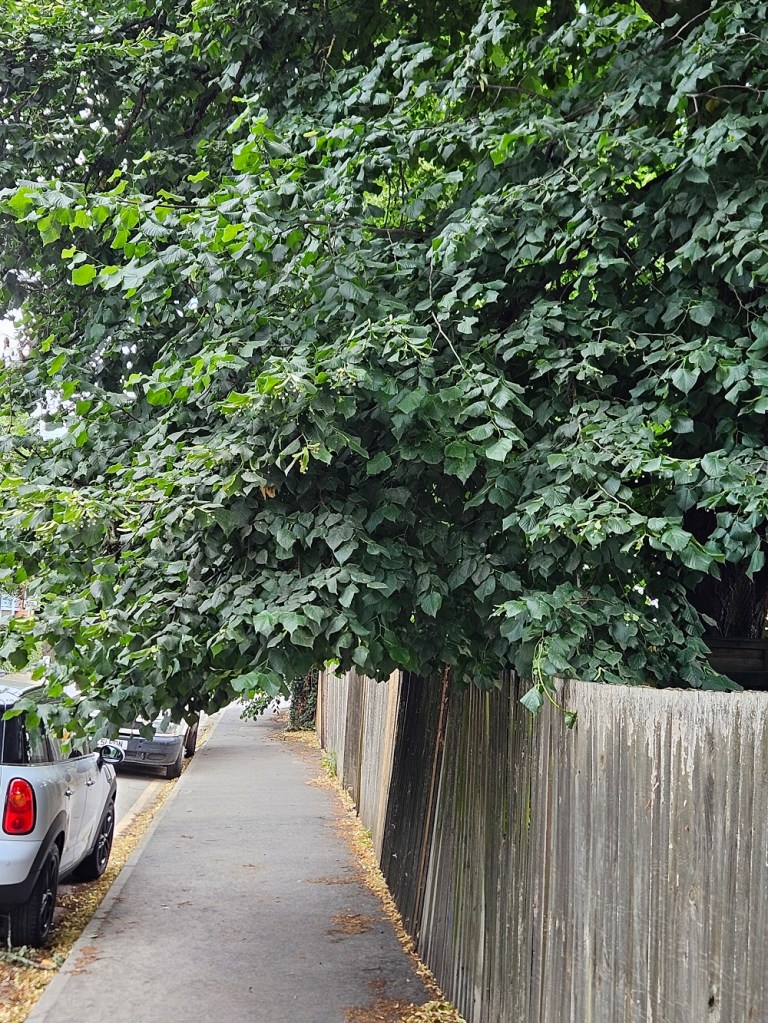
Once, all this was fields, Before the semis and the lawns – But their ghost still haunts the verges Where the stinging nettle spawns, The brambles form a makeshift hedge, The foxes keep the rabbits clear, And the accidental barley waits For the fresh suburban beer.
Once, all this was pasture, Till the Guinea pigs replaced the sheep – Yet deer still nibble round the edge, And moles have penetrated deep. The thistles form a pop-up wood, The owls invade the lean-to shed, And the reawakened barley waits For the local deli’s bread.
This straggly mess looks more like the cultivated variety’s disreputable cousin, Wall Barley. But even this is now being used as a food, and what can be more artisanal than that ?
Never trust an author who Addresses all his male cast By surname-only, first to last, As if he never even knew Their given-names. As though he doesn’t really like them, Tolerates at best the lot, It makes you wonder why he writes them Just to be forgot. And quite unlike his wives and dames, With whom he’s less superior, Yet overly familiar. There’s those who see these names we use As either/ors, up for review – One part sensible, one silly, One name functional, one frilly – Always others get to choose Which one that we must answer to. It’s strange, these different forms – We say the Hadley Cell and Beaufort Scale, And talk of how in FitzRoy sits a gale – It’s quite the norm. And yet we’re first-name-chummy with the devastating storms.
So never trust an author, Or a teacher, or a sergeant-major – Never trust a posh-voiced pager Barking surnames with a clout, Intent to order them about. Never trust a critic who ostensibly admires, Yet then only calls his heroes like some underlings he hires. And yes, I have been guilty too, Not wanting to presume a closeness Or an overly-verboseness In my always using first and last each time, just in case. But I hope I’ve never made the crime Of calling someone bluntly to their face – As if I owned the place ! And you can call me Mister, If you need to call me anything – Just like I talk of Mr Windsor when I mean the King. But why are we insisting on such old formality ? It’s just not me ! So even if we’ve never met, You all still get the same rapport – To call me by my friendly name – Cos that’s what our forenames are for !
They are the people in control, The They who run the show – Shadowy backrooms, secret goals, To prop up the status quo. Unstoppable authority, With fingers everywhere – Except…the They are simply We When seen from over there.
They told us that at school, And we read some Hiawatha, Then some Milton and some Armitage – You know the stuff. I shrugged, and ploughed along To some Ezra Pound or other, Feeling overwhelmed by culture Till I just switched-off.
I guess it works for those for whom it works, But all I found was faff – It might as well be scat or freeform jazz For all I cared. I needed rocking rhythms in verse, And lines that didn’t break in half, I needed souls that used a regular rhyme When they were bared.
They told us that at school, And they dared us to disagree – And they’re telling us still, with tuts and sneers And humourless debate. But we know what we like, and some of us like For our verse to be less free – So poems don’t have to rhyme, I guess, But when they do, they’re great !
Double roses are showy but barren, Turning stamens into yet more petals, Living the bachelor life. Even if they still make pollen, Bees can’t push through all those petals, Leaving them with no midwife. Yet these are the roses in bouquets, To symbolise our multilayered love Of loud and overdressed grooms. But dog roses are where bees graze – They’re wide-open with stamens full of love And hips full of future blooms.
Fonnëtick Inglish ? Wots the poynt ? But its a lahf, I gess. The trick tu this hol spelling gaym Iz keeping things abowt the saym. The needlesly bizärr will just disjöÿnt, A kays ov ‘morr iz less’, So dohnt bee oeverly nuröttick, Just giv hints ov the exsötick. For instans, difrent things ar dun For singul-sillabulz – It helps keep wurds the morr fammïlyer, Stops things getting even sillyer. But in the end, its just a bit ov fun To mayk sum nurdy roolz. I dohnt intënd tu laber it – My spelchecker wuhd hav a fit !
The world does not know we exist, The world is far too busy to care, The world is blissfully unaware To render us our due. And when we go, we won’t be missed By more than just a few.
We live in stark autonomy, Where hard work and enthusiasm Aren’t enough to bridge the chasm – No-one hears us sing. For in this mind-economy, Charisma crowns the king.
We may not be an island, But our causeways often slip beneath The silent waves of slow and grief While those with a winning smile Are bustling continents of dry land Full of friendships by the mile.
But don’t give up, don’t get depressed – We need to toughen up our hide And keep our darker thoughts inside, And get on with our day. That’s how it is – so make the best, To drive the blues away.
The world does not know we exist, Except a few like-lonely souls With whom we plug each other’s holes, To help us brace the weather. And life goes on, you get the gist, We’re on our own together.
Two-toned, long nosed, petals conjoined. Such pretty flowers, so rarely seen – So full of danger, so full of class, Yet snipped-off to plump-up the tubers, alas. Was that how these had been purloined ? Too toxic to keep in a garden that’s clean ? Yet someone had kept them, and set them in glass As they gingerly lowered them into a vase.
There’s something illicit in bolted blooms, In the flowers we’re not meant to see – The propellers of rocket, the lilac of chive, The pom-poms of garlic, the lettuce alive. Gardeners always link flowers with doom, Or as a time-waster, delaying the pea – But hold back the harvest, and unwheel the barrow For the scarlet of runners and saffron of marrow.
Ev’ry family has its secrets, Though they’re rarely of much of int’rest to the street beyond – Just little feuds and little quirks, That strengthen and spice the filial bond. One day, when the rest of the world has forgotten me, I’ll still be in the scope Of my great grandchildren, who vaguely recall me, And do so with and smile (I hope).
Ev’ry family has its secrets, Though that sounds far too full of passion and crime – We haven’t got literal skeletons in cupboards Just rumours made respectable by time. One day, when my genome is who-knows-where, Those little pieces of me may frown How funny we were back in my day, As we lurk in attics and photos, and the stories we’ve handed down.
Ev’ry family has its secrets, Though they’re only called that because it seems fun. We’re making some now, though we don’t yet realise, And half won’t be solved, though it matters none. One day, the hurt and the shame will heal, As we sense that we’re better together than alone. And the good times will always be there to be remembered, Though they change through the telling, as we make them our own.
Ev’ry family has its secrets, Though Dostoyevsky says that we’re all the same – I disagree, through the jokes we inherit That shouldn’t be funny, and which we cannot explain. One day, when we no longer have a family bible, We’ll need a new place to write our names – Then my great grandchildren can vaguely recall me, Half-hidden by a water-stain.