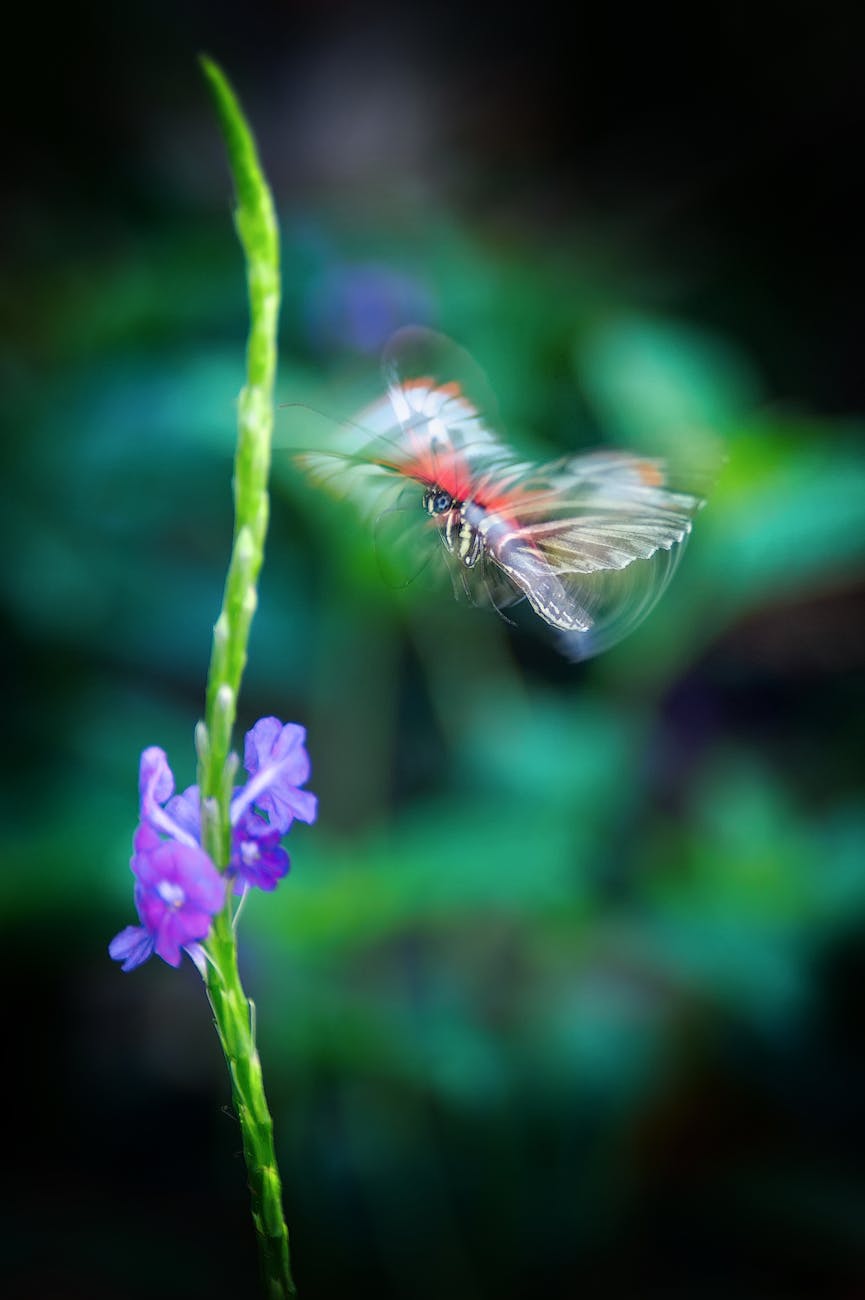
Photo by Miguel u00c1. Padriu00f1u00e1n on Pexels.com
The Spotless Page
There’s a nagging need to write That lurks within us, don’t you think ? For the page is far too white Until we stain it with our ink. But more these days, I find I tend to leave my paper bare – Yes, their emptiness can blind, But I prefer to simply stare. There’s a nagging need to write, And so I shall, some day, engage – When my mind’s as crisp and bright, And overspilling on the page.
She has the memory of a goldfish, In that she remembers pretty well. She is a frog in a warming dish That knows it is no place to dwell. And she’s a giraffe who loves shut-eye, An ostrich with her head held high, A colourblind bull when the red rags fly, And an old wife with new tales to tell.
Inevitably, this image is AI when I gave Chat GPT the poem and asked it for a picture.
Training Neurons
My dreams are like AI – They’re making-sense in bursts, But then forgetting what they’ve said. Over-confident and high – These yes-men feed my thirsts, Just to keep me longer in my bed.
All their written words are bees That simply won’t stay still – They’re almost right, until they’re read. They scrape my memories With a questionable skill, And they never pay to use my head.
My dreams are like AI – With their textures not quite right, And their eyes a little dead. But still, a riot worth the try, A playground for a crazy night Where logic fears to tread.
Another AI effort that just-about makes it into meh-tier
Archipelago
Some say poets are randy goats With endless groupies from the herd – The source of passion-dripping quotes, And rock stars of the spoken word. And yes, their tongues are best when spoken, Lilting, accented, uncowed – As something primal has awoken, Glamours cast when breathed aloud.
Some say poets are balding folks, Bespectacled and analytic, Full of dry and clever jokes That half will miss…but not the critic. Their mumbled tones are flat and beige, Each vaguely RP, lacking hype – No, theirs are poems for the page, And come to life when set in type.
Some say poets are dreamy souls Who pluck their verses from the ether – Whispered into pigeonholes By some unkempt yet soft bequeather. Screamed and rambled on the stage, And scribbled down to be forgot – They’re sometimes tortured, sometimes sage, And yet their words still hit the spot.
Some say poets, and far too many, Neither speak nor set to ink – They never want to share with any, Terrified of what we’ll think. And good luck to them, writing verse Within their heads, a private lay. There’s none are better, none are worse – They’re poets all – as some would say.
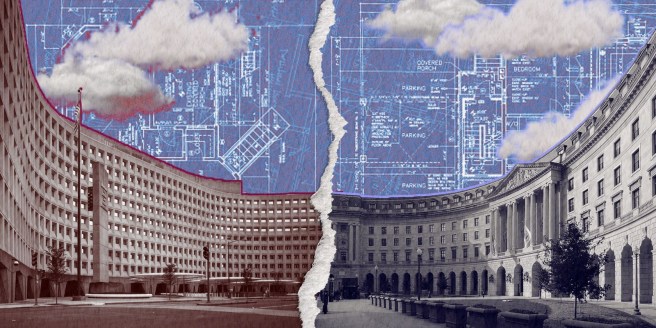
“It isn’t the resident tenants that make a city ugly, but rather the absentee planners.”
The Blueprint Bugle
Vienna is bursting with tourists, While Croydon is thoroughly dead – We all know why the one has the more is, And one is a ghetto instead. One has buildings of beauty That people will pay to admire – The other is screaming out “Nuke me !, And raze all my ugly in fire.”
Oh sure, that intangible culture takes many a-century To embed and to reign – But if your town looks more like a penitentiary, Then you’re waiting in vain.
Venice is sinking in people, While Stevenage wallows in grime – We all know why the latter is feeble, And looks like the scene of a crime. One has buildings of grandeur, That travellers travel to see, The other is yelling-out slander With a nihilistic glee.
And it doesn’t take castles and squares and cathedrals To still have plenty of charms – But it does take some sense, and lack of upheavals From brutalists swinging their arms.
Paris is famous for beauty, And Slough is famous for bombs – We all know why the one is a cutie, And one won’t get asked to the prom. One has buildings for humans, That are sculpted, and tiled, and embossed. The other is built for consumers With the ornaments cut-out for cost.
We know it deep down in our footings, this concrete-clad craze Is simply so unrefined. If it ain’t Manhattan, then high-rise ain’t for the holidays, But for the daily grind.
Please note that for the rhythm to work in the second verse, ‘century’ needs to be given it’s full there syllables, and ‘penitentiary’ it’s full six.
We’ll still grow trees on Mars, Under the domes, And rooted in thin soil – We’ll take nuts to the stars And distant homes, To shade our fervent toil. Beside potato fields, And stands of wheat, They’ll ease the barren crag – Not for their timber yields Or fruits to eat, But just to plant our flag.
It only takes an acorn, That’s not too much weight To build a tree. And ev’ry sapling born Shall grow up great In lower gravity. Yet forests don’t get lush Till many years Of Martian peace have been – I guess we’re in no rush To clothe our spheres, And turn the red to green.
Which trees, though, all depends – Can pine withstand ? Or deserts raise a beech ? We nurture ev’ry friend In ev’ry land Our giant leaps shall reach. And thus, we’ll leave a trace From overseas That shows we once came by. We’ll still grow trees in space, Because the trees Have reached-up to the sky.
A writer’s house is such an odd museum – With all their private, not-for-public touch. Does it forever colour how we see them, Or just amount to telling little much ? Must we rifle through their dirty laundry, And publish all their letters, kiss-and-tell ? And then complain they put us in a quand’ry Of seeing flaws when knowing them too-well. So why does hero-worship seek these holy relics, anyway ? And basing truth on only what they claim the gossip-mongers say ? Although I guess some writers would adore the fame they have today, And sure, let all the crowds come snooping round their hallowed ground… But as for me, if my words work there due, Don’t let the creeps come crawling through my caches – But burn my house, and all its contents too – And leave the pervy fanboys only ashes.
There ! A steak of white ! Let’s see…that’s one. Now was it large, or small, or green-veined ? Oh, what fun ! And there ! A brown of some sort – Could be meadow, heath, or speckled wood – But it’s clearly brown, I’d say, If that’s much good… A flash of red ! An admiral ? A tortoiseshell ? What’s going on ? Let’s take a closer look, But no, it’s gone… Wait, was that one the same That I tallied over there, As it circles round the garden ? That’s not fair !
Two dancing birds, Beaks apart, as if in song – As they circle through the cloudy, milky sky. One windsocked weeping willow, Slanted, yet still strong, And three folks on a hump-backed bridge nearby. Could it be they’re fishing ? Or waiting for the boat ? Though it hasn’t got a sail – perhaps a punt ? Upon the other bank Is a house that looks afloat, Sporting plenty of round shrubbery infront. And over here, behind a zig-zag fence, A squat pagoda, That’s sheltered by a spreading ping-pong tree. And round the edge are squares and scales, And flowers for a coda, A busyness of cobalt for our tea. I stared and stared at China On those Sunday afternoons, When round at Gran’s, for tea and crumpets from the grate. The disappearing cake Revealed the timeless blue lagoons – So very Eastern, yet so English, on a plate.
It is uncertain when the first examples of Willow Pattern appeared, although Wikipedia suggests they could have been produced by Spode in 1790. They are, of course, a classic example of cultural appropriation – and thank goodness they were ! Genuine Chinese porcelain at this time was very expensive, and modern pecksniffs would have seen to it that it remianed so, and that the hard-working families of Britain should be denied the beauty and broadened horizons that came with their roast beef and Yorkshires.
Staring deep in wonder at an apple, Or contemplating where to move in chess, Shutting-out the thoughts with which we grapple – Boring, boring, boring mindfulness !
Lazy-arses squatting in believe-ment, While others get stuff done so you can pray – But beauty’s in distraction and achievement, And life’s too short for omming it away.