Life, it seems, is ev’rywhere, An opportunist spiv: And ev’ry nettle, ev’ry rat, And ev’ry spider, ev’ry gnat, And ev’ry roach and snake and bat, Is one more proof of nature’s flair Through evolution’s sieve. So love each thriving organism: Dandelion, botulism, Dry-rot, fly-bot, feral pigeon; Life, it seems, is ev’rywhere, It cannot help but live.
Sir Lucas Drake was a dragon of a knight: His scale-mail always polished bright, Charging headlong into battle, Stalling left and swooping right To circle round and dive again – His wind-filled cloak, his flying mane, His sword as sharp as any talon, Raining over foes with death To make their sabres rattle. He also had a fiery breath From quaffing claret by the gallon.
Sir Lucas Drake was a dragon of a knight, Yet his coat of arms would dishonour a sergeant: Not for him a griffon argent, Nor a wyvern passant gules – His blazon, rather, came a cropper, Listing not a battle-stopper, But a shield befitting fools: ‘Azure, a mallard with head vert, Naiant contourny proper’. Oh, how that blazon hurt ! A green-headed duck upon a blue ground, Swimming the wrong-way round.
Sir Lucas Drake was a dragon of a knight, But never one for courtly prattle. Back at home, he spread his wings Across his mountainous estate, And hunted game and sheep and cattle, Anything to fill his plate. Never one for kissing rings, Or hearing yet again the jest The ladies made at his family crest, So he’d retreat to his hilltop clouds Away from kings and madding crowds. Depressed, he’d often spend his days Within his keep, atop his gold, Asleep against the winter’s cold As jealously he’d guard each chattel.
Sir Lucas Drake was a dragon of a knight, Though he bore much wit from his brothers-in-sword Who rebuked his arms with much delight – “It seems our Drake bethinks he a lord: For look: Sir Luke, by his shield, is a Duc !” Sir Lucas would curse “That’s just my luck, To share a name with so artless a bird. I’m one quack away from a chicken’s cluck ! What forebear had I who was so absurd That such a pitiful nickname stuck ? It should be a lion or a viper-snake, Or a dragon – then they’d bloody quake ! But no, I’m a Drake – I’m a ruddy duck !”
I’m not quite sure about the third verse – does it interrupt the flow ? I still like it though, so it isn’t quite a lame duck yet…
By the way, the best pronunciation of ‘Duc’ is <dook>.And can I just say how much I hate the language of heraldry – write in in English, or write it in French, but this weird Norman-middle English hybrid is…well, come to think of it, it’s the kind of snobbery we’d expect from people who still think that coats of arms matter. I love them for their history, but we’re not living in history. Well, okay, yes, we are allpart of history, because history never stops (despite what Francis Fukuyama may think…) But it only always exists in retrospect.
The facing-right bit is rare, and I’ve touched on it elsewhere. Since most knight were right handed, they held their shield in their left hand, so for the charge (animal) to be looking forwards, it has to face to the left Fine for in battle, but when hung ona wall or used on a letterhead, it always looks like it’s facing backwards, and possibly retreating !
There are many birds more beautiful Than pigeons, ducks or crows, But all these three are dutiful In holding long their pose. The kingfisher is but a blur, The swift is like its name – So why does heraldry prefer The skittish to the tame ?
So lazy is the nightingale, It sleeps the sun away – Not like the busy hen or quail, Who forage all the day. And peacocks strut with tails shut Yet still dress to the nines – So why do seals all bear a glut Of eagle-based designs ?
The dearth of birds, from rooks to crakes, Is witness of malaise – Instead, they turn to myths and fakes, And let the phoenix blaze. No herald’s crest shows blushing breast Upon its unpecked field – The cuckoos cannot reach this nest, They’re all shooed off the shield.
The herring gull is widely known, The puffin is a star, An ostrich or a penguin shown Would resonate afar, There’s no excuse to make no use Of all the vulture’s charms – It’s time to loose the humble goose Upon the coat of arms.
Ah heraldry, both endlessly fascinating and incredibly unimaginative. The ‘seal’ in the second verse of course refers to a wax-based document authenticator, and not to a walrus, though full credit to Madeira for using a pair of monk seal supporters (it would be nice to think that one of them was female).
Also, honourable mention to Whitby for showing three ammonites, even if they did look more like Chelsea buns. Alas, they were later changed to coiled snakes to tie in with the just-so story to explain the presence of the fossils, but coats of arms have always been appallingly bad at science.
I once had a clock, Just an ordin’ry clock, With its cogs that enmesh in a segue Escape and endock, With the whispering tock Of the gentle-most metrical shower. But a cuckoo took stock Of my welcoming clock And she chose it for hosting her egg-lay. Imagine my shock As her offspring would mock At my tranquil repose, ev’ry hour.
That hatchling would knock At the gears of the tock And he’d suckle a share of their motion He’d peck and he’d rock Till their screws would unlock, And he’d toss them aside for their power. Yet still the old block, Though it lost its own flock, Was a parent of clockwork devotion. It pandered this jock With his swagger and cock As he sang for his mate, ev’ry hour.
This abbey is the work of nuns, Who sing her offices each day Without a tenor in their range, And in-between, they farm her grange – They tend her pens and rabbit runs, They milk her goats and rick her hay, They gather greens and fatten veal, With herbs to spice and herbs to heal.
They fish her trout and brew her ale, They harvest cochineal from scale, And tucked away in back-court sheds Are pigeon-cotes and mushroom beds, Her mulb’ry trees, that once were tried, Still bloom – though all the silkworms died. The snailery’s a better omen, Raising broods of Brown and Roman.
They see her fields are sown and scythed, Her sheep are shorn, her orchards plucked, They see her queens are safely hived, Her cocks are henned and drakes are ducked. They churn her cheese and bake her buns Until their tender hands grow blisters – What this abbey lacks in sons, She made up for in sisters.
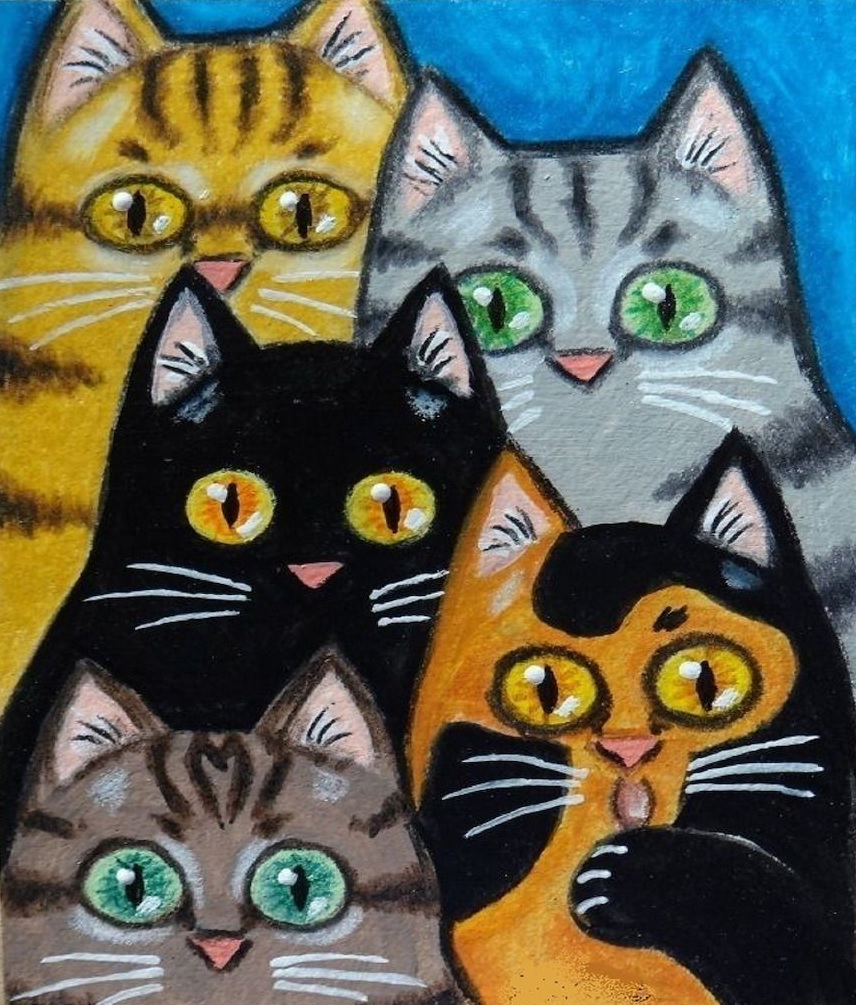
They say our chances of success Are on a level, more or less, With those that face a cat in hell. So don’t you see, we’re looking good ! We still could make it – yes we could ! Just like the cats, we’re doing swell ! For felines prosper ev’rywhere – In slums and pits without a prayer, They’re never doing less than well. So even in the underworld, You bet the cats are snugly curled ! They damn well make a heaven out of each abyss they dwell.
Cats are loners, other than their staff, But they stay away from other kitties – Except at night, when the Moon is half, And they gather into cat committees – Sometimes to fight, or sometimes to sing, And sometimes to love when the night is fair – Settling business, ignoring the king, With tails and noses up in the air. Perhaps such feline encounters harden, Make up for their lives as soft as their fur. Then once they’re done, it’s back to the garden, With time to sleep and time to purr.
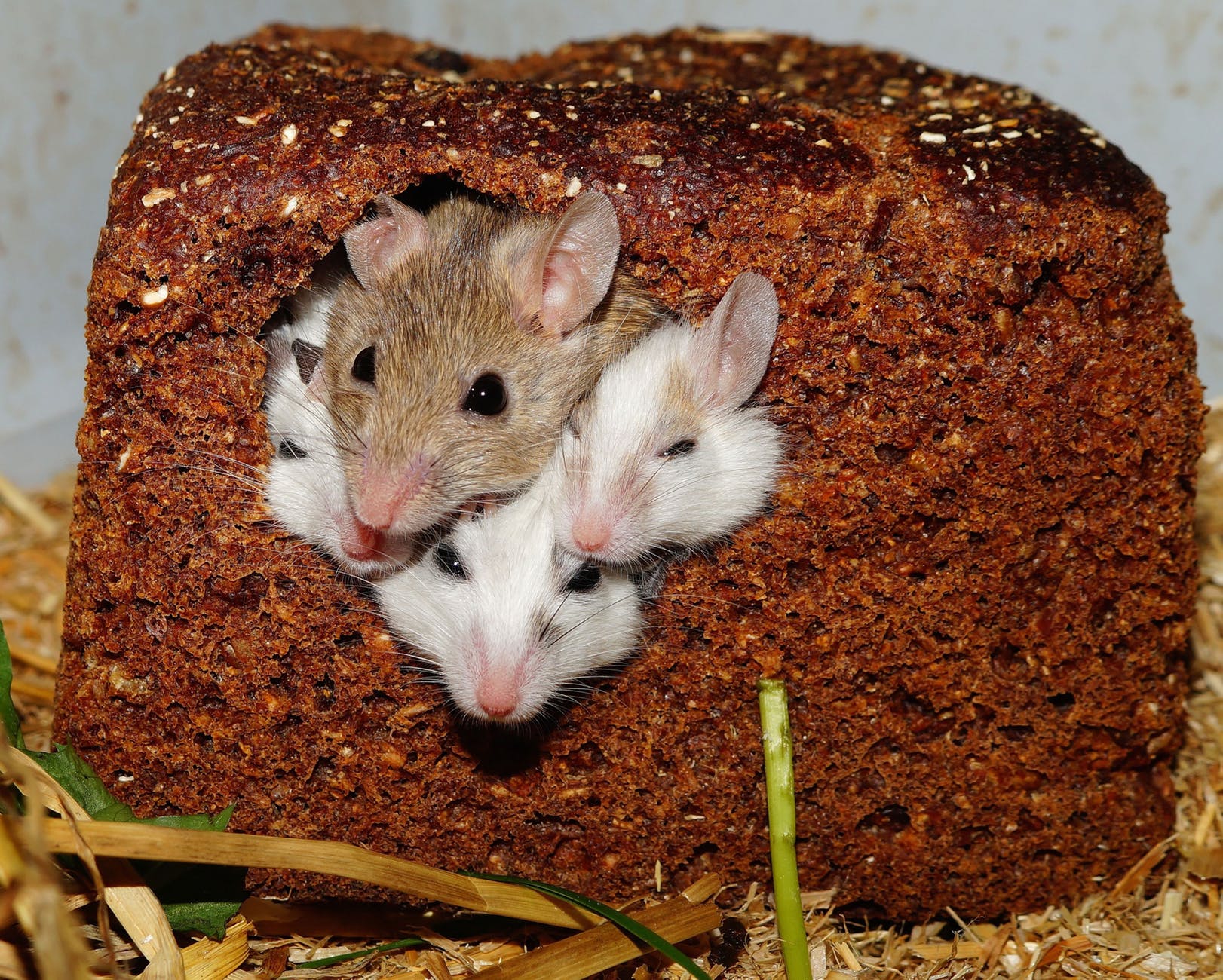
To the colony of mould upon my windowsill – Show me just the slightest mark Of sentience, a crucial spark To show you’re rising from the dark, Some gesture or some tiny act of will – Show me that you are aware And truly, shall I gladly spare Your thinking self – it’s only fair To leave you be, and curb my urge to kill. It’s not your fault, of course, I know, We cannot help the way we grow. So demonstrate it can be so With some discrete communiqué or skill. But otherwise, I hereby state I shall not balk, nor hesitate To bring about your speedy fate, And wipe you out from ev’ry crack you fill. And with my conscience duly sated, And my fears for health abated – Now it’s time I contemplated How to shift the mice behind the pepper mill. I hear them scritching in their horde, In cupboards and the skirting-board. They cannot longer be ignored – Their squeaks ring from the ventilation grille. So rodents, let us parley, please – I cannot have you stealing cheese, Nor plaguing with your crop of fleas – And yet, I hope we can co-habit still. But only if you’re duly smart To learn of hygiene – for a start – And keep your soil well set apart From places where it could pollute or spill. And finally, let’s have agreed A limit to how much you breed, And maybe we can yet succeed To forge a truce – forever and until. But if you cannot learn the score Then we, alas, must be at war – And if you doubt my lust for gore, Just ask the mould no longer on my windowsill.
A Bunch of Elephants – Photo by Pixabay on Pexels.com
An Unnecessaryness of Collective Nouns
Some creatures are packs, Or are flocks, or are nyes, Or are schools, or are smacks, Or are swarms, or are cries. These names are but games, Be they clowders or clans – Unheeded, unneeded, In knots, knobs and spans.
So what are these words for all critters and birds, With their bands and their gangs and their cohorts and herds ? Just gaggles of banter and hunches, To pep up the huddles and bundles and bunches.
And such linguistic fizz is clearly more than farmers made, With ferrets by the business, And ponies by the marmalade.
Let no sneer of pedants All lather and quack “It’s army for red ants And scurry for black.” A mole-tain of hillocks, A cotton of wools, A bollocks of bullocks And bullshit of bulls.
Just who are these sods who are playing at gods With their troops and their squads and their plagues and their pods ? As if we might ever be caring To credit each cluster and quiver and glaring.
And so their meanings dwindle till the whole safari’s spent, With kittens by the kindle, And ravens by the parli’ment.
Most collective nouns were invented by the Victorians. It’s what they did.







 Rhyming Couplets