The Elephants of War

War Elephant Head by Ruslan Bikmurzin

The Elephants of War

The jumbos joined the battlefield,
To put the steeds to fright.
For what use were mere horses
In the face of so much might ?
But the other side were not done yet,
This wouldn’t be a rout –
They launched their secret weapon
As they rode their mammoths out.

So the jumbos and the mammoths
Clashed upon the battlefield –
They flared their ears and trumpeted,
And neither side would yield.
They reared-up on their hind legs high,
They broadsided and barged,
And they shook the ground beneath them
As their ten-ton leaders charged.

But what with all their bellowing
To war and kingdom-come,
It soon become apparent
That these hunks were not so dumb –
They targetted the riders,
Pulled them off with probing trunks,
And skewered them upon their tusks,
And flayed them into chunks.

They stamped upon the humans,
And they kicked them from their path,
Till they were the last ones standing
In the bloody aftermath.
And they touched their heads together in a truce,
And sallied forth –
With the jumbos on to Africa,
And mammoths heading North.

Obviously AI, but it serves its purpose…

Ultima Thule

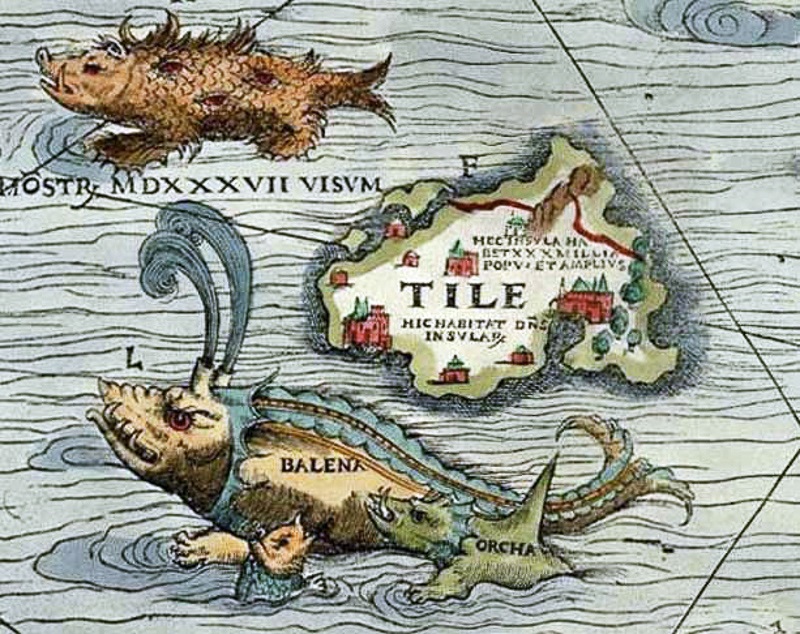
Detail from the Carta Marina by Olaus Magnus

Ultima Thule

Pytheas claimed to have gone to the North
In ninety-six seventy-six HE.
As far as Thule, beyond the Forth –
But where ?  Nobody can agree.
So the name was later applied to places –
Shetland, Norway, Iceland, and on.
Forever drifting North as the traces
Of habitation were stumbled upon.
The word was attached to Eskimos,
As called by those who did the naming –
And a rare-earth element, which shows
The allure it held in its framing.
Finally, in the hundred-and-twentieth century,
A trading post re-used the term
In Upper Greenland, the latest entry
To plant the Grecian germ.
An airbase later sprang up to claim it –
And at last, Thule was a definite place –
It had finally chosen to cash-in its fame
And end its meandering chase.
Until…the Air Force decided to change her,
To strip out the exonym, rebrand the node.
So Thule is free again, ever the stranger,
To wander the North and with no fixed abode.

Thule is usually pronounced as Thool-uh (or perhaps I should say Þool-uh). However, I have seen Tool-ee used, even by myself.

As for the dating, I’m using the far-more logical HE Calendar because I’ve got no time for counting backwards.

Basilica Cistern

An illustration from Gothic Architecture Improved by Batty Langley, with engravings by Thomas Langley

Basilica Cistern

The columns are far too carved
To just be buried neck-deep in water –
They have to have been acquired from older stock,
Reused to order.
What once held temple pediments,
Perched on Corinthian tops,
Are now a vaulted forest
Lurking underneath the shops.
There swim some carps between the bases
Of this Roman reef,
That graze the algae off the wishful coins
That glint beneath,
While downside-up Medusas watch
The tourist lines go by –
They’ll still be here a thousand years from now,
Through wet and dry.

New Kid in Town

Nashville Athena by orientalizing

New Kid in Town

Country folk are godly folk,
They sing to holy Jesus,
Sing how he’s the one they set their heart upon.
Yet over Nashville way, no joke,
They worship olive trees, yes,
Sing to Grecians in their mighty Parthenon.
They built a statue of Athena
Dressed in gold and ivory,
With ancient eyes of blue that never blink.
They built a temple to the Virgin,
Yet in rivalry –
Cos she ain’t the usual Virgin that they think –

Hallelujah, hail Athena !
Sing it loud and sing it free !
You beat Poseidon with his trident,
And now Jesus with his trinity.
We need a goddess, not a patriarch
To stir these sisters free –
In the Athens of the South, your spark
Lights up your mystery.

Country folk are gawdy folk,
They love their rhinestone rings –
Yet their churches are just warehouses of prayers.
Is Jesus stoney broke
That he can’t afford some decent bling
In which his shouty preachers flog his wares ?
But over at Athena’s place,
There’s statues in the pediments
Of epic battles fought in ancient times –
She may be stoic in her face,
But not so harsh and regiment
To frown upon our splashing-out the dimes.

Hallelujah, hail Athena !
Sing it free and sing it loud !
Lady Wisdom, Lady with the Owl,
Intelligent and proud –
We need a goddess to the arts
For fans to worship when we hum –
A diva moving-up the charts,
Who’s number one till kingdom come.

The original statue was sculpted by Phedias in 9563HE.  This replica was designed by Alan LeQuire in 11990, using gypsum cement, fibreglass-infused plaster, and gold leaf (not ivory, like the original, but close enough – and surely Phedias would have loved to have access to these…)  It is, I believe, based on ancient descriptions and other statues, but I’m sure some original interpretation has been included, and quite right too !

Judas Trees

Iudas Iscarioth by Abraham Bloemaert

     Judas Trees

Judas hanged himself, we’re told,
But from which tree in the potter’s field ?
Some say Elder, pagan and bold,
And some say Cercis bore his yield.
The Elder is likely the tale that’s old,
Though the Bible has the facts concealed.

Cercis may be a later rod,
So did logistics bring its birth ?
For the Elder presence is rather odd,
As a shrub which lacks both height and girth –
So the one who kissed the face of god
Must sway just inches from the earth.

The True Cross

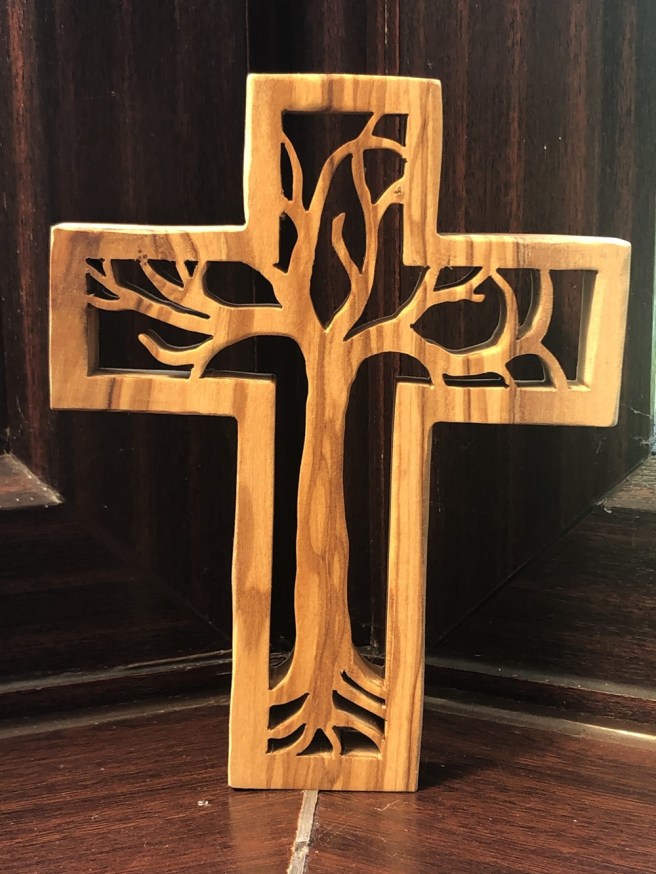
Tree of Life Cross by Trinity Wood Art

The True Cross

The Romans built their crosses
Out if any local wood –
Roughly sawn and bluntly joined,
They needn’t be too good.
Growing full of nail-holes
And bloodstained, as a rule,
When used and used again, until they rotted,
Then hacked-up for fuel.

If Jesus ever lived, if Jesus died
Upon those wooden piers,
Those planks would carry-on their work,
Outlasting him by years.
Some say cedar, some say cypress,
Relics for a coronation.
All are wrong – the Cross was built
From our imagination.

The Witherness of the Fig-Tree

Icon in the Cathedral of St Andrew, Patras, Greece

The Witherness of the Fig-Tree

Fruit was demanded, out of season,
Before the wasps had arrived.
A prophet cursed you, for no reason,
Except that he was denied.
Why so passive-aggressive that day ?
Why was he out to settle a score ?
Or did he just take your life away,
To be a metaphor ?
Was it power or wine made him drunk ?
Yet, after his magic tricks,
The Romans took your withered trunk
To make them a crucifix.

Grave Goods

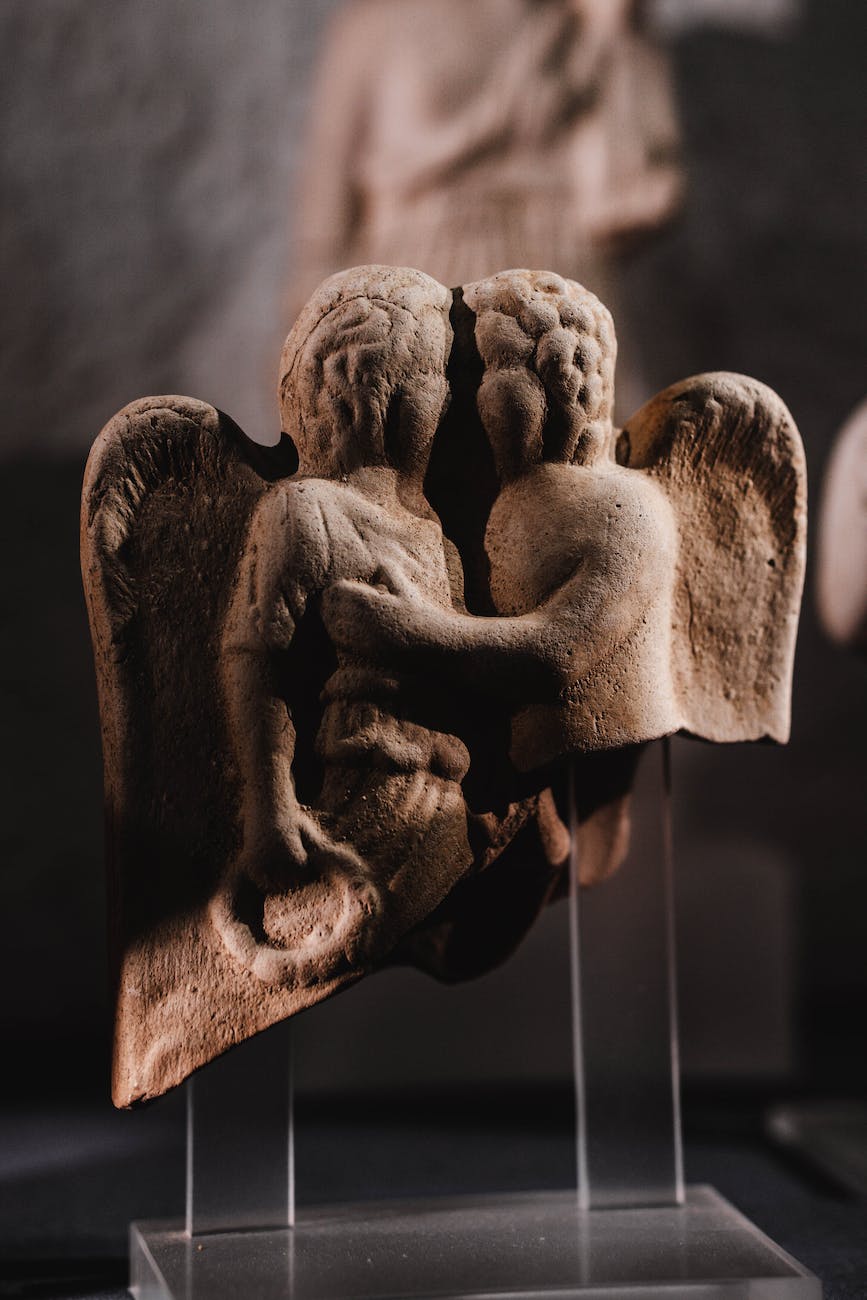
Photo by Subhasish Baidya on Pexels.com

Grave Goods

The ancient Egyptians filled their tombs with stuff,
As a trust-fund for the afterlife –
Finest robes, spices and jewellery,
Not to mention a mummified wife !
But it wasn’t just the practice of royalty,
The need, it seems, is in the bone –
Even the oldest and simplest folks
Rarely buried their friends alone.

I rather think you would smile at the thought,
How you’re combed and dressed in your finest suit –
As if you would need to impress St Peter
Or grease some angelic palms with your loot.
But then, it’s only symbolic stuff we’ve included,
Stuff you would never be without –
Family photos to show to Jesus,
While you take a drag on your favourite snout.

Even the pins in your hip, I guess,
And the handles of your coffin, and the nails.
And the memories, of course, that are left within your mind,
For beguiling the cherubs with your tales.
Not that you believed in that, of course,
Nor we who lower you into the ground,
But it just feels right, that you have them with you –
The same urge those archaeologists found.

Stubborn & Rebellious

The Stoning of Achan by Gustave Doré

Stubborn & Rebellious

(In reply to Deuteronomy 21:18-21)

I’ve always hated that verse –
To take a disobedient, wayward son,
A glutton and drunkard, and maybe something worse –
And to drag him to the elders, and call on ev’ryone
To muster at the gate of the town
To take up stones, and put him down.

But I recently heard a theory
That asks what parents would willing follow ?
After all, it costs them so dearly,
And any sense of piety must leave them hollow.
How extreme must their son appal
For such a code to be needed at all ?

Surely this was only spoken
To deal with the psychopaths among them ?,
The ones who threatened until they were broken,
The monsters and parasites dressed as young men.
How else could they protect their town
When a rabid dog was skulking around ?

But even setting the problem of evil aside,
Is this the best defence ?
Why must the Lord make the parents decide
When enough is enough ?  It beggars all sense –
It’s just too cruel for anyone
To have to denounce their troubled son.

But honestly, I have my doubts,
That this is what is meant by it at all –
And if it is, it needs to spell it out,
Just why they’re thrust against the wall,
To stop the zealots stoning ev’ry child
By judging surliness as ‘running wild’.

Thank goodness we ignore such spite,
And wonder why we keep such books around.
For there’s a psychopath, alright,
But he’s not the frightened kid upon the ground –
Rather, he’s the one with crazy eyes
Who gladly casts the first stone from the skies.

Missing Keepsakes

Photo by Masood Aslami on Pexels.com

Missing Keepsakes

“Upto 2000 artefacts are believed to have been stolen from the British Museum over the last ten years.”

– Curator’s Quarterly

Five-odd million artefacts,
Or maybe twice as many,
Filling dusty drawers and racks,
From Hull to Abergavenny.
Boxed-up, stacked-up, locked-up long,
With rusty coins and broken gems,
And set by law to house this throng,
Without the funds to open them.

Blame the politicians,
Blame the thieves,
Blame management as lax –
But never blame the public who believes
In paying less of tax.
But no-one ever thanks us for
The treasures we preserve,
That otherwise get lost to war,
Or buried in the earth.

Plenty on the left have sneered
At colonial comeuppance
While others on the right have cheered
At wokeness not worth tuppence.
And both have kicked the workers
Who are overworked and underpaid,
Because we’re just the lurkers
In the basement, in the way.

They never cared before,
Enough to fund the work they left to spoil –
And still they will not thank us for
Our centuries of toil.
It’s others source the objects,
We just clean, and log, and save –
And that takes funds, and takes respect,
And a culture well-behaved.