Linnaean quanta

linnaeus

Linnaean quanta

The thing about Phylums and Classes and Orders and all,
They don’t really mean very much, from a-one to another –
They don’t show a definite border or wall,
Except that each member within is a brother.
But how shall we simply compare, say, a Fam’ly of fishes
With Fam’lies of insects or fungi, or some other race –
For nature won’t readily yield to our wishes
For systems and schemes with all life in its place.

What’s needed are rankings that indicate something specific,
Like maybe the age when such clades were diverging anew –
There must be a way to be more scientific
That merely to shrug and decide “this’ll do”.
Then maybe some Kingdoms or Phylums will prove to be hoarders,
While others lack class in their Classes, now under-supplied.
So finally, let’s bring an order to Orders,
And give ev’ry Genus some Family pride.

It always struck me that the Linnaean ranks would be more useful if either all of their inhabitants shared a minimum percentage of genes, or alternatively that they were diverging at roughly the same time as all the others of that rank.

Note that in the old method, species is the only rank which has some actual science behind it and isn’t just vibes-based. Except…it turns out that the concept of a biological species is far murkier and less discrete than we used to think, so even this is not really true any longer. Hybrids, it seems, just keep popping-up…

But this will cause its own oddities, such as Cheliserates (arachnids & horseshoe crabs) diverging from the other arthropods in the Cambrian before all of the currently-recognised phylums had appeared, meaning these would need to be recognised as their own phylum too. So we are back to (hopefully) common-sense rough collectives showing nested sub-groups within – but this only makes real sense when we examine the specific heirarchy, but not much when we compare the same level from different heirarchies.

But either way, the idea of the phylums being the major body-plan divisions is well-established, at least in the animals. And having four intermediate levels between there and species feels about right – we now know that there have been an order of magnitude more branches (mostly petering-out in extinction), but we don’t need to capture all the complexity of the Shrub of Life, this is intended to be a layman’s tool, not a PHD.

Yet I do wish when talking of, say, the Order of Proboscidea, they would add when the split occurred – in this case, in the early Paleocene. You’re welcome.

A Poet to His Surgeon

two person doing surgery inside room
Photo by Vidal Balielo Jr. on Pexels.com

A Poet to His Surgeon

You know me much closer and touch me much deeper
Than any could ever before –
You bring to your table this soundest of sleepers,
And open me up to explore.
You rend me asunder with gentleest plunder,
To survey my hintermost-lands –
You ease my distress with your tender caress,
With my life firmly held in your hands.

Do Kings Play Chess on Fine Green Silk ?

chess

Do Kings Play Chess on Fine Green Silk ?

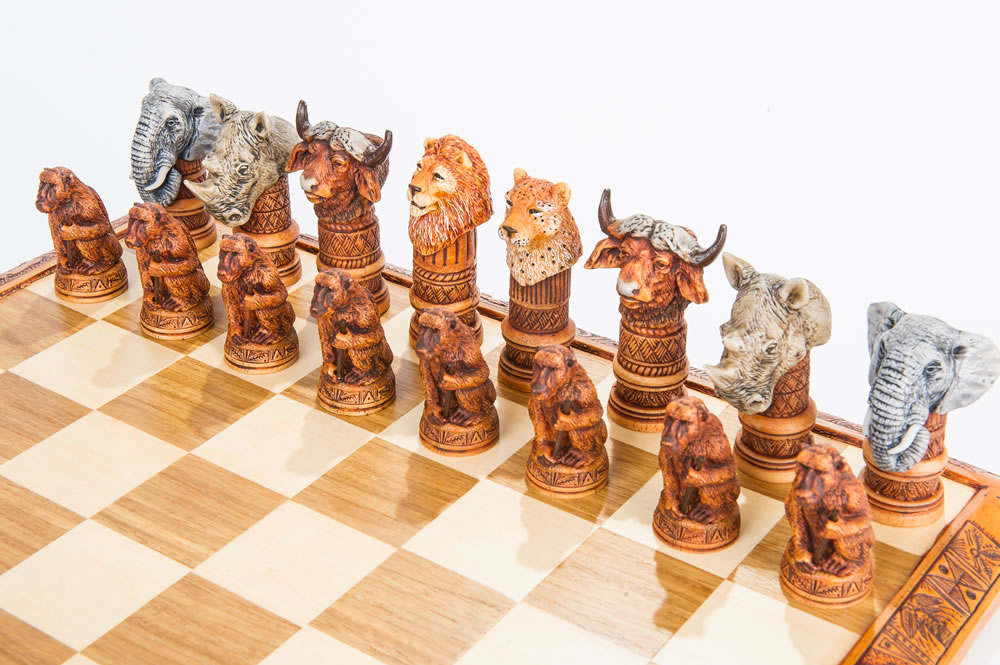
Henry moves his vertebrates,
And Louis tunes his tunicates,
While Malcolm swims his sharks and skates
To battle Olaf’s ranks of starfish pawns.
Boris risks bacillus rods
To fight with Oskar’s fungal squads,
As Richard launches octopods
To counter Philip’s shrimp-less group of prawns.
So James arrays his gymnosperms,
Like Ferdinand his cyan germs,
And Otto’s nematody worms,
At Charles’ yet-to-be-discovered spawns.

I should point out that the title is a mnemonic for the Linnaean ranks of life: Domain, Kingdom, Phylum, Class, Order, Family, Genus & Species.  Actually, Domain is a relatively new addition, and plants have Divisions instead of Phylums (or Phyla if you’re a pedant), and the whole thing now looks hopelessly simplistic in the wake of cladistics, but it’s still a handy starting-point.

Microbiota

mites
Eyelash Mites – you’ve probably got them and didn’t even realise

Microbiota

I’ve mites on my lashes,
And yeasts in my guts,
And hundreds of species
Of germs on my skin –
But not cos of rashes,
Or buboes or cuts,
Or dry parts or greasies,
Or illness within.

For ev’ry itch I curse,
There lurk my lurkers –
I know you’re there, my pretties
And I know I am your food.
My constant hitch-hikers,
My loafers and workers.
You are my troops, my cities,
You’re my nations and my brood.


Way down my intestines
Are hundreds of others,
Who outpace each cell
In my body by ten –
And while some infestings
Are life-giving brothers.
They yet could rebel
If they turn pathogen.

For ev’ry inch of me,
I am outnumbered –
And long before my birthing
Saw you terraform my loam.
I thrive unflinchingly,
Yet so encumbered.
Be gentle with this earthling
As you make yourselves at home.

Since I wrote this, the theory that bacterial cells outnumber our own by 10:1 has been called into question, and a figure of 4:1 is now proposed.  Alas, I have already rhymed with ‘ten’, so it has to stay.

Overwhelmed by Subtlety

teabag
Cup & Saucer made from Earl Grey Tea Bags by D Postlethwaite

Overwhelmed by Subtlety

You undergo life just a little too much,
You taste ev’ry nuance and stray molecule
In vision and sound and in palate and touch,
You never can blend them to seamless and whole.
But the good and the bad must equally live
Inextricably encurled –
You are, I fear, too sensitive,
To suffer this imperfect world.

This verse was inspired by a friend who insists she can’t use teabags because she can taste the paper.

Poisonhead

black spider
Photo by Anthony on Pexels.com

Poisonhead

I cannot tell you why I should be so afraid,
Except I am.
Perhaps it’s evolution keeping me alive
That makes me scram.
But I have always hated spiders, big and small –
Oh god, so small !
They’re lurking in this room, right now –
They lurk, until they crawl…

But sooner yet than later,
Then the peace between us must be made –
For I don’t want to be a hater,
When, oh please !, I hate to be afraid…

And with tarantulas – so big !- we get to see
Just how they’re built –
Their legs, their palps, their spinnerets,
Their onyx eyes and downy quilt…
Yet small ones have these too, too small to see –
But oh, they’ve got the lot,
Upon a strange and creeping body –
Never let this be forgot !

But I am more than this, and greater –
I shall love them, I shall not be swayed.
For I don’t want to be a hater,
I don’t want to spend my life afraid.

Z. apocalypsus

E Coli
Low-temperature electron micrograph of a cluster of E. coli bacteria, magnified 10,000 times, microscoped by Eric Erbe, colourised by Christopher Pooley

Z. apocalypsus

Squirming and writhing in unthinking hordes
That cannot be dented with bullets or swords –
They’ll find us and kill us and shred our remains,
They’re after our bodies and after our brains.
They’ll mess with our minds worse than Dali or Escher,
Our stomachs will turn and our bowels feel the pressure,
I sense in my gut that they’re here in the flesh –
Oh my…
Escherichia coli !

I feel a little bit guilty about the last line, as apparently the stresses should fall on the RIC and the CO, whereas I would prefer them to fall on the I and the LI (that is, the next sallybles along).  But honestly, whoever actually ever says the name in full anyway ?  So I reckon my stresses are every bit as valid.

E. coli, incidentally, is a natural part of our gut bacteria without which we would probably be dead.  That is, until it turns bad…

On a completely different note, this seems like a good place to discuss horizontal gene transfer.  This is where a (usually) bacterium grows a sex pilus which attached it to another of its species (or sometimes a completely different species) and exchanges genes, which may include a fancy new antibiotic resistance gene it happens to have mutated.  My question is: why would it do that ?  If its environment is suddenly flooded with penicillin, it’s surely to that one bacterium’s benefit to be the only survivor.

I cannot find a definite explanation online, but I do note that, for the most common method, the DNA that builds the pilus is a self-contained plasmid (that is, a part of the genome outside-of and independent-of the nucleus).  It seems that the primary genes sent across are the very genes to want to poke its neighbours, and the other genes transferred are an accidental by-product.  Therefore, the solution I tentatively propose is that, just like the mitochondria in our own cells, it started life as a parasite that over time has found it more advantageous to pay its host back for the netrients and shelter.


The plasmid would seem to be less far along this particular evolutionary journey in that it is not so intergrated into its host as to lose its own identity (as shown by their ability to pass between species) – basically they are freeloaders who don’t, I suggest, cause any problems for their hosts, and sometimes quite by chance cause an advantage.  And of course, there’s no guarantee that it ever will be further subsumed, particularly as it seems to be spreading itself around just fine as it is. (Oh, and yes, I did just spell ‘intergrate’ with two Rs, and I just did so again…)

But I could be totally wrong.  I just wish that a few of the articles marvelling at the outcome would give a thought to how we got here.

Anatamour

turned on white and black torchiere lamp
Photo by Steve Johnson on Pexels.com

Anatamour

I love the way your halves combine.
I love the way you place each lung
With careless grace and good design
On either side your centre line,
And equidistant from your spine.
I love the way your ribs are strung.

I love the way your shoulders fit,
I love the way your arms construe.
I love the way your kidneys sit,
So each, the other mirrors it
To keep the couple quite legit.
I love the way your hips are two.

I love the way you wear your legs,
So nicely paired, and just enough –
For with a third, the question begs
Of where upon your frame it pegs.
I love the way you keep to regs.
I love the way you’re up to snuff.

I love your face with eye and eye,
I love the way they both are blue.
I love the way they flit and fly
In unison, to watch me pry
Upon thy tygrish symmet-try.
I love the way you’re balanced-through.

The penultimate line is inspired by how I always read the fourth line of a certain poem of William Blake’s.

Childless Genes

Genetic Modification

Childless Genes

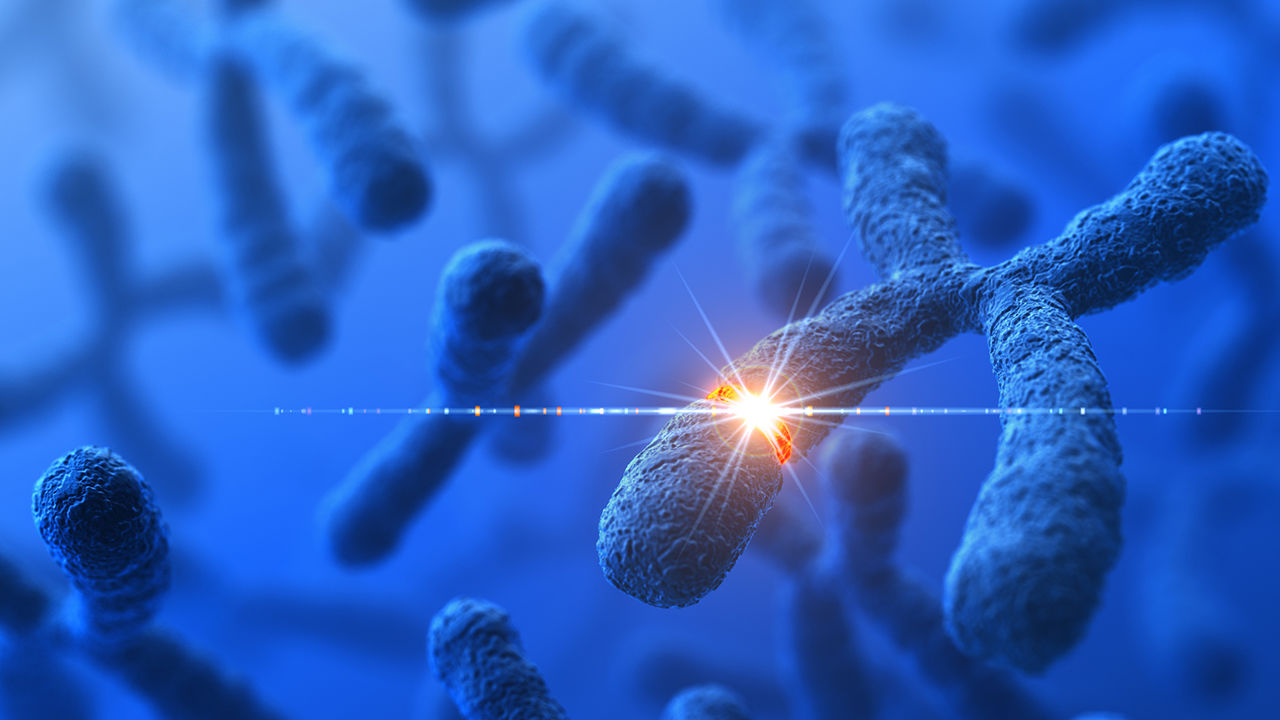
I am the product of four-billion years-worth
Of winners and breeders, and fighters and choosers.
But now they shall wither, extinguished forever –
For billions they flourished, yet still wound up losers.
But hold on, my genes are my sister’s, my brother’s –
They’ll swim through the side streams, these spawny succeeders.
For they are the product of four billion years-worth
Of fighters and choosers, and winners and breeders.

Unwise in the Ys

karyogram

Unwise in the Ys

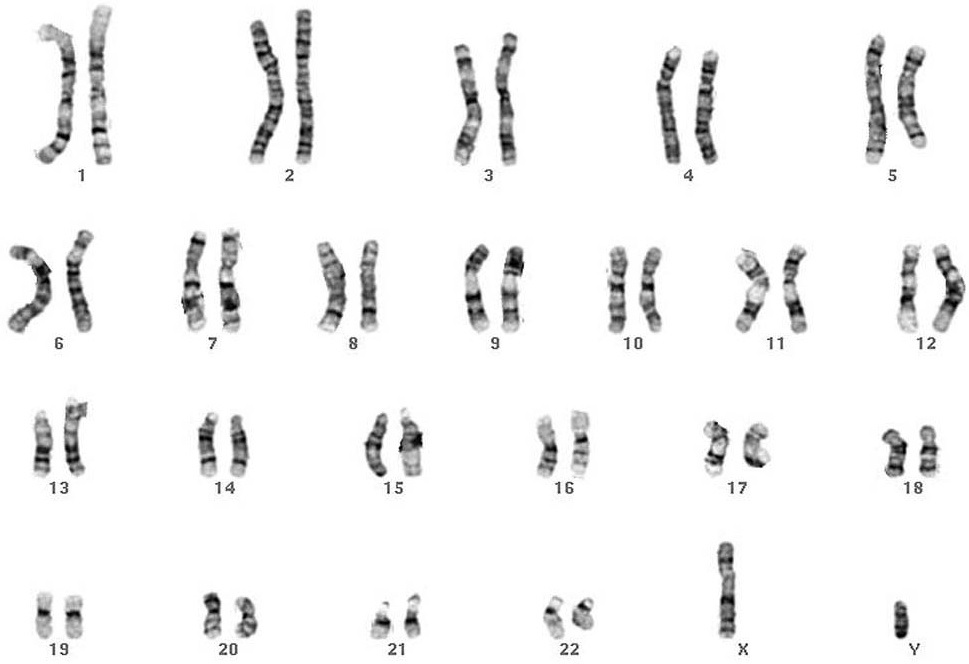
We start the wars, we fight the wars,
We win them and we lose them –
We argue out the truces and the peace.
We write the laws, we break the laws,
We honour and abuse them –
And either way, our meddling shall increase.
For we are Men, alas, we’re Men,
We’re being masculine again:
We’ve got the whiskers, got the beer –
We’re patriarchitypes, my dear.
For we are He, alas, Himself –
We’ve got the jobs, we’ve got the wealth.
We must be heard !  We shall be heard !
We started with the final word.

At least, that’s how it’s always told
By critic and historian:
From hunter-gather days of old
To present times – the myth is sold
That ev’ry man is brute and bold,
And endlessly Victorian.
But we are more than legacy,
We’ve learned to share and redefine.
The mercy that you beg of me
Is yours these days as much as mine.
For we are us, thank god, ourselves,
We’ve equal now, not trolls and elves –
But that’s enough from me today,
I’d rather hear what you might say.