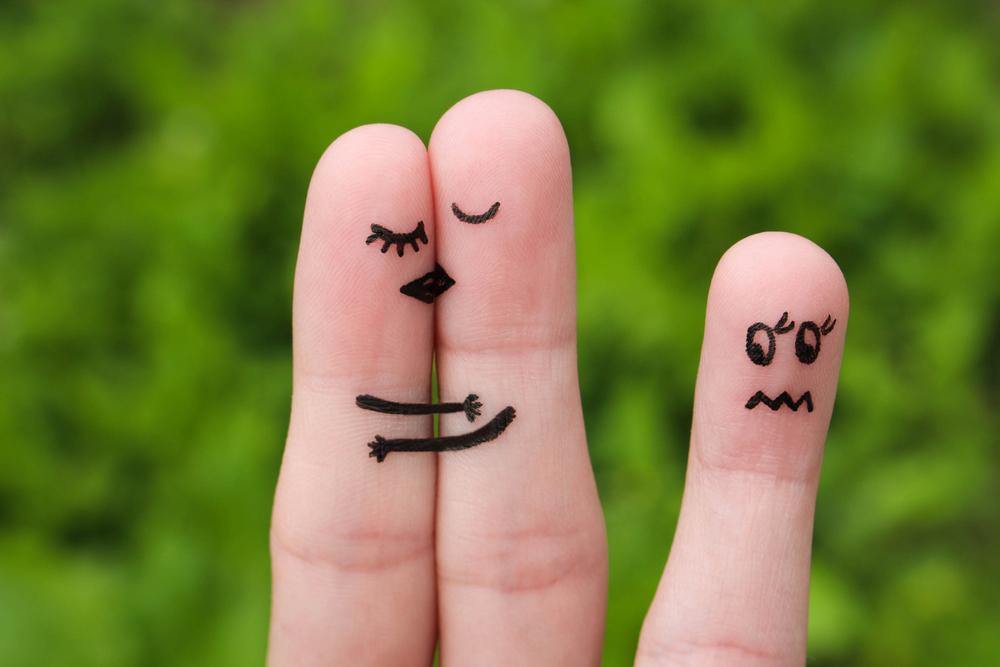
These words are mine, And you shan’t have them – These are mine, and mine alone. I guard them close So none may grab them – Guard them close, these words I own. Oh, how much you want them, want them, Oh, how much you seethe and pine So here, take envy, just for you… But jealousy is mine, all mine !
It should be pointed out that the conflation of jealous to mean envious has a long history, and Wiktionary provides quotes of both Oscar Wilde and Mark Twain using it this way. As a strict descriptivist, I have no problem with this (as shown here), but tend not to use jealous at all, preferring envious and possessive. But that’s just me.
Sir Lucas Drake was a dragon of a knight: His scale-mail always polished bright, Charging headlong into battle, Stalling left and swooping right To circle round and dive again – His wind-filled cloak, his flying mane, His sword as sharp as any talon, Raining over foes with death To make their sabres rattle. He also had a fiery breath From quaffing claret by the gallon.
Sir Lucas Drake was a dragon of a knight, Yet his coat of arms would dishonour a sergeant: Not for him a griffon argent, Nor a wyvern passant gules – His blazon, rather, came a cropper, Listing not a battle-stopper, But a shield befitting fools: ‘Azure, a mallard with head vert, Naiant contourny proper’. Oh, how that blazon hurt ! A green-headed duck upon a blue ground, Swimming the wrong-way round.
Sir Lucas Drake was a dragon of a knight, But never one for courtly prattle. Back at home, he spread his wings Across his mountainous estate, And hunted game and sheep and cattle, Anything to fill his plate. Never one for kissing rings, Or hearing yet again the jest The ladies made at his family crest, So he’d retreat to his hilltop clouds Away from kings and madding crowds. Depressed, he’d often spend his days Within his keep, atop his gold, Asleep against the winter’s cold As jealously he’d guard each chattel.
Sir Lucas Drake was a dragon of a knight, Though he bore much wit from his brothers-in-sword Who rebuked his arms with much delight – “It seems our Drake bethinks he a lord: For look: Sir Luke, by his shield, is a Duc !” Sir Lucas would curse “That’s just my luck, To share a name with so artless a bird. I’m one quack away from a chicken’s cluck ! What forebear had I who was so absurd That such a pitiful nickname stuck ? It should be a lion or a viper-snake, Or a dragon – then they’d bloody quake ! But no, I’m a Drake – I’m a ruddy duck !”
I’m not quite sure about the third verse – does it interrupt the flow ? I still like it though, so it isn’t quite a lame duck yet…
By the way, the best pronunciation of ‘Duc’ is <dook>.And can I just say how much I hate the language of heraldry – write in in English, or write it in French, but this weird Norman-middle-English hybrid is…well, come to think of it, it’s the kind of snobbery we’d expect from people who still think that coats of arms matter. I love them for their history, but we’re not living in history. Well, okay, yes, we are allpart of history, because history never stops (despite what Francis Fukuyama may think…) But it only always exists in retrospect.
The facing-right bit is rare, and I’ve touched on it elsewhere. Since most knight were right handed, they held their shield in their left hand, so for the charge (which is the super-sniffy way to describe a depicted animal) to be looking forwards, it has to face to the left. Fine for in battle, but when hung on a wall or used on a letterhead, it always looks like it’s facing backwards, and possibly retreating !
I am the B in doubt and in womb, I am the G in gnostic and brougham, The P that’s in coup, and in pseudo and pneum-, The N there in autumn, the dumb L in Hulme, The W lurking in answer and whom, The E that is freeloading gaffe. And I am the H and the T in whistle, The K in knife and the C in scissel, The S in debris and the comma in this’ll, The F in lieutenant and laugh.
A poem about silent letters. Because spelling in English is always an adventure.