Are Water- and Cape- the more closely related ? Who knows ? Why are those ‘true’ while the Bison are ‘false’ ? I say they all are true buffaloes ! You label the grouping as polyphyletic, Like ‘shrew’ – But what does it matter their genes, when we’re talking Of big things with horns that go moo ?
So pedants and cladists may mutter and sleight, But Buffalo Gals, won’t you come out tonight ?
And did you know twenty-five cities and towns Disagree ? And how many towns in the States are called Bison ? Well well, only three ! So don’t try and tell me I can’t call the bison All ‘buffaloes’, mate ! Cos Buffalo Soldiers and Buffalo Bill, And Buffalo Springfield and Buffalo Twill, And the Buffalo Wings at the Buffalo Grill, Tell me you’re way way too late.
So pedants and cladists may grumble and snide, But Buffalo Gals go round the outside.
They’re funny things, these Proper Nouns, They’re Folks and Brands and Months and Towns, And once achieved, each Noun then gives Us just-as-Proper Adjectives.
If you ever stumble on pronouncing a tricky word, Or if you’ve often seen it written, but it’s one you’ve never heard, Or if you find this language arbitrarily absurd, Well, that’s because it really rather is. The thing about this English, and the reason why it’s so, Is just to show who’s truly in the know, oh doncha know, And that’s why there’s still esses in debris and apropos, It’s often less a language, more a quiz. The spellings show the origin – the past, not present tense. And even if the origin is wrong, that’s no defence – For if we change the spelling, they will hate our common sense – We’re punished with the snigger and the snub. Well, pedants gotta pedant, and scolds gotta scold, They make up all the rules, and the rules they then withhold, And if we have to ask them, well, it’s too late to be told – They’ll never let us join their little club.
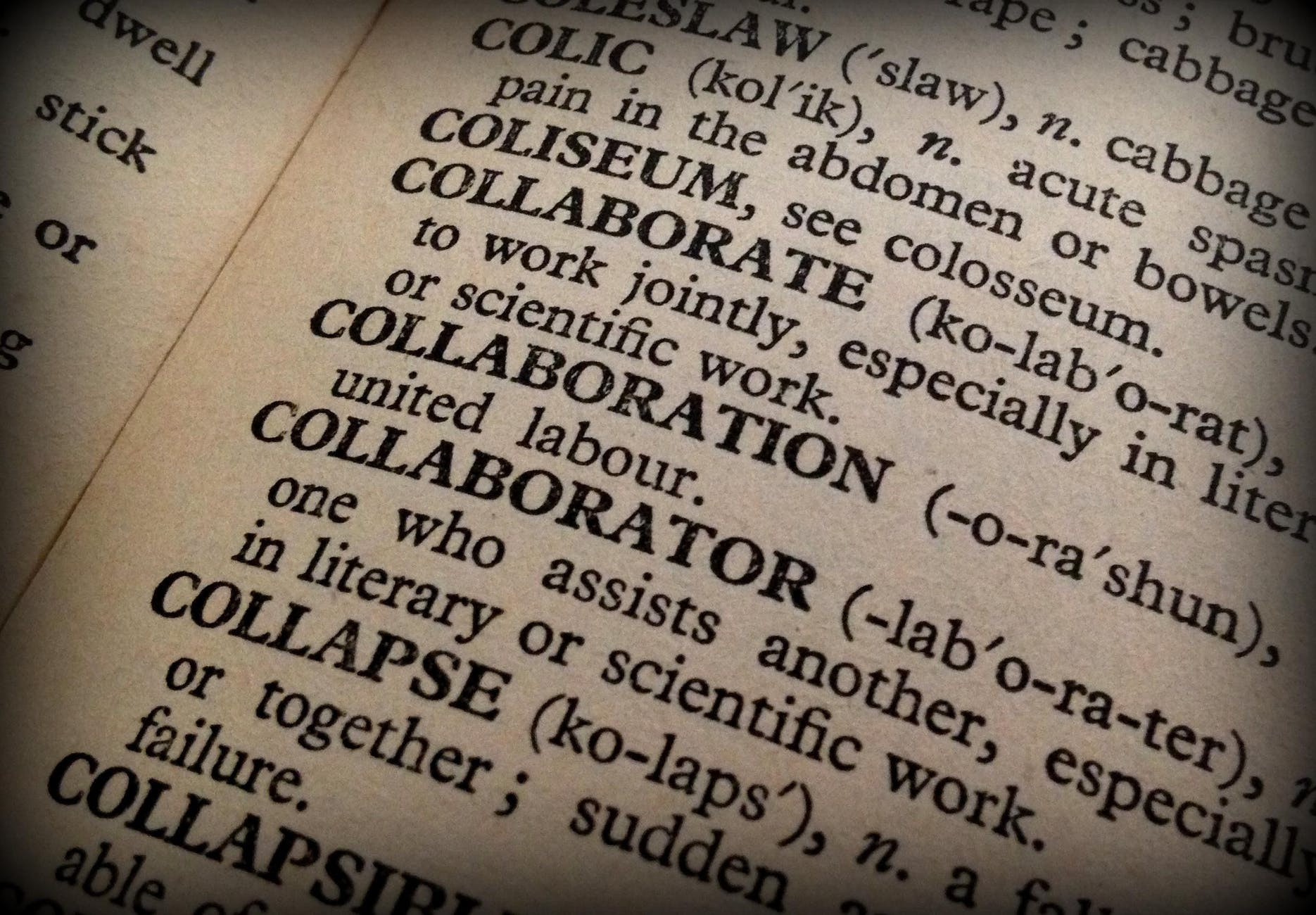
Un·in·ter·es·ted – so dictionaries claim Has meaning specific, restricted by rules; Dis·in·ter·es·ted – it now means the same To ev’ryday users of linguistic tools. So Dis has migrated to Un’s patch of speak; Is language more poverished ? Meaning dis-hanced ? Nat’ral selection defavours the weak, But look how im·par·tial is grabbing its chance.
Bid goodbye to ‘whom’ – her days are numbered. She falls out of our usage, and she goes the way of ‘thee’ and ‘thou’. And slowly shall our speech be disencumbered. (It’s down to our subconscious, really, what we do and don’t say now.) It’s not a case of messier or purer, It’s more a case of slowly just forgetting her and losing her. I don’t believe our language ends up poorer, For if we had a use for her then surely we’d be using her.
So let us bid goodbye to ‘whom’, She softly slips away to make some room for ‘who’ instead. He makes his meaning just as well – So sorry, pedants, but it’s time to tell you ‘whom’ is dead. He comes to fill her role, as he Has done for many years informally, and kept his thread. He’s coming – look ! Our future syntax bursting free – So do you see whom I see ?, (as is never ever said).
I love cake – I never will be through with it, Cos any kind we bake Has so much we can do with it: Use it as an ornament, Use it as a pet chair, Use it as a jotting-pad, Use it as a set square, Use it as a dickie-bow, Use it as a floor mop, Use it as a paperweight, Use it as a doorstop, So many ways of having it, It’s really off-the-ball. To even waste a little bit By eating it at all.
These words are mine, And you shan’t have them – These are mine, and mine alone. I guard them close So none may grab them – Guard them close, these words I own. Oh, how much you want them, want them, Oh, how much you seethe and pine So here, take envy, just for you… But jealousy is mine, all mine !
It should be pointed out that the conflation of jealous to mean envious has a long history, and Wiktionary provides quotes of both Oscar Wilde and Mark Twain using it this way. As a strict descriptivist, I have no problem with this (as shown here), but tend not to use jealous at all, preferring envious and possessive. But that’s just me.
Sir Lucas Drake was a dragon of a knight: His scale-mail always polished bright, Charging headlong into battle, Stalling left and swooping right To circle round and dive again – His wind-filled cloak, his flying mane, His sword as sharp as any talon, Raining over foes with death To make their sabres rattle. He also had a fiery breath From quaffing claret by the gallon.
Sir Lucas Drake was a dragon of a knight, Yet his coat of arms would dishonour a sergeant: Not for him a griffon argent, Nor a wyvern passant gules – His blazon, rather, came a cropper, Listing not a battle-stopper, But a shield befitting fools: ‘Azure, a mallard with head vert, Naiant contourny proper’. Oh, how that blazon hurt ! A green-headed duck upon a blue ground, Swimming the wrong-way round.
Sir Lucas Drake was a dragon of a knight, But never one for courtly prattle. Back at home, he spread his wings Across his mountainous estate, And hunted game and sheep and cattle, Anything to fill his plate. Never one for kissing rings, Or hearing yet again the jest The ladies made at his family crest, So he’d retreat to his hilltop clouds Away from kings and madding crowds. Depressed, he’d often spend his days Within his keep, atop his gold, Asleep against the winter’s cold As jealously he’d guard each chattel.
Sir Lucas Drake was a dragon of a knight, Though he bore much wit from his brothers-in-sword Who rebuked his arms with much delight – “It seems our Drake bethinks he a lord: For look: Sir Luke, by his shield, is a Duc !” Sir Lucas would curse “That’s just my luck, To share a name with so artless a bird. I’m one quack away from a chicken’s cluck ! What forebear had I who was so absurd That such a pitiful nickname stuck ? It should be a lion or a viper-snake, Or a dragon – then they’d bloody quake ! But no, I’m a Drake – I’m a ruddy duck !”
I’m not quite sure about the third verse – does it interrupt the flow ? I still like it though, so it isn’t quite a lame duck yet…
By the way, the best pronunciation of ‘Duc’ is <dook>.And can I just say how much I hate the language of heraldry – write in in English, or write it in French, but this weird Norman-middle English hybrid is…well, come to think of it, it’s the kind of snobbery we’d expect from people who still think that coats of arms matter. I love them for their history, but we’re not living in history. Well, okay, yes, we are allpart of history, because history never stops (despite what Francis Fukuyama may think…) But it only always exists in retrospect.
The facing-right bit is rare, and I’ve touched on it elsewhere. Since most knight were right handed, they held their shield in their left hand, so for the charge (animal) to be looking forwards, it has to face to the left Fine for in battle, but when hung ona wall or used on a letterhead, it always looks like it’s facing backwards, and possibly retreating !
I am the B in doubt and in womb, I am the G in gnostic and brougham, The P that’s in coup, and in pseudo and pneum-, The N there in autumn, the dumb L in Hulme, The W lurking in answer and whom, The E that is freeloading gaffe. And I am the H and the T in whistle, The K in knife and the C in scissel, The S in debris and the comma in this’ll, The F in lieutenant and laugh.
A poem about silent letters. Because spelling in English is always an adventure.