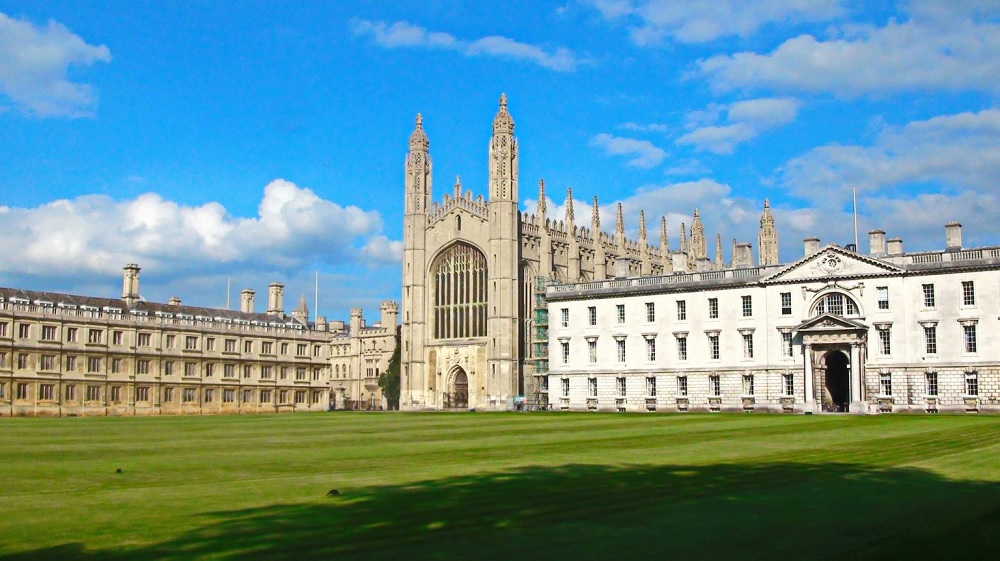
Clare College Old Court, Kings College Chapel, and King’s College Gibbs Building in Cambridge.
Soffits versus Crockets
A war was waged in brick and lime, Throughout Victorian abodes – A battle fought in seminars Of finials and glazing-bars. It seemed so vital at the time – For who defined the building codes Controlled the future, wrote the book, On how our homes and cities look.
The round opposed the pointed arch, The column pushed against the pier, As Classical and Gothic taste Were drafted, pressed, and laid to waste. With footslog critics on the march To make their case and boo or cheer – With so much breath and ink well-spent, As up and up the buildings went.
But in the end, the Romans won – The Gothic stalled, and fell from grace Despite its use in school and hall, It still felt churchy, overall. Beneath Edwardians, its run Was looking tired and losing pace – Which was a shame, because its fuss Was far more fun than serious.
As the following century Dragged on, it ditched the Grecian-born – As Classical found it was too Of little use for shiny-new. So buildings lost all sensory adornments, All their locks were shorn – And so the Battle of the Styles Saw losses shared across the aisles.
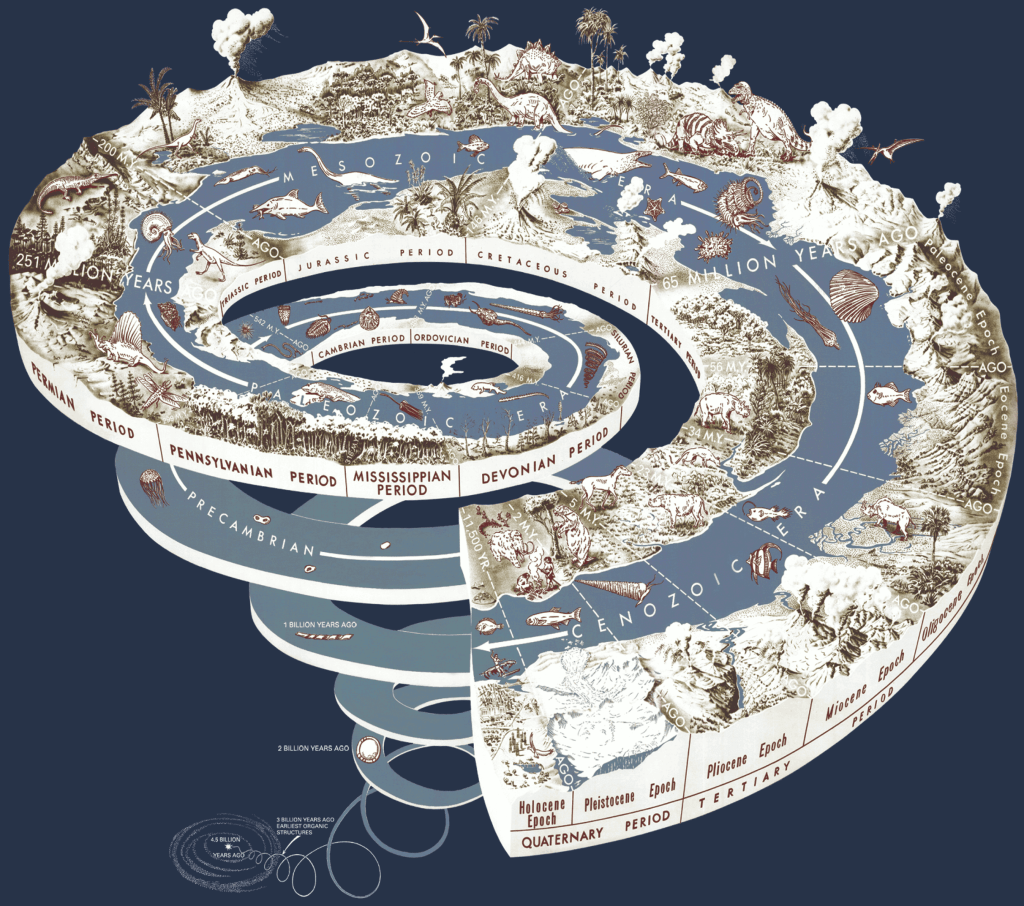
Geological Time Spiral by Joseph Graham, William Newman, & John Stacy
Counting Forwards
Imagine, if we like, To the Earth when it was younger – Let’s go back in our minds As Rodinia accretes and binds. Imagine all the life, With its breeding and its hunger, Is all within the ocean wide, While all the land is dead and dried. Go on back a billion years To when the Tonian began, And the first alga brave appears In the inter-tidal span. And let’s call this Year Thousand in our plan.
Now imagine, if you like, A thousand million later – To Britain, as it will become, Through evolution’s endless sum. Let’s use the past to take a hike, To be our ad-hoc dater – With ev’ry year that we explore That’s adding-on a million more. Ready ? Well then, come with me ! To Year One Thousand, long before, When Vinland Vikings rule the sea And early green specs dot the shore – And let’s see history expand once more.
1000-1280 The Tonian is a long old stretch, From Ethelred to Longshanks. We’re not sure when things happened quite, So none of these are strong ranks, But sponges would appear to appear Around the Fourth Crusade, Just as we leave the Dark Age, As the Boring Billion fade.
1280-1365 The Cryogenian grows cold, As the mediaeval warmth recedes – The plague upsets the status quo, As animals succeed. The monks and fossils leave their records, (Fewer than we’d wish), As peasants rise-up, and the jellies – Both the combs and fish.
1365-1460 The Ediacaran, through the Hundred Years War, Is a pregnant time. The Agincourt slaughter sees new forms of life Are on the climb. We’ve so little idea what, Though likely all the phyla we know Are going their separate ways back then, As the trade and prosperity grow.
1460-1515 Bang ! The War of the Cambrian Roses And Henry Tudor the Trilobite. Bosworth Field is awash with early fish, As eyes first see the light. Predators prey, so the shell evolves, And the codpiece probes the way to dress – And we know so much of those olden times Because of the Burgess printing press.
1515-1555 The Ordovician sweeps the monks away And ends in the great divorce – The Little Ice Age causes mass extinction, Though with a patchy force. Most of the phyla shrug it off, As do the merchants of the day, While plants colonise a whole new world of land, Down Mexico way.
1555-1580 The Elizabethan Silurian Sees vascular plants grow bodice and ruff, While armoured fish develop jaws As Catholics have it tough. The millipedes creep onto shore While Mary Queen of Scots must flee, And Francis Drake sails round the world, While scorpions swarm the sea.
1580-1640 Awaiting the tetrapod armada in Plymouth, Comes the Devonian span – Sharks and ammonites emerge In the Tempest of Caliban. King James writes his Bible On the wood of the early trees, Till the Civil War extinction Brings the shallows to their knees.
1640-1700 With the Carboniferous Restoration, Amphibeans arrive. There’s giant dragonflies in the endless forests, Where spiders thrive. They lay-down future coal, of course, As London is aflame – Till the Glorious Revolution, When the reptiles change the game.
1700-1750 The Permian now joins Pangaea With the Hannoverian line – Dimetrodon and future-mammals Have their chance to shine. But from the North, a Great Dying Sweeps them from their heights – The lava traps of Siberia, And the pikes of the Jacobites.
1750-1800 The Triassic sees a trident of firsts – Pterasaurs, crocomorphs, dinosaurs. The sea’s full of plessies and ichthies and turtles, An empire stretching to distant shores. But American lizards break away From rule they call draconian, And a great extinction’s coming-in That’s all thanks to Napoleon.
1800-1855 The Regency brings us the Jurassic, Victoria sees placentas get birthed, While the Chartists challenge the old big beasts, As the sauropods shake the earth. The allosaurs fight stegosaurs, While archaeopteryx soar above Of the Valley of Death as India splits, On their way to becoming a dove.
1855-1935 The Cretaceous next, but where to start ? Pangea well-and-truly splits, While flowers bloom for Victoria’s weeds, And spinosaurs are Edwardian hits. Veloceraptors perish in the Depression, But T-Rex jazzes the town With Triceratops to the very end, When the asteroid comes crashing down.
1935-2000+ Into the Cenozoic we go, As the atom bomb sees things get hot. Mammals and birds diversify, As hippy grasses grab their shot. Hominids climb down from the trees As Tony Blair brings-down the freeze – Then Christmas Day in ’99 Sees farmers plant communities.
Imagine, if we like, Where our journey goes from here – What might the next long thousand bring To life that’s ever-quickening ? And when extinctions strike, Then new forms suddenly appear. History shows progress all the while, Though fashions change the style. But here, for now, our trek is done, We’ve counted up the years we hold, From an Anglo-Saxon simple son To multi-cultured forms so bold. They tell the greatest story ever told.
Happy birthday ! Yes, it’s true, Rhyming Couplets is turning six, so here’s a special treat for anyone who’s still out there.
Similar to my championing of the Holocene Calendar, I hate counting backwards, and can’t wrap my head around the numbers. Therefore I propose the Paleontology Calendar, which can either begin at 0 (equal to 2,000 MYA) when the Great Oxydation Event was coming to an end, or at 1,000 MYA when the first algae was colonising the land. The latter is more useful, as it results in three-digit numbers rather than four, as we don’t have much evidence for what happened prior to the Ediacaran fauna emerging (they’re not called the Boring Billion for nothing…) However, I’ve adopted the former here so that the dates can line up with European history to make conceptualiseing the events easier, at least for me. By happy coincidence, 1000 MYA is also when Bicellum first appears, which might just be the earliest evidence we have of animals evolving away from algae…
Note that all dates prior to the Cambrian are tentative and likely to change in the future. Just when the animal phylums diverged is unclear as there are very few fossils, and rely on DNA analysis and molecular clocks. Furthermore, the current estimated dates may be a few years different from their historical counterparts for the sake convenience (for example, some think that algae first poked its head out of the water as early as 1200 MYA). Come on, this is a poem, not a textbook !
Strange, the oldest folk tunes have no authors known, They’ve just been sung like that forever. I wonder if a single soul created them, Or many voices altogether. Maybe over centuries, they’ve slowly grown, Adding new words to old songs, From bawdy balladry, through cherished hymn, To terrace singalongs.
From London Bridge to Scarborough Fair, Ride a cock horse to the old grey mare, Lady Greensleeves, mistress mine, And over the hills for auld lang syne. We’ll never know, we’re never told – They are too old and we’re too young – Yet still their songs are sung.
Strange, the newest pop tunes come with artist names – We know just who created each. Yet maybe in a thousand years, a few persist Whose origins are out of reach. Carols may be sung to them, or children’s’ games, Or earworms and lullabyes – With half the words forgotten, and their meaning missed, But hanging on in diff’rent guise.
From Ground Control to Billie Jean, Go Johnny, go, come on Eileen. All the lonely yesterday – Sing for tomorrow, we fade to grey. They’ll never know, the trail is cold – We are too old and still of tongue – Yet still our songs are sung.
Hoards of coins in shallow graves, Unlawful death of wealth – An inquest must be called To let the gold announce itself. The coroner shall ascertain The trove’s identity, And whether misadventure Caused its current liberty. Was it witness to a conflict ? Was it lost or laid to rest ? Do we need an autopsy To open up its chest ? It seems at odds with all their other tasks, It must be said – But it surely makes a pleasant change From dealing in the dead.
I wonder if Carl Linnaeus smiled As he coined a name for a water-snail As if a windmill in a gale. Perhaps the twist of its shell beguiled, But given its lack of energy, He must have seen the irony ?
Forever dubbed forever more By a name befitting of cavaliers To a bug with neither joints nor gears – In the age of steam, as the turbines roar, What did they think of their silent whirlwind, Forever failing to twirl and spin ?
But maybe our Carl was being sublime ? As cyclones on their well-greased heels, Like plugholes, perhaps, or waterwheels, But they did so in their own sweet time – Forever in motion, the will that drives, Revolving their shells throughout their lives.
Perhaps Carl was thinking of the popular hobby of snail racing ?
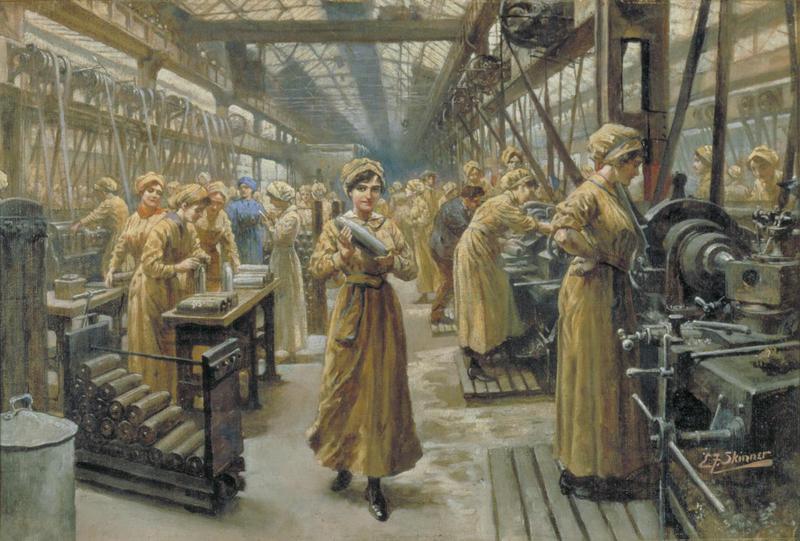
We cheered them off, that September, So sure in their duty, As we were in ours, you see. We loved them enough, I remember, To want them to keep-in alright With the powers-that-be. We held the fort, as contenders, But only until they returned, As surely they would, we trust. Be a good sport, I remember, Assisting to sister the brotherhood, Because we could, and must.
They’re most of them gone these days, ho-hum, Except the old and lame and mad – Though not their fault who goes and stays, All families are missing a brother or dad. It’s lonely for the strays that we’ve become – And guilty to be so secretly glad. Gas fitters, brick layers, Tram drivers, football players – Our handiwork is at the root Of ev’ry batch of shells the soldiers shoot.
We filled the schools, as pretenders, And the factories too, And the pubs and the shops, we hear. We held their tools, I remember, And lived their jobs, and drove their trams, And tended their crops, all year. We proved our worth, our gender, As we waited for news That the end was upon us, at last. To give back each berth, I remember – Was joy for their coming, And dread that our honours had passed.
But what if so few of them come back to check-in ? What will we do then, without their call ? We’ll manage, of course, we’ll soon get the knack, We’ll, some of us, have an absolute ball – But what if they never retrack, d’you reckon ? What if this freedom’s our absolute all ? Slowly thriving with aplomb, While gaining votes and singledom – We’ve come at last to claim our due Now that there’s far far more of us than you.
“Upto 2000 artefacts are believed to have been stolen from the British Museum over the last ten years.”
– Curator’s Quarterly
Five-odd million artefacts, Or maybe twice as many, Filling dusty drawers and racks, From Hull to Abergavenny. Boxed-up, stacked-up, locked-up long, With rusty coins and broken gems, And set by law to house this throng, Without the funds to open them.
Blame the politicians, Blame the thieves, Blame management as lax – But never blame the public who believes In paying less of tax. But no-one ever thanks us for The treasures we preserve, That otherwise get lost to war, Or buried in the earth.
Plenty on the left have sneered At colonial comeuppance While others on the right have cheered At wokeness not worth tuppence. And both have kicked the workers Who are overworked and underpaid, Because we’re just the lurkers In the basement, in the way.
They never cared before, Enough to fund the work they left to spoil – And still they will not thank us for Our centuries of toil. It’s others source the objects, We just clean, and log, and save – And that takes funds, and takes respect, And a culture well-behaved.
A statue of two men – one plays a harpsichord, The other one leans as he noodles a guitar. His lead, I notice, is plugged-into the keyboard, His fingers on the neck in a c-sharp bar. Two blokes lost in the moment, forever – George with his collar loosened at the throat, With multiple strings of borrowed beads, And his arms pulled-out from the sleeves of his coat. Jimi, meanwhile, has hitched-up his kaftan on one side, To access the pocket of his jeans – With a periwig perched atop his wild hair, And purple boots (though the colour can’t be seen). A little-bit larger than life-size, of course, But with no cordon or pedestal here – So easy, so pleasing, to reach out and touch them – The impossible past has never felt so near ! The people like to pose and the pigeons like to perch, And the verdigris and lichen are a psychedelic stain. No plaque or explanation – we know who they are, As they’re basked in the sun and they’re washed in the rain. Their eyes are open, but surely unseeing, Pointing at the keys or looking at the sky – Communing with their muse, as if she is their singer, To an audience of shoppers who hurry on by. One wonders what they might ever have talked about, Between the numbers, on languid nights – With George very much the establishment man, And Jimi outspoken on civil rights. From diff’rent eras and diff’rent generations, Baroque versus blues – yet they’re finding a way – The statue, of course, is eternally silent, And leaves it to the viewer to hear what they play.
In truth, Jimi only lived in the flat three months, but it’s still tempting to wonder what they might have said if a mixture of time travel and hallucinogens had brought them together. Both immigrants, both musicians, but there the comparisons pretty much end. Yet sometimes, it’s worth finding some common ground for the sake of a good tune...





 Rhyming Couplets