Little wasp, little wasp, Laying eggs upon the tree – Sting the one who would be king, And sting him once again for me. Little worm, little worm, Wriggling in your swollen gall – Bite the one who’s cowering, And bite him twice for one and all.
But oh !, you’ve gone and birthed a hornet, Let loose on us worker bees – And king or queen, or brutal drone, They sting the same – just ask the trees ! To rid us of a coronet Will always leave behind a gall. The buttocks mould to fit the throne – The canker ripens, warts and all.
Reparations ? What, today ? Two hundred years too late ? And how to choose who has to pay ? Best think it through now, mate… White men ran the slave trade, true, And I’m a man and also white – But don’t charge me for grievance due, I played no part in the blight. While others wreaked this tragedy, It’s not me, mate, and not my folks – I come from village farmhands, see, From ordinary blokes. While others banked the whole affair, Or clapped the chain or cracked the whip, We never owned a single share, Nor crewed a single ship. So don’t try laying on the guilt For crimes my bloodline never did – The damnable at which you tilt Were not my fam’ly, kid. I bear no blemish on my name, I bear no once-and-future sin – Don’t think that you can judge my blame By the colour of my skin. It’s not me mate, and not my genes, My hands are clean, my soul is light – So spare your wrath for dukes and queens, Not me, mate – get it right ! You may claim Britain was kept afloat By ev’ry Caribbean crop – Yet my folks never even had the vote To make it stop. My ancestors were starved and bruised, And sometimes even outright killed – They all were wage-slaves, much abused By the lords whose lands they tilled. It wasn’t as bad, of course, as chattel, But still bloody bad, in its way. But yours were worse – you’ve won the battle – Is that what you want me to say ? Alright, I’ll say it – cos I get it, I do – But they’re not you and they’re not me. So even if my blood were blue, My soul would still bloom free – For the faults of our great-great-grands back when Have died with them, and passed away – Look, nobody alive back then Is still alive today. For none of us in here’s a slaver, No-one’s whitewashing the trade – So please, just do us all a favour, And find a new crusade. Is there still inequality ? For sure – not race, but class. We need to target poverty, Not grievances of the past. Inherited wealth ? Old foundations ? Tax the rich, then, to redress – And give the reparations To the schools and the NHS. But your way feels like liberal creds To buy-off the guilt and pain – For giving a payout is putting a price on their heads All over again.
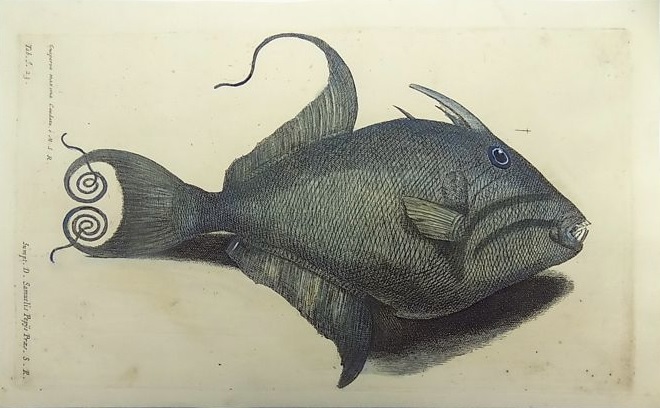
Amazonian Guaperva Fish by Francis Willughby (at least, I think he did his own illustrations).
Fishes & Physics
Gentle Francis Willughby, To best of his ability Has written us a thriller – see, The History of Fish ! Illustrated lib’rally, Meticulous and jibber-free – No charlatan or fibber, he, But honest, if not swish. The Royal-dubbed Society Have praised his work most high and free, And published with propriety His dense and hearty dish – Examining their parity And countless similarity, To classify with clarity Each finble, scule and gish. His work will lead inex’rably To Karl Linné’s complexity And Darwin’s sexy theory That the bishops try to squish – Yet mocked in perpetuity, His book an incongruity, For lacking the acuity Of Newton’s masterpiece – His grandiose Principia, That makes the heavens trippier And gravity much nippier, Is straining for release. But things are tight financially, With profits down substantially And Newton sees his chances flee Despite the Fellows’ wish – They cannot foot the bill, you see, The budget’s blown on Willughby – But don’t show Frank hostility, He’s not so queer a fish.
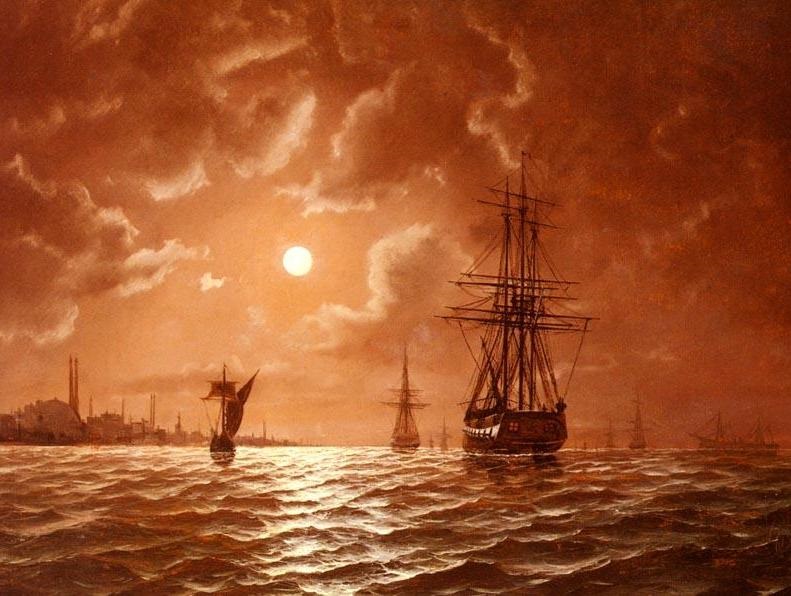
detail from Moonlight over the Bosphorus by Edward Hoyer
The Merchantman Shanty
“Work songs were banned in the Royal Navy.”
– Capt A. Bakalarka
I used to sail with the king, I sailed On a Royal Naval brig, But there they wouldn’t let me sing Whene’er we raised the rig
So we hauled away in silence so, We had to heave without a ho, We dare not peep a quick-quick-slow Or the cat would make us holler.
We mayn’t disturb his majesty With a too-rye-ay and a yo-ho-ho, For only lubbers sing at sea So let all singing go.
I used to sail with the king, I sailed On a Royal Naval sloop, But I couldn’t let my whistle ring Whene’er we swabbed the stoop.
So we scrubbed away in silence, see, We had to dumb without a dee, We dare not hum a do-re-mi, Or the cat would make us holler.
We mayn’t disturb his majesty With a too-rye-ay and a yo-ho-ho, For only madmen sing at sea So keep your whistle’ing low.
I used to sail with the king, I sailed On a Royal Naval barque, But I must not pluck a single string Till safely after dark.
So we sailed away in silence, aye, We had to hew without a cry, Unless the roaring wind was high And the cat can’t hear us holler.
We mayn’t disturb his majesty With a too-rye-ay and a yo-ho-ho, For only sirens sing at sea So take your singing below.
The lines in roman are sung by the shanty man, the lines in italics are sung by the crew.
I originally had the line “Whene’er we swabbed the poop”, referring to the poop-deck, but…well, you’ve already sniggered, haven’t you ? So I changed it to ‘stoop’, which sounds like it should be a suitably nautical word even though it isn’t. It’s actually the American term for the front steps upto the front door of a terraced house, often spanning over the area. But then, boats have attached ladders upto the poop-deck, don’t they?
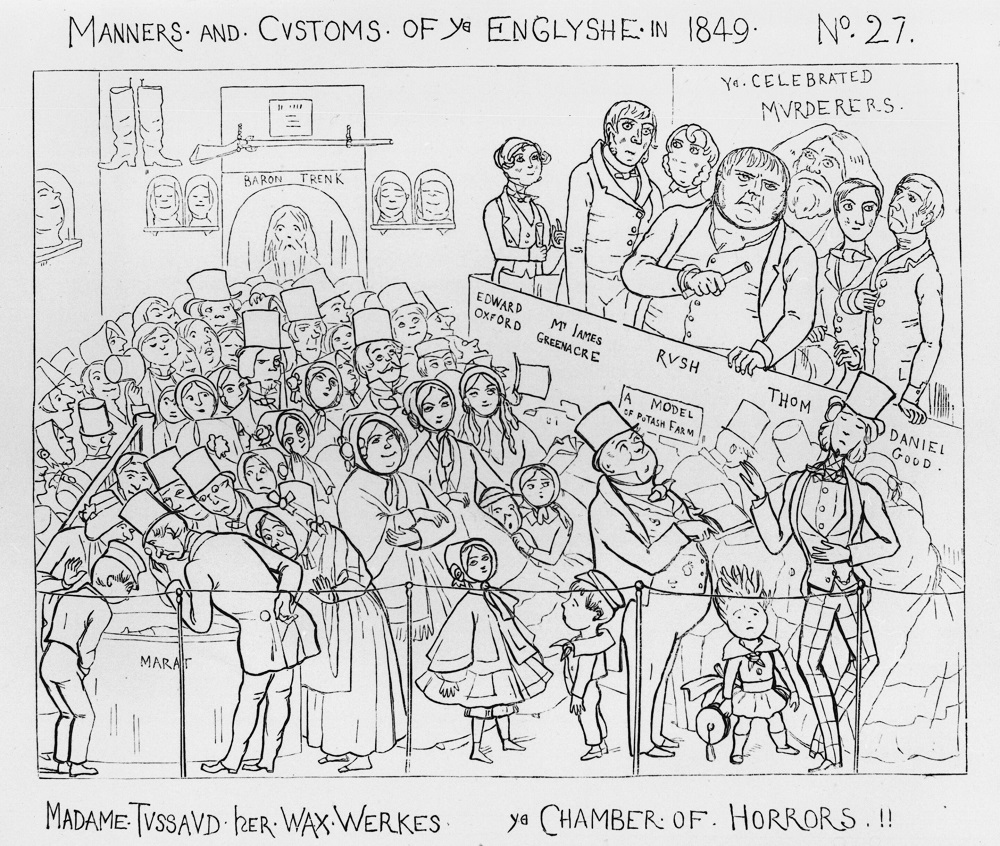
Manners & Customs of ye Englyshe in 1849 by Richard Doyle
The Wages of Sin
Thanks, Dick Turpin – what a guy ! Killed a few, but by-the-by. Thank you Ripper, Jack the Flash – Take the tour and rake the cash. Thank you Crippen, bask in fame – Morse was made through your good name. Thank you Shipman, take my breath – Waxworks beckon, Doctor Death.
We’ve all heard of the sealed train That carried the 36 between Zürich and the Glasbahnhof, In April 1917. A couple of ferries and a new suit later, Tornio station, platform 1, To catch the sleeper to Petrograd – And become the prodigal son. Finnish metals all the way, On over the swamps and rugged terrain To the Finland Station and history, Though no-one thought to note the train. One is preserved – it may be the one, But as likely not – we’ll never know. Those locos were all faithful workers, Too busy toiling to stop and crow.
But in the height of August, Fleeing back the way he came – Working his passage with a shovel, Lenin stoked the movement’s flame. 293 – preserved in glass The only loco we know he rode, Not that we can blame the pistons For their unexpected load. American built, as the century turned, A proud ten-wheeler, H2-Class, A broad-gauge beauty, wood-fired boiler, Black, without that bourgeois brass. Does it matter ? Holy relics ? Lenin was also just a machine That public anger drove to the station In the red-heat of 1917.
I have completely failed to determin which platform at Tornio the train to Petrograd would have departed from, so naturally I chose the one that rhymed.
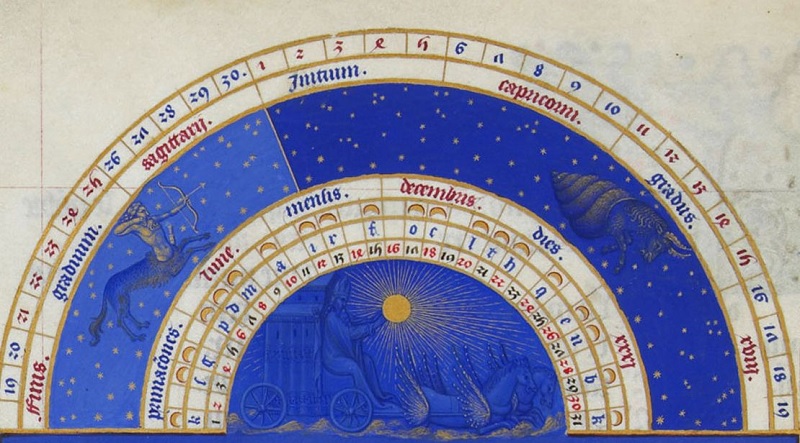
detail of December from the Très Riches Heures by the Brothers Limbourg
Quarter Days
In March the Ladies have their day, In June, the Summer’s mid, And Mickel holds his mass, they say, In late September, come what may, Just as he always did. And then we get to Christmas… That well known day for paying rents, And hiring staff, and starting school, And other secular events That prove there’s nothing new, alas, In monetising Yule.
They’re here all year are the robins, The robins on their rounds, Out delivering their song. But we barely see all the robins, We barely hear their sounds When they’re lost within the throng. But on-come the Winter and on-come the cold, And out-go the fairweather flocks – But the robins are patient, the robins are bold, As bright as the frost and as red as the fox. With a whistle they come, And they sing out the season And snow cannot stop them from spreading their cheer. They sing to each other, They sing for no reason, But we only hear them at this time of year.
They’re here all year are the robins, The robins on their rounds, Out delivering their post. We little think of the robins, Or braving rain and hounds, Till we need of them the most – Then on-comes the Winter and on-comes the cold And on-goes the jumpers and socks, And we need them to bring us the red and the gold With the cards and the parcels they push through our box. With a whistle they come, And they bring us the season, And snow cannot stop them from winging it here. They come when it’s sunny, They come when it’s freezing, But we only see them at this time of year.
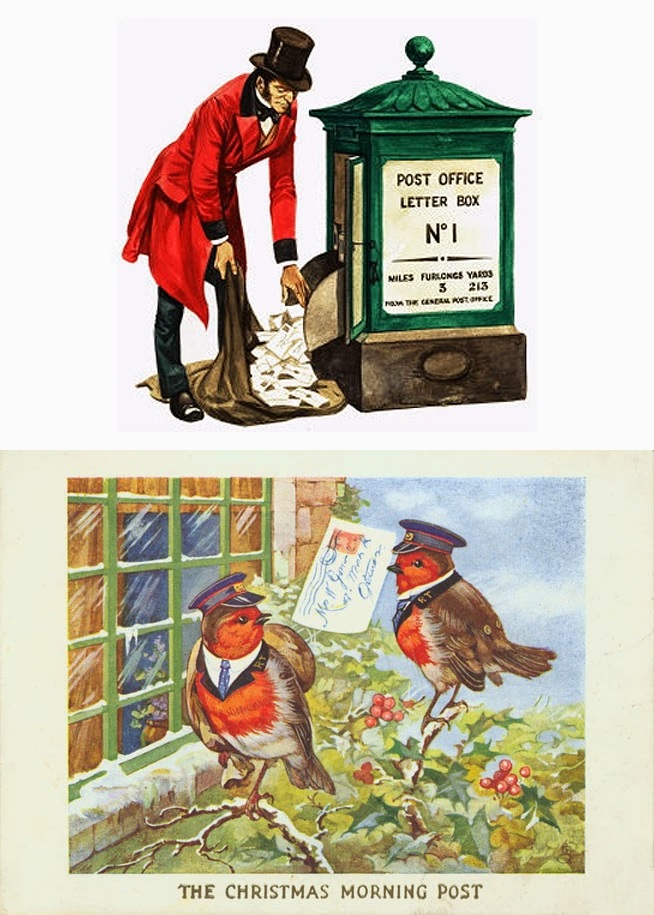
As I’ve discussed in another poem, robins are territorial and violent birds. However, they’re also a great source of pleasure to humans. So much so that Victorian postmen with their red waistcoats were nicknamed robin redbreasts and soon Christmas cards were featuring them in both human and allegorical avian form.
And when I suggest that the robins ‘sing for no reason’, I am fully aware of the many uses that their song serves, but there is increasing evidence that occassionally birds really might just sing for the fun of it.
All these Christmas cards, each year, These Christmas cards of pristine snow, With country squires and village geese, And not a trace of elbow-grease, With ev’ry lady all a-cheer, And ev’ry urchin all a-glow, And all the cosy world at peace, Forever after, never cease… Except, it never is – not here – It never was, of course, we know – But hey, let fantasy increase Upon a harmless mantlepiece.
Statues – guardians of civic pride and retail, And dressed in the city’s stones to match – Though bronze is rather dark for showing detail – A bright day is essential, and a good eye to catch. Otherwise, they’re lumps of grey we walk by ev’ry day, Dispatches from the past that we’ve forgotten – Best they stay anonymous, it’s far more fun that way, Than a boring Lord of Borough-on-the-Rotten. Never read the base in any case, that’s all the past, Let’s privately recast them as we like – Look into each graven face and let our fancies race, With this one Lady Shazza, and that one Pikey Mike. And as for any new ones – make them allegorical, As abstracts taking on the human form. They can’t cancel concepts when cast in metaphortical – Why must this hero-worship be the norm ?
I’ve never been one for remembering the worthies in lumps of dark, dull bronze whose features are more often lost in the overcast light. The ancient world painted their statues, and indeed painted their churches, but we’re far too puritan for that these days. But if we are to have them, let’s make them allegorical (and not necessarily female)…
Although having said that, I’ve also said the exact opposite over here. Also, there are two adjacent works at Hyde Park Corner which undermine my argument – one being Francis Wood’s Machine Gun Corps depiction of the Biblical David (despite the wielders of machine guns in the trenches being the very epitome of Goliath), appearing irrelevant and cliched when overshadowed by Charles Jagger & Lionel Pearson’s very literal Royal Artillery Monument (although in my defence, all of the supporting figures are suitably anonymous, including my favourite the Angel of Death).