The Daphne Shanty

parrot
Jewel of the Amazon by Stephen Jesic

The Daphne Shanty

One man drifts upon a door –
Too far from home, too far from shore,
Without supplies, without an oar.
Or so I’ve heard it told.
Both he and raft, three days ago,
Were languishing upon the deck –
Now all the rest are ten below,
Yet he by chance has fled the wreck.
Instead, he gets to starve and stare
At water, water ev’rywhere !

Beneath the fierce, unflinching skies,
He waits his death and hungry flies –
When shadows cross his salt-caked eyes…
A figurehead in gold !

So weigh the anchor, hitch the stay,
We’ll blow you back to yesterday –
We’re all adrift and outwards bound,
An island’s waiting to be found.
So dance with the carambola,
By the fair isola of the giorno prima,
Ev’ry newborn gleamer.

One man drifts below a prow
Too far from home – but safer now,
If he can only climb somehow…
And so our yarn sets sail.
Up top, he finds no sign of life,
Yet down below are cages crammed
With birds, and beasts, and flowers rife:
 As live as he, and just as damned.
A hold here to behold !  All brought
From out the land he sees to port.
But where are they who stocked this store ?
If only he could swim ashore,
To the island of the day before…
Ah, therein hangs a tale…

So drop the anchor, be becalmed,
We’re porpoised, parroted and palmed
In paradise, in distant climes
A long long way from Greenwich times.
So dance with the mola mola,
By the lost isola of the giorno prima,
Ev’ry shipworn dreamer.

This is based on the opening of Umberto Eco’s novel.

Sonnet of the Portuguese

man-o'-war

Sonnet of the Portuguese

They’re coming ! Raise the alarm on the dockside !
They’re swarming, and pushing us out of the sea !
Their billowing sails, from Pembroke to Leigh,
Are storming our beaches, invading our sands !
Their cargo is toxic, their ballast monoxide –
These by-the-wind sailors, these rafts of medusa.
Mohican’d above, while their dreadlocks hang looser –
All laces and ruffles, and hooks ’stead of hands !
On the hottest of days, when the skies are clear blue,
And the southerlies breeze off the sea to the shore,
This deadly armada with venomous crew
Are planting their colonies right at our door…
These silent bluejackets are coming for you –
These unthinking killers, these seamen o’ war.

I almost feel bad in how I’ve deliberately conflated the Spanish Armada with its neighbour (with whom Britain has had a continuous peace treaty since 1386), but good puns must be seized with both hands (unlike the creatures themselves, of course).

Incidentally, according to Wiktionary the nationality of the metaphorical warship remains consistent through most European languages: portugisisk örlogsman (Swedish), żeglarz portugalski (Polish), portugál gálya (Hungarian), and even caravela-portuguesa (Portugeuse).

Hounslow Fast & Hounslow Slow

hounslow
Early 20th Century views of Hounslow High Street

Hounslow Fast & Hounslow Slow

All the stages came through Hounslow,
All the coaches heading West –
Driving on to Bath and Plymouth,
Coming back in need of rest.
All the coaches stopped at Hounslow,
At the Bell or Rose & Crown
For stretching legs and changing horses
For the final push to town.

They all knew Hounslow then
The drovers, grooms and highwaymen.
But nothing stays the same –
And so one day the railway came.

Only three miles north of Hounslow,
Yet those three miles meant a lot –
Steaming on to Slough and Reading,
Faster than a horse can trot.
All the West once came through Hounslow,
Then the bypass passed you by –
And little mark is left to show
From when this High Street lived so high.

We all know Hounslow now –
A long way from a horse or cow,
Beneath where aircraft fly –
And like the trains, they pass you by.

Put out to Pasture

horses
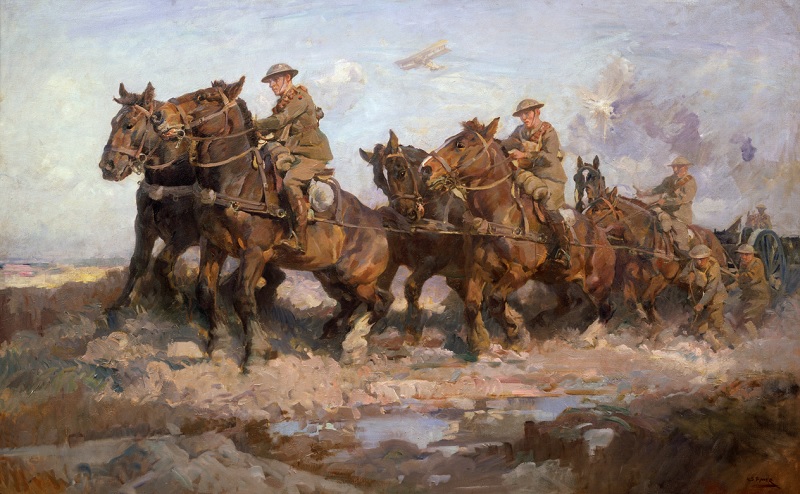
Bringing up the Guns by Harold Power

Put out to Pasture

Once a time, horses were ev’rywhere:
Carrying knights on their scoutings and charges,
Galloping messengers, lancers in battle,
Winding our winches and towing our barges,
Trekking our caravans, herding our cattle,
Ploughing our fields and pulling our drays,
Hauling our minecarts, waggons and hearses,
The Hansom and omnibus, stagecoach and chaise
Were drawn with a mixture of carrots and curses.
Chestnuts and roans and brindles and bays,
Black beauties, piebalds and fleabitten greys.
Rocking our children and hobbying fairs,
Stuffing our cushions and gluing our chairs.


So where are they now ?
They all got replaced by machines in the end,
That can do their jobs better and do their jobs faster –
They’re cheaper to build and are quicker to mend,
And don’t need reminding just who is their master.
The horses can only be worked to the bone,
They try hard, but haven’t the means.
They’ve all been replaced, through no fault of their own –
For who can compete with machines ?
In hindsight, of course, it is always the case:
When a horse must compete with the new iron horse,
Then it’s always a one-horse race.


These day, humans are ev’rywhere –
Building our furniture, stitching our clothes,
Driving our buses and stacking our shelves.
Doing the jobs the majority loathes,
For who else could do it for us but ourselves ?
Builders and farmers and doctors and tutors –
Of course they need humans !  Whyever d’you ask ?
You can’t leave the it down to machines and computers –
It’s not like there’s robots for every task.
We’ll be here for donkey’s years, my dears,
Despite such market forces –
So close up the stable door once more,
We’re all safe as horses !

Adle Strop

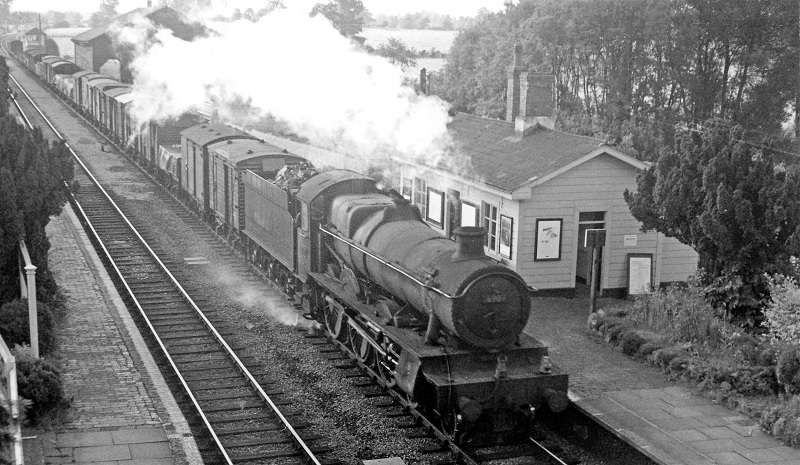
adlestrop

Adle Strop

Yes, I remember the poet’s train
That pulled up one afternoon,
And waited by my bare platform
Unwontedly.  Was it late June ?

I had been whitless-still in fair
Than the high cloudlets in the sky,
Listening to a blackbird sing
Of meadowsweet and haycocks dry,

When the express-train drew up there.
No-one left and no-one came.
The only thing they even saw
Were platform boards which bore my name.

And then they went, and took their noise,
Their hissing steam and flashing brass,
And left me once again in peace
With willow, willow-herb and grass.

Vexillologically Vexed

flags
A couple of proposed Russian flags in recent years by William Pokhlyobkin and Andrew Khlobystin

Vexillologically Vexed

Born in revolution was the Tricolour,
And suitably to radical design –
Oh sure, there were tripartite flags before,
Yet nothing like this latest Paris line.
And afterwards, we’ve trickies by the score,
As flagginess itself is redefined –
Back then, it showed a total break with lore,
By genius or accident of mind.
Felicity, simplicity,
Tradition would no limit be !
Their senses jarred by disregard
For all chromatic symmetry.
And so, unlike the world before,
You favoured grand to bear your brand –
Your tricolour said France for evermore !

Look on, you Russians, look and see,
The repercussions flying free –
For even in your own domain,
Napoleon has come again.
You took his classic of its type
And switched the order of each stripe –
And not content, we now discern,
You flipped his flag a quarter-turn.
I know, your old one had to go,
The flag that evry’body knew –
It still may shine in pure design,
But there was nothing pure on show.
And so, like Germany before,
You forewent grand for safe yet bland –
And tricolours are great for that, for sure !

Credo

picket line
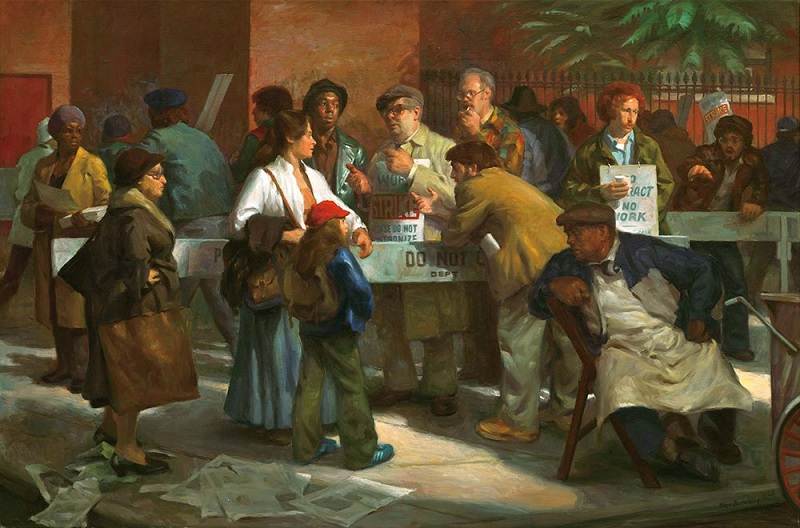
The Picket Line by Max Ginsburg

Credo

Voltaire never said it,
But that matters not a mite –
He meant it, to his credit,
And he calls on us to fight.

The words may change, but we all know them,
Paraphrased through many pleas –
When times are tough, it’s time to show them,
’Speshly to our enemies –

“I cannot stand the crap you spew,
I find you ignorant and vile –
But I will pitch my life for you,
To keep you free to spread your bile.”

We do not have to like it,
But by deuce! we must allow it !
Let us strike at those who’d strike it,
Vow to never disavow it.

(Except perhaps when it’s horrific
Vi’lence that’s incited there –
But then those times must be specific,
And they must be bloody rare !)

So however hard they’re hitting,
We must build our hearts of granite –
Though we’re still, of course, permitting
Ev’ry speech that calls to ban it.

Rights aren’t only for the nice,
Or those with better words and clout –
So come on now and tell us twice,
And we shall smile and tune you out.

So say it with me, all of you,
And say it always, come what may –
So Voltaire never said it, true,
But we shall say it, ev’ry day !

Not saying I think strikers are ‘ignorant and vile’ – I just like the painting’s mood of conflict and speech.

Paley Ontology

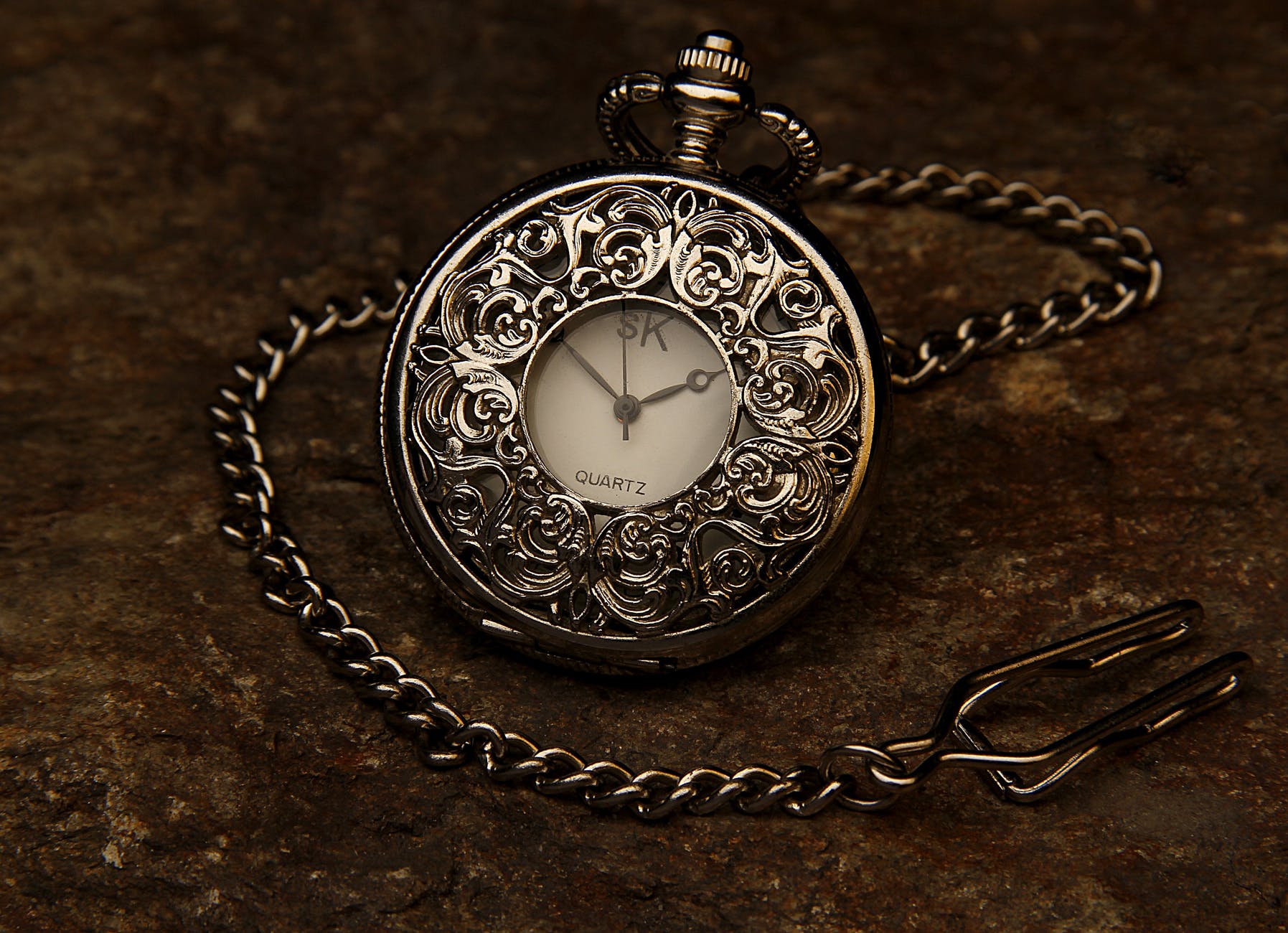
time clock silver stone
Photo by Pixabay on Pexels.com

Paley Ontology

William Paley,
(Still quoted daily)
Chanced upon a timepiece while out walking on the dale.
Pondering its presence,
Mulling on its essence,
He saw it was a Made Thing, and all that must entail:
Here there were no surplus parts, no way to make it less dense –
If this must have a Maker – why, then Man must likewise hail !

Grand Mr Paley,
Postulating gaily,
Never knew the fossils that were lurking in the shale.
So too have the watches
Seen their share of botches:
Dodgy trains and axles who have never found a sale.
Cruel is such selection as inflicts their cogs with notches,
And calling time on any found irregular or frail.

Poor Mr Paley,
Breaches in his bailey,
Holes in his hypothesis, all bigger than a whale.
Thermal compensation
And grand complication
Have grown in watches gradu’ly, and clearly leave their trail.
So tick evolves to tock with ev’ry not-quite-iteration,
In the coiling of the spring as in the spiral of the snail.

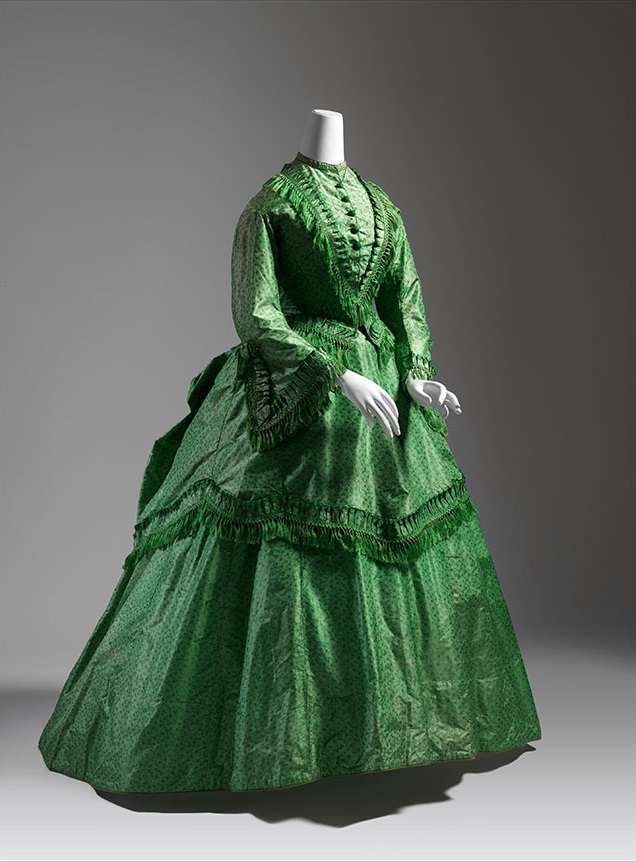
The Ballad of Miss Pickle

1980.409.1a?c

The Ballad of Miss Pickle

She skipped to the balls
In her crinoline gown,
With verdurous falls
In the drapes of her crown.
She rustled and twirled
As she danced with their gaze,
And pleatings unfurled
In a deep-lustred prase.
     Hers was no ruby or aquamarine –
     The glorious girl in the emerald green.

All season she danced
In her favourite hue –
Her eyes were enhanced,
And her blossoming grew.
Her costume was styled
To flicker the room –
The beaux she beguiled,
Her shamrock in bloom.
     Hers was no palette of altering scene –
     The glorious girl in the emerald green.

The following year
As the bucks met to fool,
They longed she’d appear –
Their taffeta jewel.
But salon and do
Were all lacking her shade –
They felt far too blue
And in want of her jade.
     Hers was no presence, but absentee queen –
     The glorious girl in the emerald green.

Then shocking they heard
Of her sudden demise –
The poison transferred
From the arsenite dyes.
She wilted last winter,
She couldn’t have known
How deadly the tints were
In which she was sewn.
     Hers was no longer, a tragic eighteen –
     The glorious girl in the emerald green.

A young woman dies
In much retching and bile
To set off her eyes
And to brighten her smile.
Her end was a blur
With her lights in distress,
But do not blame her
For the tinge of her dress.
     Hers was no moral to vanity’s preen –
     The glorious girl in the emerald green.

She skips to the balls
In her crinoline gown,
And her glowing enthrals
With a growing renown.
Remember her this way
From bodice to hem –
A verdant display
From a radiant gem.
     A shimmer and sparkle, a ripening sheen –
     The glorious girl in the emerald green.

More commonly referred to as Paris Green, but the rhythm of ’emerald’ suited me better.

Sorry, Elizabeth

big ben tower london
Photo by bruce mars on Pexels.com

Sorry, Elizabeth

“Big Ben is only the bell,”
You smugly tell,
But actu’lly, we already know.
Except you’re wrong:
It’s the bit that goes bong,
And ev’rything else, above and below.
Big Ben is the bell,
And the clock as well,
And even the whole bloody tower !
Ask any you meet
On Parli’ment Street
Whenever he’s chiming the hour.