The rich live in houses, the poor in cells, This is how classes are classed – From Kensington Gore to Tunbridge Wells The best were designed in the past. The poor get newer and concreted hells That are decomposing fast. Of course, the new could be just like the old, But then they would all get far too bold – So keep them ugly, keep them cold, And build them not to last.
For most of the people who live in a city, They’re not in the city at all – They’re out on the suburbs, a bus-ride away, In the bland and the ugly and small. But anyone’s free to enter the city, Though nothing is free once you’re there – There’s beauty and splendour for those who can stay, And a curfew for those who just stare. For only the richest can live in the city, The rest are the visiting poor, Who traipse-in to work there for day-after-day, And in through the tradesman’s back-door. They’re cleaning the crap off the streets of the city, They’re polishing egos and chrome, And serving up coffee for minimum pay, Then taking the final bus home.
Candirus – do they ? No. They don’t. Firstly they can’t, And second, they won’t. They parasite gills – Not penises, ever. They’d suffocate up there – That wouldn’t be clever.
They don’t swim up pee-streams (Even if laminar), Cos fluid dynamics Need far too much stamina. They haven’t a tool To wedge your tool wide, Nor have they the strength To push-up inside.
So next time you’re spreading A rumour or two That deep down you desp’rately Want to be true, When pissing on truth Cos it pleases your gut – Recall the candirus And keep your hole shut.
A neighbour, it was, who alerted us, Alerted himself by the muffles within – Apologising for making a fuss, “I’m no busybody, and she’s hardly kin, That’s why it took me this long to call – If only I knew my neighbours at all.”
I worked for the landlord’s agent, so I grabbed my coat and signed-out keys And hopped on a passing 220 To Fulham, above the Cantonese, Lift not working, second floor, With a gentle tap upon the door –
No reply, except some mewing – So I rapped again, then risked the lock, Announcing myself and what I was doing – A sudden guest can be quite a shock. Nobody home (though the stench was strong) – It turned out I was very wrong.
She sat upon her sofa, asleep, With two cats guarding her, agitated, The kitchen another three cats deep, And a sixth who snuck in while I waited, Calico, Siamese, blacks and tawny, Most of them hissing, all of them scrawny.
I knelt down beside the tenant then, Gently touched the back of her hand – The coldness a jolt, but I touched her agen, And all I could think of was all I’d got planned For that afternoon – all now postponed, While windows were opened and constables phoned.
The cats were making ev’rything harder, They’d made a mess, and were clearly starving – I found some tins of food in the larder, The way they fell upon it was jarring. Flies aplenty upon the ceilings, I fought down all my nauseous feelings.
The undertakers had taken her By six, so careful and so unblinking. I stayed away in the kitchen, shaken, Stroking the cats to stop from thinking. The PCs left the place to me, The neighbour popped-in with a cup of tea.
“I don’t think she had family, really, Kept herself alone, poor mite, Except her cats, she loved them dearly – What’ll become of them, tonight ?” I scooped one up to work her charms, Into his unexpecting arms.
Another neighbour took another, I badgered the landlord to take a brace, And one to my less-than-happy mother, And as for the last, she’s at my place – This job, right down to its chromosomes, Is all about providing homes.
Don’t call me a philistine, That’s racist ! Don’t call me a vandal or a thug. Don’t think just because you’re lower-case-ist That these words don’t have history to lug, That each was once intended to be place-ist, And keeping up old rivalries is strictly for the mug.
Or am I being studenty and smug ? The slandered tribes are all long gone, They’ve changed and merged and all moved on, And only pedants care enough to bug. Of course, the history involved Is fascinating to behold, Yet language doesn’t care, as it sweeps it all beneath the rug. But if you disagree, that’s fine, You’re free to call me philistine – And even though I’m not, I’ll only shrug.
Who burned down the Temple of Artemis ? “I,” said a man, “I did it for fame. I am proud to be the arsonist, Forcing the world to know my name ! Whistle me in nervous breathiness, Whisper me between your cheeks. You’ll all remember Limpfart of Ephesus ! Carry my name on the wind where it sneaks ! Limp…fart… Limp……… fart……… Toot my horn till my name reeks !”
Ptolemy, he knew the skies – At least, that much he saw of them Of course, he only had his eyes, And only words for drawing them.
He plotted out the vibrant stars Upon each underlying figure, But where ran the linking-bars Were sketched with far less rigour.
And then there were the hinterlands, The unincorporated flames Between the cities – roguish bands Too faint to ever warrant names.
He never saw the very South, The depths beneath the Argo’s keel, The Eridanus to its mouth, The wings and scales which pole-wards wheel.
So later gazers filled the gaps With modern and precision tools – They’re lacking in some myths, perhaps, A free-for-all where logic rules.
But Ptolemy has the last laugh, Those empty spaces serve their turn – For ev’ry dim and dull giraffe, Shall help his bears to brightly burn,
And sailors through the years are wise, From triremes to ships-of-the-line, To just ignore the cluttered skies And let Polaris shine.
Infact, Ptolemy named hardly any of the stars in his Almagest, with only the following:
Bootes: Arktouros (Arcturus): curiously, this is described as being ‘under the constellation’ and ‘between the thighs’ – so not technically part of Bootes at all. Lyra: Lyra (now called Vega) Heniochos (Auriga): Aix (now Capella) & Haedi (now called Haedus I & II, except Haedus I is now called Sadatoni). Aetos (Aquila): Aetos (now called Altair, which like Vega is a later Arabic name). Also of note is a passing namecheck to some stars being known as ‘Antonous’, a sort of mini constellette. This is in reference to a real individual and favourite of Emperor Hadrian who had drowned a few years previously – but despite Ptolemy’s sucking-up, his epitaph didn’t catch on, and his half-dozen stars are now firmly within Aquila. Tauros (Taurus): Hyádes (The Hyades) & Pleias (The Pleiades)clusters, but nottheir individual stars. Karkinos (Cancer): Onoi (Aselii, now Aselius Borealis & Australis). Leon (Leo): Basiliskos (Regulus), and also mentions an asterism called Plokamos (Coma Berenices) but doesn’t consider it a separate constellation (unlike today). So should I have named this poem Fifty ? Parthenos (Virgo):Protrygeter (now Vindemiatrix) & Stachys (Spica) Skorpios (Scorpius): Antares – the anti-Ares, or rival of Mars. Kyon (Canis Major): Kyon (Sirius) – Ptolemy names both the constellation and its brightest star ‘The Dog’, even though the name Sirius (or rather, Seirios)is both Greek and older. He also thought it looked reddish, which makes no sense (and it couldn’t be the final red giant phase of Sirius B, as there would still be evidence of lingering nebulosity). Prokyon (Canis Minor): Prokyon (Procyon, as in pre-Kyon) which name he also gives the constellationas a whole – all two stars of it – I’ve always thought it looks more like Canis Major’s juicy bone). Argo: Kanobos (Canopus)
Interesting that all bar two are still non-Arabic, though only Antares survives unscathed, with a few others receiving a light Latin makeover. Surprisingly, no mention is made of the two brightest stars in Gemini being named as Castor & Pollux. These are also the names of the Twins themselves, so presumably their transfer onto the stars is later. But even more surprising is that the Greeks apparently didn’t think it worth naming Betelgeuse, Rigel or Alpha Centauri.
There are a small handful of other Latin-based stellar names, and even a few Greek ones (mostly the names of individual Pleiadians), but these were coined later. For instance –
Bellatrix (Orion): from ‘female warrior’, it was first applied to Capella before being transferred in the 1400s and cemented by Johannes Bayer in 1603 – very much a name in search of a star… Polaris (Canis Minor): a shortening of Stellar Polaris, though I don’t know when the shortening first happened. The long version was recorded by Gemma Frisius in 1547, and it should be noted that precession has only moved this star closer to the celestial pole in recent centuries – indeed it won’t be at its closest until around 2100 (or should I say HE 12100 ?) – though it was probably the closest naked-eye star when Old English named it ‘scip-steorra’. Mira (Cetus): best known for being an exemplar for a type of variable star, Mira (from the Latin for ‘wonderful’) was names by Johannes Hevelius in 1662.
And finally, special mention must be made to the one lone Anglo-Saxon star name: Peacock in Pavo. (although ‘pea’ ultimately has a Latin root, though was very much in-use in Old English, as was ‘cock’, although the bird that would unite the two was unknown to them). Named by the RAF in the 1930s after its constellation, in much the same way as Ptolemy shows happening with Lyra and Kyon.
And speaking of Blighty, what did the mediaeval English farmhand think when looking up at the wide, unpolluted night sky ? It is hard to be sure what they called any of it before the Renaissance, though they likely knew the major constellations (The Plough, Orion, those of the Zodiac). It seems strange that they wouldn’t at least have had names for the twenty-odd brightest stars, but who knows – apparently Ptolemy didn’t either (because trust me, the ones he did name show a wide range of brightnesses). So perhaps the very concept of naming stars individually was invented by the Arabs ? And perhaps the very few exceptions that Ptolemy does mention are because these ones were used in astrology ? (I’m not sure they were more than others – I’m just speculating…)
So, two ohs, and an umlaut to boot – Or is it four ohs, of differing size ? Who knows ? Is the e long, or is short, or mute ? You might as well pray to the skies ! How many syllables ? Which one to stress ? Your answer’s a guess – Claims to an ancient authority, false and unwise – That way, pedantry lies.
So is he a guard for a bear (a big bear) As says his main star ? Or a plough ? The Greeks said it’s really the cart of a cow. Well, I see a plough, or dipper, or cart, But how in all of this heavenly art Is that a bear ? (And black, or white, or brown ?) Enough ! I swear, I’ve had it with this clown ! I just want to say his noun !
If we take a telescope to the second O, And focus in on its second moon, The one at five-past noon – Will it show us satellites of its own ? And could we keep on zooming-in To find another fractal clone ? Like double stars, like Gemini, There’s more than meets the naked eye – Unpronounceable, but not alone.
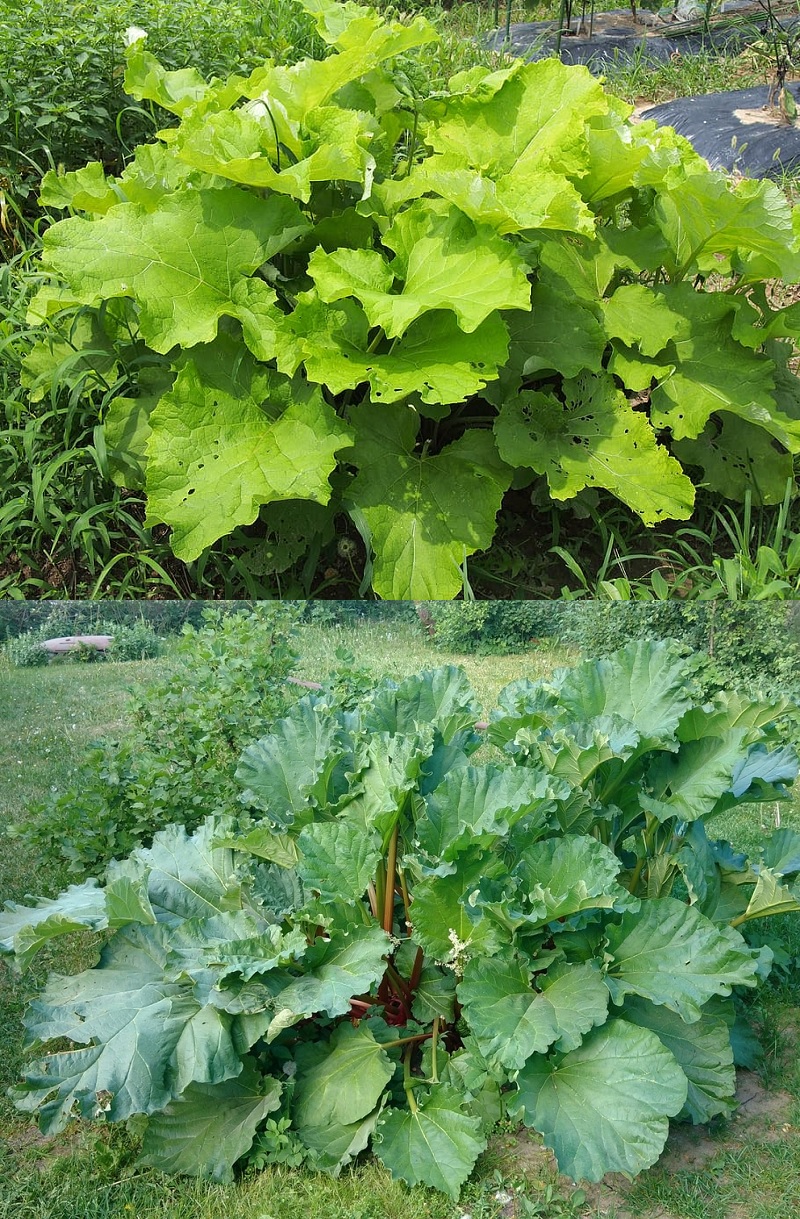
Burdock is a spit for rhubarb, Giant leaf and fleshy stalk, As if a kitchen garden has been on a woodland walk. It’s not a sorrel, (nor a laurel), ’Spite of what it’s name may say – Its lineage ain’t sitting with the dock nor with the bay. It’s true it grows from burrs, But its barbs all grow up rhubarb-y, All decked-out in another’s species’ garb, apparently. At least until it bolts, When its thistleheads are in the hedge – Unlike the cauliflowers of its doppleganger veg. And then there’s the invader – The mutant, spiky, giant kind – Whose leaves atop are rhubarb, but beneath are sharply-spined. They aren’t at all related, When these three have never shared a bed, It’s just the way plants get when they get big and broad and red.
I see them on the seats – all waiting, waiting patiently – The loved-up couples holding hands and smiles, Others with a carry-cot – happy too, but somewhat tired, And those who simply sit and stare for miles. They all have to come here, face-to-face, and talk to us – Fiancés booking churches or our hall, The parents who haven’t quite decided on a name, The loved ones left behind – we see them all. The not-yet newlyweds, or the newborns needing paperwork – A second birth, officially existing, A passport to a passport, to a doctor and a school, With their whole life held within this single listing. And then, amongst this joy, there are the ones to register a death – It’s often by the next of kin, as if a final test. Sometimes slipping peacefully, sometimes out of nowhere, Sometimes only following an inquest. We try to keep the office looking neutral and, well, yes, bland – It does not, cannot, suit for either side. A vase of flowers helps – though more white than colourful – Compassion for the griever, confetti for the bride. All must be recorded in our special everlasting ink, The wedded and the born and the deceased. It may be bureaucratic but the future’s sure to thank us, And our touch is always personal, at least.