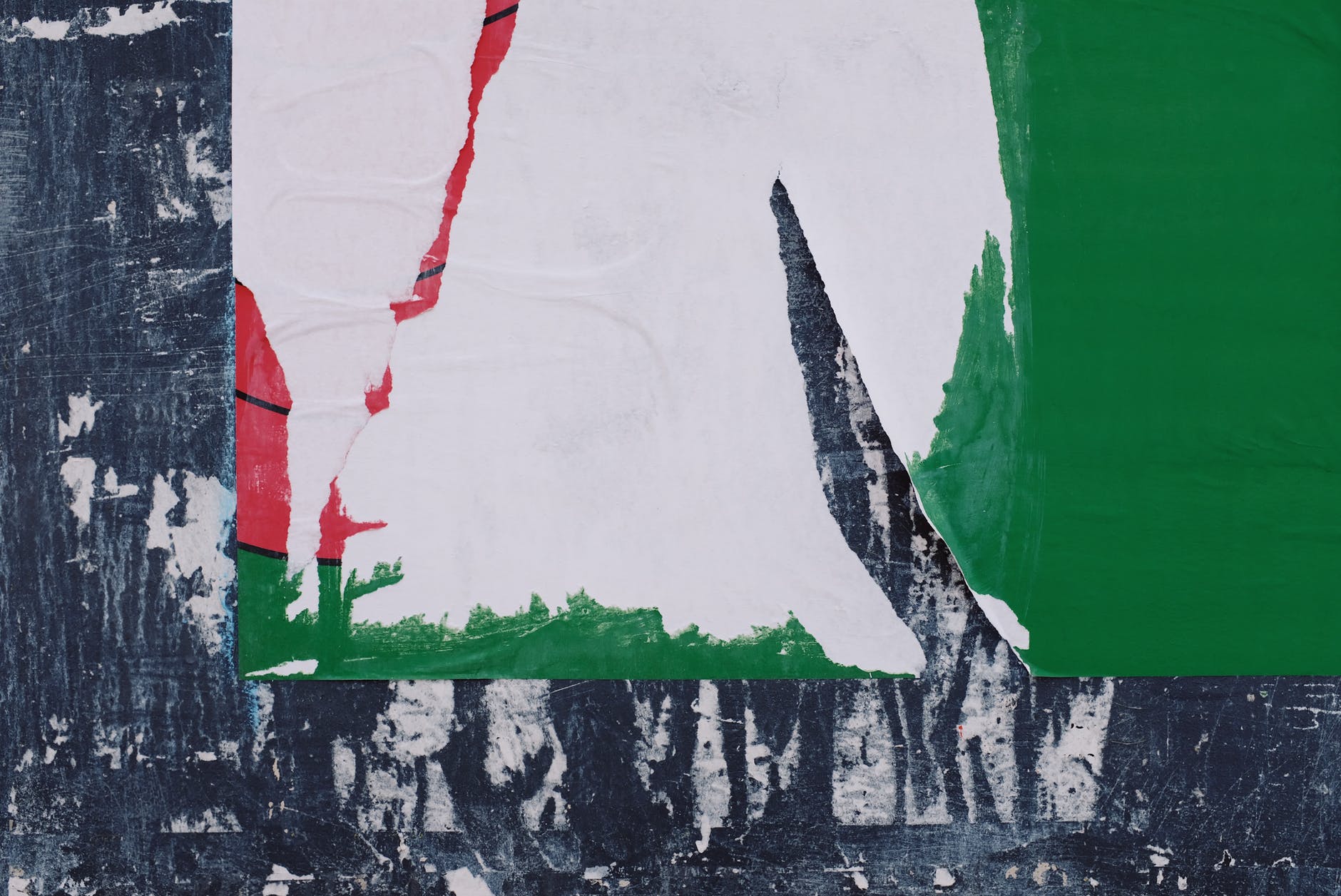
The urban billboards haven’t been updated now for weeks, Still enticing us to salons, bars, and holidays in Rome, Or advertising musicals that never got to open Or for services from businesses where nobody is home.
I always used to hate these hoardings, snapping at my eyeballs – But now they seem so innocent, with cheery friendliness. Their absence feels more communist, without their bourgeois mindwash, Replaced by public notices to queues and cleanliness.
June is full of unexpected flowers – We shouldn’t be surprised at such, We know these buds exist in theory, But we never think of them that much. I don’t mean roses or hydrangeas, Where the blooms are solely why they’re bought – But rather in the offhand places Where the flowers are an afterthought – The lively sprays of privet blossom, say, Or potato’s multi-coloured spawn, Or dead-nettles with snakeheads raised, And teasing frills of clover on the lawn. For ev’ry showy thug like bindweed, There’s small-and-many thyme and poison ivy – Where oxeyes lord it over the daisies, The plantain spikes are defiantly lively. A shock of yellow in the verges, Wastelands looking oddly brisk and bright, And brambles showing their softer side, While shy little sundews and chickweeds fleck with white. They don’t do it for us of course, These unassuming emissaries – And we’ll forget, then be surprised again By the Autumn’s unexpected berries.
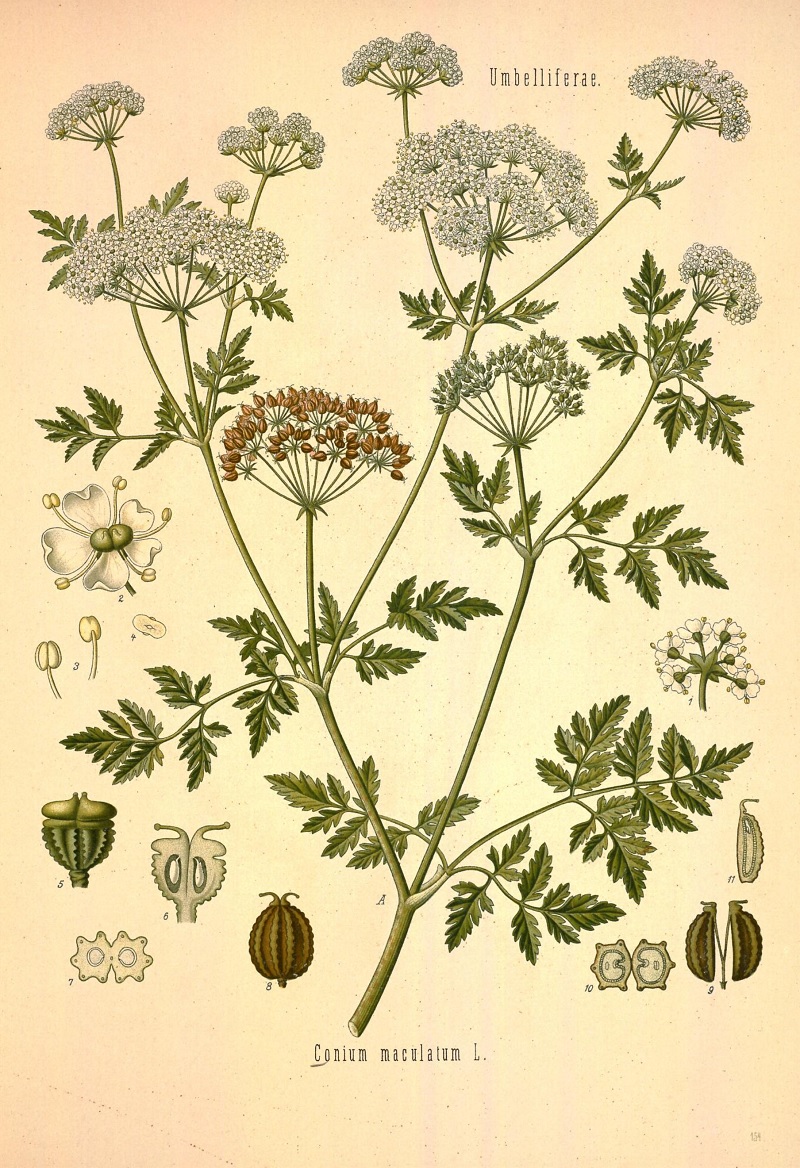
Hemlock, as shown in Medizinal-Pflanzen (Medicinal Plants) by Franz Köhler
One Plant’s Meat is Another Man’s Garden
Hemlock won’t kill us, Despite all its poison, (And not for the warnings that textbooks all parrot.) For why would we eat it, right there in the hedgerow ? It doesn’t look that much like parsley or carrot.
Since when do we sample the leaves and the berries Of any old weed in the wild ? How bizarre ! We buy all our veg from the market and grocer, Who hopefully know what the diff’rences are.
And meanwhile we cherish the monkshood and foxglove, And nurture their weapons without any fuss. But hey, there’s no danger admiring their flowers, For light cannot carry their toxins to us.
Buttercups, daffodils, rosemary, poppies, And holly and ivy, and conkers and yew. We’re much more at risk from a field of grain – From the carbs that we bake, or the booze that we brew.
Animals know well to leave them alone, Whether ragwort to nightshade – just ask any herder. And humans will likewise spit bitterness out – So we won’t die of hemlock…unless it is murder !
Siroccos blow across the Sahara, North from the desert to the inland sea, Where Mistrals meet them, off the Alps, To buffet the coasts of France and Italy. The Helm roars in from Winter Norway, And the Bora from the Steppes out East, But most of all, from gale to zephyr, None can blow as often as the beast – From out the West, with not a name but Westerly, He comes, and comes, and rarely drops for long. He’s blowing turbines, hats and weathervanes, From Summer-teasing soft to stormy-strong – Bringing the Atlantic in his clouds, And laden schooners in his wake, From Kerry landfall to the Humber, He’s the one for whom the branches shake. In truth, we rarely name our winds in Britain, Save to tell us where they’ve been – And Westerlies are born on ocean-blue, In cloudy-grey, to keep our island green.
I went on down to the Tate today To see the pompous, macho art – Art that’s oh so very clever, Art that’s far more smug than smart. It hates so much to be attractive, Loves to interrupt the brain – Wants to make the world more ugly, Wants to dare us to complain.
But most of all, this art is terrified, It’s scared of beauty and of ornament – Frightened of a crafter’s gentle pride, And what to do once all its shock is spent. But most of all, it’s frightened we might think it gay, And desp’rat’ly it butches up its empty walls. But I really loved my trip down to the Tate today – By far the best of spots to view St Paul’s.
The day that Grandpa died, that very day, My father took my hand and led the way On up the garden, round behind the potting shed, And showed me how to tell the bees that he was dead: He gently rapped the back-door key Against the frame, and spoke the name, Then wordless handed it to me That I should do the same. I guess it worked – this informed hive, now his, Survived intact, as was, as is – Though surely, bees think not of grief When Father was, to them, a honey-thief.
The day that Father died, it fell to me To take my son and take my key And pass-on the traditions of the hive – To tell the bees he was no more alive. But as I rapped upon their frame, My puzzled boy a little scared, I found I could not speak his name To bees who neither knew nor cared. And so, I placed a hand upon my lad And told him how we honour Dad – It’s not through what the past believes, But like he taught: by being honey-thieves.
Shaggier and shaggier we grow – Our roots are getting longer, Like our fringes, like our beards – Our thighs are getting hairier, And nostrels too, and ears. But does it really show On low-res video ? Just let it do its thing – Bed-head, birds-nest, afro-bloom, The natural look is in. Nail scissors, Philishaves, And goodbye highlights, goodbye waves. I never thought I’d miss the comb and clip And the stripy pole, Until the scales fell in my eyes And my tresses tangled with my soul. Barber, barber, never go, We never knew we need you so – As shaggier, and shaggier, we grow.
I write you once again, my love, By paper and by boat. The old-fashioned way’s The only way you’ll ever get my note.
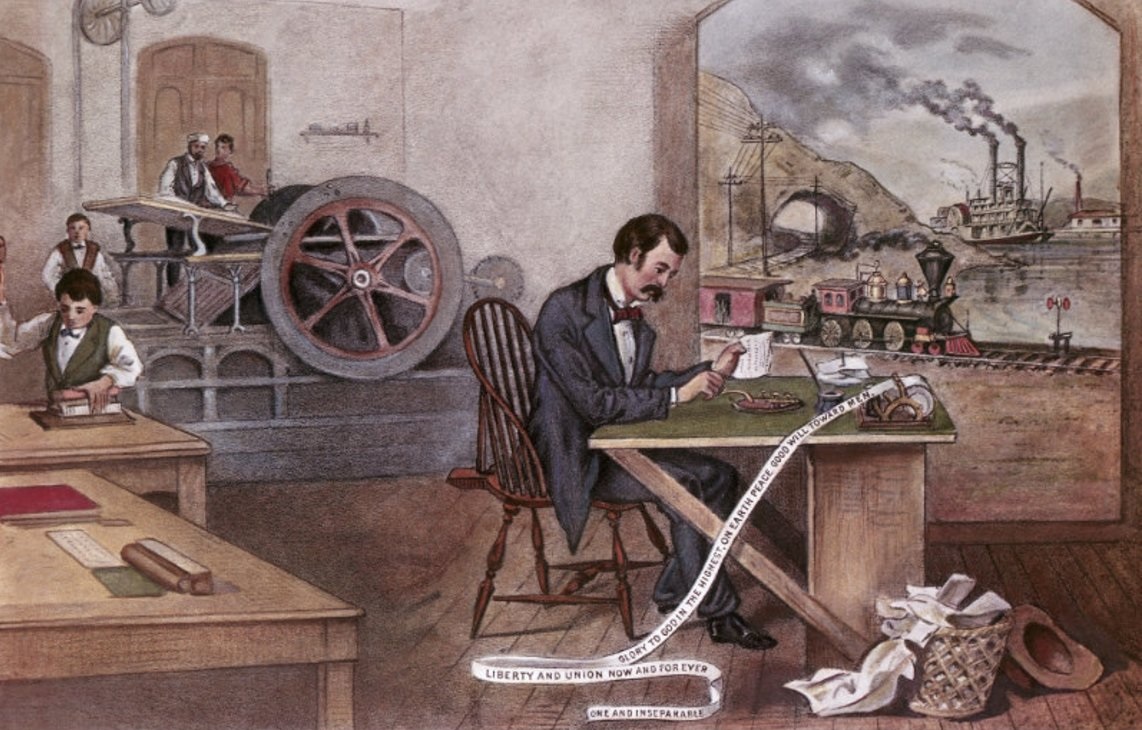
But have you heard, A telegraph now spans between we two ? Is this the modern world, my love, The endless chase for something new ?
Though sometimes, when I think how long We take to send our hearts’ desires, I fancy, on the breeze, that angels sing Along those wires –
Pensmiths, calling pensmiths, What you write today, You’ll get to say tomorrow – Calling pensmiths from across the globe, Your words shall span and probe, This time tomorrow. We shall gladly carry all your distant precious words, The small, the silly and absurd, From off your lips to willing ears – Allying fears that letters reach too slow – Come tomorrow.
It’s hardly for the likes of us, my love, Who must still write – No spark or semaphore will speed These words as fast as light.
I cannot see how just one simple cable Can unite us all. Messages are paper still and boats, For those whose means are small.
And yet, so many weeks until Your next reply can stoke my fires, If only, on the breeze the angels sang Along the wires –
Scribers, calling scribers, What you write today, Shall fly away tomorrow – Calling scribers from across the sea, Your words are bounding free This time tomorrow. We shall gladly carry ev’ry distant precious thought, The playful and the overwrought, That bring their homes to foreign parts, Assuring hearts that letters reach too slow – Come tomorrow.
Musical AI version generated by Suno.com – find more of them over here.
Ten full transmissions each hour, each way – That’s four-hundred-eighty transmissions each day – Four-hundred-eighty, and what will they say ?
Good news and bad news and news that can’t wait, Tidings and greetings and offers and meetings, And orders and pledges and threats and debate, Departures, arrivals, and lovers and rivals.
Ten full transmissions each hour, each way, Of profits and prices and projects and pay, With no words misspoken or scattered astray.
Old news and new news and news of the world, Battles, elections and plagues and infections, As fast as the lightning, each message is hurled, And back comes each answer – an undersea dancer.
Ten full transmissions each hour, each way, Through storm and through snow and through come-all-what-may, With no need to worry and no need to pray.
Peace and good will, they bade – what hath God wrought ? Nation to nation in communication. So is this the peace the philosophers sought ? No need to be shy, just send your reply.
Dits and dahs and dahs and dits, All day, all night, all year, relaying – Reading, sending, hearing, writing, Little bursts of sound and lightning. Letters come in beeps and bits, We do not think of what they’re saying – In they steam without cessation, With no room for punctuation. Tappity, tappity, dit by dah, The pulse of the modern world, they are.
We are the teachers, we are the clerks, The upper working lower middle – Literate, and handling secrets, Tap it, jot it, never speak it. We are the servants of the sparks, Our social standing quite a riddle – Overworked yet fairly paid, We’re not professionals nor trade. Tappity, tappity, ev’ry station, All we move is information.