There’s some who look on history As pages waiting to be filled, They seize the day and shake it hard Until all wild oats are tilled.
And some of us view history As what was going on besides, While we were busy being born, Or catching up with last year’s tides.
There’s those who sit in judgement, And there’s those who have to dust the throne – There’s some whose names are chiselled down, And some who have to work the stone.
And so it goes, and so it went, And history will keep the score – There’s those who fill the greatest tomes, And those who sell them door-to-door.
Every critic will tell you which is cool, And which ones suck. And we are happy to let them, fool ! For if they’re right, it’s only luck ! We trust them to know our own minds better, And welcome their shame at our previous faves – We beg them for news on the new trend-setter, And willingly sign-up as slaves.
But if we’re honest, Then we must let our guilty pleasures rule – For only we know which are best And those will always be uncool. Whenever anyone states as a fact That x is better than y, It’s time that their advice was sacked – Goodbye !
The golden age of art Is the one we’re in right now, I say ! And ev’ry age before us Was as golden in its way. For ev’ry single year has seen Our inspiration in the pink – We’re loving it by millions, Despite what critics think.
This rain is the rain of Poseidon, The bullets of Buddha, The stair-rods of Heaven – It’s raining all over, From Doha to Dover, From Denver to Devon – The swimmers must swim And the timid must drown, While the conquering thunder is taking the town.
This rain is the weeping of Angels, The bleeding of Furies, The flooding of Hades – The wrath of the mountains, The succour of fountains, The drencher of ladies – The cats follow dogs, And the grey follows brown, And it looks like it ain’t going nowhere but down !
If God is all-knowing, That means he must know Of all that there ever was, All that there ever is: How the quarks come And the particles go – Ev’rything, ev’rywhere, All truth is his.
The past and the present Are known by the Knower In all their minutia, Quintessence and trait. But still there is somewhere Where knowledge is slower – It drips out in trickles, And God must just wait.
Almighty all-knowing Is shrouded in mist When it’s scrying for knowledge Where no god can be. For all of the Future, Has yet to exist – So it cannot be known When there’s nothing to see.
More knowedge is locked up That knowedge he knows, He’s learned but a fraction Of all there can be. He knows that it’s out there, And waits till it shows As slowly – so slowly ! – It works itself free.
I could have been born in the Twenties – back when Jazz was king, Or born to Gregorian Plainsong, or Cajun Soul, or Swing I could have grown up years ago, when fugue was in command, Or maybe raised in a lonely sect where music had been banned. I might have lived through any time but this, And bathed in the music of my then – And I never would have known of all melodies I miss When for ev’ry song I know, I must be losing ten. If music were not meant for me, I’d barely care at all – In any other century, I’d never hear the sirens’ call.
Singing: “Music is the muse of here and now, Not yet to come – Who knows what the future holds at number one.”
I could have spent a past life thinking ev’ry note was wrong – It wasn’t music’s fault, of course, if I did not belong. I’m sure I was quite happy, though my passion was quite tame, While my subconscious waited for the song which never came. I might have lived through any time but this, Perhaps been born too early, and marooned – To those who say that music is a frill you wouldn’t miss I think you lack the tunes to which you’re tuned. Our music makes no dent, you see: you cannot sing along – But come back in a century, and maybe then they’ll play your song.
They’re singing: “Music is the soundtracks of our minds, Both mine and yours – Who knows what the future hold within her scores.”
An album often opens with a masterpiece – Well, who wouldn’t show their plumpest wares When setting out their stall ? The next three tracks are singles slated for release, They’re polished and harmonious affairs, Beloved and sung by all. And finally, a quirky and amusing little number For rounding out Side One of a classic disc – A blast, not overblown ! But flip it over, and what is this ?, we wonder – B-sides and hidden tracks they wouldn’t risk To stand up on their own. If we’re lucky, then they’ll rally for the closing track, To give us a finale worth the wait – And cause us to forget That for a good-while there they’d really lost their knack, And though there’s plenty here to rate, They could do better yet.
But here’s a thought: If they sell a million units, gross and nett, And if only one percent of those who bought Approve of what they get, And love it all from needle-drop to runout-groove – Well, that’s a thousand fans, I swear, With mojos quite a little richer from the buzz ! And even if we each don’t care For ev’ry song, it’s good they’re there, Because we each might still like one that’s going spare – A diff’rent one, of course, for each of us. In life, we all have tracks we know are hard to share – But someone somewhere ain’t so square And digs these souls we’ve lain so bare, Even when there’s no-one else who does.
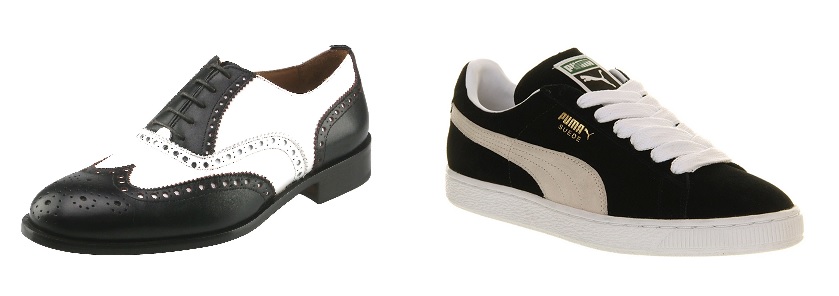
Sensible shoes are black or beige only, Trainers are black, white or red. Sensible shoes are rigid and clompy, Trainers are soft as a bed. Sensible shoes need polish and brushes, Trainers need puddles instead. Sensible shoes have nematode laces, Trainers have tapeworms to thread. Sensible shoes are smooth underneath, Trainers are deep in their tread. Sensible shoes squeeze feet into points, While trainers will let the toes spread.
So yes, alright, we held a vote, That didn’t go our way – But now we have to honour it ? I never thought I’d hear the day When self-proclaiming liberals Have lost the great paternal arts ! Call ourselves the lefties ? We’re just a bunch of bleeding hearts ! Just spin some condescending line That this must be ignored. After all, the citizens As just some bolshy horde Who never should have had the chance To have a say at all, I say – This braying and ungrateful mass Are far too thick and grey. And not forgetting racist ! They see us as a threat – Let’s tell them how we hate them At ev’ry chance we get. But they pay no attention, They’re trapped within their bubble – They’ve listened to the wrong propaganda, That’s the trouble. But then again, it’s not their fault, They have been swayed by clever lies – They should have done what they were told By those of us more calm and wise. They’ve fallen for the passionate and positive With not a sneer, They swallowed ev’ry promise made, Ignored our ev’ry scoff and smear. Well yes, they have it hard – it can’t be helped, There always must be fools To stack the shelves and clean the loos, And fill the special-measures schools – But really, it’s their own fault, anyway, That they’re so poor – If only they would learn their place And never ask for more ! Don’t they know we’re lefties ? We’re the ones who really care – We agonise about them over coffee, Then we like and share. But they are mindless zombies Which the tabloids hold in thrall. (Not us, of course, we see through that – For we are special, after all.) They’re flattered when a candidate had deemed to ask them What they thought, And dazzled when an orator had spoken up For what they sought – But most of all, confused at how They finally possessed a voice – And these are who we let loose with a vote ? It’s anarchy by choice !
When I was only one year old, My father really should have disappeared – Just sloped off to the bookies on an everlasting Tuesday afternoon. And all my life I would have told Of how my sainted mother persevered, And how, for all I know or care, he’s god-knows-where And won’t be coming back home soon. But somehow dad could never get it right – He’d bet a pound or two, and down a half, But always make it home at night, And spend his winning on another toy giraffe for me. He hung around when I was two, he hadn’t quit when I was three, At four he was still keeping near – At six, and ten, and seventeen – still here ! Forgetting birthdays till the day before, And even then he wasn’t sure which one it was that year.
He should have been an alcoholic, But he never got the hang of drinking. He always loved to flirt and frolic, Gave the eye to ev’ry barmaid while he nursed his half. But I doubt he ever got beyond the winking, I doubt he wanted sex at all – he did it for a laugh. He’d walk a straight line home, far short of tight, And always home in time to kiss goodnight, His breath with just a hint of hops, but hardly stinking.
My mum would sigh and often chide him, He’d just smile and promise to be good. He rarely did the cooking, but he sometimes did the washing up. I’d wonder how she could abide him, But she did – I never understood. He’d make this face I’d only seen before on Andrex puppies, Whenever he had accident’ly smashed her fav’rite cup. He spent a lot of time laid off, and mum would have to work He’d sometimes pick me up from school, but like as not I’d have to walk, But most of all, he always had to think what he should do – His had no instant instinct for it, Kinda wished he could ignore it, Though he still got on and bore it, kinda saw it through. He never planned to be a father – found himself a dad at twenty-two.
But you know, it seems to me In a thousand thousand universes, This one here is probably the only one in which he stayed. All those other hims are chasing nurses or some three-legg’d jade. I don’t know why he’s diff’rent, but some tiny little diff’rence Has made him just too soft and weak to quit his wife and kid. In all this multiverse immense, His stopping hardly makes much sense, But all in all, I guess I’m glad he did.