You always made the Arctic look so grand, All strewn with bouffant archipelagoes. As wide as the equator, so they spanned – As tall as continents, so they arose. And lurking down below – the vast Antarctic, A bony finger raised above the thrall – The rest so blanched and bloated and lethargic, (Well, when you bothered showing it at all – And when just done away with altogether, The southern seas would stretch on down forever.)
You held no truck with Circles, howe’er Great, For nautical advantages abound When lines of constant bearing lie so straight, Though actu’ly they took the long way round. And if we’d plot your rhumbs, we’d best beware – They’d run in true diag’nals, you’d allege, Not spiral to the Poles (which were not there) But fly on straight until they hit the Edge. (And two New Zealands – just to keep on track – But what strange lands must lurk upon your back ?)
You charted our imperial domains, And painted up your map to show our broods – You swelled the pride of rainy northern reigns, Who gained good fortune by their latitudes. You easily outstripped your upstart peers, And served so well as armchair trav’lers’ muse. You hung so proud in classrooms all those years, And lent your gravity to ev’ning news. You’re so ingrained, we’ve swallowed you since birth – From here unto the Corners of the Earth.
Photo by Markus Spiske freeforcommercialuse.net on Pexels.com
Purple Requiem
It ain’t your fireman or soldier Who risk the most to do their job. Your real heroes, I told yer, Are your bassists and strummers, Your keyboards and drummers, Your strutting party-dudes and your master bong-plumbers. They’re ever alert and ever a-throb, Just waiting for the call to rock the joint large, Just waiting to save us from the numpties in charge, Just waiting for the call from the downtrodden mob To rescue us all from the bummers.
But the price is high, the fates are sprung – Too many albums filled with the songs they never sung. Too many sobbing fans recoiling at the haste With which their idol’s promise was undone. Too many, many bands atrophied by the waste, Too many mothers lost their rebel son. Recruited to the cause while they’re still within their teens, They must slave away for years in their thousand-dollar jeans, With the hair and the teeth and the endless magazines. They’re out there, dying too young – Labour-market casualties, axemen unstrung.
Do they really hope to die before they get too old ? Before they’re easy-lis‘ning gold, Before the cramps have taken hold ? Or do they think they’re better dead before their soul is sold ? Before their shooting star has stalled, Before they’re shagged-out, fat and bald ? Sometimes living on, they cry, just makes the struggle cheaper. To play the great gig in the sky, don’t fear he reaper.
Some won’t even make it to the twenty, Many dead before the big three-oh. Thus drop the mighty cognoscenti – When ev’ry flight to Rio Is another flight could crash, And what else but on drugs Can they find to chug their cash ? And the groupies are exhausting, And the booze is flowing plenty, And their bodies suffer burn-out and the rash. Thus the endless nights of forcing Make their flesh all pocked and denty, And suddenly their eyes have lost their flash. Then when at last the blues hit town, They gloom on up and come on down, And find a noose to wear or vein to slash.
And early years, or so I hears, are diciest of all As the Mayfruits of success will press the harvester to call. But if they still kick ass at fifty, Got no pension, ain’t so thrifty, Gotta take another tour of duty – such a haul. Sponging cronies, bootleg phonies, “Hello Montreal”, Three-legged ponies, alimonies, drive them to the wall. So what sets them so thrillingly upon a road so killingly, And choose a trade so willingly that sees her children fall ?
Yet still you’re out there, gods divine, With scream and shout. Keep on flouting it for ev’ry single one of us, Keep on pouting it for ev’ry single mug and wuss. You’re always there, walking the line, Just rockin’ out. Keep on vaunting it for those of us who never can, Keep on flaunting it and sticking it right to the Man, Keep on party on and shine, Just like it’s Nineteen Ninety-Nine. For they can never undermine the peace and love that you began.
You’re always out there living it, living for us all – And cos you are so superstar, You lighten up our daily crawl – You make it all alright by far, for us to be so small. So rest in peace, and rest in rock, each fallen avatar – Your life was brief, yet through our grief Comes weeping your guitar.
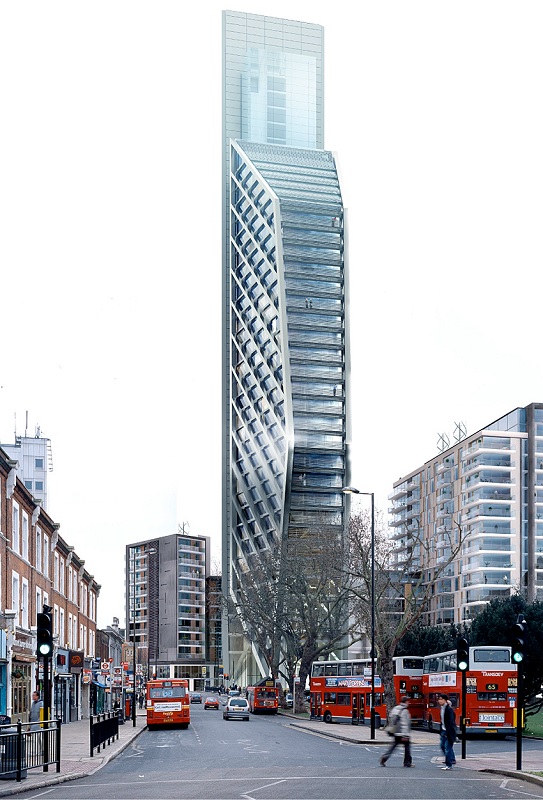
Well done, Ealing ! Macho, strong ! Build your towers, probe the sky, Pump your concrete, raise your steel – Bring the low-rise wimps to heel. Bravo, Ealing ! Far too long You’ve languished only four floors high – Never felt the bracing breeze When funnelled through a cut-price Mies.
Lord it over Christchurch spire, Just a finely-sculpted fop – It looks too good and stands too proud, It mocks too much to be allowed. Now we find when building higher, So our expectations drop – Mustn’t cling to ancient primes, For now we live in av’rage times.
Your flats will sell before their sheen Has moldered-off or ghetto-greyed. So price them at a hefty wad – For no cheap housing here, thank god ! And finally can Haven Green Now bask all year in deepest shade. Don’t be subtle – rage and shock, By showing them the finger-block.
Well done, Ealing ! Ditch the mild ! You’re pissing down to raise a stink. It’s meant to be so out-of-scale, This temple to the Thrusting Male. Bravo, Ealing – stay beguiled ! And who cares what they locals think ! Quit the Nineteenth Century, And welcome Nineteen Sixty-Three.
The ‘Leaf’ was a proposed wanger for Ealing in West London back in 2007. Alas, this was ditched in favour of the Dickins Yard wangettes of only 14 floors, which is only three-and-a-bit times too high. But just think what we could have had !
The rain, it rains like rainy rain, The time, it ticks so slow. It soaks the garden, soaks the lane, It soaks the overflow Won’t it ever shine again ? Won’t it ever go ?
We curse these clouds we undergo, We curse this ever-rain – But still the gullies rush and flow And wash the boggy lane. Oh, must the day creep by so slow, And with so little gain ?
We check the window once again, We watch the drops that flow. Perhaps the clouds are bored of rain, Have somewhere else to go ? Check the garden, check the lane – Not too quick. Be slow.
It hasn’t yet begun to slow, It’s coming hard again. It should’ve stopped an age ago, Instead it has free rein. So down to earth the clouds all flow Upon the roof and lane.
We long to be upon the lane Where blooms the indigo, We long the garden to regain Between the may and sloe. Instead, the clouds forever reign, Like icebergs in a floe.
So round and round our thought must flow – The clouds. The time. The lane. And like the day, they crawl so slow, As round they crawl again. They’re stuck with us, nowhere to go – And still comes down the rain.
This is a sestina, whereby the six endwords are repeated each verse in a different order. Tradition also requires a seventh mini-verse, or envoy, to round things off, but I’ve never seen the point.
I used to watch the ordinaries Crowded on their buses Or queuing in their banks – Watch with fascination all baldies and the hairies, The thems to my own usses, The shufflers to my swanks. Watching all the many ways that nothing-special varies, Its minor spats and fusses, Its local hopes and thanks – Certain in the knowledge how I’d never join their ranks.
I used to think extr’ordinary Feats were for my aiming – I’m, surely, something more. Now I must accept the truth, so truly sharp and scary – That I am but a tame thing, Like those I watched before. All my efforts cannot reach my heroes’ lofty eyrie. You must have thought the same thing When yours too wouldn’t soar. Genius, it seems to me, must always live next door.
“The image of Britannia, which has featured on British coin for hundreds of years, is to be retired.”
– The Changing Change
Britannia ! Oh, what have they done to you ? Firstly they dressed you in helmet and armour, And decked you with shield and trident and lion – An overlord lady, the Empire’s scion. Then they decided your tenure was through – If only they’d made you a doctor or farmer, A lawyer, a teacher, a builder or nurse: These are the women who should fill our purse.
Britannia ! Oh, they reject you unduly, Now you have many more forms to acquire – Indian, African, Asian and Arab, Mediterranean, Saxon and Carib – These are your Britons, Britannia, truly, These are your faces and flowing attire. These are your spirit, that we may unlock it, And gather your virtues right here in our pocket.
Ms is such an ugly word, Let ev’ry Ms become a Miss – I know no-wedlock is inferred, But Ms is such an ugly word. And Mrs too, a mumble slurred – It’s not the sense, but sound I diss. For Ms is such an ugly word – Let ev’ry Ms become a Miss.
I once had a clock, Just an ordin’ry clock, With its cogs that enmesh in a segue Escape and endock, With the whispering tock Of the gentle-most metrical shower. But a cuckoo took stock Of my welcoming clock And she chose it for hosting her egg-lay. Imagine my shock As her offspring would mock At my tranquil repose, ev’ry hour.
That hatchling would knock At the gears of the tock And he’d suckle a share of their motion He’d peck and he’d rock Till their screws would unlock, And he’d toss them aside for their power. Yet still the old block, Though it lost its own flock, Was a parent of clockwork devotion. It pandered this jock With his swagger and cock As he sang for his mate, ev’ry hour.
You say that faith has got too commercial – I say it always was. From the Witch-Doctors’ chant dispersal, Through the Druids’ winter reversal, To the Oracles’ future rehearsal – It came not for free, that sacred buzz. Even Jesus on his mission, Hosted at his fans’ volition, Over suppers told his vision, The way a schnorrer does.
You say that faith has lost its key sense – I say it’s never there. You long to reclaim that old-time credence From the modern world’s impedance, Yet you forget your antecedence – Ev’ry ritual’s heathen forebear. All belief has complex prices – Prayers are bought with sacrifices. To the faithful, my advice is – Pilgrim, buyer beware.