Bad girl Ellie – dangerous to friend, Hanging around with her trouble-brewing sort, They always knew how she’d turn out in the end.
Not an easy woman to defend – Probably at what she really shouldn’t ought. Bad girl Ellie – dangerous to friend.
Build your hopes up – and watch them all descend. Hanging around her will only get you caught. They always knew how she’d turn out in the end.
Seeking action ? How much can you spend ? Probably life for the trouble you just bought. Bad girl Ellie – dangerous to friend.
Sex and menace – hazardous to blend: Hanging around, and you quaff her by the quart. They always knew how she’d turn out in the end.
So they tell me – none would recommend. Probably wise, but I’ll take my chance to sport With bad girl Ellie – dangerous to friend – I can’t wait to see how she turns out in the end.
English has many a-loanword – Absurd a-name, as if to suggest (Despite how much they’ve grown so blurred And settled-in, so you’d never have guessed) The day may come when they must pack And once-and-for-all be all given back.
French, please take the biscuit, And Persian, fetch your cash, Norse, collect your brisket And Arabic, your sash. Chinese, we have to unravel your silk, And German, it’s time please to drink-up your milk.
Greek, fly out your planet, And Spanish, kill your roach, Italian, shift granite, And Hungarian, take coach. Tongan, please, release taboo, (Though we’ll never shift Tahitian tattoo).
So Hebrew, take Israeli, then, And Dutch, stop pushing foist. And Latin – now an alien With all your words unvoiced. We hand them back all bent-up and slurred, And full of…thingy…you know…oh, what’s the word ?
Michael’s ones are round, But Gabriel’s are pointed – With orders, each is crowned, And mouldings, each anointed. With stonework tightly joined And structurally sound, Gabriel’s are pointed, But Michael’s ones are round.
Tusk-tusk, Tuscan, You’re just a stripped-down Doric, Sat squat upon your plinth – You don’t fool me. And don’t posit Composite, You ain’t so long historic – You’re just Corinthian That’s running-free.
If Bassae’s still Ionic, (And it is), And so are Ammonites – Then isn’t it moronic To insist that Serlio is right ? To favour Romans over Greeks, And not allow some playful tweaks, Patrolling boarders of the orders Just to keep them pure from mutant freaks.
The Tuscans and the Composites Were born in the Renaissance, When Italians made counterfeits To stand-up in response. Well fair enough, by why stop there ? Now that we have this president, Let’s have a hundred orders blare To prop-up ev’ry pediment.
Hold off the tinsel and un-ring the bells, Don’t hack the holly, at least for a week, And don’t eat the chocolates or savour the smells – Endurance, my friends, we are far from the peak We’ve barely entered December, remember, We’ve business to busy and bills to be paid. For awe and excitement need patience and pacing – It’s not like we’re likely to miss the parade.
The thing about Phylums and Classes and Orders and all, They don’t really mean very much, from a-one to another – They don’t show a definite border or wall, Except that each member within is a brother. But how shall we simply compare, say, a Fam’ly of fishes With Fam’lies of insects or fungi, or some other race – For nature won’t readily yield to our wishes For systems and schemes with all life in its place.
What’s needed are rankings that indicate something specific, Like maybe the age when such clades were diverging anew – There must be a way to be more scientific That merely to shrug and decide “this’ll do”. Then maybe some Kingdoms or Phylums will prove to be hoarders, While others lack class in their Classes, now under-supplied. So finally, let’s bring an order to Orders, And give ev’ry Genus some Family pride.
It always struck me that the Linnaean ranks would be more useful if either all of their inhabitants shared a minimum percentage of genes, or alternatively that they were diverging at roughly the same time as all the others of that rank.
Note that in the old method, species is the only rank which has some actual science behind it and isn’t just vibes-based. Except…it turns out that the concept of a biological species is far murkier and less discrete than we used to think, so even this is not really true any longer. Hybrids, it seems, just keep popping-up…
But this will cause its own oddities, such as Cheliserates (arachnids & horseshoe crabs) diverging from the other arthropods in the Cambrian before all of the currently-recognised phylums had appeared, meaning these would need to be recognised as their own phylum too. So we are back to (hopefully) common-sense rough collectives showing nested sub-groups within – but this only makes real sense when we examine the specific heirarchy, but not much when we compare the same level from different heirarchies.
But either way, the idea of the phylums being the major body-plan divisions is well-established, at least in the animals. And having four intermediate levels between there and species feels about right – we now know that there have been an order of magnitude more branches (mostly petering-out in extinction), but we don’t need to capture all the complexity of the Shrub of Life, this is intended to be a layman’s tool, not a PHD.
Yet I do wish when talking of, say, the Order of Proboscidea, they would add when the split occurred – in this case, in the early Paleocene. You’re welcome.
You know me much closer and touch me much deeper Than any could ever before – You bring to your table this soundest of sleepers, And open me up to explore. You rend me asunder with gentle‘est plunder, To survey my hintermost-lands – You ease my distress with your tender caress, With my life firmly held in your hands.
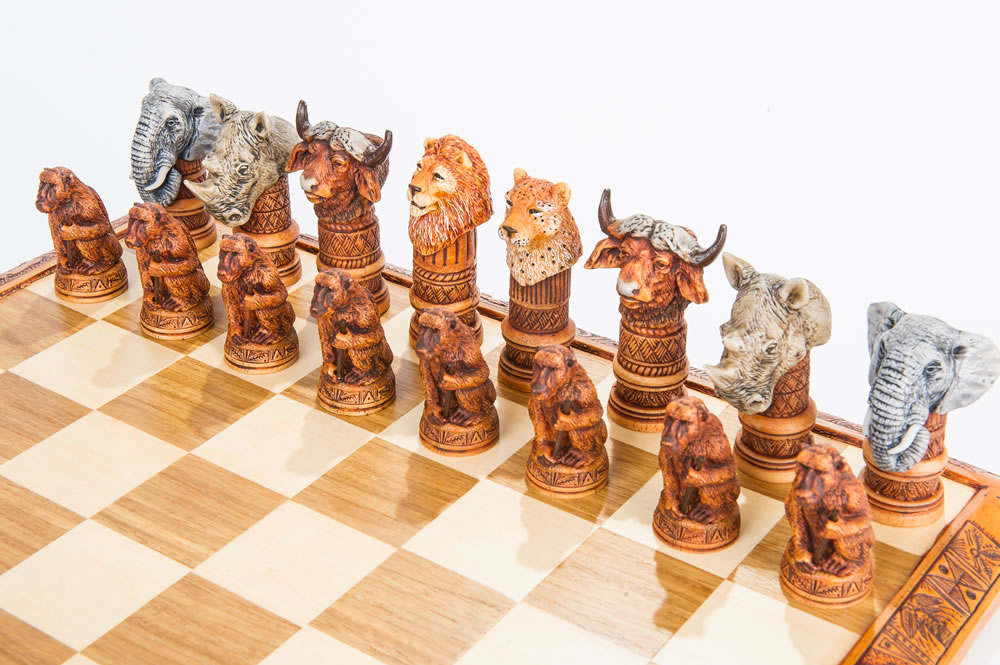
Henry moves his vertebrates, And Louis tunes his tunicates, While Malcolm swims his sharks and skates To battle Olaf’s ranks of starfish pawns. Boris risks bacillus rods To fight with Oskar’s fungal squads, As Richard launches octopods To counter Philip’s shrimp-less group of prawns. So James arrays his gymnosperms, Like Ferdinand his cyan germs, And Otto’s nematody worms, At Charles’ yet-to-be-discovered spawns.
I should point out that the title is a mnemonic for the Linnaean ranks of life: Domain, Kingdom, Phylum, Class, Order, Family, Genus & Species. Actually, Domain is a relatively new addition, and plants have Divisions instead of Phylums (or Phyla if you’re a pedant), and the whole thing now looks hopelessly simplistic in the wake of cladistics, but it’s still a handy starting-point.
Eyelash Mites – you’ve probably got them and didn’t even realise
Microbiota
I’ve mites on my lashes, And yeasts in my guts, And hundreds of species Of germs on my skin – But not cos of rashes, Or buboes or cuts, Or oils and greases, Or illness within.
For ev’ry itch I curse, There lurk my lurkers – I know you’re there, my pretties And I know I am your food. My constant hitch-hikers, My loafers and workers. You are my troops, my cities, You’re my nations and my brood.
Way down my intestines Are hundreds of others, Who equal each cell, But are tiny by ten – And while some infestings Are life-giving brothers. They yet could rebel If they turn pathogen.
For ev’ry inch of me, I am outnumbered – And long before my birthing Saw you terraform my loam. I thrive unflinchingly, Yet so encumbered. Be gentle with this earthling As you make yourselves at home.
If God is not, and I believe, Then my mistake shall matter none to me – And when I come this life to leave, I matter none to void infinity.
If God there is, and I abstain, Then my mistake shall matter great and well – And when I quit this earthly plain, I matter none to He who saves from Hell.
If God is not, or God there is, Still our mistake, for taking up this bet. So ere our lives are done, know this – They matter much, they might be all we get.