Journeyman

aerial view of road between green grass field
Photo by TruShotz on Pexels.com

Journeyman

First I took the high road, then I took the low road,
(But I found the middle of the road is barely worth a mention.)
I hit and hogged and kicked-the-can upon the long and winding road
That’s sometimes paved with yellow bricks, and sometimes good-intentions.

Yet how many must a man walk down before they make him ?
This hard road to Damascus is a lonely trial of tears.
Please don’t lead to Rome again, but to the road not taken,
For the golden road to Samarkand begins at Wigan Pier.

Ah idioms, where would language be without jargon ?  This poem is so early, I was still allowing myself to slip in post-rhyme esses (tearS and pier), which I’m much stricter about these days, although they do still crop-up where to avoid them would make the syntax tortured (though usually in the also-rhyme position [lines 1 and 3], with a cleaner pairing on the prime-rhymes).

Propersome Grammar

north america book and toke book
Photo by Negative Space on Pexels.com

Propersome Grammar

To take the example of gotten,
Grammaticists so much malign
This useful past participle
Whose use was once most rife and fine.
Crossing oceans, forth it went,
Yet back at home its usage fell
A shorter version came in vogue
That was but little used till now.
And yet these language experts
Who tell us how to speak forthhence
Forget this evolution,
Forget that English is not French.
They try to stop the creeping changes,
Battle hard against the rot.
“If we don’t keep our English pure,
Well, what then have we got ?”

Language has long fascinated me, and here’s an early attempt of spinning some obscure lingual trivia into half a page, a useful fallback still when Mr Block comes to call.  The bit about English not being French is a reference to l’Académie Française, (that’s right, Immortals, I capitalised the adjective – deal with it !)  I heartily hope that the average Francophone ignores them with rigour.  I’m sure an English equivalent would simply hate ‘forthhence’, though maybe with good reason on this occasion.

Hogwash

close up of hand feeding on tree trunk
Photo by Leah Kelley on Pexels.com

Hogwash

To the Anglo-Saxon world,

A deer was anything than ran,
A fowl was anything that flew,
A fish was anything that swam,
A lily, anything that grew,

A fly was anything that buzzed,
A louse was anything that crept,
A worm was anything that crawled,
A spring was anything that leapt –

That’s just what they were called.

But scientists then came along,
Insisting we had got it wrong
For centuries.
And we must never mention these.

I guess the world has specialised,
But why are smart lads still surprised
By broader use,
Or giving modern speech a goose ?

They’re self-fulfilling pedants, keen to snub,
These sneery science boys –
They build their lab beside our pub
Then whinge about the noise !

A weed was anything of herbs,
An apple, anything of fruits,
And bug was something that disturbs
Your modern blooms with ancient roots.

Scharfes Ess

sssss

Scharfes Ess

I don’t care what you tell me,
It’s a B !,
Whatever Germans see.
A Beta-B, a bit more curvy,
Cool and verve-y,
Filigree.
This ligature is formal dress,
A symbol of the bourgeoisie.

But who could guess that it’s an S ?
Well, okay, two, that you compress
(or is it three…?)
Enough !
Don’t squeeze your esses into messes,
Let each ess breathe free !
And let’s supress this guff, unless,
We let it be a B !

I almost called this poem βcharfeβ-Eβ.

Mongeese

africa animal british close up
Photo by Mike on Pexels.com

Mongeese

I’m far too much busy just watching these wonderful creatures
To care for your grammar.
They’re so like the ferrets and martens in habit and features –
They drown out your clamour.
They aren’t, though, that closely related (they’re closer to panthers),
They just look the same –
For evolution converges on similar answers,
And so does their name.

Monotongue

tongue

Monotongue

My Latin may be lacking,
My Dutch may be unknown,
In Thai and Greek I cannot speak,
My English stands alone.
If I can’t win with Mandarin,
I still might cast my a spell –
I shall compete with language sweet,
And use my English well.

Pissing on the Pedants

get a life

Pissing on the Pedants

Do you remember, back in school,
When teachers, parents, busybodies,
Told us, told us, told us how
Our grammar shamed our tongues ?
They called us slovenly and coarse,
No better than the brats of squaddies –
Smacked our hands and clipped our ears
And bellowed out their lungs.

They were wrong.  So wrong.
On ev’ry single point they taught.
Wrong that we couldn’t,
And wrong that we wouldn’t
And wrong that we cared what they thought.

Sometimes we mixed up laying and lying,
Or fewer and less,
But I guess that we just didn’t care.
The meaning was clear from the context,
As clearly as there is from their is from they’re.

We thunk and we brung and we beated –
The more they cared, the less we core.
And even today, they get heated,
But they can’t clip our ears no more.

Punctilagogaloquociatude

dryden
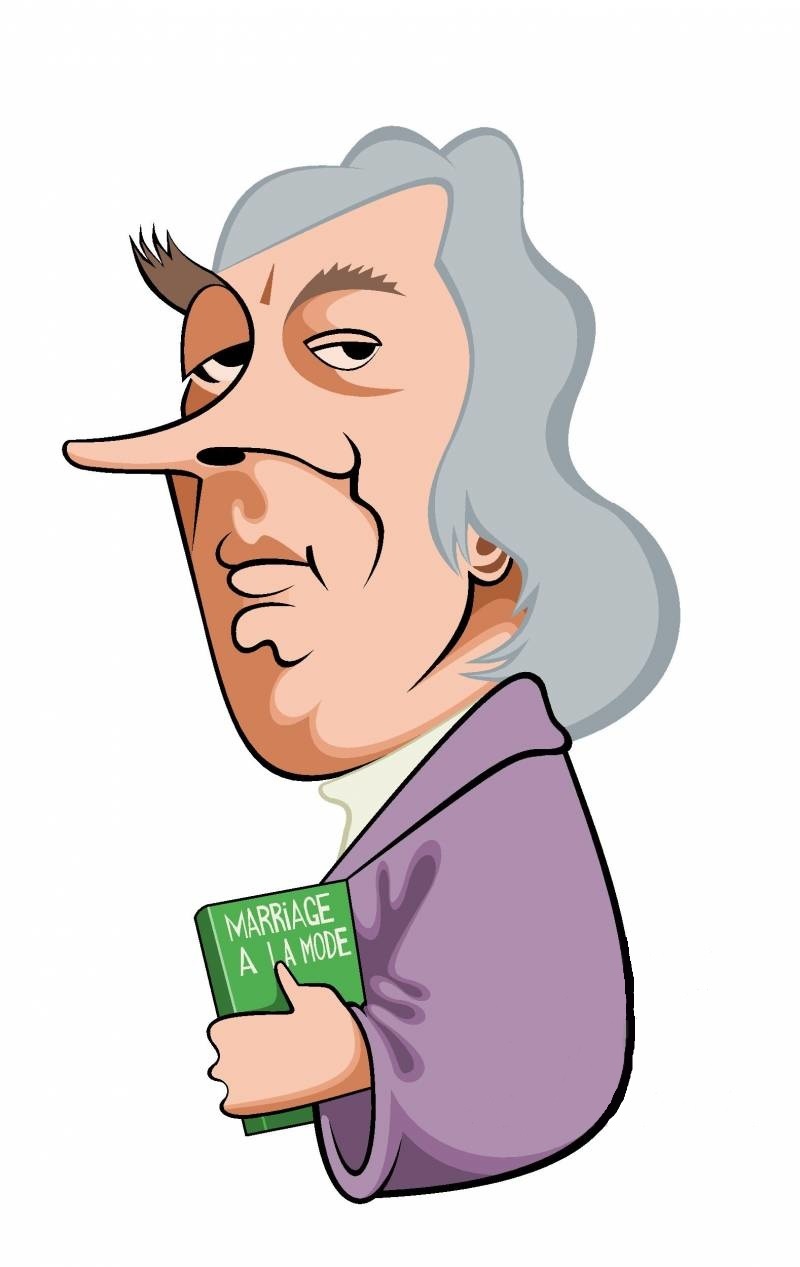
John Dryden by Gary Brown

Punctilagogaloquociatude

Poor poor Johnny Dryden
Thinks that English is too English –
Wishes it could be more Latin,
Than this horde that he’s combatting.
But he’s heading for a hiding
If he thinks our mongrel language
Is a synonym for Latin,
Somehow ripe for reformatting.

Poor poor Johnny Dryden
Hates those final prepositions –
Keep them out, just like in Latin,
Else we’ll really let the cat in.
Always ready for some chiding,
He polices our transmissions
Should we stray away from Latin
In our ungrammatic chatting.

Poor poor Johnny Dryden,
Hates infinitives to split –
After all, you can’t in Latin…
Oh, to truly scholar that in !
But the mobs are over-riding
All his careful rules to bits !
Ripping off their hairshirt Latin
For their English shifts of satin.

The title is pronounced PUNK-till-uh-gog-uh-low-KWO-shah-tyood.

Was, Not-Was

Was, Not-Was

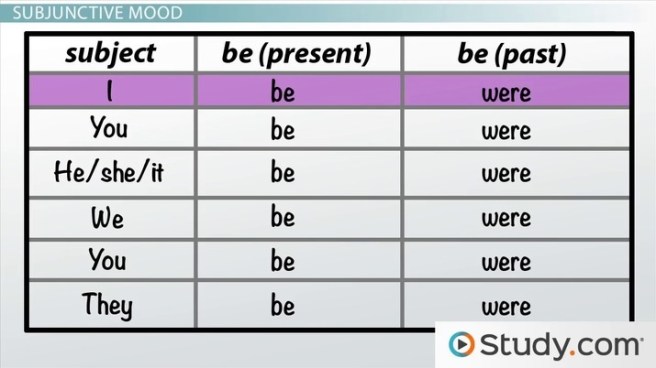
If I were to say today
If I was,
Would I generate a buzz
At my un-subjunctive ?
I doubt it.
Not to be presumptive,
But the world can live without it.
The less-pedantic folk
Have been dropping weres for years –
Not to provoke,
But only, it appears,
That they never learned a diff’rent way.
And who’s to say that what they say is wrong ?
Their meaning is as clear
To an ever over-fussy ear,
And all thanks to its context –
That complex glue that helps us get along.
To make a counter-factual phrase,
They have no need for prissy rules
That sound like strays from olden days –
They do it fine with simple tools,
Without the fuss,
Without the spleen,
And ev’ry single one of us knows wholly what they mean.

Don’t weep for changes in our speech –
It changed for you –
In all those words they wouldn’t teach
That once were dangerous and new.
They horrified your grandpapa, of course –
They made him jar, they made him hoarse.
But you knew better than your betters –
Broke the fetters on the Non-U,
Took these immigrants upon you,
Gave them voice and gave them force,
You let them all rejoice
And hoped they stung –
Rolling their illicit letters
Round and round your tongue.

So if I was to use the was
Is it because I like the buzz ?
But then again, perhaps
It’s more an unintended lapse,
And not a careless slur.
Or maybe I prefer
The ever-simple sound of was –
I like the way she does,
So let her purr.
If that be all it is,
Or if that is all it be,
Let’s let the was be fancy-free –
As it were…