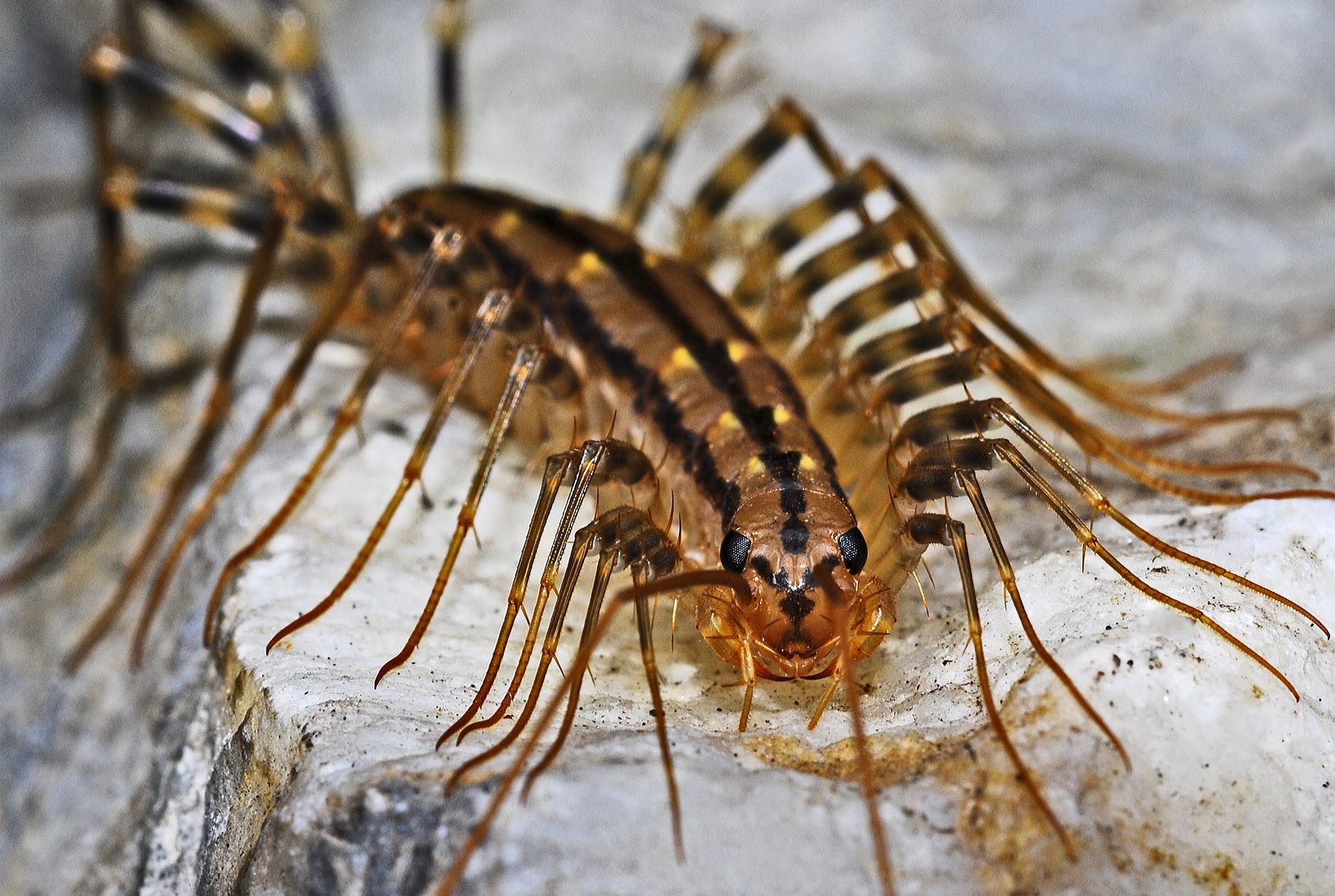
I’ve seen this spider around, I’m sure… Yes, yesterday or the day before – Precisely where she’s hangs right now, So there she was before, I vow. Hasn’t she got webs to spin – I wonder if she’s dead, or just a skin ?
I’ve seen that spider around, I know, Maybe a weeks or two ago – I’m rarely here about my biz, But when I am, well, there she is – Hasn’t she got legs to move ? A gentle blow…and yes !, she lives, I prove.
I’ve seen that spider around, I bet, From month to month, we’ve clearly met. She lurked right there, and always will – Just dangling from her strand, so still. Hasn’t she got flies to catch ? I guess she must keep guard upon her patch.
I’ve seen that spider around, I’d swear – This year, last year, she was there ! Hanging from the self-same thread – And all I know is, she’s not dead. Hasn’t she got eggs to lay ? But I’ll forget her once I’m on my way.
When I wrote this, I had quite forgotten that I had already dealt with this topic two years earlier in Daddy Longlegs, which is uncomfortably similar. I’m also not really happy with using biz, but rhyme-needs must.
A cellar spider hangs in his web, Head down, just where he always hangs – He’s always on the same old strands, Just waiting with the same old fangs. Actually, is he dead ? Or is this just his old skin suit ? A gentle blow, and a gentle twitch Confirms there’s life in the little brute. I’ll pass again in a week or so – I guess he’s eaten in between, And maybe even met a girl, And kept his cobweb nice and clean. But then its back on the web to pose, The same old web he proudly spun – Until one day it’s time to go, And pass the business to his son.
Unbeknownst to exis’tence, Who lived in bodies, firm and dense, There looked upon with apprehence – An unknown entity. Beings of a diff’rent class, Not formed of solid, liquid, gas: For not one atom had they mass, But weightless energy.
When they looked upon the Earth In hill and cave and brook and firth, They found the rocks had given birth To life most tangible. Life alive as mould and trees, And slugs and crabs and honeybees, And frogs and crows and chimpanzees, With tooth and mandible.
“This is outright blasphemy !” They screamed in thought-like energy “For never life can ever be Built with a hard physique. And they live at such extremes In ocean depths and fissure seams And in another’s fluid streams. With mutant-gained technique.”
Terrified by solid life They blew apart this world-midwife, For only there could such be rife, And now it was destroyed. Rock and lava shattered thence And sped across the void immense, Without a single thought or sense: A thousand asteroids.
Thus were ended carbon forms In fumigating magma storms, Biomass now dusty swarms – Extinction voracious. But all this life is hard to kill, And even in the deathly chill Of outer space, it’s clinging still: Patient and tenacious.
As the debris drifts afar, So come the tuggings of some star Upon this frozen reservoir, And bring about a thaw. Let them countless orbits make, And with an endless time to take – One bacterium shall wake, And life resume once more.
I cannot tell you why I should be so afraid, Except I am. Perhaps it’s evolution keeping me alive That makes me scram. But I have always hated spiders, big and small – Oh god, so small ! They’re lurking in this room, right now – They lurk, until they crawl…
But sooner yet than later, Then the peace between us must be made – For I don’t want to be a hater, When, oh please !, I hate to be afraid…
And with tarantulas – so big !- we get to see Just how they’re built – Their legs, their palps, their spinnerets, Their onyx eyes and downy quilt… Yet small ones have these too, too small to see – But oh, they’ve got the lot, Upon a strange and creeping body – Never let this be forgot !
But I am more than this, and greater – I shall love them, I shall not be swayed. For I don’t want to be a hater, I don’t want to spend my life afraid.
Centipedes, ah centipedes, with more legs than blood veins, Not like the millipedes – they’re rounder, you’re flatter. Among the weeds are centipedes, articulated trains – So how can you walk without causing a clatter ? You gain two more segments each time that you shed – That’s four legs per moulting, with more moults ahead. So I don’t know, centipedes, quite how you succeed When the insects can make do with six feet per tread. Is it to lengthen your gut, or to strengthen Your grasp on the earth, causing limbs to accrue ? And if so, you sly lot, I’m wondering why not Have billipedes, or trillipedes, or squillipedes too ? Nat’ral selection, of course, has you firm in her grip – It’s legs verses food, and at some point your fortunes must slip – Though how many legs does it take for the balance to tip ?
Centipedes, ah plentipedes, with more legs than brains, Though more brains than millipedes, if far fewer pins – Bullet-headed batter-rams who plough through remains, They’re moving slow by gearing low, to help sync their shins. Silly slow millipedes, high in torque and low in speed – Faster though than rotting leaves, upon which they feed. You race them and beat them, you chase them and eat them – But how many, Centipede, of legs do you ready need ? Perhaps it’s your body that’s less planned than shoddy, And just goes on growing till one day you pop. You keep budding segments and each comes with legments, All far too far back-there behind you to stop. Centipedes, ah centipedes, you’re runners and dancers, You’re bolted together, you’re slaloming chancers – So rich in appendages, always – but so poor in answers.
Two wings for casing, And two wings for flying, Mouthparts for feeding, And feelers for prying, Six legs for crawling, And two eyes for peeping – Scuttling and swimming And buzzing and creeping. Hundreds of thousands Of species most fine, And all of them based on One winning design.
Little Miss Schneiders has always loved spiders: From miniscule monies to long-leggèd striders, From purse-webs to orb-webs, to nursery sheet-webs, From cobbled-up cobwebs to fussily-neat webs. With eight legs and eight eyes (unless they have six eyes) And just the right size to pose no sort of threat. She loves all the spiders, does Little Miss Schneiders, And thinks that tarantulas make a fine pet – Who needs a red setter when eight legs are better ? (Her parent won’t let her, but she’s hopeful yet.)
Little Miss Schneiders is smitten with spiders, From burrowing wolves to ballooners and gliders. But best of all, surely, is knowing how Britain’s Are pussies – as cute and as gentle as kittens. Imagine Australia ! What lurks inside her ? There’s trapdoor and funnelweb, huntsman and redback ! But not for Miss Schneiders, who’s safe to love spiders – For all of her widows are false, and not black.
Ev’ry September sees Little Miss Schneiders Go searching the skirting and combing the coving – For this is the season when spiders go roving, The scent-spinning ladies and amorous lads, All looking to hook-up as mammas and dads. From bath-tub and cellar to guinea-pig hutch, And under the pelmets there’s eggs by the clutch. They dance on the walls and they sprint ’cross the rugs For eight gorgeous eyes and for eight-leggèd hugs.
Little Miss Schneiders has always loved spiders – They’re bigger than beetles and faster than slugs !
“…all other flying creeping things, which have four feet, shall be an abomination unto you.”
– Leviticus 11: 23
Chow down on the damselflies, Munch upon their crop – Bite into their compound eyes Until you feel them pop. Scoff on moths and feast on ’wigs, Or ’skaters, ’skeeters, whirligigs – And aphids served up by the dish With ladybirds and silverfish.
Count the legs to know the score. If six apiece, our bugs are pure.
Chomp upon the wasp when ripe And pluck each silky wing, Chew upon its barley-stripe And suck its juicy sting. Scarabs sate the palate well, Just don’t forget to crack the shell – While maggots taste so sweet and young, When slowly melting on the tongue.
Count each foot and thigh and shin – When legs are six, we never sin.
But locusts and crickets All look like they’ve rickets With bandy gert hindlegs for springing around. And mantids, you’re saying Have forelimbs for praying. But all use all six when they creep on the ground. And fleas, if you please, walk the hexa-gait too – (At least, in the circus they do.)
So count each leg, each gnat and bee – For six is fit anatomy !
*****
But feast not on the mutants, The foul four-leggèd mutants ! Such creeping fowls thou shalt not eat, With legs above their feet.
Beware the peacock butterfly ! With four leg-legs and foreleg combs. Beware the mantidfly, they cry ! And drive these devils from our homes.
Then feast not on the spine that’s rimmed by six, With shoulders double-limbed. So count the struts in which they’re clad – Six legs good, four legs bad.
And I heard of some bats in New Zealand Who go on all-fours on the floor Their wings get tucked up, and each free hand Is def’nit’ly walked on, for sure !
So shout it out to congregations – None shall taste abominations ! Heresies thou shalt not eat With legs above their feet.
So gather, gather for the feast Of insects, great and small. They’re pure and kosher, ev’ry beast – Six-leggèd, one and all !
I have seen footage of a mantidfly use it’s forelimbs to help pull itself up a wall, but on the flat at least they seem to keep them folded up. The unrelated praying mantis does similar, but I think may use it’s forelimbs for locomotion a bit more often. But the real champions are the brush-footed butterlies (peacocks, monarchs, tortoiseshells, red admirals) whose front ‘legs’ are far too short for standing on. Probably best not to eat them, just in case…
As for birds, they use their forelimbs for flying, or swimming (penguins), or display and balance (ostriches), but never for weight-bearing locomotion. The only partial exception are the hoatzin and the unrelated turacos whose chicks have claws on their wings which they use to climb (but not walk), and which are lost as they fledge. The pterosaors were a different matter, with azhdarchids in particular showing a preference to spend longer on the ground scampering around on all-fours, but of course they hadn’t survived Noah’s Ark…
Oh, and the narrator seems to have forgotten that bats are specifically forbidden in Leviticus 11:19, so avoiding New Zealand bats in favour of flying foxes is no help. Although…did ‘bat’ really mean bat ? I’ve pondered on that over here.
There, on every table, As the best man gave his speech, There was a box, about a hand’s-width each. With a couple of pretty bows, And little holes in rows.
The day was cooling off As the sun was slipping down the sky. A blackbird sang duets With the buzzing of a fly, And the garden’s sweet perfume was in full bloom.
And then the moment came At the bidding of the bride – The bows were soon untied As we gingerly undid the lid, To find a single butterfly inside.
Large, by British standards, Their leaded-lights stained orange-red, And quick enough they roused from bed. Their wings all beating seagull-slow As up away they go.
A cloud of monarch butterflies – A plague, almost, a scarlet host To start the dance and lead the toast – A starling-swarm, a bridal crown, Confetti that went up instead of down.
They soon dispersed into the beds, A doddle for a bug collector – Crowding any flowers still in nectar. A little sugar on the hand, And maybe we could bring one in to land.
But if, like any wedding guest, They hoped to meet their future mate, Or else at least to score a date, Well, better come on strong – They’d all be dead before too long.
And as for starting families, They’d find no milkweed here. Their kids will starve to death, I fear. Some metaphor for wedded life – A pushy groom and barren wife !