Ev’ry cherub has a good side, Has a cute and blond-curled nonesuch, Muted-trumpet, harp-soft-touch. But deep within, they surely hide A grinning, sharp-horned, prong-tailed whiplash, Bass-drum-beating, cymbal crash.
The truth is, in ev’ry Gabriel, A Lucifer is also present – Ready, should things get unpleasant… But likewise, in the darkest Hell, In ev’ry Beelzebub in town, A Michael waits to calm things down.
Musical AI version generated by Suno.com – find more of them over here.
Nothing excites like a fragment of coastline, A ribbon of mountains, an island arc, A river’s meander, an outpost upon it, A highway to cross it, and leave its mark.
Fantasy maps have gotten much better these days, With histories drawn in tectonics – With rain-shadowed deserts and cyclonic trade-winds, And conlangic place-names correct in their phonics.
Readers demand that their continents drift, On a globe that is spinning through space – Our increase in knowledge has moved-on our world, And our make-believe realms must keep pace.
Adventurers trek across accurate kingdoms, The blanks are uncovered, the borders expand, And fossils are dug-up of earlier monsters – The dragons evolve now, and so does the land.
Ev’ry family has its secrets, Though they’re rarely of much of int’rest to the street beyond – Just little feuds and little quirks, That strengthen and spice the filial bond. One day, when the rest of the world has forgotten me, I’ll still be in the scope Of my great grandchildren, who vaguely recall me, And do so with and smile (I hope).
Ev’ry family has its secrets, Though that sounds far too full of passion and crime – We haven’t got literal skeletons in cupboards Just rumours made respectable by time. One day, when my genome is who-knows-where, Those little pieces of me may frown How funny we were back in my day, As we lurk in attics and photos, and the stories we’ve handed down.
Ev’ry family has its secrets, Though they’re only called that because it seems fun. We’re making some now, though we don’t yet realise, And half won’t be solved, though it matters none. One day, the hurt and the shame will heal, As we sense that we’re better together than alone. And the good times will always be there to be remembered, Though they change through the telling, as we make them our own.
Ev’ry family has its secrets, Though Dostoyevsky says that we’re all the same – I disagree, through the jokes we inherit That shouldn’t be funny, and which we cannot explain. One day, when we no longer have a family bible, We’ll need a new place to write our names – Then my great grandchildren can vaguely recall me, Half-hidden by a water-stain.
Maybe there really was a guy who said, “Why can’t we get along ?” Maybe the poor sap went and wound-up dead, From when it all went wrong. And maybe his still-believing converts claimed He rose up from the grave, Like dozens of disciples of previous prophets Framed their loss to keep them brave.
Hardly a two-pipe problem, this. Not much call for the little grey cells. But round-up the witnesses if you wish, And compare the parallels. Now, how many women approached the site ? Three ? Or two ? Or one alone ? How many young men dressed in white ? Was there a guard ? Or tampered-with stone ?
We’ve so few clues for the how, why, or when, But remember the first rule of proof – Eliminate the impossible, Then what remains is likely the truth. Maybe there really was a guy who said “Let’s love our neighbours, hey ?” And maybe, alas, he really wound-up dead. And that’s all there is to say…
Beneath the Waves – Garden of Buried Hopes by Nightblue-Art
The Bootymen’s Air
There is, it’s said, a pirate ship That haunts the Caribbean. Or does she sail the Orient, Or pilot the Aegean ? Was ever there a stranger craft On which men went to sea on ?
No-one seems to know her name, For all she rides the swell. Some say she’s The Banshee, Some The Siren, some The Belle, Perhaps there’s plenty meet with her, But none who live to tell.
Yet one fact all agree on, Is you hear her when she nears, By a slow and lonely singing That the ozone brings our ears – And a world away from the racket Of the usual pirate jeers.
They claim that it’s her figurehead Who keens upon the waves – That is, it is the ship herself And not her crew of knaves, As she bares down on the helpless souls And sings them to their graves.
But eerier yet, her voice, they say, Will echo off the sea, And bounce upon the clouds and back While the breeze blows in her key, She sounds from all directions, And in perfect harmony.
So if you ever catch a snatch Of ghostly murmurings, And if your hold is full of coin And fingers full of rings – Then pray it’s just the whistling wind, And not the ship who sings.
Please remember to remind me Where I left my keys. I know you know, but will you say ? You do so like to tease… I cannot ask a god I can’t accept, I’m on my own – Just you and me, Subconscious – Be an angel, not a drone.
I know, I know, we two are one, You’re no more than a hunch, And Up There is infinity, That’s swallowed-up my bunch. I cannot ask a god I don’t believe To bring a fix – So all that I can do is prod about Till something clicks.
So please, by all that’s holy, Shine a light upon my ring, And I shall pledge the soul I lack To better processing. I cannot ask a god I‘ve never felt, So I ask you. It’s us against the endless void – Just praying for a clue…
My folks were full of the fear of God, And full of His holy gravity. Music, and dancing, were frivolous wastes And bywords for depravity. And birthdays passed with nary a mention So’s not to lead our thoughts astray – But I was still the lucky one, For I was born on Christmas Day.
I was born in the dark of Winter, In the midst of an Almighty freeze Too far North for much of the sun, Too bleak for that many trees. But ev’ry year, the town would string up lights As if to lead my way, And hope that it might snow for me – For I was born on Christmas Day.
Ev’rybody wore a smile, And nobody wore grey – Ev’rything was done with style, Right through to Hogmanay ! And my fav’rite animal, the deer, Was ev’rywhere, with a sleigh ! How much I loved this time of year, To be born on Christmas Day !
I was born in ignorance, And thought all this must be for me – The whole of the town would celebrate That time I changed from two to three, They cheered some more when I turned four, At five and six, they cried hooray – My parents couldn’t stop it all, For I was born on Christmas Day.
They may not have given me presents, But they gave me the greatest gift on Earth – I used to think how lucky Jesus was To coincide my birth. And piously, I’d thank the Lord For far more joy than words can say. And so I grew up loving life – For I was born on Christmas Day.
The choirs would sing, The bands would play, The bells would ring, The shops display, And all the world felt good and near, In one long cabaret – How much I love this time of year, To be born on Christmas Day !
Like other kids with Santa, though, We all must learn the truth – I gradu’ly became aware, As I slowly left my youth. But nonetheless, I didn’t mind, There was no shame to pay – They never could take the glow from me, For I was born on Christmas Day.
I was born in happiness, Despite attempts to tamp it down – And I got to cast my birthday wish To spread my joy throughout the town. I stopped believing in the end in Christ, But that’s okay – Cos I still believe I must be blessed, For I was born on Christmas Day.
And yes, the lights still shine, And yes, the drinks still sway, And still the robins pine, And still the reindeer bray, And I wish my parents well, despite, Their lack of festive fray – Let all the world join-in tonight, To be born on Christmas Day !
So, what’s this title about ? Well…
In 1935, Clayton Woodworth proposed a new calendar. He was a prominent Jehovah’s Witness and editor of The Golden Age magazine for the faithful, and he considered the Gregorian calendar to be irredeemably Pagan. His scheme was laid out in his publication, and it received tacit official approval by the inclusion of a ‘trailer’ in the 1935 Watchtower Yearbook. It introduced a whole new method, with new names for the days of the week, and new lunar months that began their year from the the first New Moon after the Spring Equinox. An example is shown below the Year of Ransom.
The important part for us is that the first New Moon will fall between March 20th for the rare occasions the Equinox falls on March 19th) to April 20th (if the Equinox is on March 21st). This will result in months of either 29 or 30 days, with a thirteenth month of ‘Sanctuary’ being required every two or three years.
Thus, the tenth month could begin anywhen between the 10th of December and the 10th of January…
It’s not surprising that the JW leadership appear to have quickly soured on the idea, but it’s also fascinating to wonder what it would be like had they persisted. In particular, I wonder if part of the appeal was to dislocated the calendar from the Gregorian, so that any given date of the latter would fluctuate upto a month on the new one – making keeping track of those nasty secular dates and birthdays and public holidays that much trickier, (not to mention all of those specific AD-years when the world failed to end…)
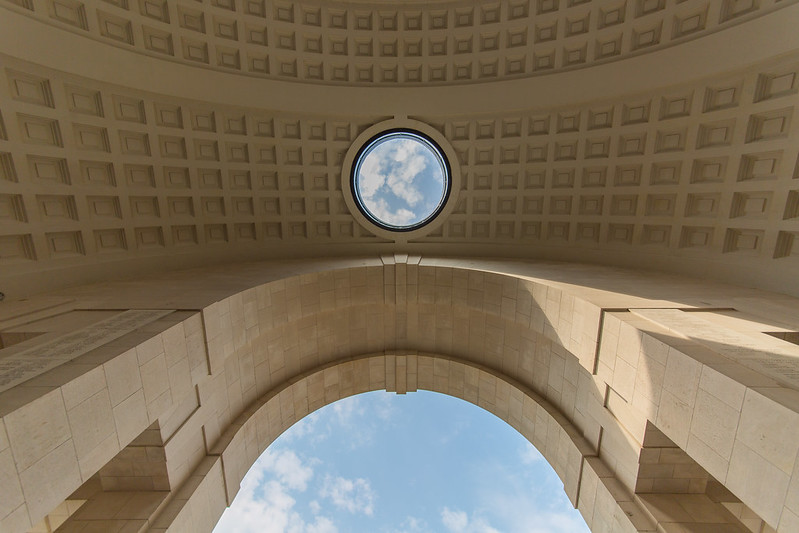
We, the onlookers, dressed for Summer, Less of a troop and more of a pack. Shins and forearms and heads uncovered – Only the jackdaws are dressed in black. Partly honouring, partly gawking, English voices amiably talking, Not many present are younger than fifty – One or two pause to read the plaque.
Officials in blazers, though we’re well-behaved. Squaddies’ fatigues, their shoulders say Dutch, Though I swear their “left-right-left” is in English – The crowd wear no medals – would that be too much ? The towers of names are columns of debt, Bearing down, by rank before alphabet, In a random sample, I look for my own In the Surreys and sappers and serjeants and such.
Suddenly, a hush, an announcement by speaker, Telling we must not talk or applaud. A trio of buglers – was that the Last Post ? Then a soldier steps up, a little over-awed. “They shall grow not old” he reads, His accent heavy, and yet succeeds To draw from us a shared Amen: “We shall remember them”, these Brits abroad.
The bugles again, and wreaths are laid, The squad march off in the evening sun, And suddenly ev’rything melts into chatter – We mill for a while, but the service is done. The road reopens, the traffic drives through, We pose for a final selfie or two, But we’ve far too many atrocities to remember, To focus on only one.
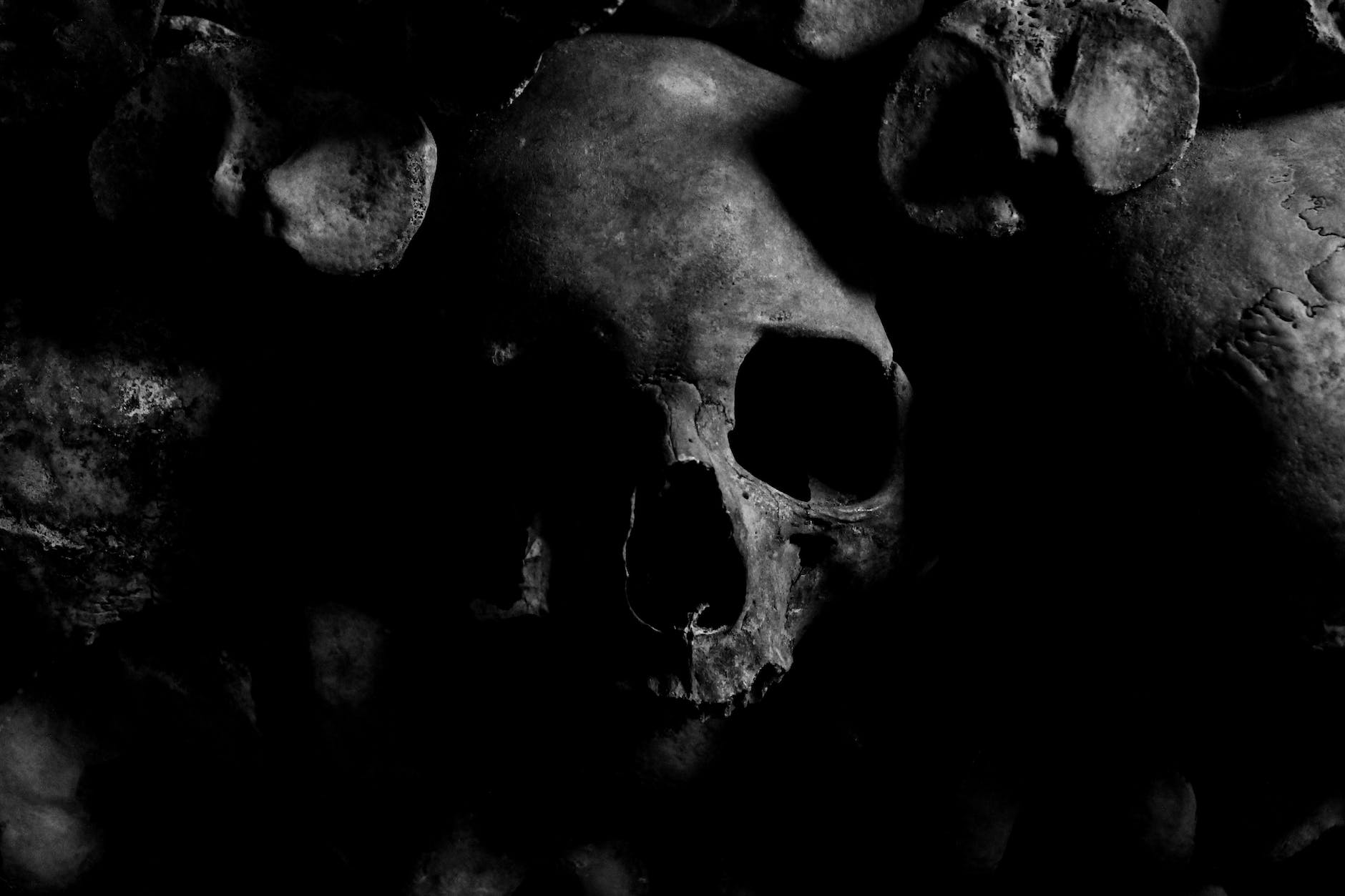
One day, I’ll be dead as a parrot, I’ll feed the worms, I’ll buy the farm – With neurons in my brain at peace, As ev’rything I am shall cease. One day – in my lonely garret, Or else within my lovers’ arms – But either way, when all is said, They’ll tuck me in my final bed, One day – Aye, but not this day, For this is the Day of the Dead !
So grab your tridents, grab your horns, Your furry paws and crowns of thorns, Tonight, there’s no-one weeps or mourns, Unless it’s out of fright ! For this is a time to be alive, In overdrive, till our veins run red – There’s just no time to die tonight, There’s a long long way to go before we’re dead. At this time of year, When entropy is near – let’s keep it light, And laugh at our inescapable fate instead.
One day, I’ll be nothing but a past tense – And that fact lurks at the back of my mind. Ev’ry road will lead me to the grave, With no prayer to pray and no soul to save. It all makes simple, terrifying sense – So I’ve learned to leave such thoughts behind. For either way, come joy or dread, They’ll close my eyes and shroud my head. One day – But not now, I say ! For this is the Day of the Dead.
So grab your accents, grab your cloaks, Let’s haunt this technicolour hoax ! We’re just your av’rage mortal folks Who laugh in the face of blight. For this is a time to be alive, Let’s joke and jive wherever we tread – Who cares if we must die some night, Let’s worry about dying once we’re dead. At this time of year, When existential fear is at its height – Let’s laugh in the face of the mirthless void instead.






 Rhyming Couplets