Passing through Ypres, We paused for a moment to take in the Cloth Hall. By the cathedral we parked, And we wandered the Grote Markt, Charmed and yet chilled By the way they had carefully rebuilt it all.
The shops were all shut – (We’d come on a Sunday, just wanted a look) English words blared from their posters and flyers So locals or ex-pats ? We didn’t enquire. Their windows were filled With helmets and biscuits and rifles and books.
Then down to the Menin Gate – Far too triumphant and proud of its names: Look at how many I bear ! They all did their duty and lie who-knows-where. Just look at our killed ! And dare you resist us, and dare you lay blame ?
Rank upon rank of surnames, With first-names reduced to only initials. People I found myself wishing Had told their nations to carry on fishing – But instead, they had fought. And here were their names, to make it official.
The flags barely moved, And a few of us found ourselves holding our breath, And it all seemed so lonely and still And so thankfully long since the kill, And yet still overwrought – A faded and motionless orgy of death.
Ah, hindsight you rogue ! But let us not hate the hard lessons you tell. So maybe it’s time to finally suture, Time now for Ypres to find a new future. And here’s a thought: Maybe let’s spell it as Ieper from here on as well.
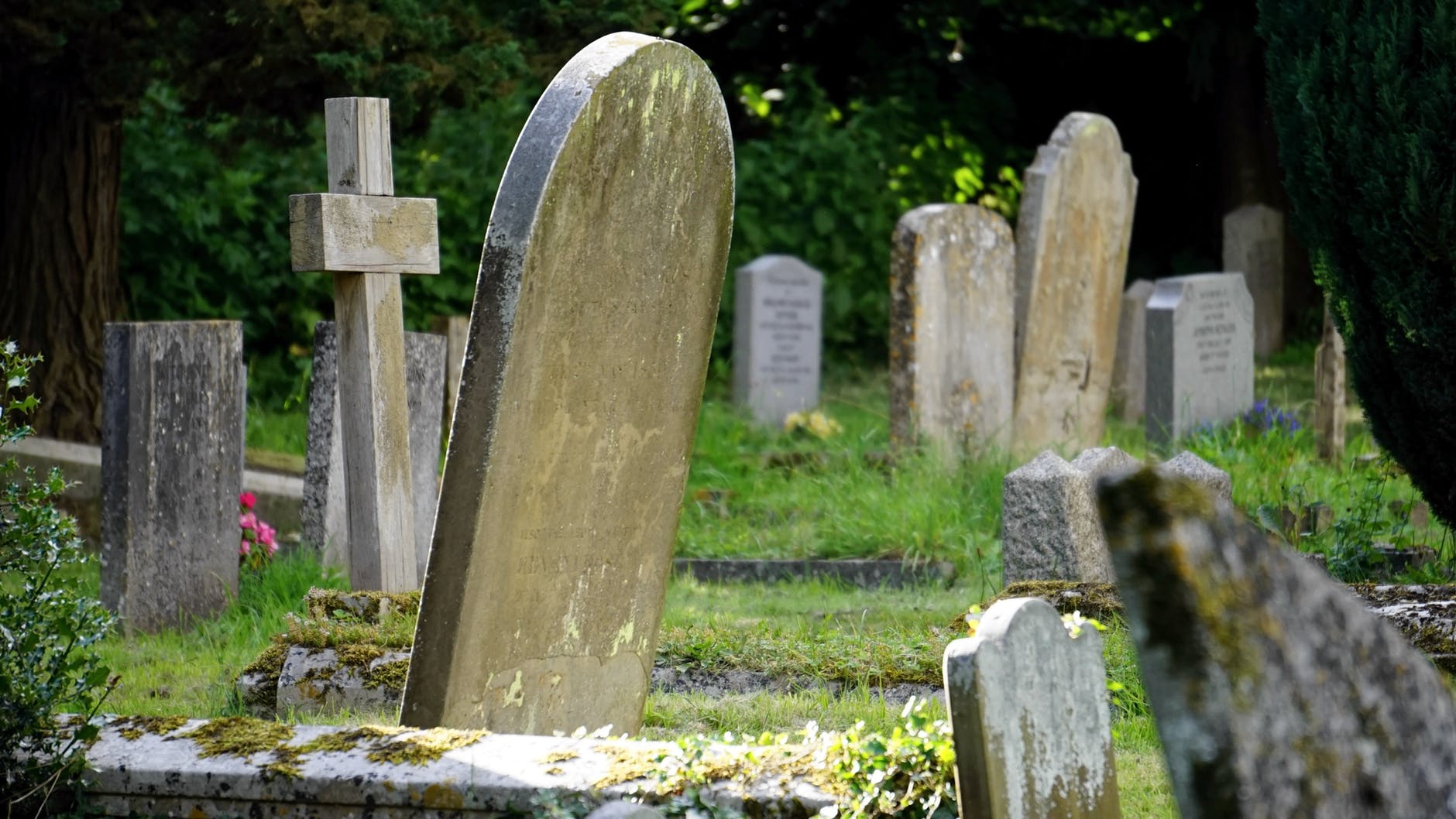
These tombstones are listed, these crypts are protected, Preserving the love and the pride that erected These grand mausoleums and gravesides historic, Their statements and passions to questions rhetoric. Yet time shall erode with its rain and its frost, Till their dates are obscured and their epitaphs lost. It weathers their angels and softens their urns, As lichens enshroud and subsidence upturns, And insects will burrow in mortar and crack, And ivy will clamber and marble turn black. Yet do not repair them, their tarnish amassing – Such monuments solemn are records of passing.
How do churches stop the rain ? And send the downpours down the drain ? That’s pretty simple to explain –
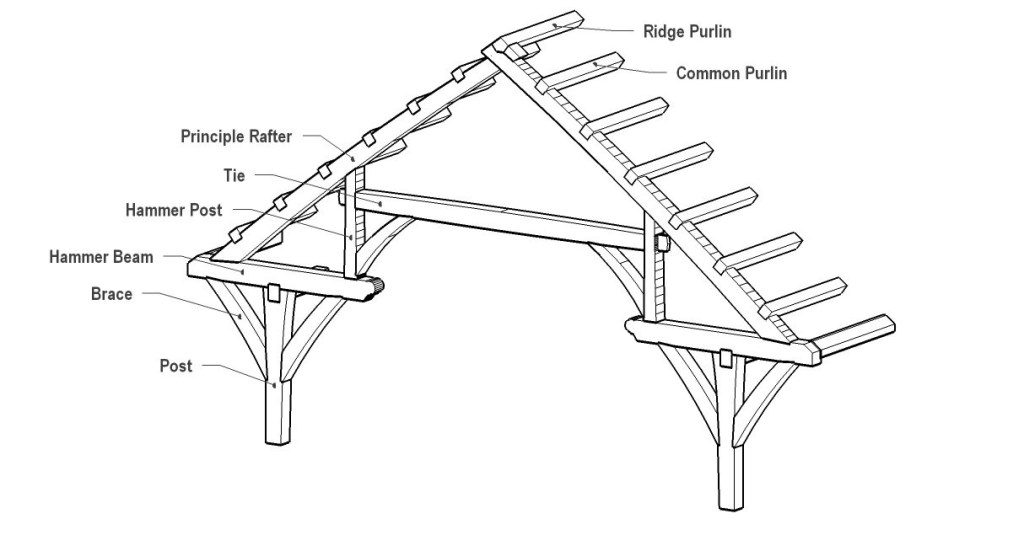
See, the footings hold the buttress, And the buttress holds the flyer, And the flyer holds the corbel, And the corbel takes the strain. For the corbel hold the springbrace, And the stringbrace holds the hammerbeam, And hammerbeams hold hammerposts, And up, and up again. These hammerposts hold collar-ties, And the collar holds the kingpost high, And the kingpost holds the ridge-beam, And in turn, the weathervane. So the kingpost holds the struts up, And struts support the rafters – Or at least, they hold the principals – (The big ones, in the main.) Then the rafters holds the purlins, And the purlins holds the sheathing, And the sheathing holds the shingles, And the shingles stop the rain.
Hammerbeam roofs were developed in England in the 1300s, but not namedsuch until the 1820s. So just why are the short horizontal ties called hammerbeams ? I mean, what’s so hammer-y about them ? I suspect it was just to show that architects could be manly when talking about their erect members.
The History of an Industrial Revolution, Located in a Parallel Universe
There was a time before the steam, The world was truly manned – Each ditch was dug and plough was drug By animal or hand – And all the light to see by came From tallow or the sun. So lives would trudge on just the same, Each short and brutal run. There was a time before the steam, The only help was wind or stream – So up we moved to brook or hill, Forever lashed to nature’s will – We’d tap the earth to drive our mill. A little better, maybe – but we’d only just begun.
There was a time before the steam, The world was short and slow. Our only fuel was ox or mule, Or when the wind might blow. And all the warmth in winter came From hearths of wood or peat, With forests lost to make a flame And give a little heat. There was a time before the steam, Before the pitch-black golden seam, When all the energy not hooved Could not be bottled, bred or moved. Our lives could only be improved By pilgrimage to power on our thousand weary feet.
There was a time before the steam, The world was harshly ranged – The days were long, yet swiftly gone, And nothing ever changed. But then came coal – the good earth’s soul, The black and frozen fire – And finally we took control, And built our chimneys higher. There was a time before the steam, But that was then – before the gleam Of pistons, valves and proud machines Whose vapour-thrust provides the means For endless and precise routines – To serve our ev’ry labour and to never miss or tire.
There was a time before the steam, To which we dread return – But once the coke is up in smoke, Well, what then will we burn ? We’ve still got wind and rivers, sure, But only local clout – And charcoal gobbles trees the more, Till none are left to sprout. To where there’s folk about. Will there be times beyond the steam, A flywheel to prolong the dream ? If only we can tame the spark – The lightning bolt, the static arc – And store it, then release its bark ! Or else we face an Age of Dark, when all the lights go out.
frontispiece from Novum Organum Scientiarum by Francis Bacon, art by anon
The Voyage of the Novum Organum
’Twas in the summer of ’20 When our galleon set sale. Now gather ye, and plenty, As I lay the fearless tale: We soon approached the pillars bold That Hercules himself, we’re told, Had planted, so’s to say “Behold ! Behold these sights, and quail ! Here lies the End of the Earth, my friends, And who knows what may lie beyond ? It’s time to find what you’re worth, my friends, If dareꞌst ye leave your pond. Will you view my gates as a warning ? Then head for home on the turning tide. Or will you view my gates as a dawning ? Then pass on through to the other side !”
Who knows if God shall forsake us ? Who knows where the currents take us ? Over the seas on our questing quest: With our fortunes pressed for the holy grail, As on and on we sail.
So wise old Captain Bacon Gave the word to pass on through. We prayed he weren’t mistaken And a-gambling with his crew. We sailed betwixt those ancient piers, And set a course for new frontiers. Once Argonauts, now pioneers ! ’Twas time to earn our due. “There lies the Start of the Earth, my friends, When we find out what lies ahead ! It’s time to give rebirth, my friends, It’s time to raise the dead !” We knew great riches would await us, All our maps were full of exes ! We dug up booty with apparatus, And unearthed keys to fresh complexes.
Follow the clues, be smart and plucky – Here be dragons, if we’re lucky ! Over the seas on our questing quest: The better we guessed, the more we unveiled, As on and on we sailed.
We plumbed that deep wide ocean So’s to chart her reefs and bars The first we found was motion – It was written in the stars ! Then spied we microscopic forms – A hidden world of tiny swarms. We shuddered, but we rode such storms, And better for the scars. There lies so much joy on this Earth, my friends – Let’s find out what we share her with ! There’s nowhere upon her in dearth, my friends – She’s always more to give ! We sailed upon her seas of numbers, Fathomed her amounts amounting: Formulas and patterns slumbered – Ev’rything, we learned, was counting.
And the point where the limit of our learning meets, There’s always a fair wind filling our sheets. Over the seas on our questing quest: The more we professed, the more we regaled, As on and on we sailed.
The further out our striving, So the better stocked our stores. And always we’re arriving Onto ever-stranger shores. And on those lands we took our drills And tapped the streams and dug the hills And set down bridges, rails and mills, And just and noble laws. We learned how the whole of the Earth, my friends, Is built from the same few blocks, not more ! We learned how the life round her girth, my friends, Is built from life before ! We sailed away to explore and learn, And still there is so much more to find ! We know we can never again return To that ancient world that we left behind.
We’ll never be bored and we’ll never be done – We’ll never arrive at the setting sun. Over the seas on our questing quest: The more we progress, the higher we scale, As on and on we sail.
Sir John St.John the Sixth esquire, Is strictly iambic and strictly a Saint. He won’t stand for slurring his old money surname – His Saint-hood is sacred, so ‘Sinjun’ he ain’t !
Sìr Jòhn Sàìnt Jòhn (to use sprung rhythm) Was knighthed for service to country and queen. It isn’t a parvenu baronet title That’s passed-down with silver and eyes of grey-green.
Sir John St.John is a John at the double, Whose handle is firing both barrels to boot. The hyphen’s still present, though these days it’s silent – The fam’ly tree’s old, but it’s still bearing fruit.
Sir John St.John is a doctor, also – Dr. Sir John the surgeon, no less. He once sojourned on a journeyman’s journal In old St John’s, with its permanent ’s.
Sir John St.John has a inborn condition That makes him assume that we jolly well care. His symptoms assisted his self-diagnosis: The syndrome of Sinjun Sinclair.
Sir John St.John, (like his father, Sir John), Insists as the firstborn, his name gets full worth – He claims both his Johns by the right of tradition, And claims he’s a Saint by the right of his birth.
There is a cat who watches trains And makes his home in signal boxes, Lives beneath the weathered gables, Catches rats who chew the cables. Grey, he is, with smoky grains That fleck his coat the way of foxes, ’Cept the tramlines down his back Which earn his name of Clickerclack. They shine out silver, brow to rump They even bear the marks for sleepers – Branded thus, his fate assured His working for the Railways Board. So where a plague of rodents clump Within the homes of signal-keepers – Unannounced by midnight freight Comes Clickerclack to extirpate. He bites, he claws, he chews in half And shreds them into vermicelli – Drives them out and leaves his scent To fright them off resettlement. And when his work is done, the staff Will feed him fish and rub his belly. Then it’s off to boxes new Aboard the 07:22.
As a child, I loved to pore Upon an atlas like a book. The early chapters laid out Europe, Where I knew it’s ev’ry nook. Later on came Africa or Asia, I forget which first. The other next, then North, then South America Would be traversed. Oceania bringing up the rear, And scattered islands next, With local names italicised beside The faithful English text. That was the story’s climax, now the coda – Now the final pair of plates – The Arctic, then the Ant, in round tableaux, The Baring and Magellan Straits.
Antarctica, to my surprise, Had place-name labels scattered round – The Ross Ice Shelf and Ellsworth Mountains, Kemp Land, and McMurdo Sound. Such British names ! The Arctic, though, was foreign – Though I’d love to think How Queen Victoria might send The Royal Navy out to turn it pink. Take Greenland, with its Anglo-Saxon name – From Cape Farewell down in the South, On through Discov’ry Bay to Upper Tooley, And out East there’s Scoresby Mouth. The Viceroy has his Residence in Goodhope, With the inevitable railway lines – Heading South to Hope St Julian, Through Greenvale and the Squarehill mines.
And the Great Green Mainline steaming North, With a branch and boat-train out to Sugar Top, And via Lower Streamouth aerodrome, To Foxborough – which once was the final stop, Until the junction to Jacob’s Harbour, (Ferries to God’s Haven from the pleasure pier), Then the final push to Springfield Isle, On viaducts of steel that we’d engineer. Of course, in time the Esquimaux would learn The ways of cricket and the bowler hat, And in later years, there’s some would settle down In Blighty, in a council flat In Ashford, Accrington and Aberdeen, To drive the buses and newspaper stands, Opening churches, opening restaurants, Marrying the local girls and forming bands.
I know, I know, so many problems Unthought-out in the fantasy of a kid. Just as well it never happened – And yet…on a parallel Earth, it probably did.
Blaise Pascal once placed a Bet, And for a Stake he risked his Soul: “If of Gods there’s Nothing yet, Then all our Faith can’t fill the Hole – But then, since no God will Notice, For no God then Is at all, So our Prayers unto Abyss Have done no Harm nor broke no Law.
But, should I now choose Desisting, Claiming Heavens are Unmanned – And, should now our Lord be lis’ning, So shall He declare me Damned. Therefore, weighing Odds and Chances, Losses made and Gains received, Wager wise where Luck enhances: ’Tis far Safer we Believed.”
Roll up ! Roll up ! The Tote is open, Honest Blaise the Bookie always gives the Smartest Odds. And ev’ry Sharp and Rookie can apply His Patent Foolproof System to the Big Game in the Sky. Poker-Face Pascal knows the Score, He’s Croupier to the Heavenly Draw – He’s got the Inside Track on Hoping, He’s the Turf Accountant to the Gods.
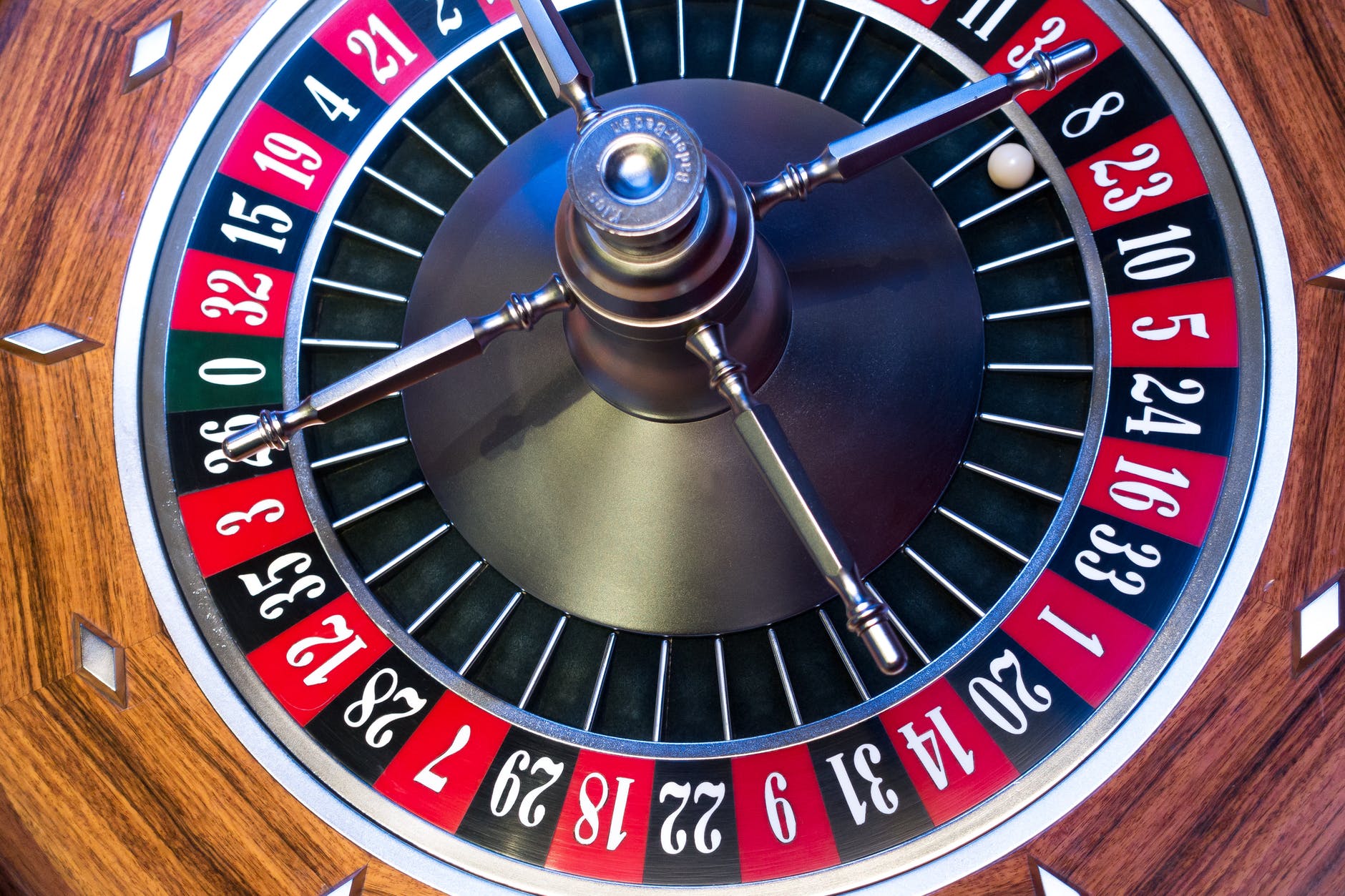
Alas, Blaise, your God is not The Only Game to play in Town, A thousand other Evens Lots Can yet be Laid when eyes are Down. Such Longshots aren’t worth a Flutter, Spin the Wheel and watch the Ball, And pray it Lands within your Gutter – Better not to bet at All.
So, whichever Gods are Winners, Rank us Luckless all the same: As Heretics and Bankrupt Sinners – Even those not in the Game. And if I Bust, I’m Damned if they Shall claim the only Stake I’ve got. But Stick or Twist, collect or Pay, Let’s ante-up the Mortal Pot.
Roll up ! Roll up ! The Gods are waiting Three Prayers for a Fiver, and the Fate Tombolas roll ! Now ev’ry Saint and Skiver gets to play With Aces high and Jokers wild, and Tabs till Judgment Day. Brokerman Blaisey knows the bid, With Afterlife Shares just seven-a-quid: He has the Dope and Gen and Rating, He’s the Underwriter to the Soul.
We all know what will happen If these ravens quit the Tower – Strange to think these scavengers Should hold such royal power – To keep the crown from toppling, They are crippled in one wing, To fawn and clown for punters, (All still peasants of the king.)
But you should be flying, Raven, You should have flown, For what cares a raven for propping-up thrones ? Be mightier, Raven, than magpie or rook – For the higher you fly, so the smaller we look.
We all know what will happen If these ravens quit the Tower – So much like us, they’re savaged Just to keep the nobs in power. They’re victim of Victorians, They’re prisoners to lore – If only they could bring them down, And goad them “Nevermore !”
For you should be soaring, Raven, You should be gone, For what cares a raven for owners of swans ? Be mighty, oh Raven, and help us stand tall – For the higher you fly, so the further they fall.
The whole myth only started in Victorian times, and to this day these magnificaent birds are denied their natural instinct to fly for the sake of tourist pounds.






 Rhyming Couplets