All Life Is Here
They group all life with near-the-same –
To keep on track, they’ve got a list.
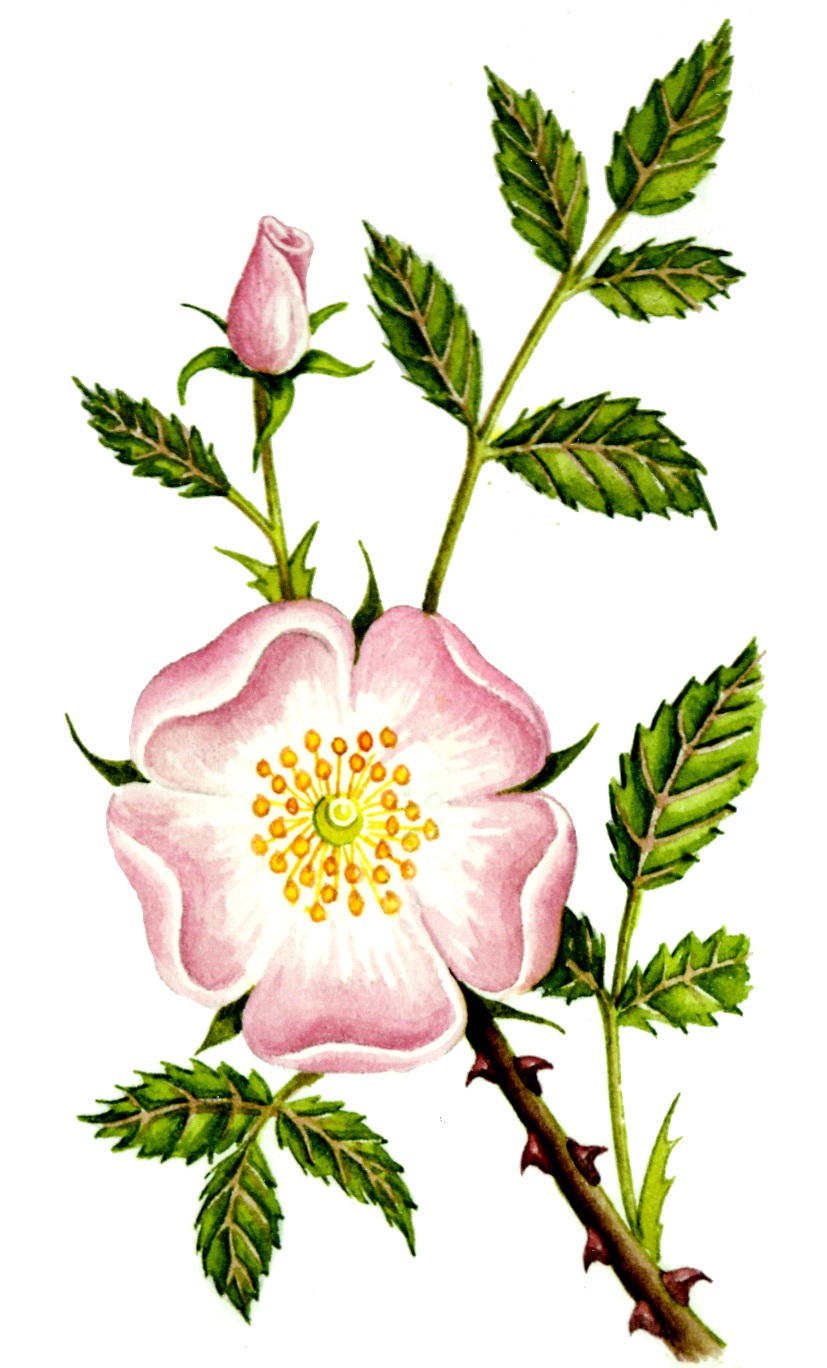
A rose by any other name’s
Still Rosa to a botanist.
I stole this joke from noted Trilobytist Richard Fortey.

All Life Is Here
They group all life with near-the-same –
To keep on track, they’ve got a list.
A rose by any other name’s
Still Rosa to a botanist.
I stole this joke from noted Trilobytist Richard Fortey.

To the Future
My world was taught in your history class,
In half a chapter your teacher rushed through.
Somewhen between a turning point
And some other event which we never knew.
My world just probably made you bored,
Learning the dates of a notable few –
But not of my name – I never was found
In the textbooks on which you scribbled and drew.
Maybe then I was nobody special,
Somebody whom you can safely ignore.
Never improved a million lives –
Never brought hatred, hunger, and war.
Maybe then I was nobody special,
Maybe achieved next to nothing at all.
But still I meant to a couple of dozen,
And for those the closest, an awful lot more.
You may then think that I was unknown,
Unrecorded in sadness and mirth.
Save for the parish’s register-book
Where my name’s still getting its three-entries’ worth.
Maybe you gotten my census or tax,
My causes of death and my weighing at birth.
But never be thinking that this is my lot,
All that I left from my time on this Earth.
Never get thinking that I didn’t count,
Or thinking I’m someone you never need.
For all that you laugh at my primitive ways,
Just never forget that we nobodies breed.
Even the famous had parents of unknowns,
As did all the riff-raff who helped them succeed.
So there must be hundreds, or thousands by your time,
In whose chain-genetics I mean much indeed.
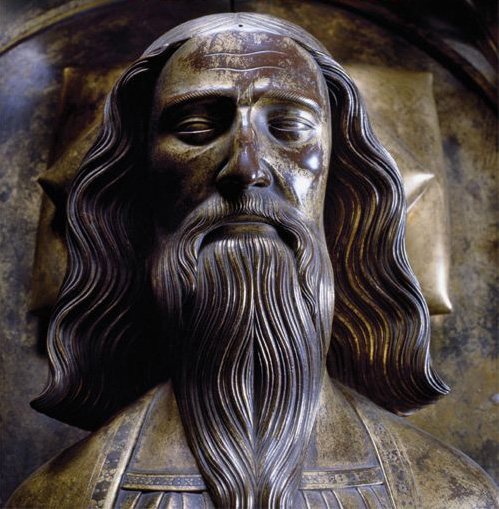
It is claimed that anyone living in Britain today and whose family have been living here for several generations will lmost certainly be a direct descendent of King Edward the Third, who died in 1377. Of course, if I’m, say, 24 generations down the line, that means I have over 830,000 great*21 grandparents, though quite a few of those will be dupliates. Not that the poems about him, of course.

Butyrumusca getii
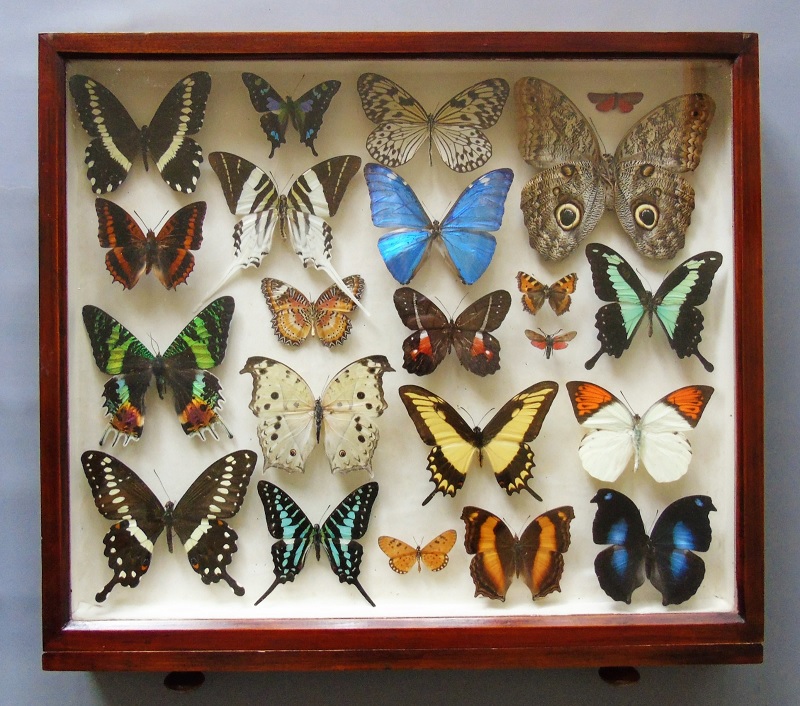
I saw a lepidopter’s case,
A peon to the butterfly.
With filigree of carapace
From abdomen to compound eye.
The duffer who possessed these critters
Spoke at loving length of flitters.
I wondered how this gent possessed
Their tiny feet and stain-glass wings,
For clearly one who so obsessed
Could never harm so precious things –
Therefore, it must surely follow,
Ev’ry bodyshell was hollow.
These weren’t spent, discarded parts –
For butterflies can never shed –
They never get a dozen starts,
And only gain their wings to spread
Upon their change to adulthood –
They change for once and change for good.
Maybe then they’re not rejected,
Rather they are shiny new –
Here displayed to be selected
By the crawling grubs who queue –
So they choose their new quintessence
As they quit their adolescence.
Some are brighter, some are duller,
Some are nippy, some enlarged –
Pick a model, pick a colour,
Carbon-framed and sugar-charged.
Are you a grounded caterpillar ?
You should check these stats – they’re killer !

Sheep Mayn’t Safely Graze
We rack them out between bridges and nuts,
And crank till they must reply.
And those low, low throbs that we feel in our guts –
Well, the sheep feel them too, by-and-by.
But it’s never their bleats or their baas that are scored,
It’s never their voices that sing from each chord,
And it’s never their own requiem we applaud.
In life and in death, so their tension will always be high.
How many hundreds of thousands of sheep
Have our symphonies dispatched ?
Every cello has reason to weep,
And scream as its sinews are scratched.
How many flocks must we cull to the muse ?
How many sacrificed lambkins and ewes ?
On the altar of Bach shall their entrails ooze.
They live for this music, but always do strings come attached.

Elevenses
Polly Dacktle has ten fingers,
(Well, eight fingers,
And two thumbs.)
Polly Dacktle has ten fingers,
But there lingers…
What’s that…Crumbs !
Look ! She also has a spare
Upon her hand, just waiting there –
So if another needs repair,
Then out her extra digit comes.
Of course, it’s always there, if needed –
And if not, it’s there unheeded –
Always there, the ten exceeded.
(Good for doing tricky sums.)
Polly Dacktle must wear mittens,
Only mittens,
Never gloves.
Polly Dacktle must wear mittens,
Like her kittens.
(Not like doves.)
She wants fingers free to move
With ev’ry digit in its groove –
And so with scissors she’ll improve –
She snips and tears and pulls and shoves.
Now she has contrived to riddle
There a hole ’tween Ring and Middle
Where her spare can flex and fiddle,
(Just how Polly Dacktle loves.)
Polly Dacktle learns piano,
Learns piano
From her Teach.
Polly Dacktle likes piano
(Miss Delano’s
such a peach.)
Polly has to practice scales
And stretch for keys, but never fails –
Her widened span just skips and sails
And holds all music in her reach.
Gripping racquets, catching balls,
And shooting baskets, climbing walls,
Or sculpting clay, and dialing calls –
Polly scores at all and each.
Polly Dacktle isn’t evil.
Never evil,
Often good.
Polly Dacktle isn’t evil –
(Nor’s the weevil
In the wood.)
Neither one is plotting danger
Just because their look is stranger.
Polly’s fine, so never change
Her many-multi-fingerhood.
Shake her hand – there’s no electrics,
No prosthetics, no deceptricks.
She can touch in asymetrics.
(Don’t you sometimes wish you could ?)

Here Today
We’ll never know when our end shall be,
The screen goes black, the credits roll,
And wide awake or in our sleep,
We’ll never know we lack a soul.
Perhaps that’s why for some it’s tempting
Taking matters in control.
I’ll never know how they make the choice,
And they, alas, aren’t here to tell –
Chronic pain or chronic guilt,
Or pits of lonely, muffled hell ?
I hope it’s not intense romantic folly
That has cast its spell.
I’ll never know how they feel that way,
So desperate to shed the weight –
Yet if I’m honest, right now in my life
Most things are not so great
But never for a moment do I
Seriously contemplate.
I’ll never know, and I hope I never will
What makes them run aground.
There’s always a chance of beauty,
And belief it can be found –
I’m certain that I’ll kick this slump
And you’ll be seeing me around.

Intwinned & Intwined
My brother is a part of me,
I carry him within
He will forever be my twin.
We joined our forces in the womb,
Became a greater whole,
The soul with whom I share my soul.
Behind these eyes, within this skin,
Above our common tongue –
Our mutual breath is in each lung,
But in our synapses we part,
Although I hear his thoughts –
They burn in me like sparks in quartz.
But those are his, that other voice,
That telepathic call –
I have no choice but hear them all.
For he’s the evil, I’m the nice,
Yet brothers of the blood –
Our heart beats twice, our sinews flood,
And we will fight to shine or sin
As only brothers could…
I mostly win – that’s why I’m good.
But don’t be shocked and don’t blame me
When he must have his fun –
For we are we, and we are one.

We Are Legion
We’re too many, that’s the trouble,
But what to do ?
Who would wish a war to thin the herd
Down to a few ?
Gone are cities brought to rubble,
Gone the Black Death’s fatal third.
We’re safe in our hygienic bubble –
Breeding, undeterred !
Climate change is next to tackle,
Pollution, too –
But even if we don’t, we’ll still be here,
If black and blue.
As a species, though ramshackle,
We won’t go extinct, don’t fear –
Other creatures take the flack,
But we won’t disappear.
For all our poverty and pillage,
Give us our due –
We’re capable of so much common sense
To pull us through.
We’re running out of land for tillage,
Cities growing far too dense –
Time to shrink down to a village,
Time for abstinence !
It’s time to start doing our bit by not doing our bit…

Witnesses
“Tell me, Roman, why this plan
To execute this convict man ?
Of all the ways to make him dead,
Why hold up high with arms outspread ?
Seeing him now crucified
Just makes a martyr, gives him pride,
It lets the martyr die with pride,
So hero-like, so dignified.”
“But you are wrong. Now look again:
The loincloth with its urine stain,
The drooling lips, the bloodshot eyes,
The excrement that cakes his thighs.
To hang for days in agony –
Now look again and show to me,
Just look up there and show to me,
The slightest shred of dignity.”
“Ah yes, I see, the lolling head,
And yet…who cares once he is dead ?
And history may not recall
His wails and jerking fits at all.
Despite what we right here may find,
The crowd are of a diff’rent mind –
And what they see within their mind
Is all that you will leave behind.”
“Perhaps you’re right, and time will tell –
But who can say he’s dying well ?
And in three days, he lingers on
For no-one, once the crowd has gone.
Any execution can
Create a martyr from a man –
Yet here, we see he’s just a man
And that is why this Roman plan.”
Bringing Juvenilia Week to a close with a typically iconoclastic poke at religion with some Real Science. Originally just the first two verses, it lacked the necessary back-and-forth to be the dialogue it wanted to be, so the latter two are new, though just as naff as a homage to the original.
Now, the perfect poem to follow with tomorrow would be this one, but it has already been posted.

One Plant’s Meat is Another Man’s Garden
Hemlock won’t kill us,
Despite all its poison,
(And not for the warnings that textbooks all parrot.)
For why would we eat it, right there in the hedgerow ?
It doesn’t look that much like parsley or carrot.
Since when do we sample the leaves and the berries
Of any old weed in the wild ? How bizarre !
We buy all our veg from the market and grocer,
Who hopefully know what the diff’rences are.
And meanwhile we cherish the monkshood and foxglove,
And nurture their weapons without any fuss.
But hey, there’s no danger admiring their flowers,
For light cannot carry their toxins to us.
Buttercups, daffodils, rosemary, poppies,
And holly and ivy, and conkers and yew.
We’re much more at risk from a field of grain –
From the carbs that we bake, or the booze that we brew.
Animals know well to leave them alone,
Whether ragwort to nightshade – just ask any herder.
And humans will likewise spit bitterness out –
So we won’t die of hemlock…unless it is murder !
I’ve more to say about hemlock over here.