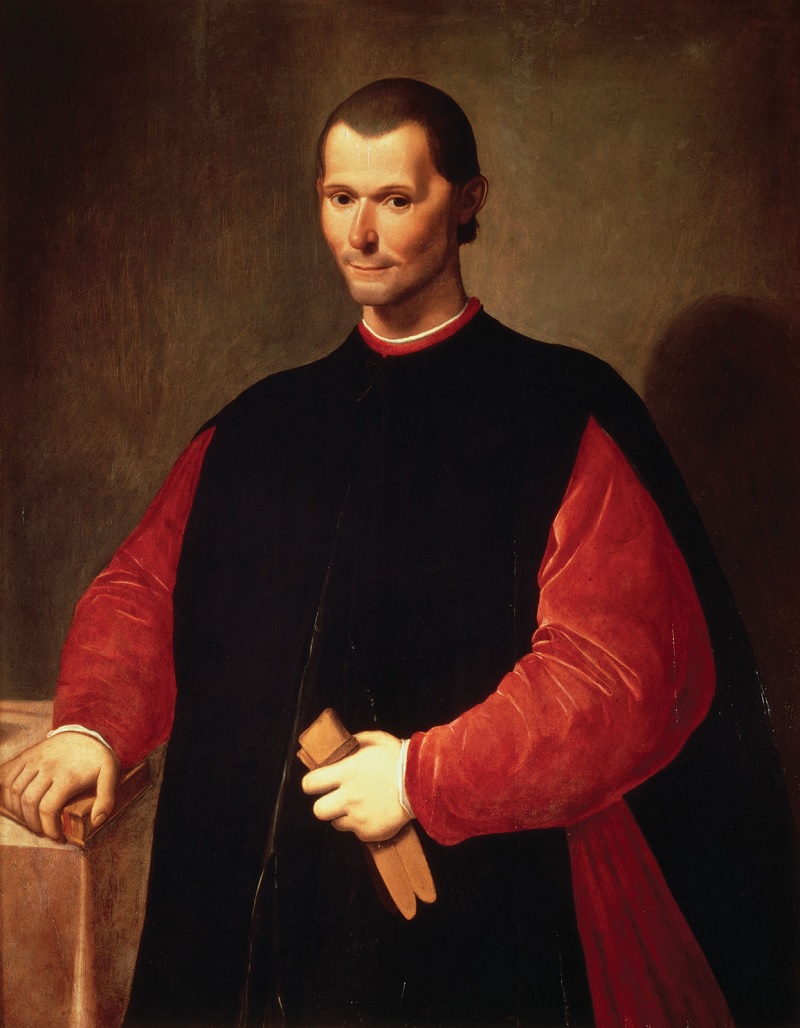
details from Charles Vth by Titian, Antonio Navagero by Giovanni Moroni & Guidubaldo della Rovere by Agnolo Bronzino
Prithee, Sirrah ?
The poster announced “Shakespeare Season !” Well, why not ?, I thought. For no particular reason, I’d seen precisely naught. I know it sounds high treason, But I guess this time I’m caught.
Yet all reviews and interviews I heard Said much the same – They read the play, yes, ev’ry word, Before they even came, To better understand. But that’s absurd ! Just what’s their game…?
What about the spoilers, hey ? Will Macbeth be number one ? But the plot matter less, they say, Than ‘getting’ a Tudor pun ! This all feels like homework anyway, And not much fun !
You clearly can’t be arsed to try And make the story clear, And surely don’t want oiks as I To gaze upon your Lear. I think I’m gonna pass you by For something less austere.
The Anglo-Saxons had their own names – Had no need for our Kate or James – Some, like Swithin and Thunor, perhaps, Are only found on churches and maps – Yet some, like Edward and Hilda, survive, Though Oswald and Cuthbert are barely alive – And Mildred and Wilfred are old-fashioned now, Yet rather less Saxon than Dickens, somehow. The same with Ethel and Edith – I swear They sound quite common, for all that they’re rare, While some like Dunstan, Wymond, and Wystan, Are as old-money posh as Aubrey and Tristan. And fun-fact, Ruth was a noun for compassion, Yet strangely never was used in this fashion – Yet Edruth and Ruthbert could’ve been (no joke), Though Gailjoy to them meant a wind and a yoke… Stanley and Beverley back then were place names, While Hengist and Offa are leave-just-a-trace names, And Osborn and Osmund are now only surnames, While Hrothgar sees Roger become the preferred name. So Alfred and Albert are still doing fine, But Harold and Winston are on the decline – And Edmund and Edgar are straight out of yore, While Winifred and Edwin are winners no more.
Note that the theoretical Ruthbert would probably be pronounced in modern English to rhyme with Cuthbert and not with truth-bert.
I know we love it as a symbol – Hubris, cheap materials and failure, While locals soak up tourist-dollars Selling canting paraphernalia. The crowds all prop it up in photos Loving that its old and broke – While laughing at the locals, Who are all in on the joke.
And now the authorities Have had to underpin the base, While taking care to keep the tilt That underpins their public face. I guess we do not get to choose What piques our int’rest, makes us smile – But here’s a tower full of piquant int’rest By the mile !
I think I am alone in wishing That they’d take it down and start again. I just want my cathedrals To inspire me, not amuse me, in the main. But here is a belfry Far too weak for bells and gravity’s demands – It’s just a shell, a cynic’s dream Who’s only wonder is how still it stands.
Ah, listen to me, what misery ! Just moaning off my sunstroke. Can’t I shrug and let them be, And maybe even get the joke ? I guess we do not get to choose What gets remembered, anyway – But this one’s sure to loom in mind, And hold us in its sway.
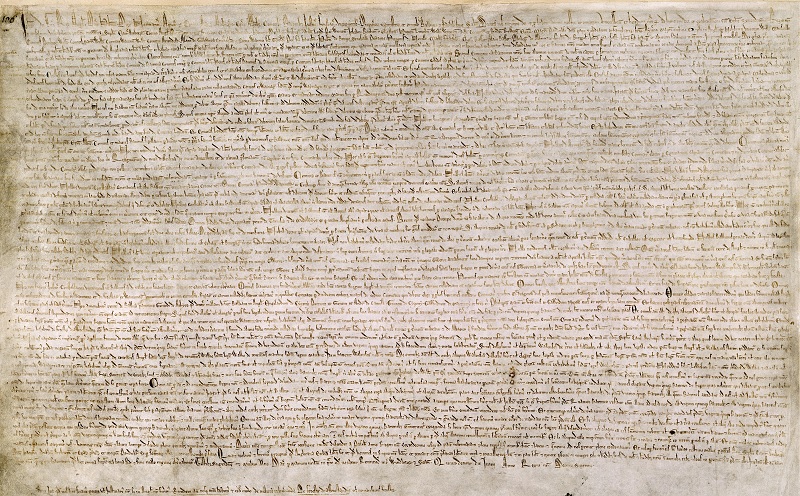
Thirteen copies were written, at least, And probably many more – All passed from bishop to sheriff to lord, And pinned-up, read, and, finally, stored, Then rotted or burned or thoroughly creased, Until we were left with four.
But then, for many centuries, Their words were out-of-date – Their scutages and fishing-weirs Belonged to long-forgotten years, And busy parli’mentaries Have moved on the debate.
Their Latin text is cramped and clipped, With not an inch to spare. And just like half the baron knights, We cannot even read the rights We’re gifted by this foreign script – We have to trust they’re there.
But so what if the parchments fade ? They’re passing, mortal things – It ain’t the laws that they imparted, But the movement that they started – In their image we are made, Who bow to laws, not kings.
“We will remove entirely the kinsmen of Gerard d’Athée from their bailiwicks, so that in future they may hold no bailiwick in England. We will remove from the kingdom all foreign knights who have come to the detriment of the kingdom.”
Magna Carta, 1215
English rights for English barons: That was the cry at liberty’s birth – And though they’d gag at the thought, would the barons, Their rights would trickle down to the serfs. Slowly, slowly, and bloody hard-won, Till the days of the tyrant-kings were done.
But nothing but exile for Gerard d’Athée, Farewell to Engelard, can’t let you stay, Goodbye to Guy, and to Guy, too-da-loo, Au revoir, Peter, and Andrew, adieu, And Geoffrey and Geoffrey, your fate is the same: Deported by charter in liberty’s name. And Philip (and brothers), return to your sires, Ex-Sheriff of Derby- and Nottingham- shires.
So there it was: the English disease: Scraping-up some scapegoats for their sleeping in our bed. But never for a moment did we get up off our knees To kick out at the barons – so we kicked the French instead. This lack of disquiet from locals is telling: Just tugging at forelocks instead of rebelling.
But surely things have improved ? It isn’t as though the world hasn’t moved: It started a wave that has kept rolling on, So we’ve far more rights now than had even King John. But all the un-English may find us less caring, For English-born freedoms were not made for sharing. So tell, Magna Carta: just what are you for ?, But a thing to suspend when we’re neck-deep in war.
The quote above is actually elided from half of clauses 50 (which does indeed go on to name nine individuals as well as two additional sets of ‘brothers’), and also part of clause 51 which continues the thought – although in the original, the clauses were not infact numbered. The first to do so was George Ferrers’ English translation of 1534, while the modern numbering dates from William Blackstone in 1759.
Once-a-time, when castles wore a crown of battlements, Their merlons hid the archers in the toothy parapet – And when the peasantry came by to pay their serf-and-chattel-rents, It wasn’t solid walls that awed them, but the holes that made a net. If only they had known how they were more for show and ostentation, Arrow slits too small to use, and windows big and weak – A single siege would give the lie to strength in crenellation But who would dare declare their home as battle-less and meek ? So castle-style continued long past castles were of any use, As if a Henry Tudor were no diff’rent from a Robert Bruce.
To be clear, battlements are very effective when their big enough, but by the time of Bodiam (1385) and Herstmonceux (1441) things were on the slide.
The Thousand-Years War did not come to an end, So they say – it just came to a stop. When the gold and the men and the food has all gone, Then the number of battles must drop.
The sheep were untended, the cattle were stray, While the geese were so full they must walk, For there’s none could survive, save the crickets and mice, When the harvest remained on the stalk.
So famine and fasting would follow the fighting, As fighters would follow their swords – And even the nobles ate turnips and gruel, While the ravens were dining like lords.
For year after year, as the sun dried the ground, So the raiding would start with the Spring, Till the storms and the Autumn at last gave a rest, Till the battles that next year would bring.
When home for the Winter, the men would greet newborns, And plant in their wives their next growth – But all of the fighting brought all of the dying, And birthing was slower than both.
So fathers and brothers, on hearing the muster, Rode off with the equinox sun – Then followed their heirs, from the firstborn and eldest – To younger – then youngest – then none.
The plague swept the camps and the swords swept the necks, And the romance went out of the roam, And the tales and adventures for telling through Winter Would often not make it back home.
Then even the daughters, for lacking their brothers, Would join for the pride of the shire – When even the women were thrust into arms Then you know that the world is on fire.
The war couldn’t last now, with nobody raising The next generation to fight – So either the feuding must splutter to ashes, Or burn all to keep it alight.
The Thousand-Years War did not come to an end, So they say – it just came to a stop. Now folk and their cattle are slowly increasing, And harvesters bring in the crop.
But I hear my countrymen, those who came home, As they tell of their travels with sword. And what of our enemy ? Cheated us victory !- Grandsons are dutif’ly awed
The war has been wounded, and needed to heal, But it’s now getting frisky for gore – Were years of futility not pain enough That we’re keen for a thousand-odd more ?
The Destruction of Sodom & Gomorrah by John Martin
A Walk Through the End of Days
I never thought Catastrophe Would be as beautiful as this, That Ragnarok at sunset Is a moment of such bliss. So peaceful is Apocalypse, So languid is the End of Time – The Armageddons come and go, But were they ever this sublime ?
So come, my dear, Come and let us stroll awhile, To seek the lesser-spotted troll That builds its nest beneath the stile, As angels circle with the hawks, And demons gad on Sunday walks, And banshees squawk and phantoms play And the Ending of the World’s a world away.
We’re told and told we’re living through The cataclysmic Final Days: Where wrath is wrought on wretched waifs Who sup with Jews and gays. Yet brimstone seems in short supply, And so too human sacrifice – Just people getting on with lives Amid the unseen Antichrist.
So come, my dear, Come and let us wend a path That takes us further round the bend To promised bloody aftermath. Let’s walk with blacks and greens and reds Before the sky falls on our heads, And, hand-in-hand, let’s thread our way Through the law-abiding wastes of Judgement Day.
A long-dead king has gained a sponsor, As he gets re-buried in state A tyrant, if not quite the monster That the Tudors would create.
But wait – We’re missing the beauty here, Amid the pomp and lack of debate: It’s not in the marble, or toady veneer, In a minster of the second rate.
So a long-lost king was dug out of the ground – So what ? But how do we know whose bones we’ve found Despite long centuries years of rot ? That is the beauty we’re missing, I say – The beauty of DNA !
It shows us just who’s our forebear or grandson – And surely that’s all worth a king’s ransom ! And where were such secrets first teased from their source ? Why, right here in Leicester, of course !